海外駐車が難しい理由
駐車ルールと標識は国、都市、通りで変わります。イタリアとフランスの青い区画も同じ意味とは限りません。色だけで判断せず、標識、矢印、区画線、縁石、支払い機、補助標識を一つの規則として読みます。
駐車ルール全体を読む
色は手がかりにすぎず、世界共通のコードではありません。車を離れる前に、許可される車両・利用者、曜日と時間、最大時間、支払い方法、矢印の方向を記録します。二つの標識が違う場合は、区画の近くにある具体的な標識を優先し、迷えば運営者に確認します。
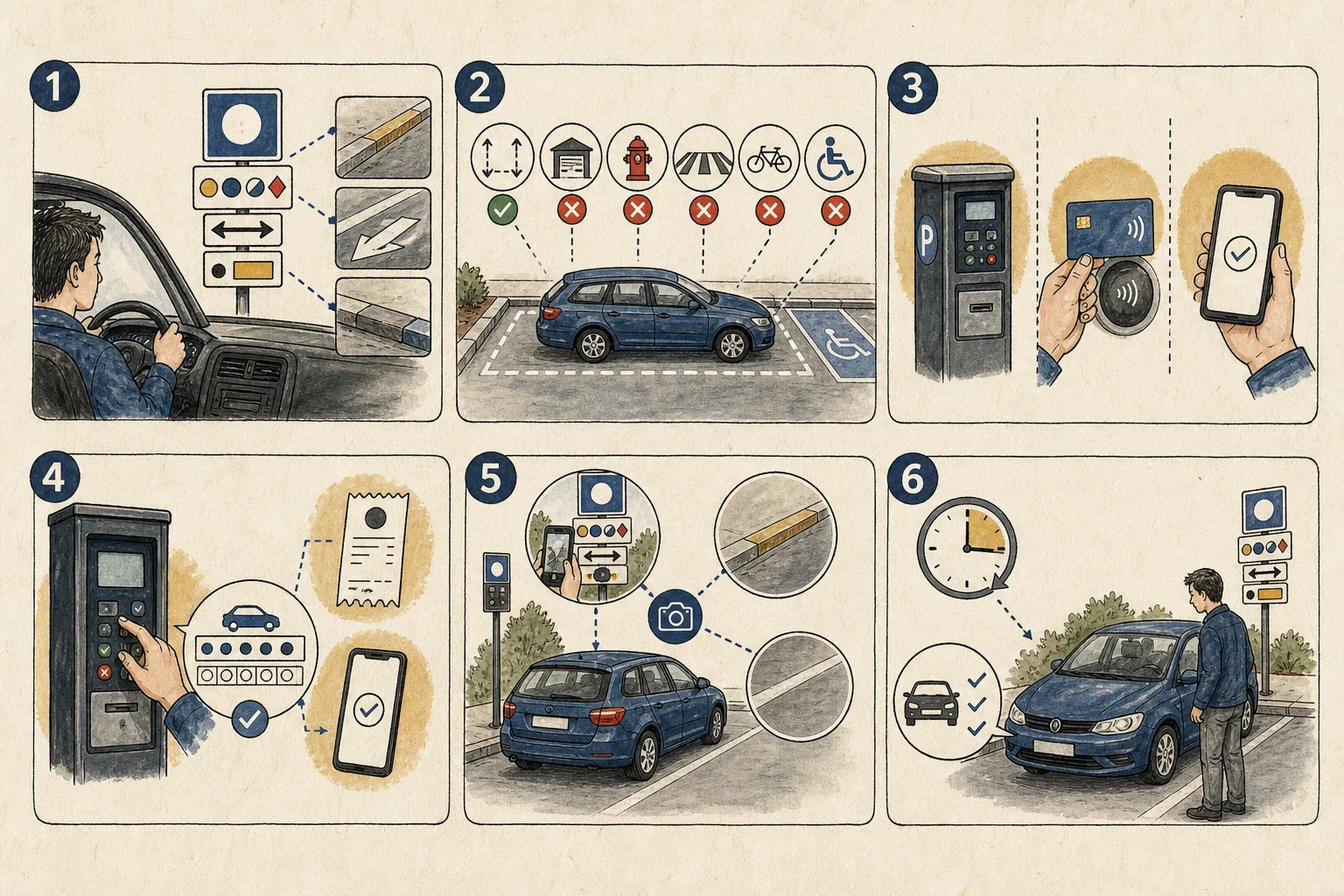
確認の順番:1 最寄りの標識・矢印・縁石表示を一緒に読む、2 専用区画や通行を妨げる場所を除外、3 対応する支払い方法を確認、4 正しい車両または区画情報を入力して控えを残す、5 標識と駐車位置を撮影、6 期限前に戻ります。色の意味は世界共通ではありません。クリックすると拡大できます。
パークアンドディスプレイと駐車アプリ
パークアンドディスプレイ:正しい車両番号または区画で購入し、印字された期限と掲示方法を確認します。車両番号をシステムに登録し紙を置かない都市もあります。カードが使えても、正しい車両に紐づいたとは限りません。
駐車アプリ:EasyPark、ParkMobile、RingGoなどのアプリは多くの欧州都市で使用できます。ナンバープレートを入力して携帯電話で支払うため、車に戻って延長手続きをする必要がありません。渡航前に、目的地の国で自分の使いたいアプリが対応しているか確認しておきましょう。
ゾーン・ナンバー入力:標識にあるゾーン、区画、ナンバーを正確に入力し、機械画面とアプリ控えを保存します。機械故障時は標識に示された代替方法を探し、無料だと決めつけません。
 支払い記録には時刻、場所、車両情報が残るようにします。写真:Wikimedia Commons。

地下駐車場とパークアンドライド
地下駐車場:都心部では最も安全で便利な選択肢であることが多いです。入口で券を取り、出口で支払います(カードは通常使用可能)。高さ制限があるため、ルーフボックスを装着している場合はレンタカーの高さを確認してください。駐車場によっては急な曲がり角があるので、ゆっくり進みましょう。
パークアンドライド(P+R):多くの都市では郊外に格安または無料の駐車場を設け、そこからトラムやバスで都心部へアクセスできます。費用とストレスを節約できます。「P+R」の標識を探しましょう。
車輪止めとレッカー移動
車輪止め:制限区画や未払いへの措置として使われる地域があります。解除方法と料金は場所ごとに異なるため、器具や公式通知の番号を使います。動かす前に器具、区画、標識、時刻を撮影します。
レッカー移動:交通妨害、アクセシブル区画、移動通知の無視で移動されることがあります。引き取りにはナンバー、レンタル契約、公式保管場所での支払いが必要です。車が見つからないときは地元警察・駐車管理機関に確認してから会社へ連絡します。
予防策:有効な許可証なしに障害者用スペースに駐車しないでください。バス停、タクシー乗り場、荷積みゾーンは避けましょう。迷ったときは地元の人に聞くか、有料駐車場を探しましょう。
避けるべきよくある間違い
- 時間制限を無視する:2時間の青いゾーンは2時間です。戻りが遅れると罰金の対象になります。
- 逆向きに駐車する:一部の国(フランス、ドイツなど)では、進行方向と同じ向きに駐車しなければなりません。
- パーキングディスクを忘れる:ディスクが必要なゾーンでは、時間内でもディスクがないと罰金です。
- 日曜日は無料と思い込む:ルールはさまざまです。日曜日も駐車取締りを実施する都市もあれば、実施しない都市もあります。
- 住民専用区画に駐車する:許可証、時間、ナンバー条件を読みます。アプリが決済を受け付けても、旅行者が使えるとは限りません。
帰るための二分間ルーティン
- 最寄りの標識、区画または縁石、ナンバーが見える車を撮影します。
- 券、アプリ控え、故障画面を期限と場所付きで保存します。
- 歩行や出口の列を見込み、スマホに戻る時刻を登録します。
- 返却時に損傷や車輪止めを確認し、新しい問題は現場で会社へ連絡します。
参考資料と確認日
このチップは 2026年8月17日に確認しました。駐車は自治体が通り、曜日、イベント、車種ごとに定めます。車を離れる前に区画の標識と運営者の最新支払い方法を確認してください。
各国の詳細ルールは、目的地ガイドで確認してください。