Overview
Belgium is small enough for a multi-city trip, yet its road experience changes noticeably between the three regions. Flanders has dense traffic, cycle infrastructure and many towns close together. Wallonia opens into quieter countryside and the Ardennes, where bends, hills and winter conditions matter more than motorway speed. Brussels is a separate urban problem: the default speed is lower, parking is regulated by zone, and most of the region is a low-emission zone.
The road network is extensive, but “easy” does not mean interchangeable. A route that looks short on a map can cross a city ring, a cycle street, a low-emission boundary and a different language area in one hour. Save the destination in both the local spelling and the spelling used by your navigation app, and decide in advance where the car will stay while you visit a historic centre.
Licence, documents and rental conditions
- An EU driving licence is valid throughout the EU. The Your Europe licence and insurance guidance explains the general recognition rule.
- For licences issued outside the EU/EEA, verify recognition with the Belgian Federal Public Service Mobility and with the rental desk. A translation or IDP can be required depending on the issuing country and licence format; a phone photograph is not a substitute for the original.
- Carry your licence, passport or national ID, rental agreement, insurance details and vehicle registration. If you cross into France, the Netherlands, Germany or Luxembourg, confirm the contract’s cross-border permission and insurance before leaving Belgium.
- The legal driving age is 18. Rental companies often set a higher minimum age, add a young-driver fee, or limit larger vehicles to older drivers.
Regional rules that matter
Belgium drives on the right. The EU road-rules page for Belgium lists the current national and regional details. Unless signs say otherwise, ordinary roads outside built-up areas generally use 70 km/h in Flanders and 90 km/h in Wallonia and Brussels. Built-up areas are usually 50 km/h in Flanders and Wallonia; Brussels uses a 30 km/h default with signed exceptions. Motorways are normally 120 km/h, and roadworks can lower that limit.
The standard blood-alcohol limit is 0.5 mg/ml. The lower 0.2 mg/ml limit applies to professional drivers; it is not a general “new driver” limit. Seat belts and child restraints are mandatory, and handheld phone use is prohibited. A warning triangle is required; on a motorway or motor road where stopping is prohibited, wear a reflective vest before leaving a broken-down vehicle. Belgium also requires a rescue lane on roads with at least two lanes in the same direction as soon as traffic jams form.
At an unmarked intersection, priority to the right can apply, but signs, markings, traffic lights and cycle facilities take precedence. In a marked bicycle-priority street (rue cyclable / fietsstraat), cars may enter but may not overtake cyclists and must stay at 30 km/h. When a lane closes in very slow traffic, follow Belgium’s zipper-merge rule: use both lanes and merge one vehicle at a time at the narrowing.
Motorways and interchanges
The E40 links the coast, Brussels, Liège and Germany; the E19 connects Brussels with Antwerp and the Netherlands. Interchanges around Brussels and Antwerp can change lanes quickly, and overhead signs may show Dutch or French place names. Set the navigation before joining the motorway, keep right unless overtaking, and leave a gap for traffic entering from a short slip road.
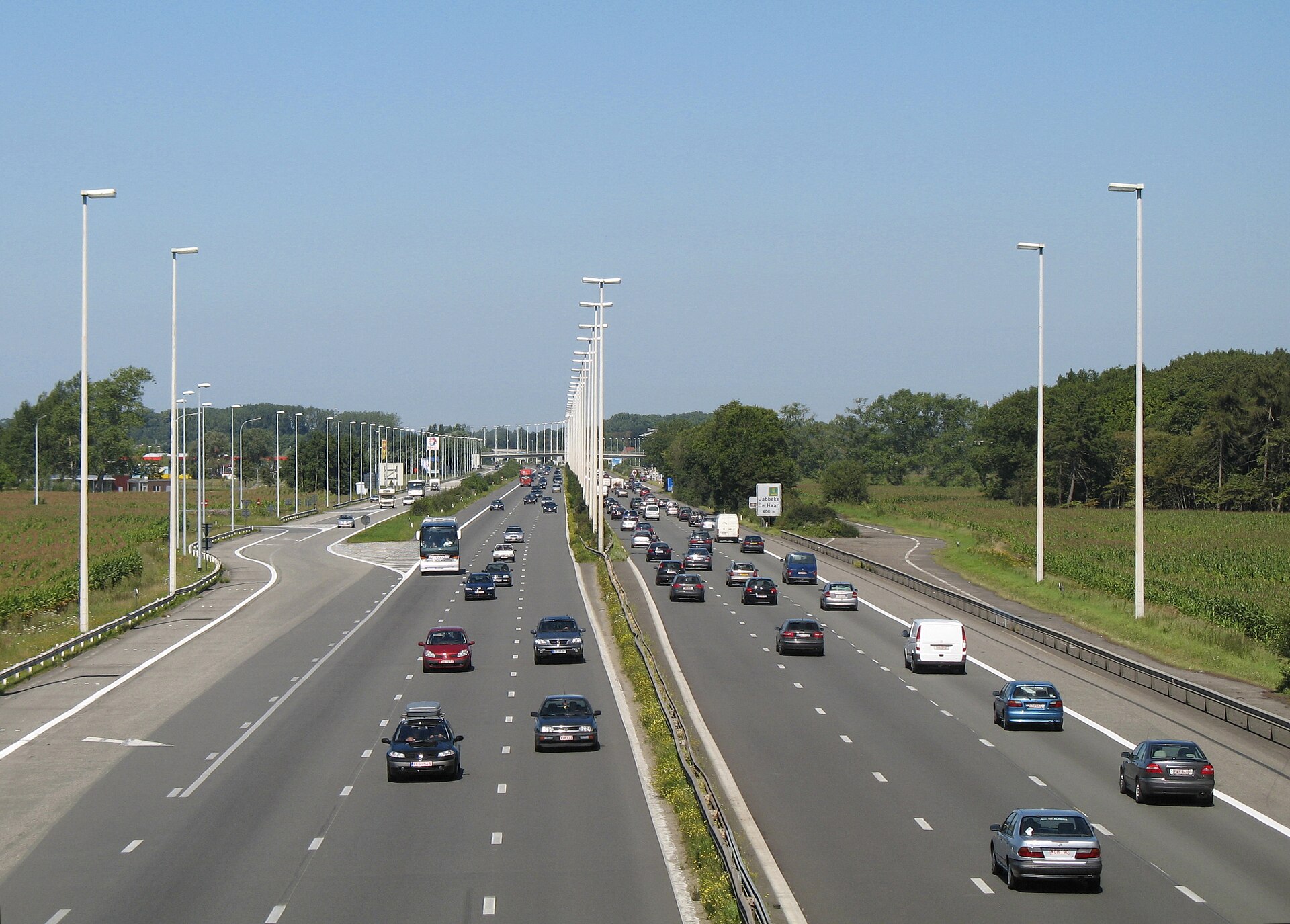

Work zones can move lanes or reduce the speed limit with little warning. Do not use the hard shoulder as a normal lane. If congestion stops, create a rescue lane immediately: vehicles in the left lane move left and vehicles in the other lanes move right within their lanes.
Flanders, Brussels and cycling streets
Flanders has a dense network of cycle tracks and bicycle-priority streets. Before turning across a cycle track, check the mirror and blind spot, signal early and cross only when clear. Avoid stopping on a marked cycle lane or opening a door without a shoulder check. In Brussels, a short urban route can include tram tracks, one-way exceptions and 30 km/h streets, so a route that avoids the centre is often less stressful.
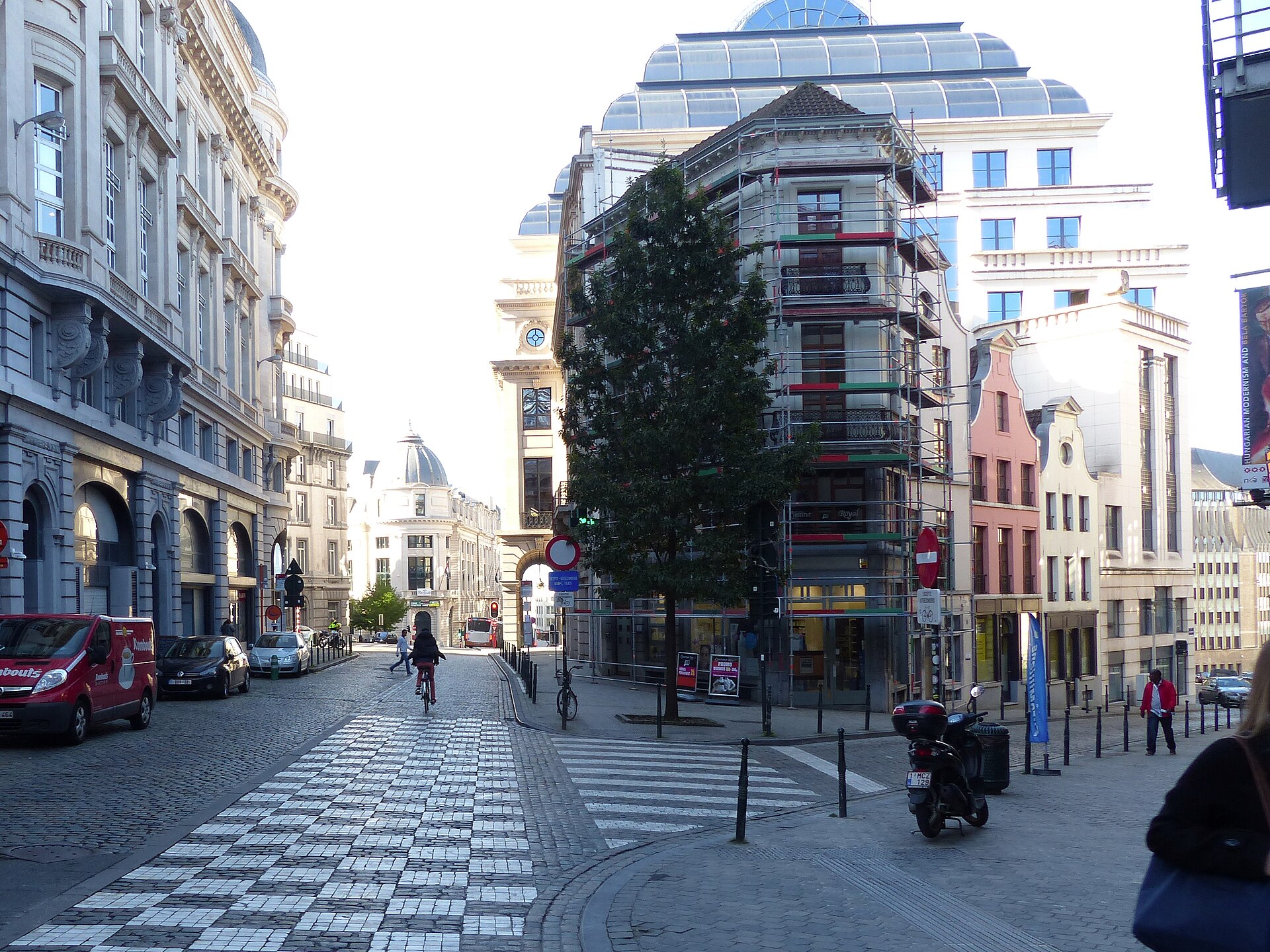

Place names change with the region: Antwerpen/Anvers, Gent/Gand and Luik/Liège are the same cities. Enter both forms when searching for a hotel or a car park, and check that the navigation has not selected a restricted street in a historic centre.
Wallonia and the Ardennes
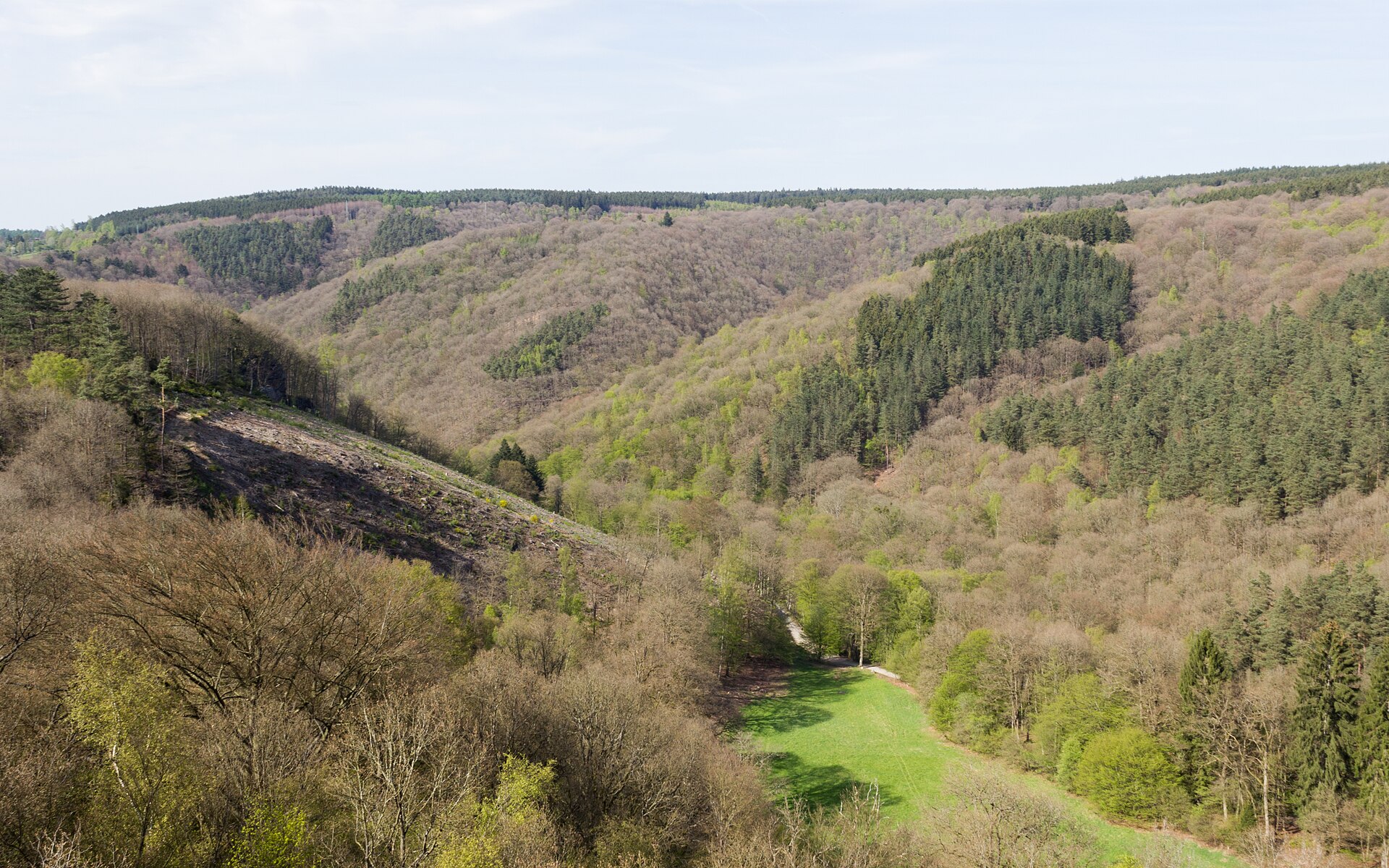
Once south of Namur or Liège, roads become quieter but more sinuous. The Ardennes has narrow village approaches, steep bends and forest shade that can stay wet after rain. Reduce speed before a bend rather than braking halfway through it, and expect farm vehicles, cyclists and occasional fallen branches. In cold weather, check the forecast and road authority notices before committing to a high route; Belgian law does not impose one calendar date for winter tyres, but the rental car must be suitable for actual conditions.

Low-emission zones
Brussels, Antwerp and Ghent have separate low-emission zones. The Flanders official overview confirms that Antwerp and Ghent use their own access checks, while the Brussels-Capital Region is a separate zone. Rules depend on fuel, Euro standard and vehicle type.
Brussels LEZ covers almost the entire region and operates 24 hours a day, seven days a week. Foreign-registered vehicles generally need free registration before entry, except Dutch-registered vehicles; use the official Brussels registration and simulator. Registration for Brussels does not authorise entry to Antwerp or Ghent. If a rental car is diesel, ask the company for the Euro standard and registration document before entering any city centre, and use the city’s own checker. A park-and-ride outside the zone is often simpler than buying a day pass at the last minute.
Parking, fuel and charging
Parking rules are local. In Brussels, the parking.brussels zone map distinguishes blue, green, grey, red and orange zones; a blue zone normally needs a parking disc and has a time limit. The agency also lists P+R options for visitors. In Ghent, payment machines and apps ask for the registration plate, and city tariff zones have different hours and maximum stays. Read the sign at the exact space, enter the plate carefully, and do not assume an empty bay is free.
Belgian fuel prices change, so compare the current pump price rather than relying on an old country ranking. Cards are common, but an unmanned station may require a PIN or pre-authorisation. For an EV, save the charging operator’s app and a roaming backup; connector availability can vary between motorway and city sites.
Passenger cars normally use Belgian motorways without a general toll. The exception most visitors encounter is the Liefkenshoek Tunnel near Antwerp. The 2026 tariff depends on vehicle height (under or over 3 m) and payment method; the Kennedy Tunnel is not a standard passenger-car toll. If the rental has a roof box or is a tall van, check its height before choosing a tunnel lane. Heavy vehicles over 3.5 tonnes follow separate Viapass kilometer-charge rules, which do not normally apply to an ordinary rental car.
Emergencies and a useful checklist
Call 112 for a serious accident with injuries, a vehicle fire or a medical emergency. In Belgium, 101 is the urgent police number. The official 112 guidance explains what information to give and warns that 112 is not a breakdown service. Stop safely, turn on hazard lights, put on the reflective vest before leaving the vehicle on a motorway, and place the warning triangle only when it is safe. For a non-dangerous fault, use the rental contract’s assistance number.
Before leaving the depot:
- photograph the car, wheels, windscreen and fuel or battery level;
- save the rental assistance number and the contract’s cross-border policy offline;
- record the car’s Euro standard and number plate before approaching a LEZ;
- enter both local and alternate city names in the navigation;
- check work zones, traffic and parking rules for the exact municipality;
- carry the original licence, ID and a payment card.
For neighbouring routes, compare our Netherlands, France and Germany guides before crossing a border.
Official resources
Frequently Asked Questions
- Can I drive in Belgium with my foreign licence?
- A valid EU licence is recognised across the EU. For a licence issued outside the EU/EEA, check Belgium's recognition rules and the rental company's policy; an IDP or translation may be needed. Carry the original licence with you.
- What speed limit should I use outside towns?
- The regional default differs: Flanders generally uses 70 km/h on ordinary roads, while Wallonia and Brussels commonly use 90 km/h outside built-up areas. Signs can set a different limit, and Brussels has a 30 km/h citywide default with signed exceptions.
- Do I need to register a foreign car for Brussels?
- Foreign-registered vehicles generally need free registration before entering the Brussels Low Emission Zone, except vehicles registered in the Netherlands. Check the official simulator and register before driving in.
- Are Antwerp and Ghent covered by the same low-emission-zone registration?
- No. Antwerp, Ghent and Brussels have separate rules and systems. Check the vehicle and register with each city where required; Brussels registration does not automatically authorise Antwerp.
- Are Belgian motorways tolled for rental cars?
- Ordinary passenger cars normally do not pay a motorway toll. The Liefkenshoek Tunnel near Antwerp is a separate tolled crossing; its 2026 price depends on vehicle height and payment method.
- How should I handle a Belgian zipper merge?
- When traffic is very slow and a lane closes, use both lanes until the merge point. Drivers in the open lane should let one vehicle in at a time. Do not force an early merge or block the closing lane.
- Which number is for an accident or breakdown?
- Call 112 for a serious accident, fire or medical emergency; 101 is the urgent police number in Belgium. A non-dangerous breakdown belongs with the rental company's roadside-assistance provider, not 112.
Information Sources & Disclaimer
This guide compiles information from the official transport authorities, road operators, government travel information, and automobile associations linked for Belgium.
While we strive to keep this information as accurate and up-to-date as possible (last reviewed: August 2026), traffic laws and toll rates can change without notice. We recommend verifying critical information with the local authorities or your car rental agency upon arrival.
Learn more about our Editorial Process →Compare Your Origin and Destination
Use the comparison tool to check driving side, units, documents, and other destination data for your route.