Overview
France is easier to plan when the route is split into three settings: tolled autoroutes for long transfers, N and D roads through towns and countryside, and city streets where parking, bicycles, trams and access zones share the same space. A route that looks short on a map can take much longer once a town centre, mountain pass or toll payment is added.
France drives on the right. Keep the original licence and rental documents within reach, read the sign at each junction, and decide where the car will be left before entering a historic centre. The official EU road-rules summary for France is a useful starting point, but local signs and current government notices control on the day.
Licence, documents and rental conditions
- An EU or EEA licence is generally recognised during a visit.
- For a licence issued outside Europe, the Service-Public guidance for foreign licences requires the licence to be valid and written in French, or accompanied by an official translation or an International Driving Permit for a short stay. The exact residence and exchange rules are different, so do not rely on a blanket “six-month tourist rule”.
- Carry the original licence, passport or national ID, rental agreement, vehicle registration and insurance details. A photo stored on a phone does not replace the original document.
- Passenger cars should have a warning triangle and a reflective vest available for a breakdown or collision. Keep the vest where it can be reached from inside the car; ask the rental desk where the equipment is stored.
- Eighteen is the legal driving age, while rental firms can set a higher age, restrict vehicle classes and charge a young-driver fee. Confirm automatic transmission, additional drivers, cross-border permission and one-way fees before paying.
Speed, alcohol and junctions
For an ordinary passenger car, the usual defaults are:
| Road setting | Default to remember | What can change it |
|---|---|---|
| Built-up area | 50 km/h | Town signs, school streets and temporary controls |
| Non-urban road | 80 km/h | Posted limits, divided carriageways, bends and settlements |
| Motorway | 130 km/h when dry; 110 km/h in rain or wet conditions | Signs, roadworks, congestion and visibility |
The limit is not a target. If visibility falls below 50 metres, the safe legal limit is much lower, and a signed limit always wins. Novice drivers can have additional restrictions. The standard blood-alcohol limit is 0.5 g/l; new drivers have a lower 0.2 g/l limit. The EU France road-rules page lists the current figures and equipment guidance.
At an unsigned junction, priorité à droite can give way to traffic approaching from the right. Signs, road markings, signals and a yield line override that default. Roundabouts are not all identical: slow down, read the entry sign and choose the lane before the circle. A local practice at one Paris junction is not a national rule.
Holding a phone in the hand or using earphones while driving is prohibited. A properly installed Bluetooth hands-free system still requires full attention. Seat belts and suitable child restraints apply to the occupants covered by the rules; check the child seat with the rental company rather than improvising with an adult belt.
Autoroutes and péage
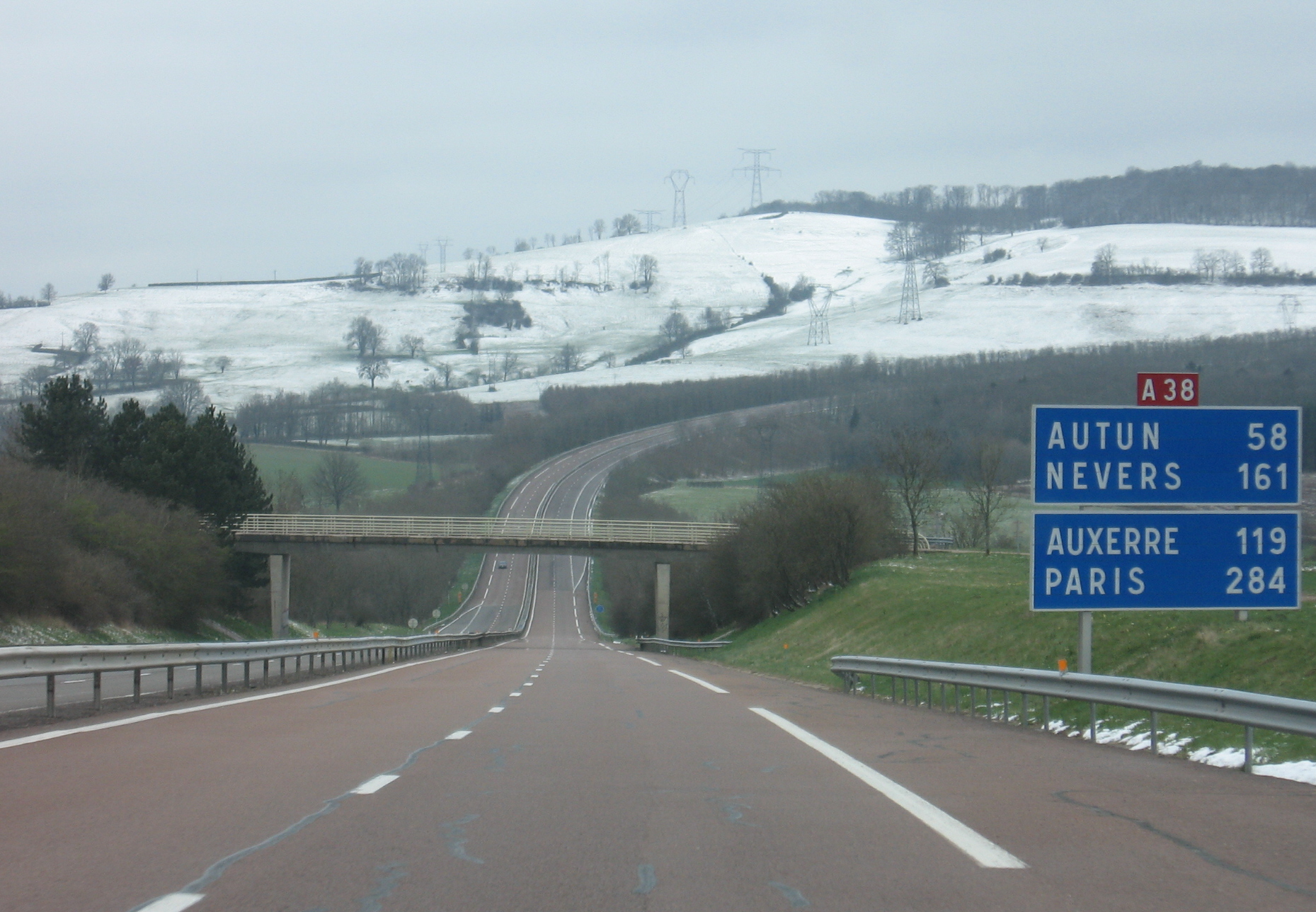
Autoroutes are the efficient choice for long cross-country legs, but a toll is part of the route calculation. Many sections issue a ticket at entry and charge at exit; other sections use card lanes, cash lanes or a télépéage badge. The symbols above the lane matter more than the colour of a rental-car windscreen device. ASFA’s payment guide lists the main payment methods and operator links.
_002.jpg)
Some newer sections use péage en flux libre. Cameras read the registration plate and the road operator sets the payment process and deadline. Record the motorway, direction, date and rental plate, then pay through the named operator or follow the rental company’s documented process. Do not reverse at a toll lane or use a payment link from an unexpected message.
Service areas (aires) are the right place for fuel, food and a break. On a motorway shoulder, use hazard lights, leave the vehicle only when safe and call the emergency system or rental assistance. Keep the ticket, payment receipt and rental agreement together; a toll charge can reach the rental invoice after the vehicle has been returned.
N roads, D roads and priority in villages
N roads connect regions and can change from divided road to a town approach within a few kilometres. D roads are often narrower and pass through villages, vineyards, farm entrances and cycling routes. Treat the painted centre line and the next sign as the limit of what is safe, not the speed of the car behind you.
At a village junction, a yellow diamond or other priority sign can change the right-priority expectation. Without a sign, ease off before a blind side road and look for a vehicle emerging from the right. On a downhill bend or a mountain lane, leave space for a bus, delivery vehicle or cyclist before committing to an overtake.
City driving, parking and Paris arrivals
The Paris Périphérique and central streets combine dense traffic, bus and cycle movements, delivery bays and restricted access. A garage or park-and-ride location outside the centre is usually easier to verify than a kerbside space found after arrival. Save the exact entrance address: a hotel pin can sit inside a pedestrian street or an access-controlled lane.
Parking is governed by the sign at the exact bay. A zone bleue may require a parking disc and a maximum stay; paid bays may use a meter, plate entry or a city-approved app. Read the hours, resident restrictions, cleaning days and maximum duration before walking away. Rates and accepted apps vary by municipality, so old price examples are poor trip-planning data.
Watch for cycle lanes, tram tracks and pedestrians at crossings. Avoid stopping in a loading area or blocking a cycle track while checking navigation. If the route enters an environmental zone, verify that before choosing the garage.
Crit’Air and ZFE access
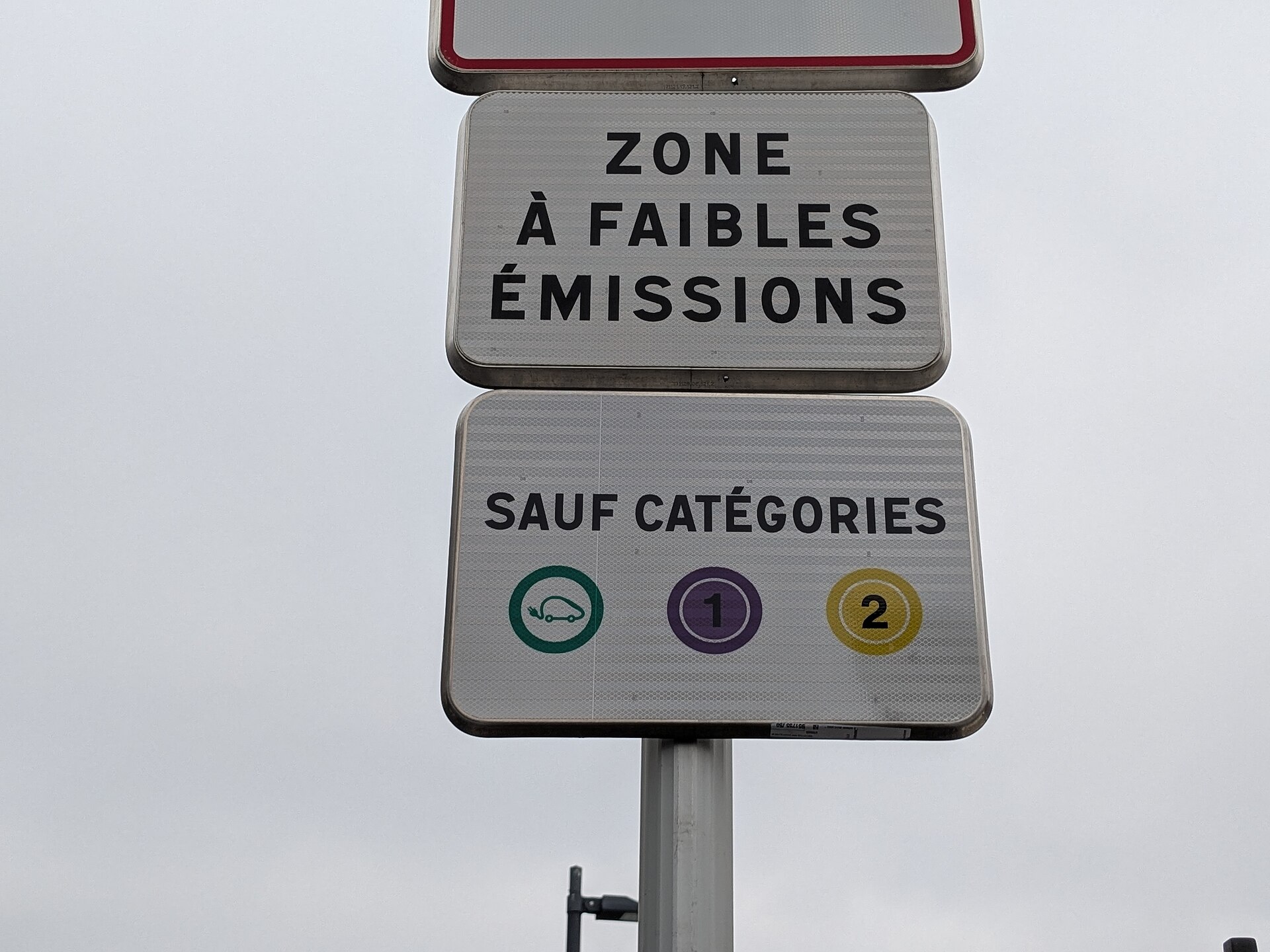
Crit’Air classifies a vehicle by fuel, emissions standard and first registration. A ZFE is a locally defined low-emission zone; its boundary, hours, vehicle classes and temporary pollution measures can differ from another city. The official Crit’Air FAQ explains the sticker and links to the government order service.
_(fév_2025).jpg)
French rental cars often already have a sticker. Match it to the registration number and ask the rental desk which cities and vehicle classes are covered. For a foreign-registered private car, order through the official portal using the registration document and allow delivery time. The sticker is a classification, not a nationwide pass: check the city’s current map and any pollution-episode notice on the day of travel.
Fuel, charging and route costs
Pump labels commonly use E5, E10 and Gazole. Match the label to the rental agreement and the fuel flap; do not assume that “petrol” identifies one blend. Card pumps can place a temporary authorisation, and a rural station may close outside its published staffed hours. Keep a backup payment method.
Motorway charging and public charging are separate decisions. Save the operator app, a roaming option and a backup charger before leaving a major city. Prices change by operator, time and payment method, so use the current operator display rather than an old national average.
Mountain roads and winter equipment
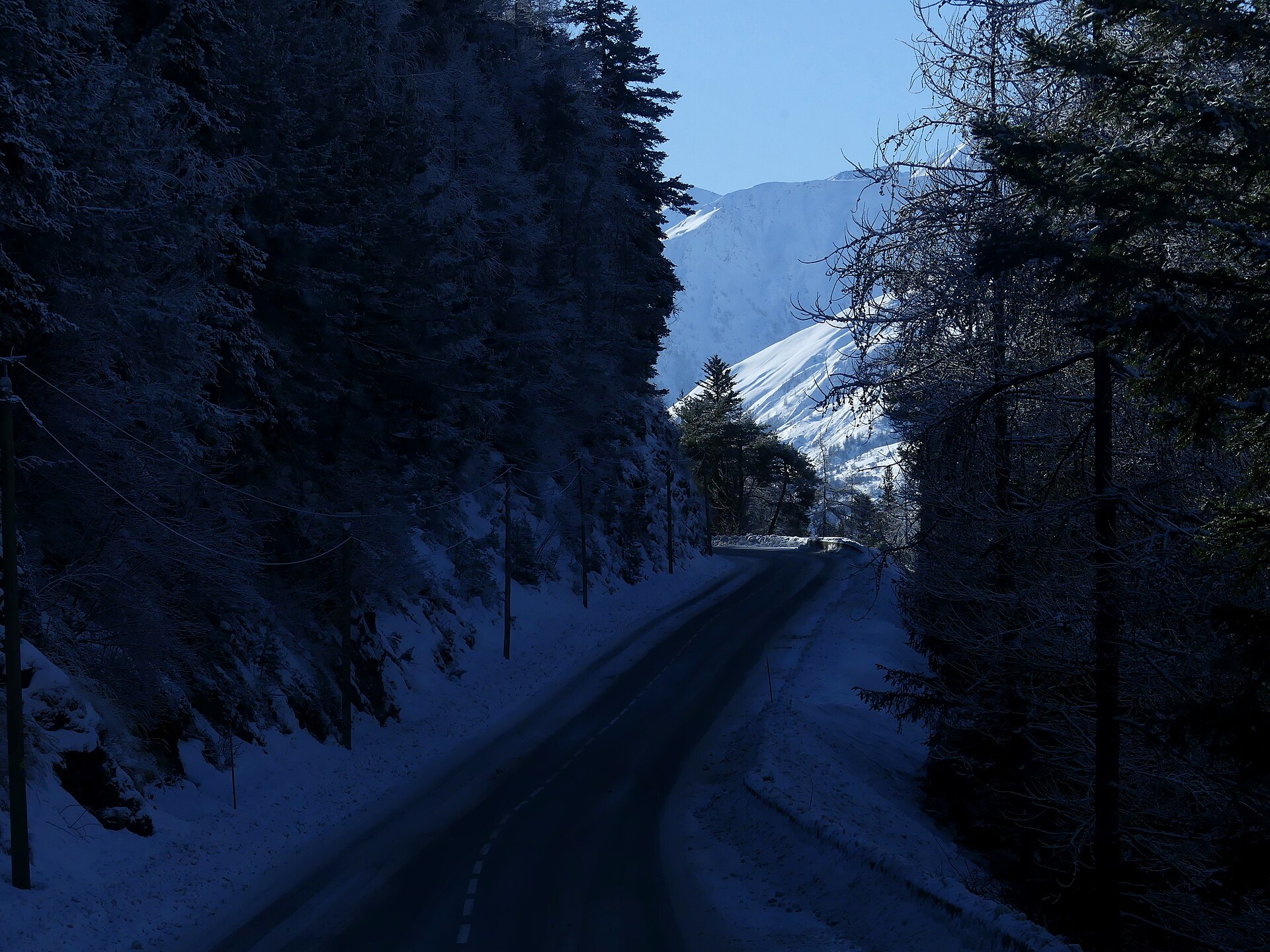
From 1 November to 31 March, designated mountain areas can require winter equipment. The Service-Public winter-equipment notice explains the current rule: a vehicle may need 3PMSF tyres or chains/socks, and the signposted route and local authority notice determine what applies. Since the 2024 transition, an M+S marking alone should not be treated as the chain-equivalent symbol.
.JPG)
Ask the rental branch which tyres are fitted, whether chains or socks are supplied, and how the equipment is installed before reaching snow. Check the mountain forecast, pass opening, roadworks and daylight. A dry road in the valley says little about a shaded bend at altitude. If the car is not equipped for the posted conditions, change the route rather than testing the climb.
Rental records, accidents and border trips
Photograph wheels, glass, bumpers, fuel or battery level and the dashboard warning lights at pickup. Save the contract, assistance number and the names of any toll or environmental-zone services. Automatic transmission, additional drivers, cross-border permission and a one-way return can each change the price or insurance conditions.
For a collision, stop safely, exchange details and complete a constat amiable when appropriate. Photograph the lane position, signs, damage and registration plates, then call the rental company. Do not admit liability in a language or form you do not understand; ask the insurer how to submit the report.
Emergencies and departure checklist
| Situation | Number or action |
|---|---|
| European emergency | 112 |
| Police or gendarmerie | 17 |
| Fire and rescue | 18 |
| SAMU medical emergency | 15 |
| Non-dangerous rental breakdown | Use the assistance number in the contract |
The Service-Public emergency guidance explains the national numbers. Move behind a barrier if safe, wear the vest before leaving a stopped vehicle and give dispatchers the road number, direction, kilometre marker and nearest town.
Before leaving the depot:
- keep the original licence, ID, registration and insurance details accessible;
- photograph the vehicle and confirm the fuel or charging return policy;
- record the toll badge arrangement and any free-flow payment instructions;
- check ZFE boundaries, parking signs and mountain equipment for the planned dates;
- save the rental assistance number, an offline route and a second payment method.
Official resources and review date
This page was reviewed on 16 August 2026. Speed limits, ZFE boundaries, toll processes, parking systems and rental terms can change, so reopen the official sources before departure:
- EU road rules and safety: France
- Service-Public: driving in France with a foreign licence
- Official Crit’Air FAQ and order service
- ASFA: French motorway payment methods
- Bison Futé traffic information
- Service-Public: mountain winter equipment
- Service-Public: emergency numbers
For neighbouring routes, compare the Spain, Italy, Belgium and Switzerland guides before crossing a border.
Frequently Asked Questions
- Can I drive in France with a foreign licence?
- EU and EEA licences are recognised for a visit. For a non-European licence, Service-Public says a short-stay driver needs a valid licence written in French or accompanied by an official translation or an IDP. Residence rules differ, so check the issuing country and the rental company's policy before booking.
- What speed limits should a visitor remember?
- The usual passenger-car defaults are 50 km/h in built-up areas, 80 km/h on ordinary non-urban roads and 130 km/h on a motorway in dry conditions. Wet weather lowers the motorway limit to 110 km/h; signs, visibility and temporary controls take priority.
- Does priorité à droite apply at every French roundabout?
- No. Give-way signs, lane markings and traffic lights decide the junction. At an unsigned intersection, traffic from the right may have priority. Read the sign before entering a roundabout instead of applying one rule to every circle.
- Do I need a Crit’Air sticker?
- Crit’Air is relevant when the route enters a marked ZFE or a temporary pollution restriction. Foreign-registered vehicles can order through the official government service using their registration details. A sticker does not grant access to every French city, so check the local zone rules for the travel date.
- How do French autoroute tolls work?
- Charges depend on the road section and vehicle class. A route may use an entry ticket, a staffed or card lane, télépéage, or a barrier-free section that reads the number plate. Follow the operator's signs and keep the rental contract and payment record.
- What is required for winter driving in the mountains?
- In designated mountain areas, seasonal rules run from 1 November to 31 March. The posted requirement may be 3PMSF winter tyres or chains/socks, with local signs and prefecture notices controlling the exact route. Check the rental car before leaving the valley.
- Which numbers should I call after a crash?
- Call 112 for a European emergency, 17 for police or gendarmerie, 18 for fire and rescue, and 15 for SAMU medical help. For a non-dangerous rental breakdown, use the assistance number in the contract rather than an emergency line.
Information Sources & Disclaimer
This guide compiles information from the official transport authorities, road operators, government travel information, and automobile associations linked for France.
While we strive to keep this information as accurate and up-to-date as possible (last reviewed: August 2026), traffic laws and toll rates can change without notice. We recommend verifying critical information with the local authorities or your car rental agency upon arrival.
Learn more about our Editorial Process →Compare Your Origin and Destination
Use the comparison tool to check driving side, units, documents, and other destination data for your route.