Overview
Germany is easiest to understand as three different driving environments joined together: a high-speed Autobahn network, ordinary Bundesstraßen between towns, and dense city streets where trams, bicycles, pedestrians and access restrictions share the same space. The famous “no speed limit” idea applies only to some motorway sections. A route can move from an unrestricted section to a signed 120 km/h limit, a roadworks lane and a city Umweltzone within one afternoon.
Germany drives on the right. Save the exact hotel or car-park address before leaving the airport, and check whether the final streets are restricted to residents, trams or low-emission vehicles. The shortest route on a map is often not the easiest route to a historic centre.
Licence, documents and rental conditions
- A valid EU or EEA licence can generally be used during a visit. The EU road-rules page for Germany is a useful starting point.
- For a licence issued outside the EU/EEA, bring the original licence and confirm the required translation or IDP with the ADAC guidance for foreign licences and the rental company. English-language licences may be accepted in practice, but document handling is not uniform for every issuing country.
- The six-month German exchange rule is linked to establishing residence. It should not be presented as a universal tourist validity period. If you move to Germany or register a residence, check the official conversion process before the six months expire.
- Keep the licence, passport or national ID, rental agreement, vehicle registration and insurance details accessible. A phone photograph is not a substitute for the original document.
- The legal driving age is 18. Rental firms commonly set a higher minimum, restrict vehicle classes for younger drivers and add a young-driver charge. Confirm automatic transmission, cross-border permission and one-way fees before paying.
Rules that change an ordinary junction
Germany uses the right-hand traffic system and the right-before-left priority rule at unsigned junctions, unless signs, signals or road markings say otherwise. Keep right when travelling on a multi-lane road and return after overtaking; the left lane is not a cruising lane. The EU summary of German rules lists the current equipment and speed guidance.
The standard blood-alcohol limit is 0.5 mg/ml. Drivers in the probationary period and drivers under 21 are subject to a zero limit. Seat belts and suitable child restraints are mandatory. Handheld phone use is prohibited while driving; a properly mounted hands-free system still needs to be used without distracting from traffic.
At a red signal, do not turn right unless a separate green-arrow sign authorises it. Even then, stop fully at the stop line, check pedestrians and bicycles, and yield before turning. Carry a warning triangle, reflective vest and first-aid kit; the EU equipment list explains the visitor requirements.
Autobahn: speed is only one decision
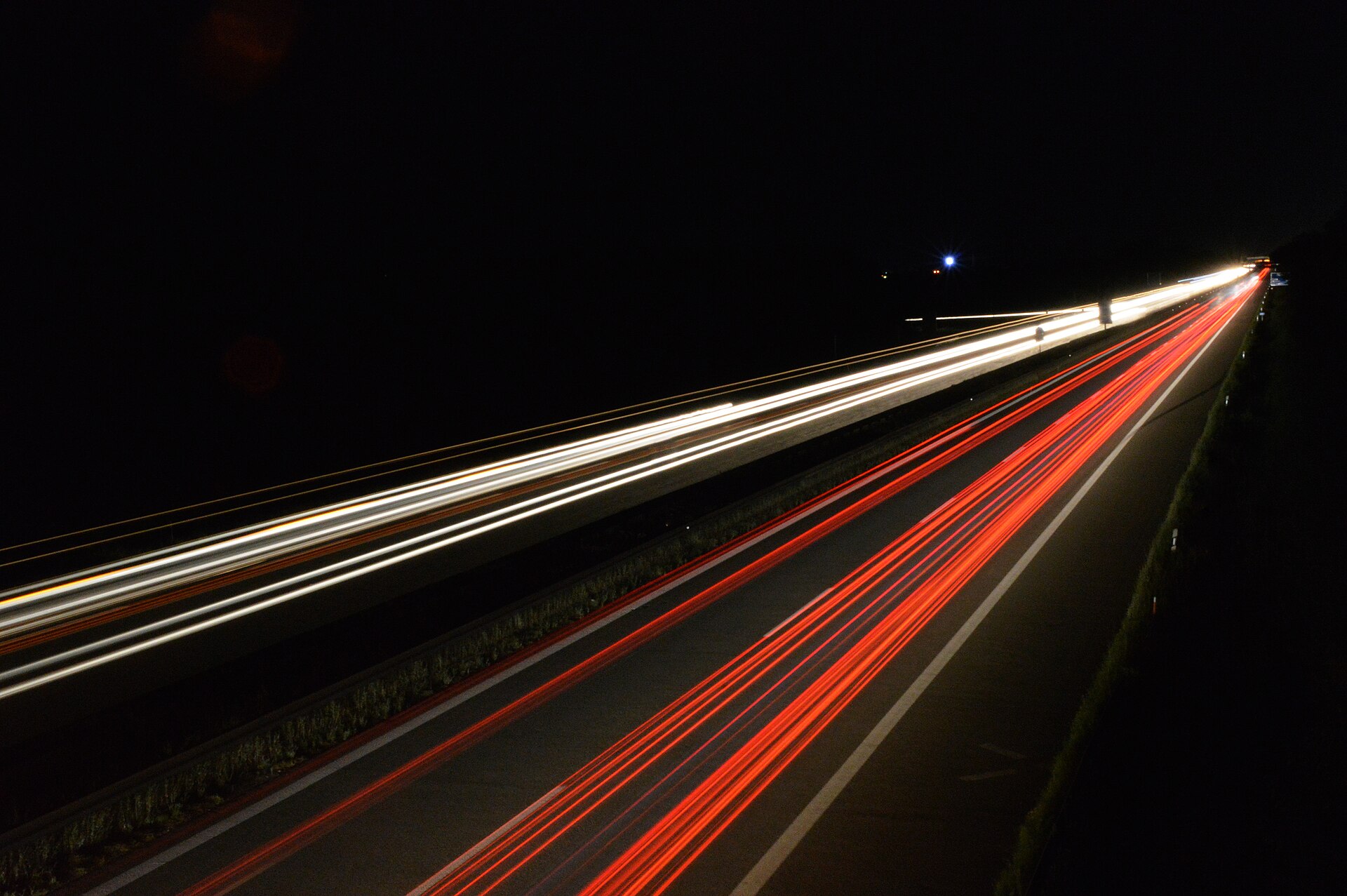
Some Autobahn sections have no general speed limit, but local signs can impose 80, 100, 120 or another limit for traffic, noise, weather, junctions or construction. Where no limit is posted, 130 km/h is the recommended speed. Rain, spray, darkness, a full luggage load or a sudden queue can make a lower speed the only sensible choice. Follow the Autobahn GmbH traffic and works information before a long transfer.
When a queue forms, make a Rettungsgasse immediately rather than waiting to hear a siren. The leftmost lane moves left; every other lane moves right. Keep the lane open, do not follow an emergency vehicle through it, and do not stop to take a photograph. On a motorway shoulder, stop only for a genuine emergency. Fuel, food and a toilet break belong at a rest area, not on the hard shoulder.

Bundesstraßen, villages and the city edge
Outside built-up areas, ordinary roads commonly use a 100 km/h default, but bends, settlements, crossings and signs can lower it. Bundesstraßen may be wide and fast near a city, then narrow quickly through a village. Expect farm machinery, cyclists and motorcycles emerging from side roads. Leave extra room before a blind bend and avoid matching a local driver’s speed when the sign says otherwise.
City arrivals need a separate plan. Tram tracks can share the lane, cycle tracks can cross a turning path, and a hotel address may sit inside a pedestrian or access-restricted street. Leave the car in a signed garage or park-and-ride site when possible, then walk or use local transport for the centre.
Umweltzone and city parking
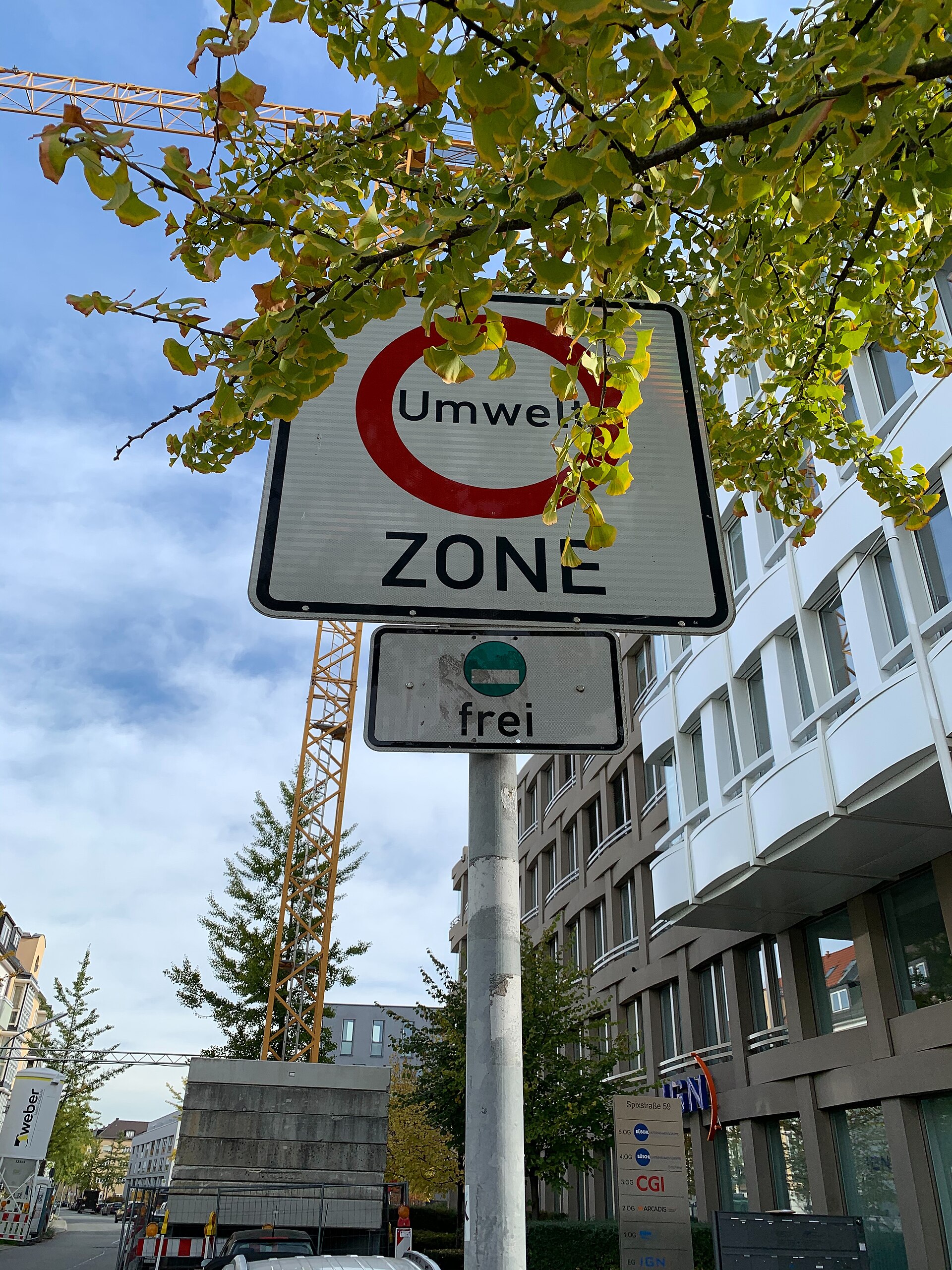
An Umweltzone is a marked low-emission zone, not a border requirement for the whole country. The Federal Ministry for the Environment says that a sticker is needed when driving into the signed zone; it is not needed merely to enter Germany or use an Autobahn that passes outside the zone. Foreign-registered vehicles must follow the same restriction. Existing zones generally require a green sticker, which can be ordered using the vehicle registration documents. The sticker remains valid across German Umweltzonen, but it does not cancel a separate local access restriction.

Parking is controlled by the sign at the exact space. A blue-and-white Parkscheibe sign means a parking disc may be required; set it to the next half-hour after arrival and leave it visible on the dashboard. Paid bays can use a meter, a plate-based app or a garage ticket. Read the maximum stay, resident hours and cleaning restrictions before leaving the car. Do not carry the old assumption that an empty kerb space is free.
Winter roads and seasonal preparation
Germany has no calendar date that automatically makes winter tyres compulsory. The duty applies when the road has black ice, snow, slush, ice or frost. Under the current rule, the tyre must show the Alpine mountain-and-snowflake symbol; an M+S mark by itself is not enough. The legal tread minimum is 1.6 mm, although the ADAC winter-tyre guidance recommends replacing winter tyres earlier.
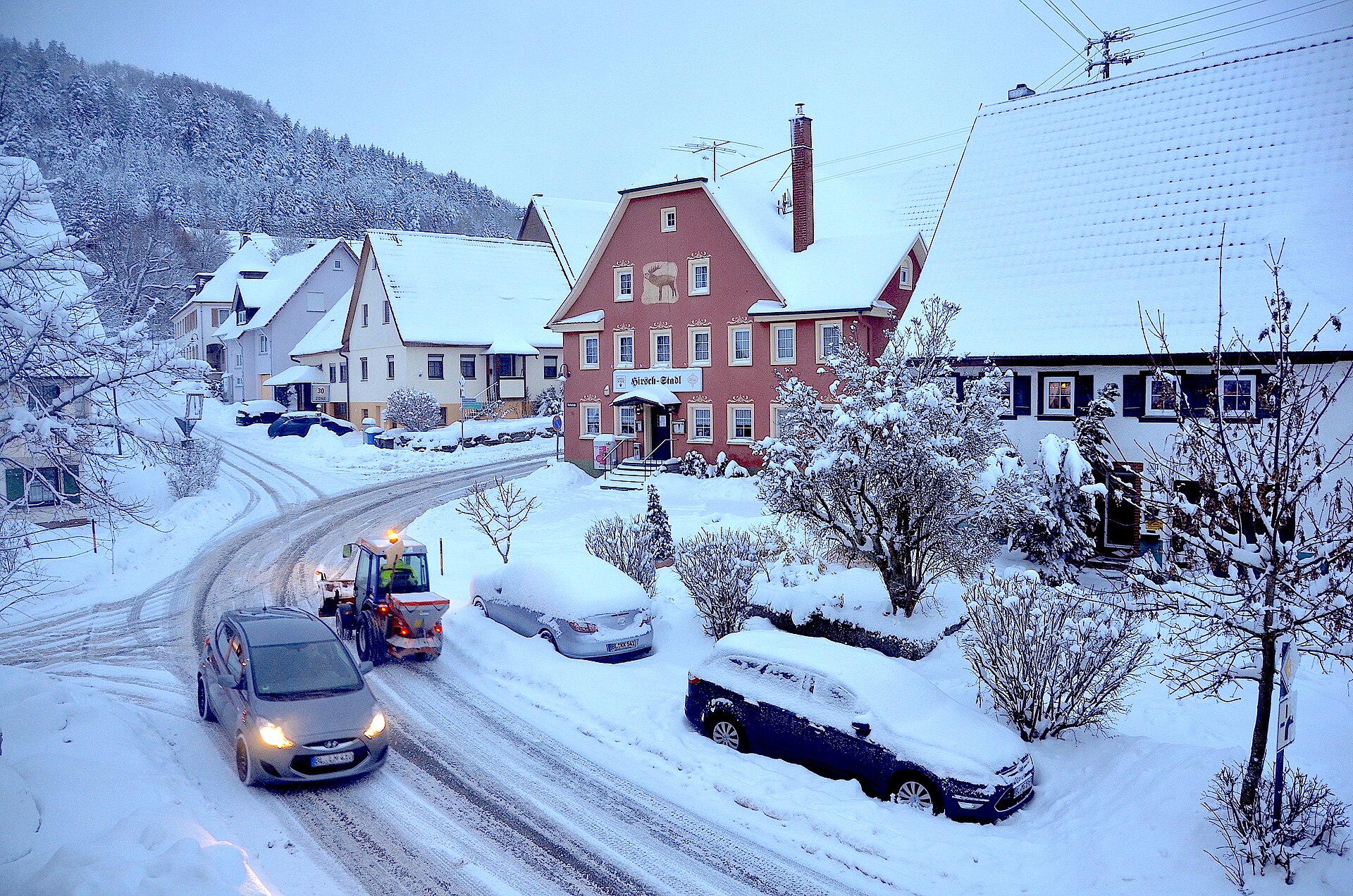

Ask the rental desk what tyres are fitted, whether snow chains are supplied for an Alpine route, and how the vehicle should be returned after a cold-weather trip. Clear all windows and lights, check the forecast and roadworks, and keep a time buffer for a hill or village road. A route that is comfortable on a dry afternoon can become a slow, visibility-limited drive after dark.
Fuel, charging, tolls and parking costs
German stations sell E5, E10, diesel and higher-octane petrol. Prices change by station and time, so use a current comparison or operator app rather than an old national average. An unmanned pump may reserve funds on a card or ask for a PIN. For an EV, save the operator’s app and a roaming backup before leaving a motorway; charging access and payment methods vary between sites.
Ordinary passenger cars do not pay a general German motorway toll. The Toll Collect vehicle rules apply to qualifying goods vehicles and combinations over 3.5 tonnes. Some private tunnels and crossings charge passenger cars separately, so check the route planner if a tunnel is optional. Do not assume a rental van, camper or trailer has the same classification as a small car.
Emergencies and a departure checklist
Call 112 for a life-threatening medical emergency, fire or rescue; call 110 for police. The German Federal Office of Civil Protection emergency guide lists these numbers and the information dispatchers need. Move behind a barrier if safe, turn on hazard lights and wear the reflective vest before leaving a stopped vehicle. For a non-dangerous breakdown, use the number in the rental contract and follow its towing instructions.
Before leaving the depot:
- photograph bodywork, wheels, windscreen and the fuel or battery level;
- save the rental assistance number, cross-border permission and insurance details offline;
- check the route for Autobahn works, Umweltzonen, private tunnels and city parking restrictions;
- confirm the tyre symbol and emergency equipment when winter weather is possible;
- keep the original licence, ID and payment card accessible.
For neighbouring journeys, compare the Austria, Switzerland and Netherlands guides before crossing a border.
Official resources and review date
This page was reviewed on 16 August 2026. Rules, zone boundaries, toll classifications, parking systems and rental terms can change; open the source pages again immediately before driving:
- EU road rules: Germany
- ADAC guidance on foreign licences
- Federal Ministry for the Environment: emissions stickers and low-emission zones
- Autobahn GmbH traffic and works information
- Toll Collect: vehicles subject to toll
- ADAC winter-tyre guidance
- German Federal Office of Civil Protection emergency guide
Frequently Asked Questions
- Can I drive in Germany with a foreign licence?
- EU and EEA licences are recognised for visitors. With another licence, carry the original and check whether its format needs an official translation or IDP; the rental company can apply a stricter policy. The six-month exchange rule concerns people who establish residence, not every tourist's first day.
- Is the German Autobahn always unlimited?
- No. Some sections have no general limit, while signs impose limits around cities, junctions, works, weather risks and congestion. Where no limit is posted, 130 km/h is the advisory speed; it is not permission to drive faster than conditions allow.
- What is a Rettungsgasse?
- It is the rescue lane formed as soon as traffic slows to a queue. Vehicles in the left lane move as far left as safe; vehicles in every other lane move right, leaving the gap between the two sides.
- Do I need an Umweltplakette to enter Germany?
- No. The sticker is needed only when the route enters a marked low-emission zone. Existing zones generally require a green sticker, including for foreign vehicles; obtain it from the registration details before entering the city.
- When are winter tyres required in Germany?
- The duty is situational: ice, packed snow, slush, black ice or frost trigger it, rather than a fixed month. Tyres must carry the Alpine 3PMSF symbol; M+S alone is no longer sufficient for the current rule.
- Do ordinary rental cars pay a German motorway toll?
- There is no general passenger-car motorway toll. Individual private tunnels or crossings can charge, while the nationwide truck toll applies to qualifying goods vehicles over 3.5 tonnes. Check the exact route and the rental vehicle's weight classification.
- Which number should I call after a serious crash?
- Call 112 for fire or medical rescue and 110 for police. Use the rental contract's assistance number for a non-dangerous breakdown; do not occupy an emergency line for routine towing.
Information Sources & Disclaimer
This guide compiles information from the official transport authorities, road operators, government travel information, and automobile associations linked for Germany.
While we strive to keep this information as accurate and up-to-date as possible (last reviewed: August 2026), traffic laws and toll rates can change without notice. We recommend verifying critical information with the local authorities or your car rental agency upon arrival.
Learn more about our Editorial Process →Compare Your Origin and Destination
Use the comparison tool to check driving side, units, documents, and other destination data for your route.