Overview: choose the road before choosing the car
Egypt is possible to explore by rental car, but a successful trip starts with a route decision rather than a vehicle upgrade. Cairo and Giza have dense traffic, frequent lane changes and informal stopping. The Nile Valley has settlements, pedestrians, livestock and slow vehicles close to the carriageway. Long Red Sea and desert stages bring heat, sparse services and security controls. A driver-guide, taxi or rail connection may be the better choice for one leg of the same holiday.
Egypt drives on the right. The Egyptian Ministry of Interior traffic portal publishes the traffic-law summaries and services; its English FAQ says drivers must adapt speed to visibility, weather, traffic and the condition of the road. Treat the numbers below as a starting point for checking signs, not as a target speed.
Keep your passport, original licence, IDP or certified translation, rental agreement, insurance certificate and an emergency contact together. At a checkpoint, answer briefly, keep your hands visible and wait for the officer to tell you which document is needed. Do not photograph a checkpoint, police activity or military site without permission.
Licence, IDP and rental documents
Egypt’s traffic authority describes the validity of foreign international licences issued under the applicable road-traffic convention. The exact document depends on the country that issued your licence. For example, the current UK government road-travel guidance says a UK visitor should carry the 1949 IDP and UK licence and may drive for up to six months. That is useful country-specific evidence, not a universal answer for every nationality.
Before booking, ask the rental branch to confirm in writing:
- the accepted licence language and IDP convention/version;
- the minimum age, licence-held period, deposit and additional-driver rules;
- whether the car may cross a governorate boundary, enter Sinai or use a ferry;
- the registration, insurance and roadside-assistance documents that stay in the car;
- whether desert tracks, unsealed roads and border areas are excluded from the contract.
The legal driving age for a private car is 18, but rental companies commonly set a higher age and may add a young-driver fee. Inspect tyres, spare wheel, lights, windscreen and existing damage at pickup. Photograph the dashboard and the four corners of the car before leaving the branch.
Speed, lights and traffic habits
The Ministry of Interior FAQ gives these scheduled maxima for ordinary cars when conditions allow them:
| Road setting | Ministry schedule | Practical reading |
|---|---|---|
| City | 60 km/h for most vehicles | A lower sign, junction or crowded street controls the speed |
| Residential, industrial or tourist community | 40 km/h | Expect pedestrians, turning vehicles and frequent access points |
| Governorate highway | 80 km/h for passenger cars; 90 km/h for other cars | Confirm the sign and vehicle category |
| Named desert roads | 90 km/h for passenger cars; 100 km/h for other cars | Wind, sand, animals and checkpoints can make a much lower speed appropriate |
The same official guidance requires seat belts and bans hand-held phone use. Use headlights from sunset to sunrise and whenever visibility is poor. The UK travel advice describes drink- or drug-driving as a serious offence with possible fines and imprisonment; the useful travel rule is simple: do not drive after drinking.
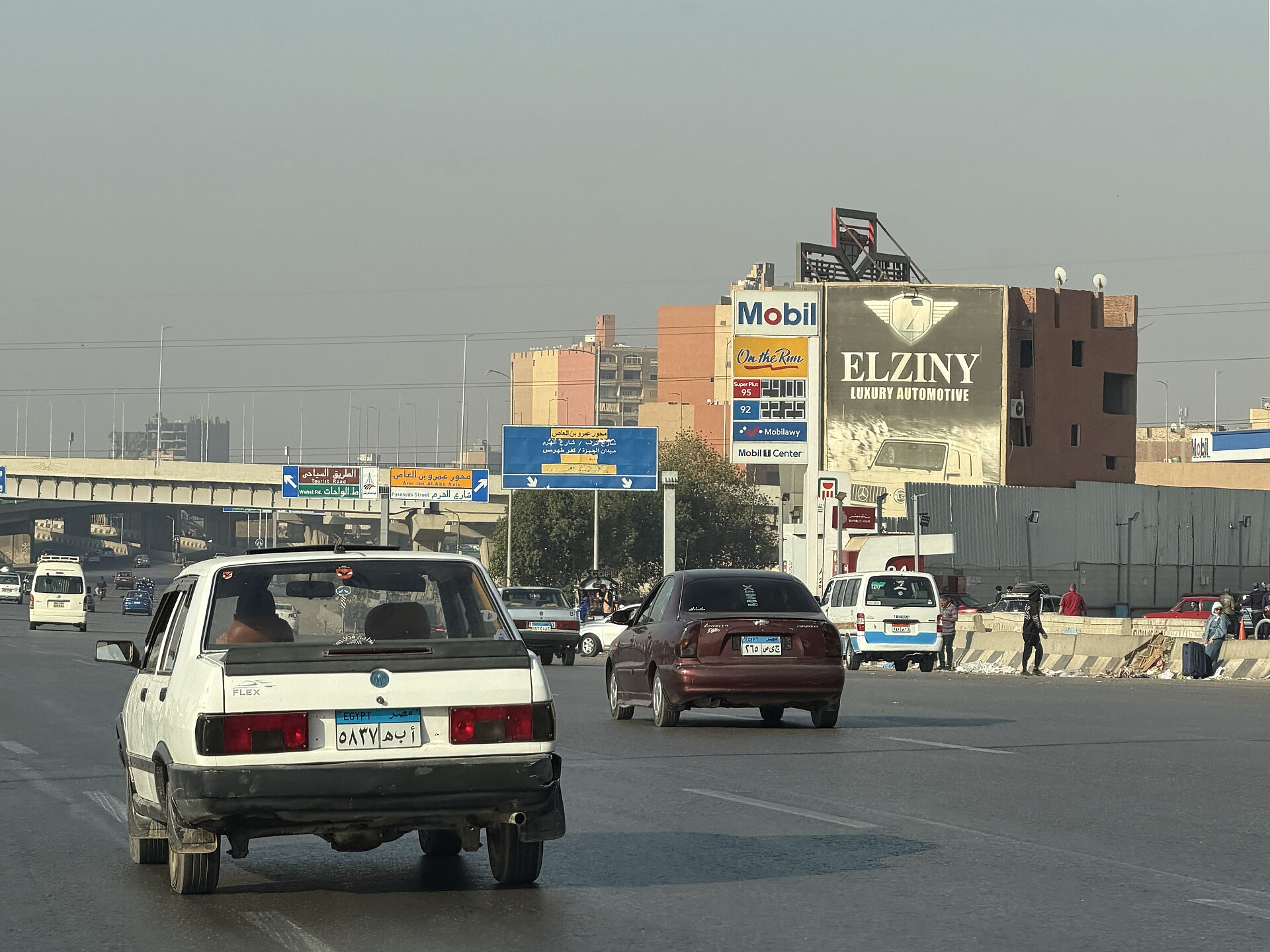
Traffic flow is expressive: horns announce presence, minibuses stop at short notice and road users may merge with little warning. Keep a generous gap, scan mirrors before every lane change and leave a junction when there is room rather than blocking its centre. A navigation app is helpful for orientation, but a local driver or hotel desk is often better at identifying a current closure or a checkpoint-sensitive turn.

Route patterns that work better
Cairo and Giza
Treat Cairo as a base with a transport plan, not as a city to cross casually in a rental car. Airport pickup, the Ring Road, the Pyramids area and central Cairo can each consume more time than the map suggests. If you do drive, travel outside the busiest periods, set the destination before moving and use a hotel or paid lot rather than improvising at the kerb. Keep bags out of sight and do not leave the car unattended with the engine running.
Alexandria and the north coast
The Alexandria corridor is a long intercity stage with urban traffic at both ends. The General Authority for Roads and Bridges describes toll-collection stations on Egypt’s express and premium roads. Carry cash in Egyptian pounds, confirm the route with the rental branch and allow time for roadworks. On the coast, wind, glare and pedestrians near settlements can matter more than the motorway’s nominal speed.
The Nile Valley: Luxor and Aswan
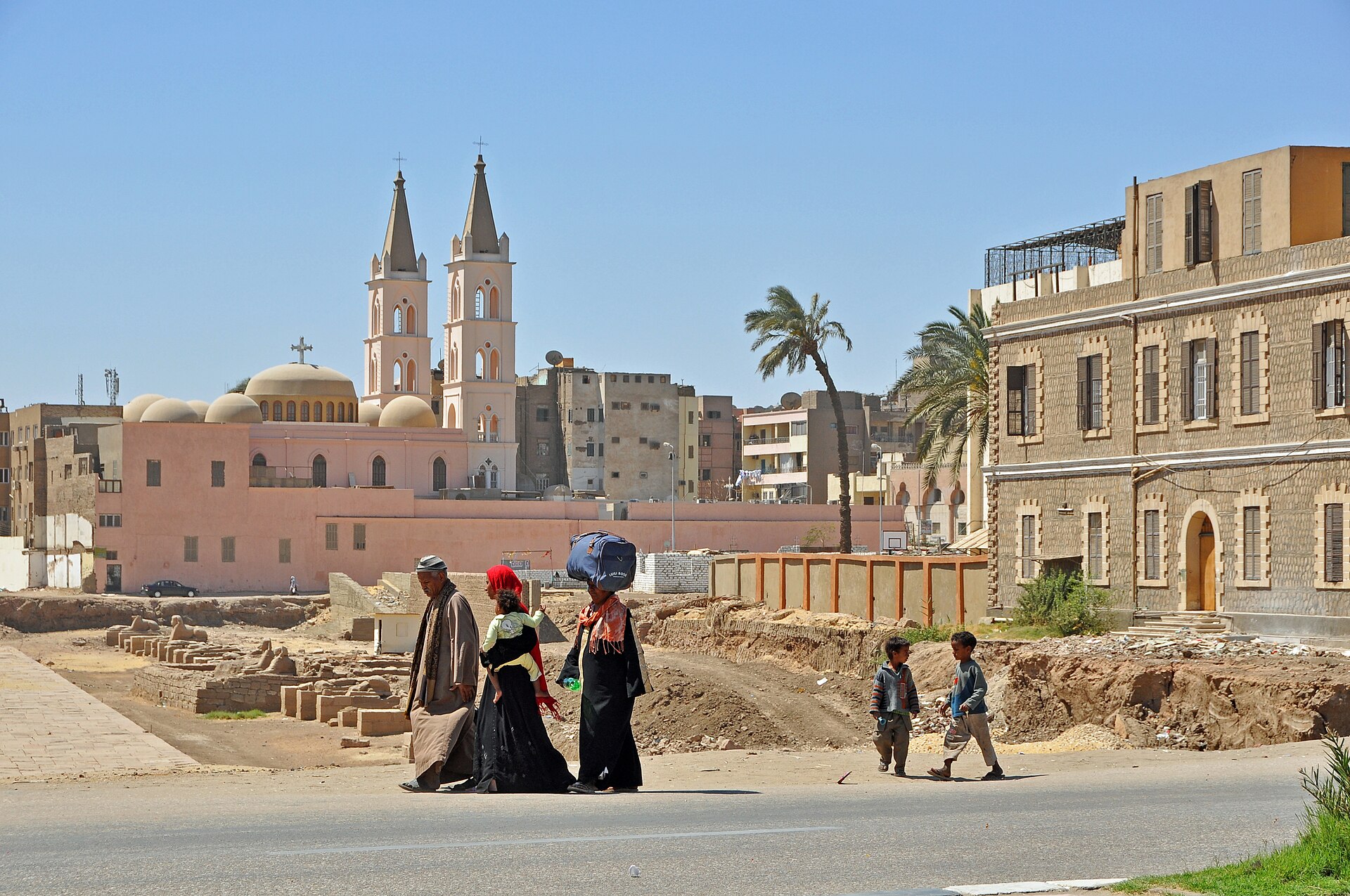
The Cairo–Luxor–Aswan axis rewards daylight travel and short stages. Villages, market activity, agricultural traffic and people walking beside the road mean that a “straight” road is not an invitation to maintain the desert-road maximum. Book accommodation with a defined parking arrangement, keep water in the cabin and refuel before leaving a major town. If the itinerary is built around temples and museums, rail or a licensed driver can remove the least useful driving hours.

Hurghada, Marsa Alam and the Red Sea
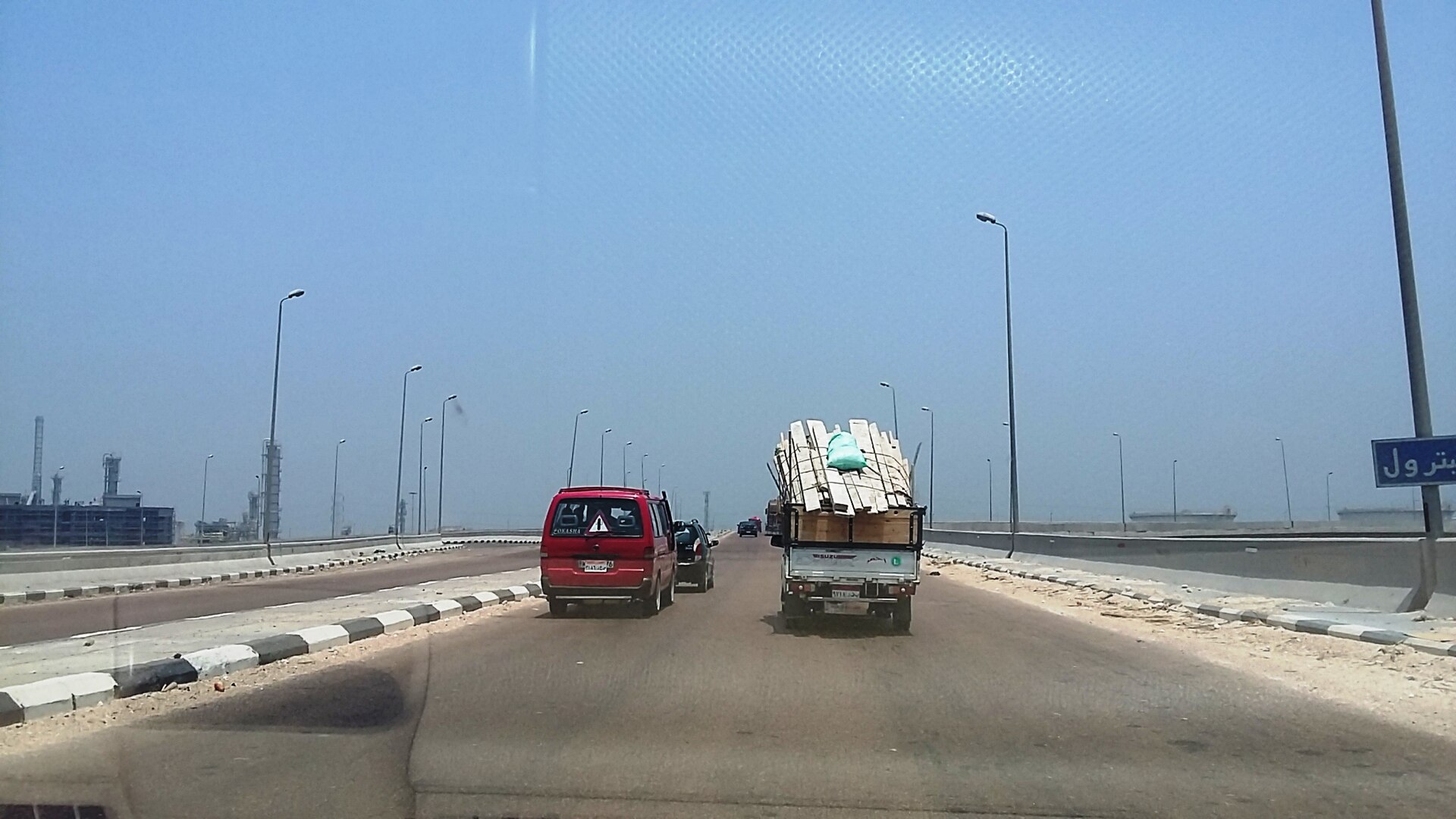
Resort corridors can feel calmer than Cairo, but they still include long distances, trucks, construction and sudden turns into hotels or service roads. The current regional travel advice distinguishes established Red Sea resort areas from higher-risk parts of the peninsula and border regions. Check the exact route, start with a full tank and avoid assuming that a resort transfer road is suitable for an unplanned night drive.

Desert and Sinai planning
Do not turn a map line into a self-drive promise. The current FCDO regional advice says parts of North Sinai, northern South Sinai, the Western Desert and border areas carry “against all” or “against all but essential” travel warnings. It also notes that some Western Desert trips require advance permits and an official guide, with limited phone reception and poor medical facilities. Your own government’s advice may differ, so read it before booking and again before departure.
If a permitted desert journey goes ahead, use the licensed operator named in the permit, share the itinerary, carry more water than the route estimate and keep a paper contact list. Confirm where the next fuel stop is and what happens if the road closes. Never leave the marked route to “save time”, and never continue after a driver, guide or checkpoint tells you to turn back.
Parking, fuel, tolls and vehicle choice
City parking is often arranged through the hotel, a staffed lot or an attraction entrance. Ask whether the fee is official, keep valuables with you and avoid blocking a footway or gate. At archaeological sites, follow the site’s parking instructions rather than copying cars stopped on the shoulder.
Fuel availability is strongest around cities and major corridors. On a desert or oasis leg, fill up early, carry drinking water and keep small notes for tolls or attendants. Egypt’s road authority lists toll stations, but prices, payment methods and lane arrangements can change. Confirm the current details with the rental company and the road authority before departure.
A normal sedan is enough for paved Cairo, Nile Valley and resort corridors when the rental contract allows them. A 4WD does not remove the need for a permit, guide, daylight or recovery plan. Electric-car charging should be treated as a route-specific question: ask the rental company for the exact connector, reliable stations and backup plan before accepting an EV.
If something goes wrong
For an immediate threat or collision, move people away from traffic if it is safe, call the appropriate emergency service and follow the operator’s instructions. Save the rental company’s assistance number before leaving the branch. Photograph the road number, signs, vehicle positions and damage from a safe place; do not argue at the roadside or sign a repair settlement before contacting the rental company.
Save these numbers:
| Service | Number |
|---|---|
| Emergency police | 122 |
| Ambulance | 123 |
| Fire | 180 |
| Tourist police | 126 |
| Traffic police | 128 |
The Egyptian Ministry of Interior traffic page also publishes a motorway-accident contact. Numbers and response arrangements can change, so save the linked official page offline before a remote trip.
Before departure, check:
- original licence, correct IDP or translation, passport, rental agreement and insurance;
- the written route permission for Sinai, desert areas or any border-adjacent road;
- fuel, water, spare wheel, tyres, phone power and an offline map;
- daylight arrival and a legal parking arrangement at every overnight stop;
- your government’s current Egypt travel advice and the rental company’s restriction list.
Sources and review date
This page was reviewed on 17 August 2026. Licence and traffic-rule references use the Egyptian Ministry of Interior traffic portal, its foreign-licence provisions, English traffic FAQ and general road rules. Road-network context uses the General Authority for Roads and Bridges. Safety and regional route checks use the UK FCDO Egypt advice, its road-travel section and regional-risks map. Emergency numbers use the Ministry of Interior traffic page and the official Minya government emergency list. Regulations, security advice, permits, roadworks and rental terms can change; check the named authority and your own government’s advice for the actual travel date.
Related destinations
Frequently Asked Questions
- Can I drive in Egypt with my home-country licence?
- Bring the original licence and the correct international driving permit or translation for the licence-issuing country. Egypt's traffic portal recognises foreign international licences issued under the applicable convention, while country-specific advice can require a particular IDP version. Ask the rental branch before paying and carry both documents.
- Is an International Driving Permit required in Egypt?
- For many visitors, yes, and the version matters. The Egyptian traffic authority publishes rules for foreign international licences; UK guidance, for example, says UK visitors need the 1949 IDP with their UK licence for up to six months. Check your own authority and the rental company's written requirements.
- Should I rent a car in Cairo?
- Cairo and Giza are usually easier with a licensed driver, taxi or ride-hailing service. If you self-drive, avoid an arrival-day rush, leave extra time for the Ring Road and confirm the hotel has a legal parking arrangement. A driver-guide can also handle route decisions at checkpoints.
- What speed limits apply in Egypt?
- The Ministry of Interior schedule lists 60 km/h in cities, 40 km/h in residential, industrial and tourist communities, 80-90 km/h on governorate highways, and 90-100 km/h on named desert roads depending on the vehicle. Posted signs, roadworks, visibility and traffic conditions take priority.
- Can I drive across the Western Desert or Sinai?
- Some routes require permits, an official guide or both, and travel advice changes by region. The current FCDO advice identifies restricted areas in North Sinai, parts of South Sinai, the Western Desert and border zones. Check your own government's advice and the Egyptian authorities before booking a desert leg.
- Is it safe to drive at night in Egypt?
- Avoid night driving outside main cities and established resorts. Official travel advice cites variable road conditions, dangerous driving and weak enforcement; darkness also makes unlit vehicles, pedestrians and animals harder to see. Start long intercity stages early and keep a daylight buffer.
- How should I plan fuel and tolls?
- Fuel stations are easier to find near cities and major corridors than on oasis roads. Fill up before a long desert section, carry water and small Egyptian-pound notes, and ask the rental company which toll roads and payment methods your route uses. The roads authority lists toll-collection stations, but charges and operations can change.
- Which emergency numbers should I save?
- Save 122 for emergency police, 123 for ambulance, 180 for fire, 126 for tourist police and 128 for traffic police. The Ministry of Interior also lists a motorway-accident number. Call the rental company's assistance line after securing people and the vehicle, and keep the incident reference.
Information Sources & Disclaimer
This guide compiles information from the official transport authorities, road operators, government travel information, and automobile associations linked for Egypt.
While we strive to keep this information as accurate and up-to-date as possible (last reviewed: August 2026), traffic laws and toll rates can change without notice. We recommend verifying critical information with the local authorities or your car rental agency upon arrival.
Learn more about our Editorial Process →Compare Your Origin and Destination
Use the comparison tool to check driving side, units, documents, and other destination data for your route.