Overview: three very different kinds of driving
Morocco rewards a route that separates city time from open-road time. The autoroutes connect Tangier, Rabat, Casablanca, Marrakech, Fez and other major centres with predictable toll booths and service areas. Around a medina, the useful vehicle is often the one left in a legal car park. Across the High Atlas, the road becomes a sequence of blind bends, villages, heavy vehicles and weather decisions. South of the mountains, the paved approach to the desert can be long and quiet, while the dunes themselves belong to a guided or contract-approved excursion.
Morocco drives on the right. Keep the original licence, passport, rental agreement and insurance details together. Photograph the registration plate, fuel level, wheels, windscreen and existing marks before leaving the branch. Download the route and the rental assistance number before entering a valley where mobile coverage is intermittent.
Licence, IDP and rental documents
Morocco’s NARSA service guidance says foreign nationals can drive with a valid foreign licence during a temporary stay, for up to one year in the context described by the agency. That does not turn every licence into a universally accepted rental document. The licence must be valid for the vehicle, legible to the authorities and recognised under the relevant convention or bilateral arrangement.
An IDP is therefore conditional rather than a blanket rule. The UK government’s Morocco advice requires a 1968 IDP with a UK licence, and its IDP table says to check both the country rule and the car-hire company. A licence printed in a non-Latin script, a country-specific convention issue or a branch’s insurance policy can make an IDP or certified translation necessary. Carry the original licence as well: an IDP is a translation, not a replacement.
At the desk, confirm the following in writing:
- the named driver’s minimum age, licence-held period and additional-driver rules;
- whether the vehicle is allowed on mountain roads, gravel, pistes, beaches or across an international border;
- the excess, glass and tyre cover, reporting process and roadside number;
- the registration document and insurance certificate that must stay in the vehicle; and
- the fuel or battery return rule and any one-way drop-off charge.
The legal driving age for a car is 18, but rental branches commonly set a higher minimum and may charge a young-driver fee. A contract can also exclude underside damage, sand, unpaved roads or unauthorised border crossings even when the road itself is open.
Speed, lights and everyday road rules
The Moroccan road-safety agency NARSA lists 20, 40 or 60 km/h in built-up areas, usually 80 km/h on national roads with some sections allowing 100 km/h, and 120 km/h on autoroutes. Use those as planning ceilings, then follow the sign in front of you. Villages, schools, road works, rain, dust and a police direction can reduce the safe or legal speed without warning.
NARSA describes seat-belt use as a legal obligation for the driver and every passenger. The agency’s seat-belt guidance also stresses a correctly fitted child restraint. The FCDO road-safety advice treats any alcohol detected while driving as a serious offence, so the useful rule for a visitor is zero alcohol. Keep the phone out of your hand, use a mount before moving and leave extra space for scooters, pedestrians, livestock and vehicles that stop without much notice.
At an unmarked junction, slow down and read the signs rather than assuming that the traffic pattern will match the one at the previous intersection. Enter a roundabout only after checking the lane markings and priority signs. On a two-lane road, do not copy an overtake on a blind bend or crest. Horns are common in cities, but a horn is not a substitute for a safe gap.
Autoroutes, toll classes and Jawaz
The Autoroutes du Maroc tariff table is route-specific. It lists a Casablanca–Rabat class-1 passage at 25 MAD and shows why a remembered Casablanca–Marrakech estimate is not a reliable budget for every itinerary. Check the origin, exit and date in the current table instead of copying an old range into a booking plan.
ADM classifies vehicles using measurable features at the front axle and the number of axles. Its vehicle-class page puts a two-axle vehicle up to 1.30 m at class 1; taller two-axle vehicles move to class 2. Ask the rental branch which class matches the actual vehicle, especially when the booking is for a tall van or SUV.
The ADM payment page lists Jawaz, bank cards, the network card and cash. A rental car may already carry a tag, or the branch may bill tolls later. Photograph the tag or note the payment lane, keep the receipt and ask how an unpaid passage is reconciled at return. ADM Trafic’s live map shows incidents, closed sections, rest areas, parking and breakdown points. The motorway is the calmer choice for a long city-to-city movement, but it does not remove the need to check the exit and the final urban approach.
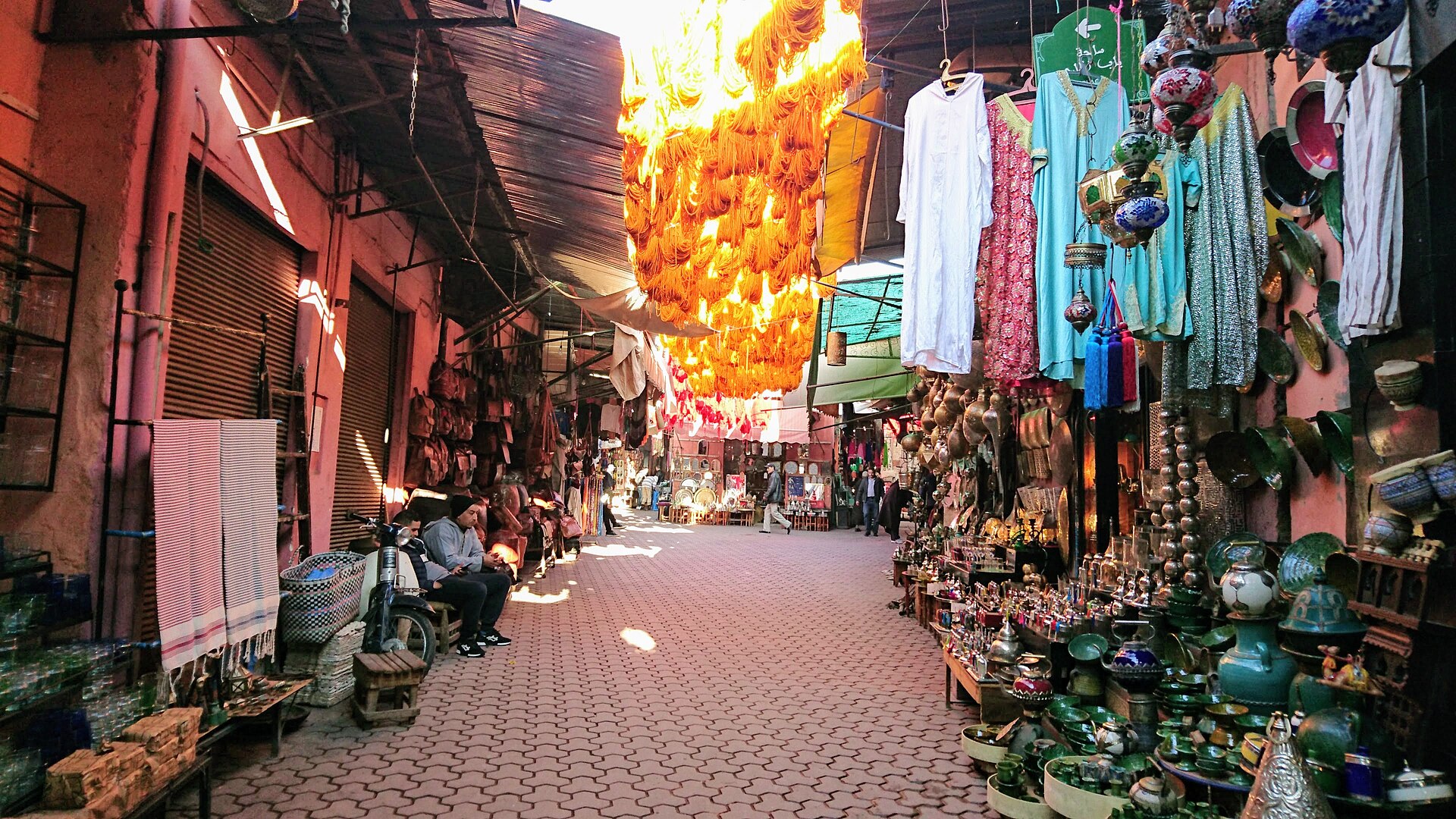

Cities and medinas: park before the last kilometre
Casablanca, Marrakech and Fez all have different local parking arrangements. Treat a painted kerb, an unofficial attendant or a hotel map pin as a prompt to ask questions, not as proof that parking is legal. Use a signed public or guarded lot, remove bags and documents from view, and keep the receipt or written price when one is issued.
Medina lanes can be pedestrian-only, too narrow for a normal car or restricted at particular times. Ask the riad or hotel for the nearest legal drop-off point and whether a porter will meet you there. If the accommodation sits inside a restricted area, follow its written access instructions instead of following navigation into a gate. The few extra minutes on foot are easier than turning a rental car around among scooters and pedestrians.
High Atlas and Dades: a daylight road decision
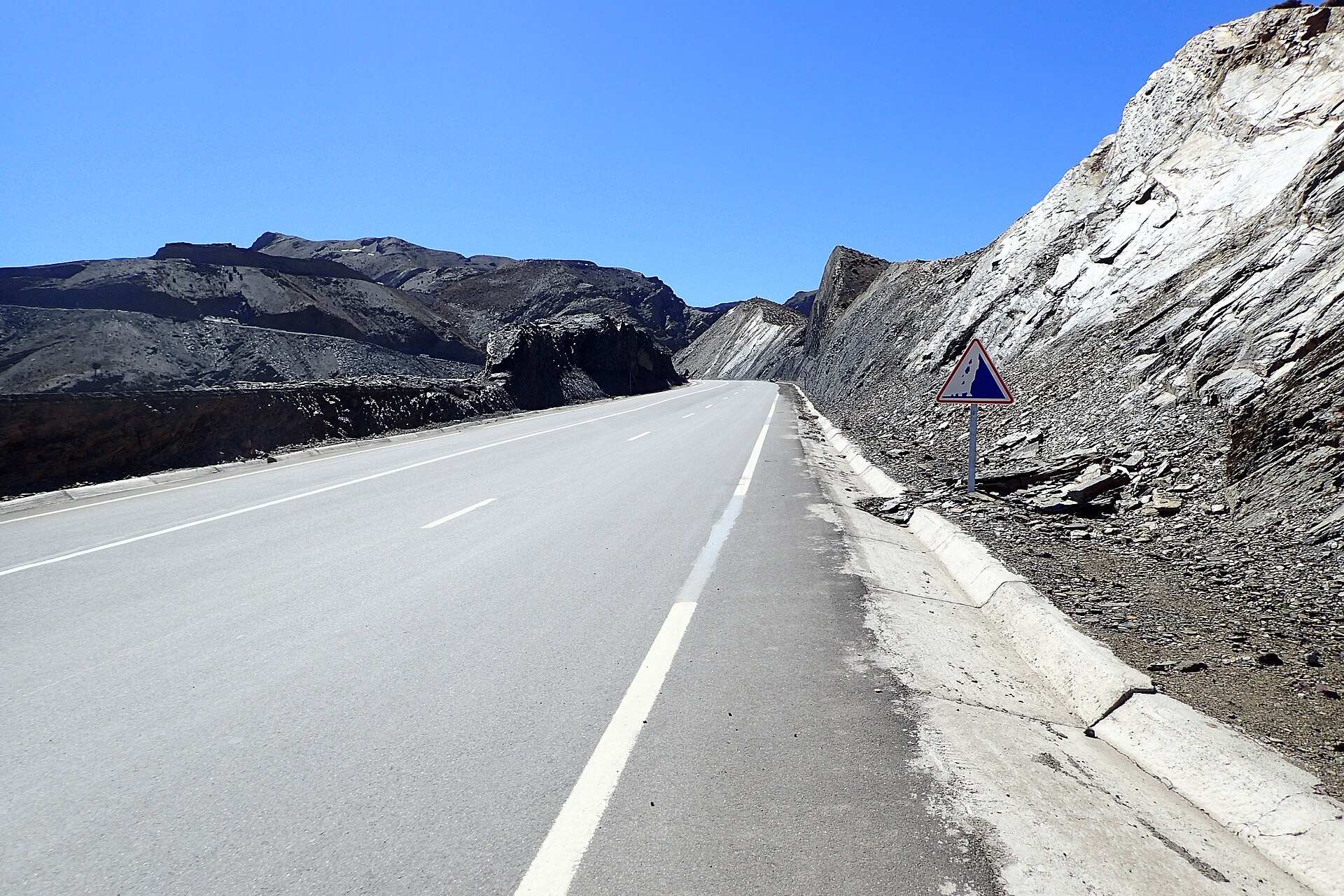
The N9 over Tizi n’Tichka and the roads towards Ouarzazate and the Dades valley are scenic working roads, not viewpoint circuits. Leave Marrakech with daylight in hand, fill the tank, check the tyres and washer fluid, and keep a margin for a lorry, livestock, road works or a stop behind a bend. Use a signed pull-off rather than the carriageway for photographs.
The official tourism board describes Morocco as a country of Atlantic and Mediterranean coasts, Rif and Atlas ranges, plains and desert. Its climate guidance notes that the Atlas creates several climatic influences and recommends spring and autumn for the southern desert. For a live pass decision, use ADM Trafic for autoroutes, then check local road notices and ask the next accommodation about the mountain or regional road itself. Snow, rain and rockfall can change the plan after a clear forecast in Marrakech.
_kz01.jpg)
The paved approach to the Sahara and the off-road boundary
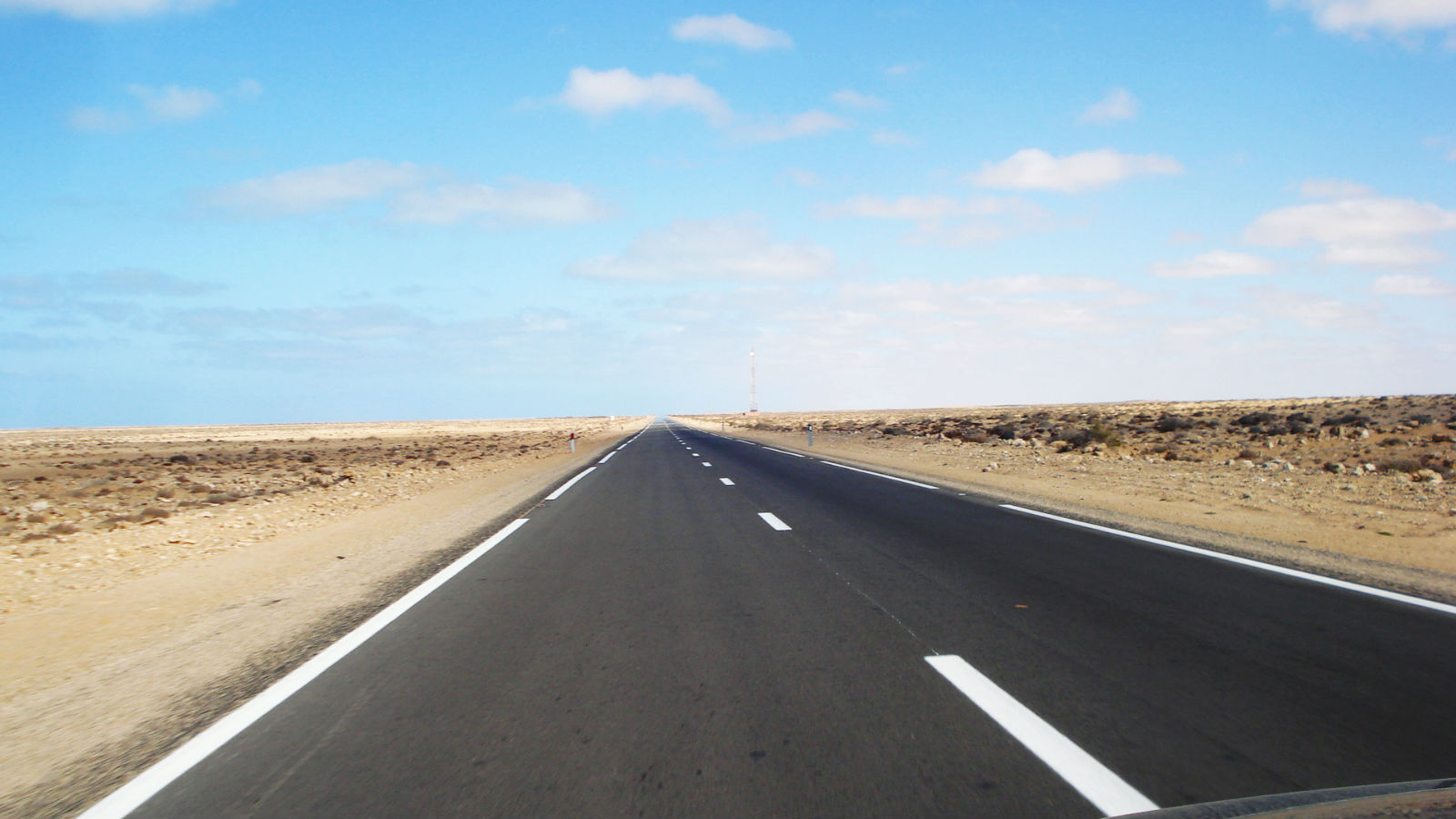
The road to Merzouga, Zagora or another desert base is a normal route-planning problem until the surface changes. Fill up before the long empty stretch, carry water and a charged phone, and save the accommodation location offline. A paved road to a town does not authorise a rental car to cross dunes or follow an unmarked piste.
Read the contract for “off-road”, underside, sand and recovery exclusions. For a camp transfer or dune circuit, use the operator’s vehicle and driver when that is the stated arrangement. If you choose to take a higher-clearance rental on a rough track, get written permission and insurance confirmation first. Stop before a surface that the contract excludes; being close to a camp is not a recovery plan.

Fuel, breakdowns and collisions
Main corridors have regular fuel stations, while remote mountain and desert legs need an earlier refill than the map suggests. Check whether the cap is marked sans plomb or gasoil, keep a little cash for a rural stop and record the return fuel level. Charging availability and payment can change, so an EV itinerary should be built around named, currently operating chargers rather than a country-wide assumption.
If the car breaks down, move it out of the lane when safe, use hazard lights and call the rental company’s assistance number. On an autoroute, ADM publishes a motorway assistance centre on 5050 and shows breakdown points on ADM Trafic. Do not accept an unrecorded repair that could invalidate the contract; send the branch photographs and the location pin first.
After a collision, protect people from traffic, photograph the road and signs, and complete the insurer’s constat amiable form when appropriate. The Morocco road advice warns that a fatal collision can lead to detention while responsibility is investigated. Call the police or gendarmerie, keep the rental and insurance documents available, and do not leave the country in a different vehicle without resolving the record.
Emergency numbers are published differently by official sources. The Japanese Embassy in Morocco lists 19 for urban police, 177 for the Royal Gendarmerie and 15 for ambulance or fire. Visit Casablanca also lists 112 from a mobile. The UK FCDO help page currently prints 190 for police and 150 for ambulance or fire. Save all of these with the rental number, then give the operator the road number, direction and nearest settlement.
Official resources and review date
This page was reviewed on 17 August 2026. Licence recognition uses NARSA’s foreign-licence service, the UK Morocco road advice and the UK IDP table. Speed and seat-belt guidance use NARSA road safety and its seat-belt guidance. Toll classes, route prices, payment options and live motorway events use ADM’s tariff table, vehicle classes, payment page and ADM Trafic. Landscape and seasonal context use the Moroccan National Tourist Office geography page and climate guidance. Emergency numbers use the Japanese Embassy, Visit Casablanca and the UK FCDO help page. Recheck signs, tolls, road status, weather, security advice and rental exclusions for the actual travel date.
Related Morocco guides
Frequently Asked Questions
- Can I drive in Morocco with my home-country licence?
- NARSA says a foreign national may drive during a temporary stay with a valid foreign licence, subject to the applicable recognition rules. Bring the original licence and passport. An IDP can be required by the issuing-country rules, an unreadable licence script or the rental branch, so check the exact contract before payment.
- Is an International Driving Permit always required in Morocco?
- No single answer covers every nationality. The UK government, for example, requires a 1968 IDP with a UK licence, while Morocco's NARSA guidance describes temporary use of a valid foreign licence. Treat an IDP as a practical supplement and follow the rule for your issuing country and rental company.
- What speed limits should I plan around?
- NARSA lists 20, 40 or 60 km/h in built-up areas, usually 80 km/h on national roads with some 100 km/h sections, and 120 km/h on autoroutes. A posted sign, work zone, weather condition or police instruction always takes priority.
- How do Morocco's autoroute tolls work?
- ADM publishes route-by-route tariffs for vehicle classes 1 to 3. Payment is available through Jawaz, bank cards, a network card or cash. Use ADM's current tariff and traffic pages for the exact route, and ask the rental branch whether a Jawaz tag is fitted and how the final charge is settled.
- Can I drive into a Marrakech or Fez medina?
- Usually plan to leave the car outside the old city. Access can be narrow, pedestrianised or time-controlled, and a hotel pin is not permission to enter. Use a signed or confirmed car park, ask the accommodation for its unloading point, then walk the last stretch.
- Is the Tizi n'Tichka or Dades route suitable for a normal rental car?
- The paved N9 and the main Dades approach can be driven in a normal car when the road is open and dry, but the bends, rockfall, slow vehicles and limited stopping space demand daylight and a conservative pace. Unpaved tracks and dune excursions are a separate contract question.
- Do I need a 4WD for the Sahara?
- A normal car is adequate for the paved approach to towns such as Merzouga. Dunes, piste tracks and the final camp transfer are different: use a permitted vehicle and a local operator, and confirm that the rental contract and insurance do not exclude the surface.
- Where can I check road and toll conditions before leaving?
- Use ADM Trafic for live autoroute incidents, closures and service points. For mountain and regional roads, check the road operator or local authority and ask the accommodation on the morning of departure. A route that was open yesterday can change after rain, snow or rockfall.
- Which emergency number should I call after a collision?
- Save 112 for a mobile emergency, 19 for urban police, 177 for the Royal Gendarmerie outside cities and on rural routes, and 15 or 150 for fire and ambulance. Numbering differs across official travel pages, so tell the operator the road number, direction and nearest town, then call the rental assistance line.
Information Sources & Disclaimer
This guide compiles information from the official transport authorities, road operators, government travel information, and automobile associations linked for Morocco.
While we strive to keep this information as accurate and up-to-date as possible (last reviewed: August 2026), traffic laws and toll rates can change without notice. We recommend verifying critical information with the local authorities or your car rental agency upon arrival.
Learn more about our Editorial Process →Compare Your Origin and Destination
Use the comparison tool to check driving side, units, documents, and other destination data for your route.