Decide whether a car helps
Hong Kong is a left-driving city with an unusually compact road network. The MTR, buses, trams, ferries and taxis reach most places a visitor wants to see, often more predictably than a car stuck on an urban approach. A rental becomes easier to justify when the plan includes several New Territories stops, a long day on Lantau, or luggage that makes transfers awkward. It does not remove the need to plan parking.
The difficult parts are specific: lane changes before tunnel mouths, steep and narrow roads, queues at busy interchanges, and a shortage of legal parking. Read the next section before booking a car, then build the route around confirmed parking and road access rather than adding a car for the whole stay.

Licence and documents
The Transport Department’s visitor-driver rules allow a visitor to use a valid overseas full licence or an external IDP for up to 12 months after the latest entry, as long as the licence covers the vehicle class and the driver meets the age requirement. That means an IDP is not a blanket legal requirement for every visitor. The rental desk may impose a stricter document rule, so ask before arrival.
Carry:
- your passport and the original home licence;
- an IDP if your licence is not readily accepted, or if the rental contract asks for one;
- a certified Chinese or English translation when the Transport Department requires it for a document in another language;
- the rental agreement, insurance details and vehicle documents.
The minimum age for a private car is 18, but rental companies often set a higher age or add a young-driver fee. A stay that turns into residence, or driving beyond the visitor period, requires a Hong Kong licence application.
Rules that matter on the road
Hong Kong drives on the left. The Road Users’ Code is practical guidance; traffic law takes precedence. In day-to-day driving:
- wear a fitted seat belt in every front or rear seat where one is provided;
- do not hold or operate a mobile phone while the vehicle is moving; use a hands-free setup only when it can be used safely;
- from 1 November 2025, a child under 8 or shorter than 1.35 m in a private car needs an approved child restraint;
- from 25 January 2026, no more than two devices may be positioned in front of the driver, and a visible device screen may not exceed a 19 cm diagonal;
- keep yellow box junctions clear unless the exit is available, and follow tram, bus-lane and lane-direction signs;
- the prescribed blood-alcohol limit is 50 mg per 100 ml of blood (22 micrograms per 100 ml of breath).
At a roundabout, watch the lane arrows and give way as the signs indicate. Chinese and English appear together on most major signs, but the next exit can arrive quickly after a tunnel, so choose the lane early.
Speed limits
The Road Users’ Code says the general maximum is 50 km/h unless a sign sets another limit. Faster roads commonly display 70, 80, 100 or 110 km/h limits. The sign, not a broad “urban” or “rural” label, controls the road you are on. Weather, roadworks and vehicle type can require a lower safe speed.
Tunnels, bridges and HKeToll
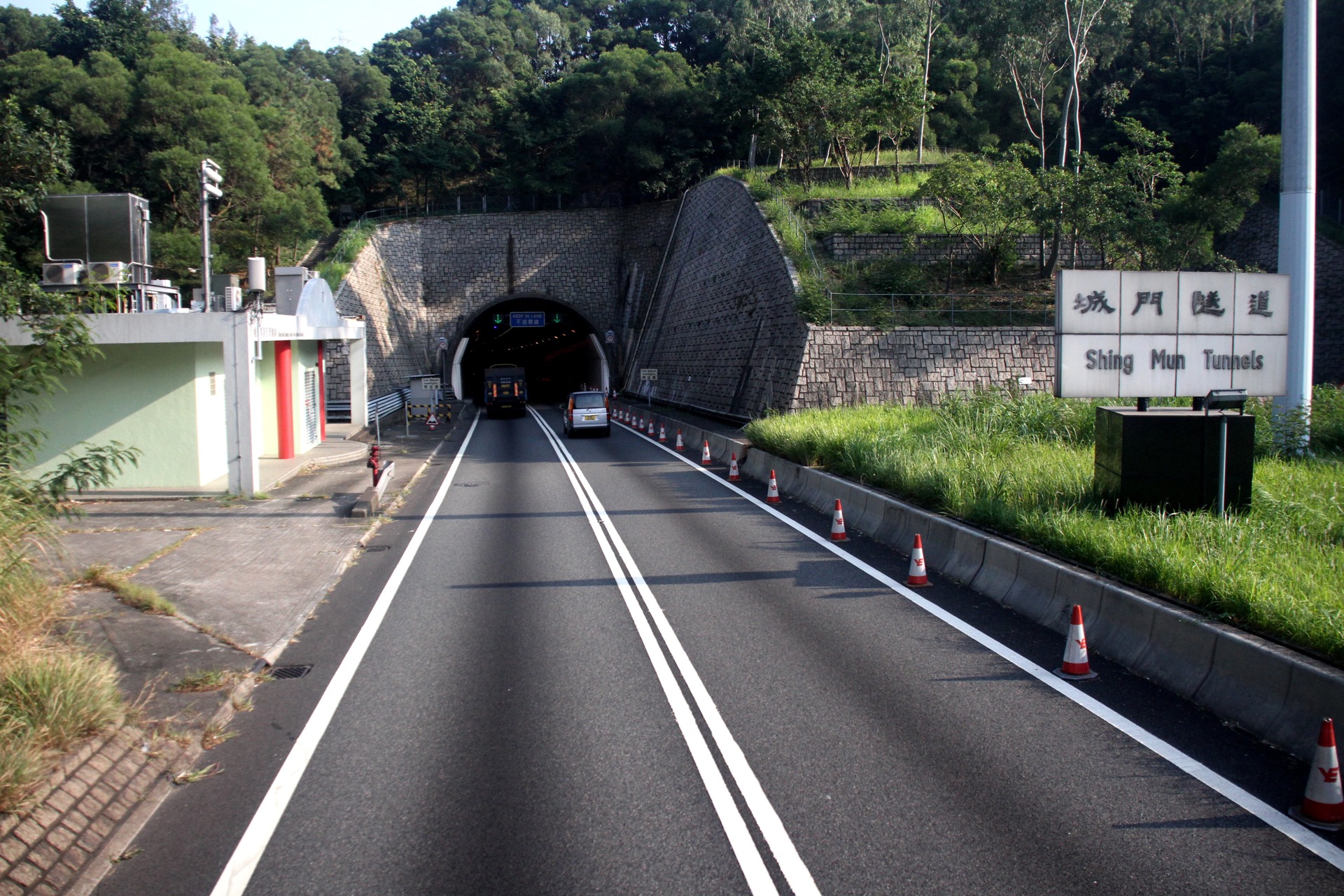
Government tolled tunnels and the Tsing Sha control area use HKeToll, a free-flow system that reads a vehicle tag or number plate. There is no booth at which a visitor can stop and choose cash. The registered owner is responsible for the charge and must pay within 14 business days; a rental company may pass the charge and its administration fee to you.
The Hong Kong Government announced that Autotoll ETC and VGoPAY would stop operating on 16 March 2026. Treat an old rental-company note about Autotoll as out of date and ask how the car is registered for HKeToll. For current tunnel and control-area charges, use the Transport Department’s HKeToll information rather than a static price list.

Parking and the last kilometre
Parking is the part of a Hong Kong road trip that most often breaks an otherwise good plan. Use the Transport Department’s metered-parking information and government car-park list to check location and operating hours. HKeMeter and HKeMobility can help with meter payment and availability, but a free space is not guaranteed.
Do not wait on a yellow line, a bus stop, a yellow box or a narrow village road. In Central, Wan Chai, Tsim Sha Tsui and around major trailheads, reserve or identify a legal space before setting out. A “quick stop” can become a ticket or a blocked lane very quickly.
Lantau, the New Territories and route planning
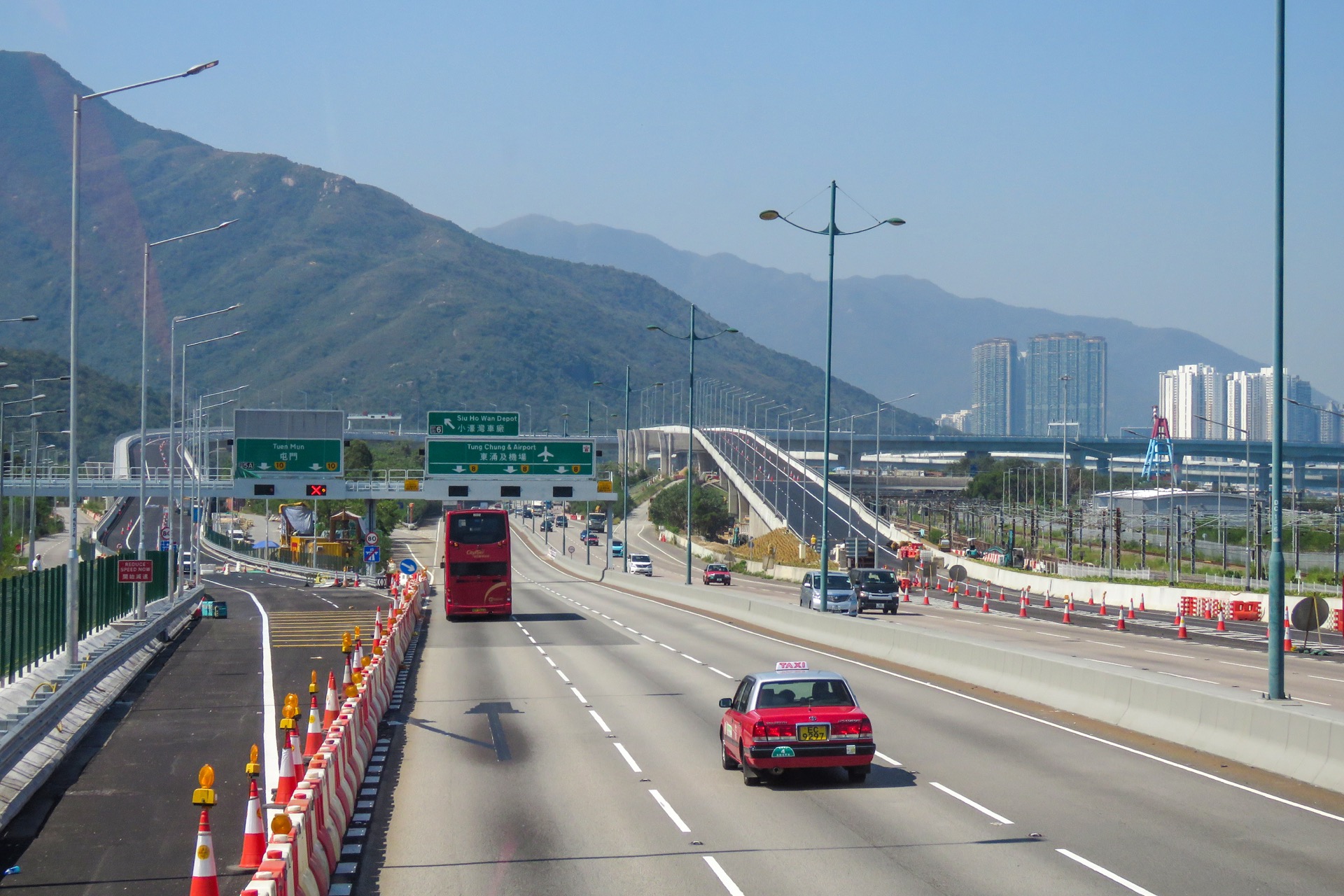
North Lantau Highway, the Tsing Ma connection and the roads near the airport are signed for several destinations at each interchange. Decide early whether you need the airport, Tung Chung, the HZMB Hong Kong Port or another Lantau route; the interchange leaves little time for a last-second lane change.
South Lantau is different. South Lantau Road and parts of Tung Chung Road are closed roads, so a visitor needs a Lantau Closed Road Permit unless an exemption applies. The current scheme includes a weekday access window, a daily private-car quota and a permit fee; confirm those details on GovHK’s Lantau permit page before planning a beach or village drive.
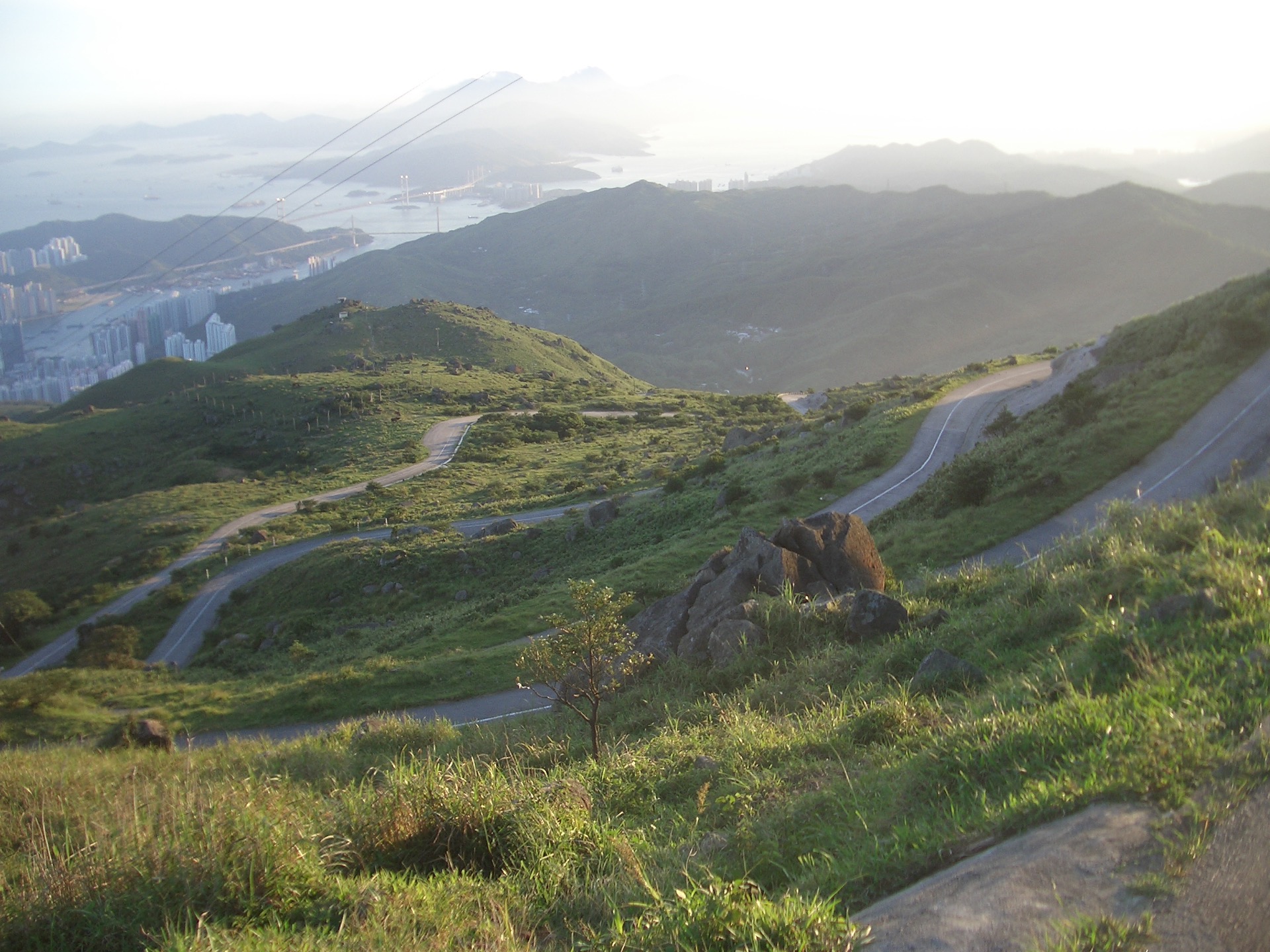
New Territories mountain roads can be narrow, damp and poorly suited to a rushed schedule. A map may show a short distance while the climb, hairpins and trailhead parking take much longer. Leave room to turn around; do not stop in passing places.
.jpg)
Weather and roadside problems
The Hong Kong Observatory places the usual tropical-cyclone season in May to November. Before a mountain or coastal drive, check its tropical-cyclone precautions, rainstorm warnings and local road notices. When strong wind, flooding, poor visibility or a high cyclone signal is forecast, postpone the route. If a warning arrives while driving, leave exposed roads and low-lying areas and park safely; do not try to finish a scenic loop.
For a breakdown, use hazard lights and move to a safe place only if you can do so without crossing live traffic. Call the rental company’s roadside number. For police, fire or ambulance call 999; people with hearing or speech impairment can use the 992 SMS emergency service described by GovHK.
Fuel, EVs and rental contracts
Confirm the fuel type at collection and photograph existing damage. Ask whether the vehicle has an HKeToll tag, how tunnel charges are reconciled, and whether the contract excludes South Lantau, cross-boundary travel, ferries or unsealed roads. For an EV, check the operator’s charging map and return-charge rule; do not assume a charger near a rural attraction will be available.
Rental desks may require an IDP even where the Transport Department accepts a home licence. They can also set age, deposit and insurance rules above the legal minimum. Read those conditions before choosing a route.
Cross-border driving
The GovHK cross-boundary guidance treats a private-car journey to or from Guangdong as a permit and quota matter. You may need a Hong Kong Closed Road Permit, mainland driving and vehicle documents, and approval for the selected boundary control point. A Hong Kong rental car and an ordinary visitor licence do not automatically qualify. For most trips, use a cross-boundary coach, train or the HZMB shuttle instead.
Sources and review date
Key checks for this page:
- Transport Department: overseas licences and visitor driving
- Transport Department: Road Users’ Code
- Transport Department: mobile-device rules
- Transport Department: child restraints
- HKeToll introduction
- Transport Department: parking meters
- Hong Kong Observatory: tropical-cyclone precautions
- GovHK: emergency services
Reviewed 17 August 2026. Rules, toll arrangements, permits and rental conditions can change; the linked government pages take priority over this summary.
Related destinations
Frequently Asked Questions
- Can a visitor drive in Hong Kong with a home licence?
- A visitor may drive for up to 12 months after the latest entry with a valid overseas full licence or an external International Driving Permit (IDP), provided the vehicle class and age requirements match. A rental company may still ask for an IDP or an official translation, so check its contract before paying.
- Does Hong Kong drive on the left?
- Yes. Keep left, expect right-hand-drive rental cars, and take extra care at roundabouts, tunnel approaches and multi-lane flyovers.
- Is renting a car worthwhile in Hong Kong?
- Usually not for a city break. The MTR, buses, trams, ferries and taxis cover the usual visitor routes. A car is more useful for a carefully planned New Territories or Lantau itinerary, and parking still needs to be arranged in advance.
- What are the default speed limits in Hong Kong?
- The general limit is 50 km/h unless a sign says otherwise. Faster roads use signed limits such as 70, 80, 100 or 110 km/h; follow the sign for the lane and vehicle you are driving.
- How do tunnel tolls work now?
- Government tolled tunnels and the Tsing Sha control area use HKeToll free-flow collection through a vehicle tag or number-plate recognition. The registered owner must settle a charge within 14 business days. Autotoll and VGoPAY are no longer the current payment route.
- Do I need a permit to drive around South Lantau?
- Yes. South Lantau Road and parts of Tung Chung Road are closed roads. A Lantau Closed Road Permit is required unless an exemption applies; the Transport Department also limits some private-car access by time and quota.
- Can I take a Hong Kong rental car into mainland China?
- Not as an ordinary day trip. A cross-boundary private car needs the relevant Hong Kong closed-road permission, mainland driving and vehicle documents, and any quota or approval for the chosen control point. A rental contract normally excludes this use.
- Where can I park in Hong Kong?
- Use marked spaces, government or commercial car parks, and legal meter bays. HKeMeter and HKeMobility can help locate and pay for metered parking, but availability in dense districts changes quickly.
- What should I do if rain or a typhoon warning arrives?
- Check the Hong Kong Observatory and Transport Department before leaving. During severe rain, flooding, strong wind or a high tropical-cyclone signal, postpone the trip and park somewhere safe away from low-lying roads and exposed slopes.
- What is the emergency number for a driving incident?
- Call 999 for police, fire or ambulance. The 992 SMS service is available for people with hearing or speech impairment. If it is safe, move out of a live traffic lane, switch on hazard lights and follow the operator's instructions.
Information Sources & Disclaimer
This guide compiles information from the official transport authorities, road operators, government travel information, and automobile associations linked for Hong Kong, China.
While we strive to keep this information as accurate and up-to-date as possible (last reviewed: August 2026), traffic laws and toll rates can change without notice. We recommend verifying critical information with the local authorities or your car rental agency upon arrival.
Learn more about our Editorial Process →Compare Your Origin and Destination
Use the comparison tool to check driving side, units, documents, and other destination data for your route.