Overview
This page covers the Republic of Ireland. Northern Ireland is a separate UK jurisdiction even though the land border is normally open. That distinction matters for speed units, signs, insurance and rental permissions.
Ireland is easy to underestimate on a map. Motorways connect the main cities, while regional and local roads can narrow to a single lane between hedges, stone walls or drainage ditches. The Road Safety Authority tourist guidance describes a network that runs from motorways to narrow rural roads. Plan by driving time, not by the straight-line distance between viewpoints.
The country drives on the left. A first day around Dublin or a motorway transfer is a useful way to learn the car before committing to a coastal loop. The left-side driving guide and roundabout guide cover the two habits that visitors most often need to rehearse.
The Wild Atlantic Way is a 2,500 km signed touring route from the Inishowen Peninsula in County Donegal to Kinsale in County Cork. It is a collection of sections, loops and discovery points rather than a challenge to complete in one sitting. The official Discover Ireland route page is a better starting point than an old blog itinerary.

Licences, IDP and rental documents
The RSA distinguishes between driving as a temporary visitor and taking up normal residence:
- An EU/EEA licence can be used in Ireland while it remains valid.
- A visitor can use a current, valid licence issued outside the EU/EEA for up to one year.
- If the issuing state is not recognised for exchange, the RSA says the visitor must also hold an IDP from the issuing country. A rental desk can still request an IDP or an official translation for a recognised licence, so check the operator’s written conditions rather than relying on a nationality list.
The current RSA foreign-licence guidance links to the recognised-state list and explains the non-recognised-state exception. Bring the physical licence, passport, rental agreement and insurance evidence. A scan on a phone is useful as a backup, but it does not replace the original document at the counter or after a collision.
The legal minimum age for a car is 17. Rental conditions are usually stricter: age bands, a minimum period holding the licence, a credit-card deposit and a young-driver surcharge vary by operator. Before paying, confirm whether the vehicle may travel on ferries, unsealed roads or across the border into Northern Ireland. The contract may exclude damage to tyres, glass, the underside or a roof struck by a low branch even when the public road itself is legal.
Left-side driving and everyday rules
Keep the centre line on your right after every turn. At a junction, pause long enough to identify the near lane before moving. On a roundabout, approach slowly, look right and give way to traffic already on the circle. Follow the lane arrows and destination signs; a large multi-lane roundabout is not the place to improvise a lane change.
The RSA Rules of the Road is the reference for signs, markings and motorway behaviour. The practical rules that matter on a rental trip are:
- A handheld phone is illegal while driving. Garda guidance treats holding the phone at traffic lights as an offence too. Set navigation and music while parked, and keep hands-free conversations short enough to remain attentive.
- The alcohol limit is 50 mg per 100 ml of blood for a fully licensed driver and 20 mg for learner and professional drivers. A zero-alcohol plan avoids guessing which category applies.
- Seat belts are compulsory for every occupant where fitted. Children under 150 cm or 36 kg need a suitable child restraint in a car or goods vehicle, other than a taxi or bus. The RSA child-safety guidance explains the height-and-weight rule.
- Use the lower of the posted limit and a safe speed for the conditions. A 120 km/h motorway sign does not make 120 km/h sensible in spray, fog or standing water.
Speed limits and road classes
The current RSA tourist table lists these ordinary limits: 120 km/h on motorways, 100 km/h on national roads, 80 km/h on regional roads and 50 km/h in urban areas. Since February 2025, many rural local roads have a 60 km/h default instead of the previous 80 km/h. Local authorities also use 30 km/h special limits, and the Department of Transport is rolling out further urban speed-limit changes in phases. Read the sign on the road in front of you rather than trying to infer the limit from the colour of the route number.
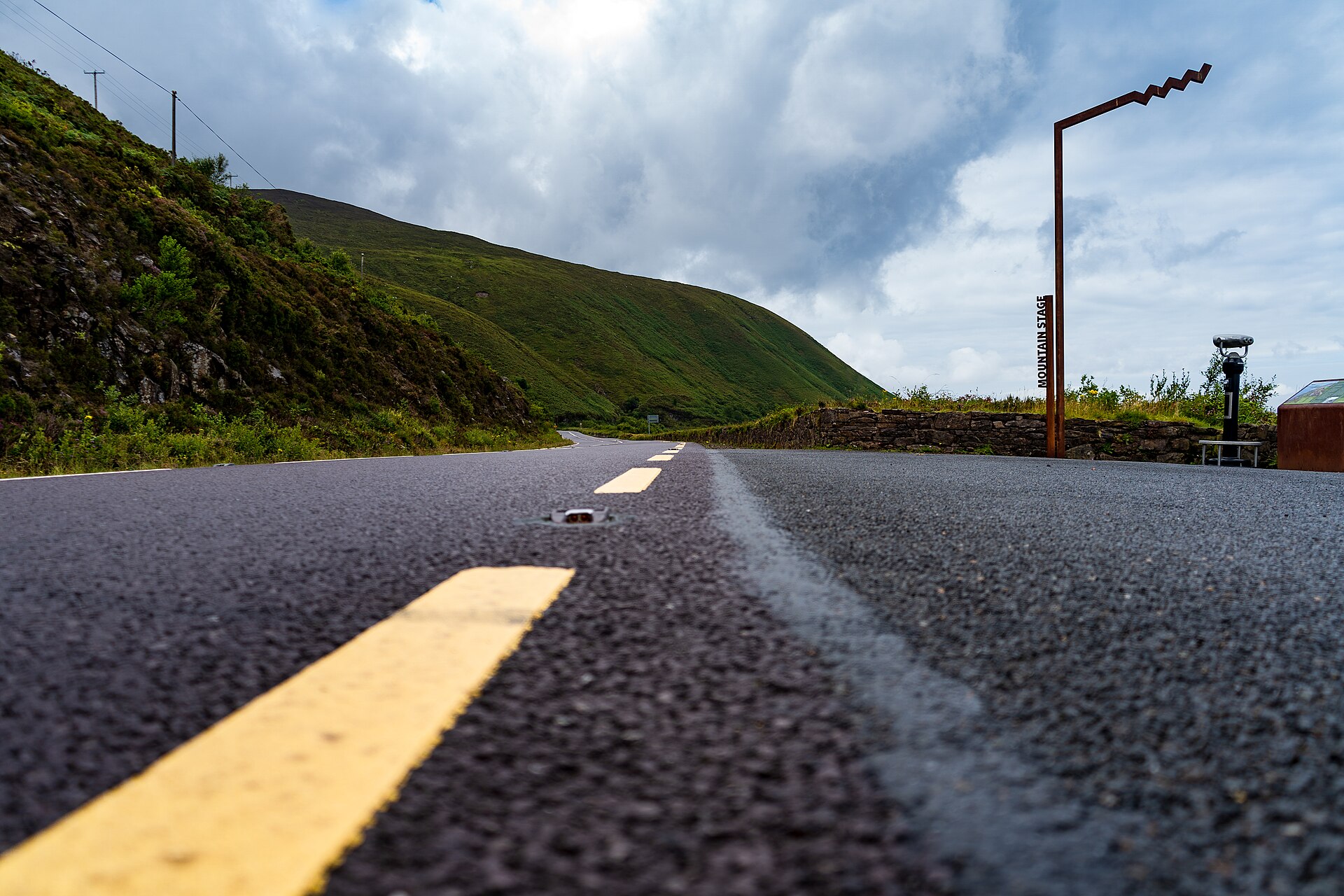
That distinction matters on the Wild Atlantic Way. A scenic N-road can be a broad national route for one stretch and a slower, winding section soon after a junction. An R-road or L-road can have no centre line, a grass edge and a blind crest. On a narrow lane, choose a speed that lets you stop within the clear view ahead; the legal maximum is not a target.
Motorways use the inside lane for normal travel and the outside lane for overtaking. Do not reverse, turn around, stop to pick up passengers or use the hard shoulder except in an emergency. If a breakdown leaves the vehicle in danger, switch on hazards, get behind a barrier when safe and call 112 or 999 if there is an immediate risk.
Rural lanes, livestock and route choices
The road surface can change quickly outside the national network. Hedges hide side roads, stone walls leave little recovery space and rain can make the edge muddy. Passing places are for meeting traffic, not for parking or leaving a car while taking photographs. If a vehicle is coming towards you, slow down early and use the nearest safe space; reverse in a straight line if that is the safest option.
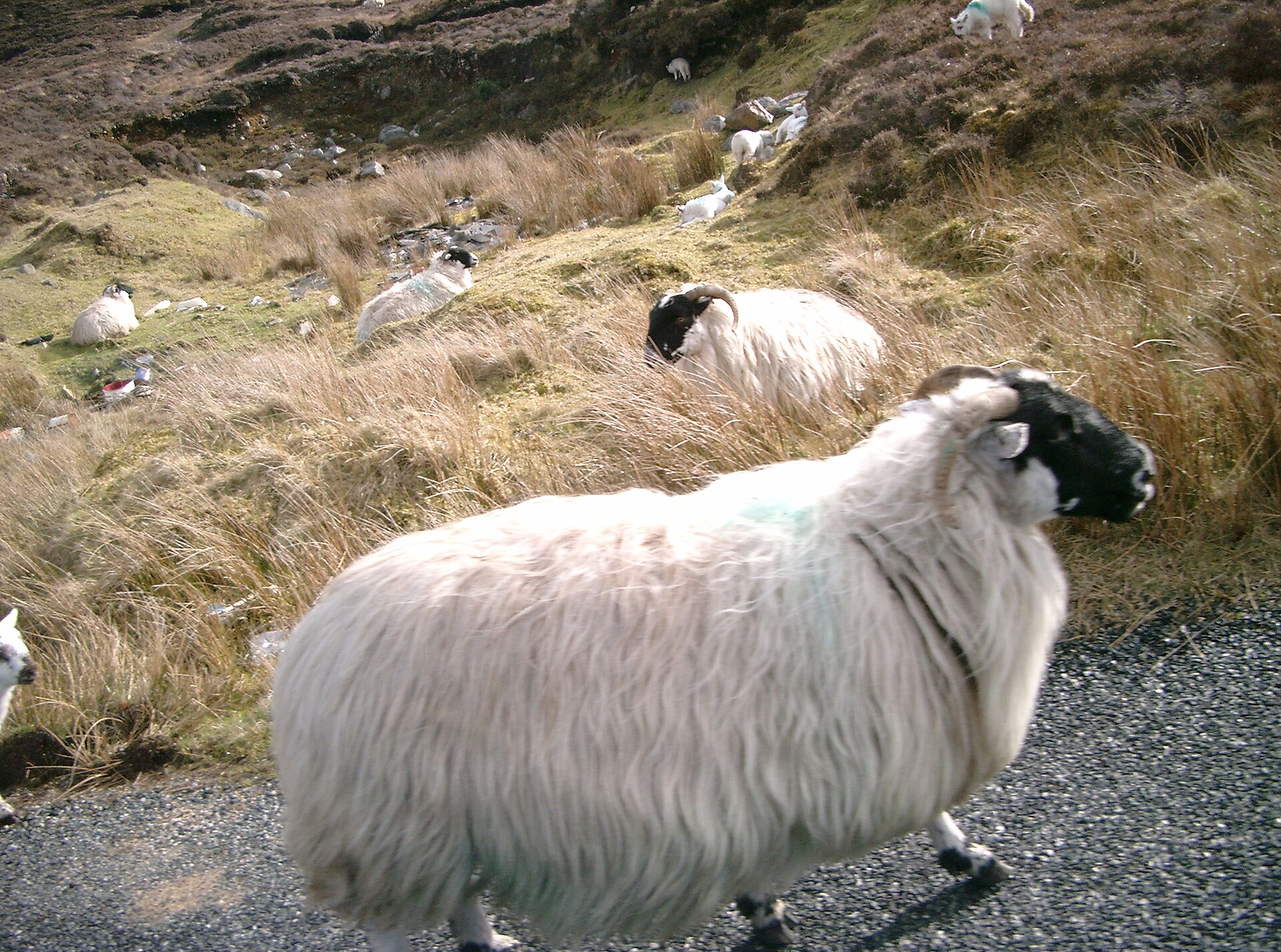
Expect tractors, cyclists, walkers, horses and tour buses near popular peninsulas. Livestock may be loose on the road, especially in Donegal, Connemara and Kerry. Do not sound the horn at sheep or cattle. Wait, leave room and follow a farmer’s direction if animals are being moved.
The best itinerary is usually a small region with a spare weather day. Kerry and the Dingle Peninsula reward short loops with time for viewpoints. Clare and Connemara mix N-roads with narrow approach roads to beaches and cliffs. Donegal has long distances between fuel stops and many exposed sections. A route that looks like a two-hour transfer can fill a day once parking, walking trails, ferry queues and a slow convoy are included.

Dublin, M50 tolls and other charges
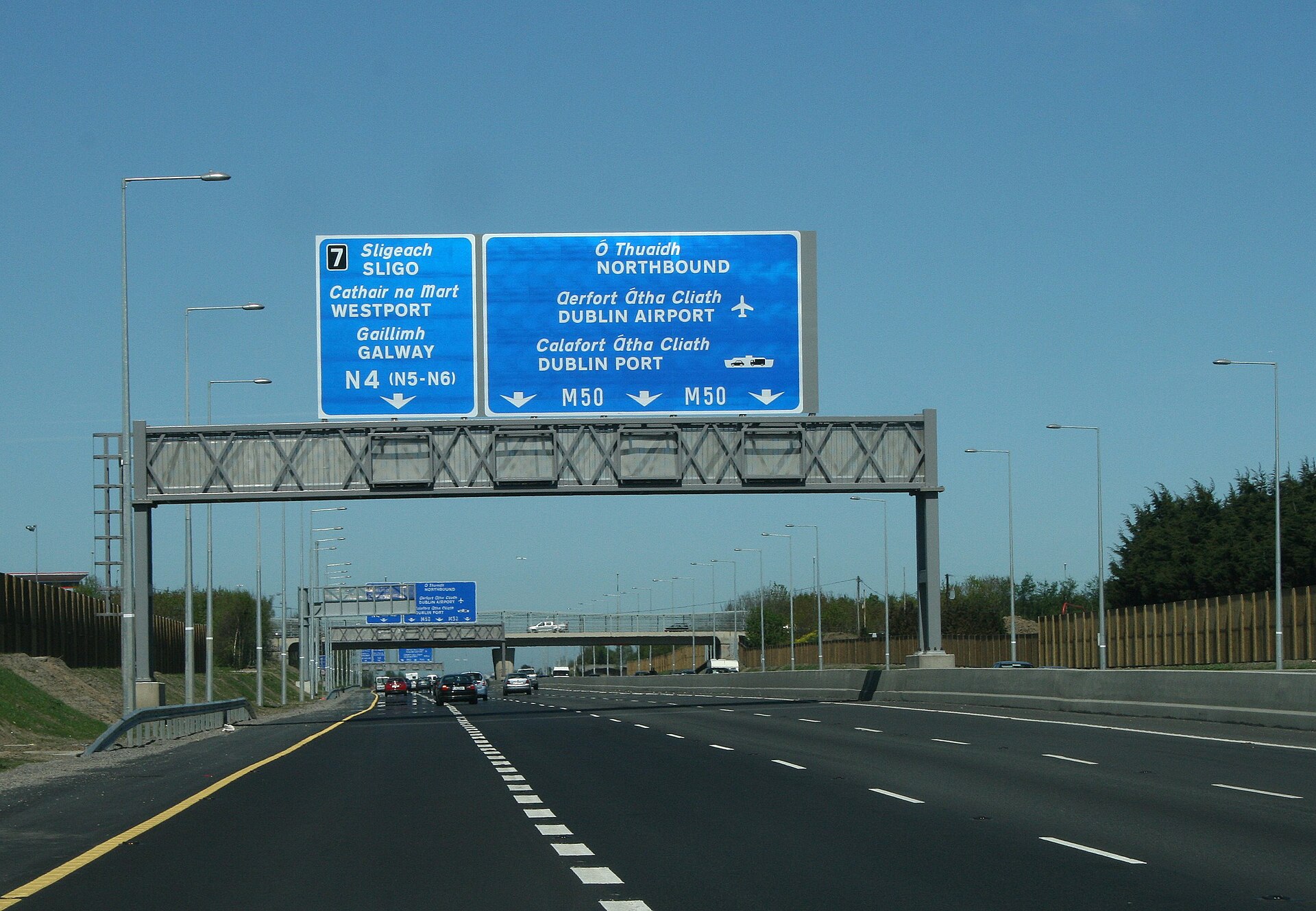
The M50 around Dublin uses barrier-free tolling between Junction 6 (N3) and Junction 7 (N4). For a private car in 2026, TII lists applicable tolls of €2.60 with a tag, €3.20 with a video account and €3.80 for an unregistered vehicle. Rates and vehicle categories can change, so use the TII M50 toll page for the current figure.
An unregistered user must pay by 8 pm on the following day. eFlow accepts online and telephone payments, and Payzone outlets can also take payment. Enter the rental registration exactly as shown, without guessing a hyphen or an old plate. The eFlow tourist and rental guidance explains the company-pays model and the administration charges that may appear on a rental bill.
Most other national toll roads use a barrier plaza. TII currently lists the M1, M3, M4, N6, M7/M8, N8, Limerick Tunnel, N25 and Dublin Port Tunnel alongside the M50. Manual lanes normally accept cash or card, while tag lanes require an electronic account. The TII toll payment page is the right place to check a route before departure.

In Dublin, parking restrictions are local and sign-led. A double yellow line means no parking at any time; a single yellow line is paired with a nearby time plate. Pay-and-display bays, loading restrictions, bus lanes and residents’ zones can change within a few streets. Use a marked car park when the sign is unclear. At a beach, trailhead or viewpoint, never assume an empty verge is a legal space: keep farm entrances, passing places, gates and emergency access clear.
Fuel, charging and weather
Petrol is sold as unleaded grades such as E5 or E10, alongside diesel. Check the filler label and the rental agreement before refuelling. Rural stations can be widely spaced on a coastal loop, so top up before leaving a large town rather than waiting for the warning light. EV drivers should check connector, opening hours, payment method and live status, then keep a second charger in the plan for an exposed or remote section.
Ireland has an Atlantic maritime climate. Rain, wind, fog and quick changes in visibility are normal planning variables; they are not a reason to cancel every trip. Check the county warnings on Met Éireann and the live TII traffic map before leaving. Met Éireann’s warning system distinguishes Yellow, Orange and Red impacts, while TII reports incidents, roadworks and closures. On exposed headlands, allow time to turn around. In winter, early-morning ice and wet leaves can make a narrow lane more demanding than a motorway at the same speed.
Collision and emergency checklist
Call 112 or 999 for an urgent Garda, fire or ambulance response. Garda’s traffic-collision guidance says to stop, help an injured person, call for assistance and remove a vehicle if it blocks the road or creates danger when that can be done safely. Do not stand in a live lane to exchange details.
Before collecting the car:
- save the RSA licence page, eFlow payment page, Met Éireann warnings and TII traffic map;
- photograph the vehicle, wheels, glass, fuel level and registration plate;
- confirm the rental company’s toll, breakdown, ferry and Northern Ireland procedures;
- set the sat-nav while parked and carry a physical licence and insurance record;
- plan fuel or charging stops before a coastal or mountain section;
- share the route and an arrival time when mobile coverage may be patchy.
Official resources and review date
This page was reviewed on 17 August 2026. Licence recognition, speed-limit rollout, toll rates, parking controls and rental terms can change. Recheck the relevant authority immediately before driving:
- RSA advice for tourists
- RSA foreign-licence guidance
- RSA Rules of the Road
- TII tolling FAQ
- eFlow rental and tourist information
- Met Éireann warnings
- Garda traffic matters
- Discover Ireland: Wild Atlantic Way
Related guides and destinations
Frequently Asked Questions
- Do I need an International Driving Permit to drive in Ireland?
- There is no single answer by nationality. The RSA allows a visitor to drive for up to one year on a current, valid non-EU/EEA licence. If the issuing state is not recognised for exchange, the RSA says to carry an IDP from that country. Check the current RSA and rental-company requirements before pickup, and carry the original licence with any required translation or IDP.
- Which side of the road does Ireland use, and how do roundabouts work?
- Drive on the left and overtake on the right. At a roundabout, slow down, look right and give way to traffic already circulating unless signs or markings change the priority. Choose the lane shown by the approach arrows and signal for the exit.
- What are the speed limits in the Republic of Ireland?
- The current RSA tourist table lists 120 km/h on motorways, 100 km/h on national roads, 80 km/h on regional roads and 50 km/h in urban areas. Many local rural roads now default to 60 km/h, and 30 km/h special or urban zones are signed. Posted signs and local special limits always take priority.
- How do I pay the M50 toll in a rental car?
- The M50 between Junction 6 and Junction 7 is barrier-free. If the rental company does not pay for you, pay eFlow by 8 pm the following day using the vehicle registration, online, by phone or at Payzone. Ask whether the contract adds an administration fee and keep the receipt.
- Can I drive from the Republic of Ireland into Northern Ireland?
- There is normally no routine checkpoint on the land border, but Northern Ireland follows UK rules and uses miles per hour. Ask the rental company for written cross-border permission and insurance confirmation before crossing.
- Is the Wild Atlantic Way suitable for a short road trip?
- It is a 2,500 km touring route from the Inishowen Peninsula in Donegal to Kinsale in Cork. Most visitors should choose one section, such as Kerry and Clare or Galway and Mayo, rather than try to cover the full coast in a few days.
- What should I do when two cars meet on a narrow Irish lane?
- Reduce speed before the bend, use a marked or obvious passing place without parking in it, and reverse calmly to the nearest safe space when needed. Leave room for tractors, cyclists, walkers and tour buses. Do not assume a map route will be wide enough for two cars.
- What age can I rent a car in Ireland?
- The legal minimum driving age is 17, while rental companies commonly set a higher minimum and charge a young-driver fee. Confirm the age, licence-holding period, deposit, transmission, excess, ferry use and Northern Ireland permission in the contract.
- Are child seats and seat belts compulsory?
- Every occupant must use a seat belt where one is fitted. Children under 150 cm or 36 kg must use a suitable child restraint in a car or goods vehicle, other than a taxi or bus. Reserve the correct restraint with the rental company rather than assuming one will be available.
- What should I check before driving in Irish weather?
- Check Met Éireann warnings for the counties on your route and the TII traffic map. Rain, coastal wind, fog, ice and surface water can make a signed limit too fast. Delay an exposed coastal or mountain section when warnings or visibility make stopping distance uncertain.
Information Sources & Disclaimer
This guide compiles information from the official transport authorities, road operators, government travel information, and automobile associations linked for Ireland.
While we strive to keep this information as accurate and up-to-date as possible (last reviewed: August 2026), traffic laws and toll rates can change without notice. We recommend verifying critical information with the local authorities or your car rental agency upon arrival.
Learn more about our Editorial Process →Compare Your Origin and Destination
Use the comparison tool to check driving side, units, documents, and other destination data for your route.