Plan by road class, not by postcard
Iceland’s main driving choice is not whether a viewpoint looks close on a map. It is whether the day’s road surface, vehicle and forecast agree. The Ring Road is the practical spine around the island, but a short detour can become gravel, a blind crest, a single-lane bridge or a road that is closed for the season. Build each day around one region and leave a turn-back option.
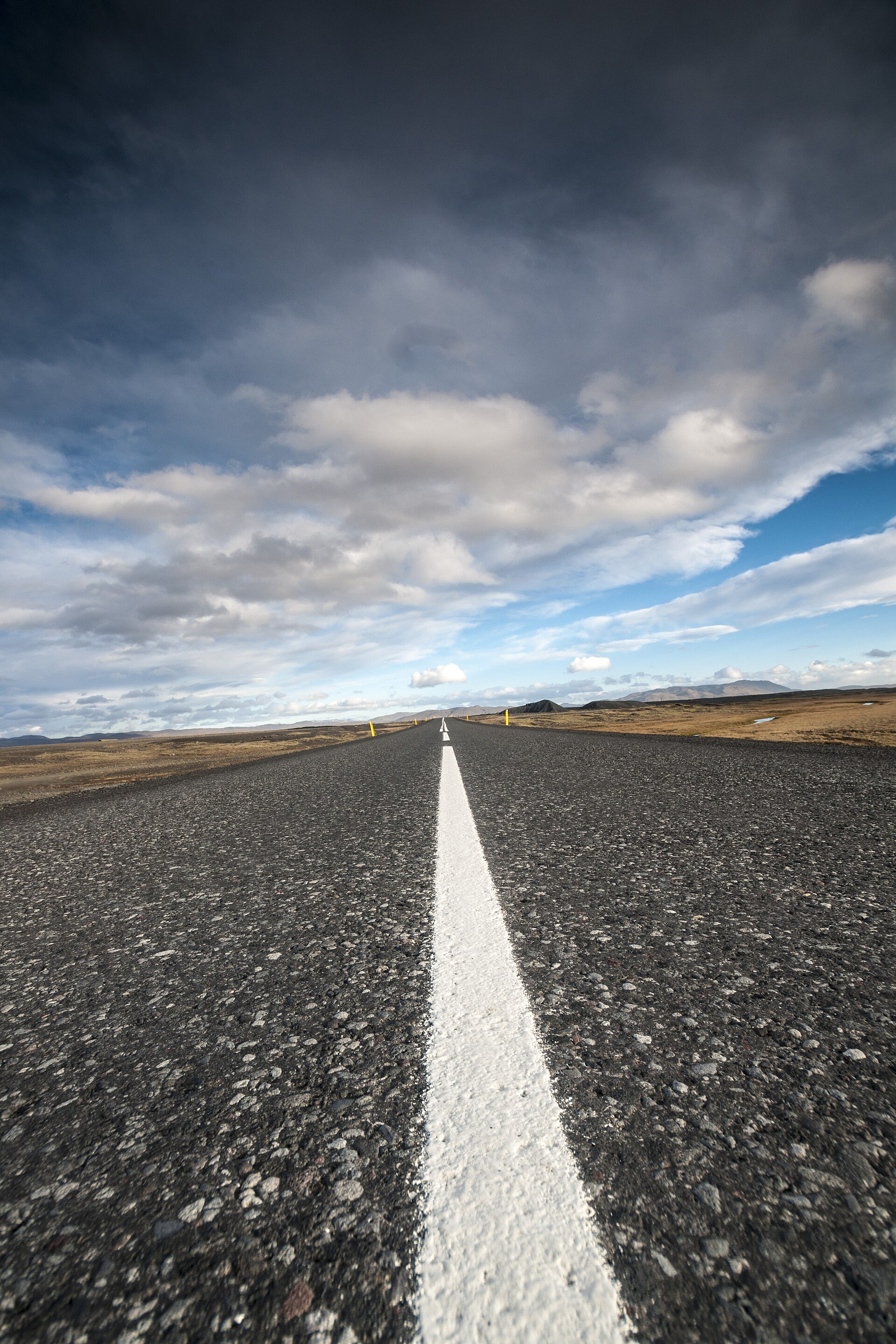

Treat Reykjavík, the south coast, the Eastfjords, North Iceland and the Westfjords as different operating environments. A summer Ring Road transfer may fit a normal car, while a winter detour over a mountain road may not. Do not turn a ten-day itinerary into a promise that every road will be open; use the Ring Road itinerary as a route idea and check live conditions on the day.
Licence, documents and the rental boundary
The Icelandic Transport Authority’s foreign-driver material directs visitors to SafeTravel and the official road-information services. Carry the original physical licence, passport, payment card and rental agreement. For a licence issued outside the EEA, the UK or Japan, recognition is not a universal tourist checklist: the issuing country, script and rental company can affect what is accepted. Send a scan to the branch before paying and ask whether an IDP or certified translation is required.
An IDP is a companion translation, not a replacement for the original licence. A rental company may also require that the driver has held the licence for a stated period, is above its age threshold or chooses a different vehicle class. Record every authorised driver, the permitted road classes, gravel or F-road exclusions, roadside number and excess before leaving Keflavík.
Rules that matter on the first day
The Icelandic Transport Authority driving leaflet and SafeTravel driving guidance cover the practical rules:
- Headlights and tail lights must be on all the time, day and night. An automatic setting may not be enough.
- The BAC limit is 0.2‰. Plan for zero alcohol before driving.
- Every occupant wears a seat belt. Children under 135 cm need a correctly fitted child restraint.
- Handheld phones and other smart-device use while driving are forbidden; use hands-free only.
- Common limits are 30–50 km/h in urban areas, 80 km/h on rural gravel and 90 km/h on paved rural roads. A sign and the conditions take priority over memory.
- Livestock, cyclists, hikers and sudden gravel transitions are ordinary hazards. Slow before the surface changes, not after the tyres lose grip.
Two-lane roundabouts have a local trap: SafeTravel explains that a vehicle in the inner lane can have priority when it exits across the outer lane. Choose the lane for the exit you need, avoid changing lanes inside the roundabout and signal before leaving.
Ring Road, gravel and F-road classes
The IRCA road-classification page distinguishes highland trail classes rather than treating every “F-road” as one product:
- F1 trails are generally summer routes for general traffic, often closed by snow or thaw.
- F2 trails are for four-wheel-drive vehicles and may include unbridged water.
- F3 trails need large, well-equipped 4WDs or a superjeep and can be rocky or deeply rutted.
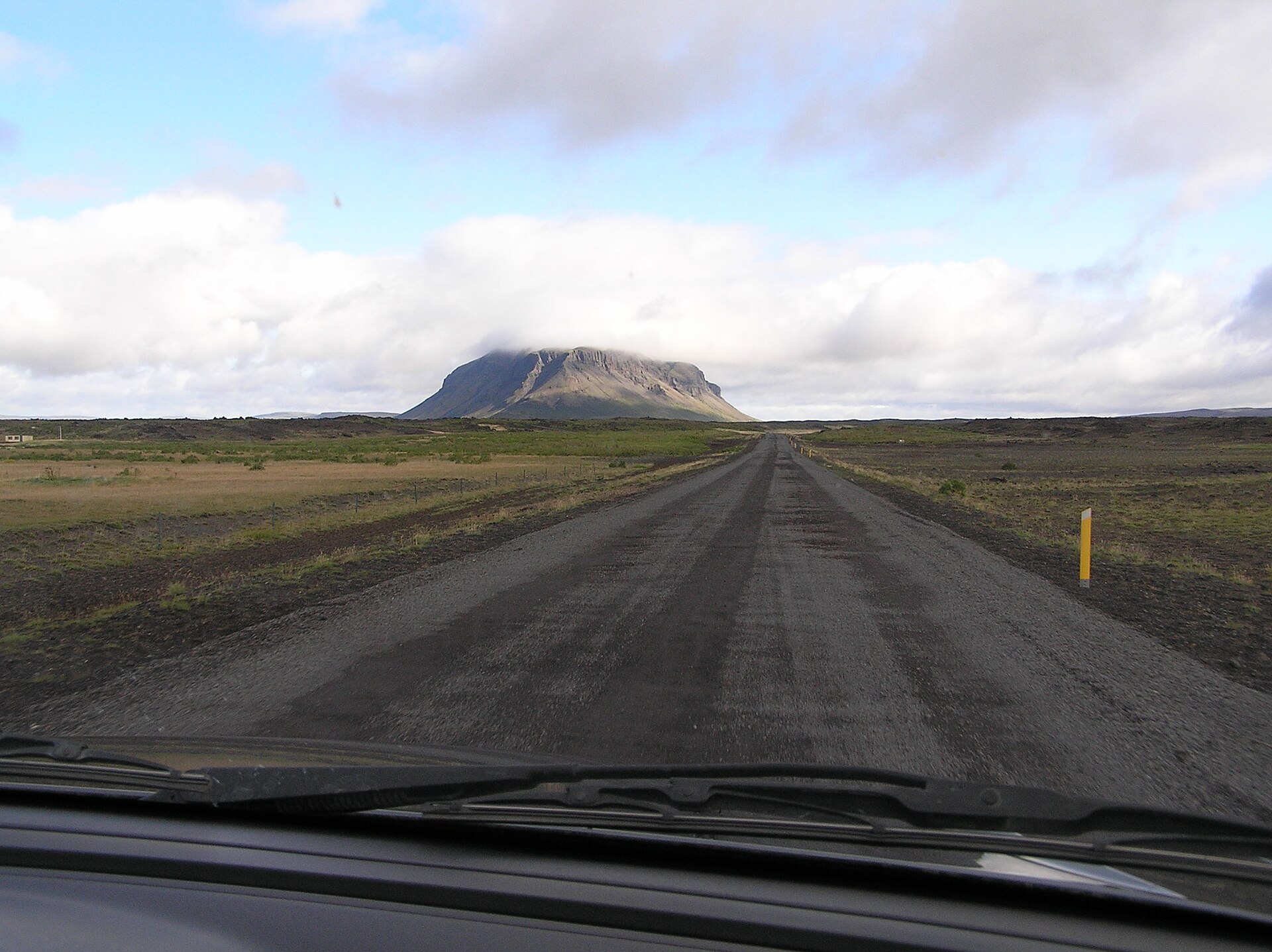

Opening is controlled by snow, thaw, conservation conditions and repair work. Vegagerðin publishes an updated map, while umferdin.is shows the current status. F-roads and gravel roads are legal road surfaces; leaving them is off-road driving and strictly forbidden. A route being open to traffic does not override a rental contract that excludes it.
Highland routes may contain unbridged rivers. SafeTravel’s highland guidance says water depth and current change quickly and that no insurance covers damage during a river crossing. Do not follow another vehicle into water, do not enter when the exit is unclear, and turn back early when the conditions no longer match the vehicle.
Bridges, roundabouts and stopping for a view
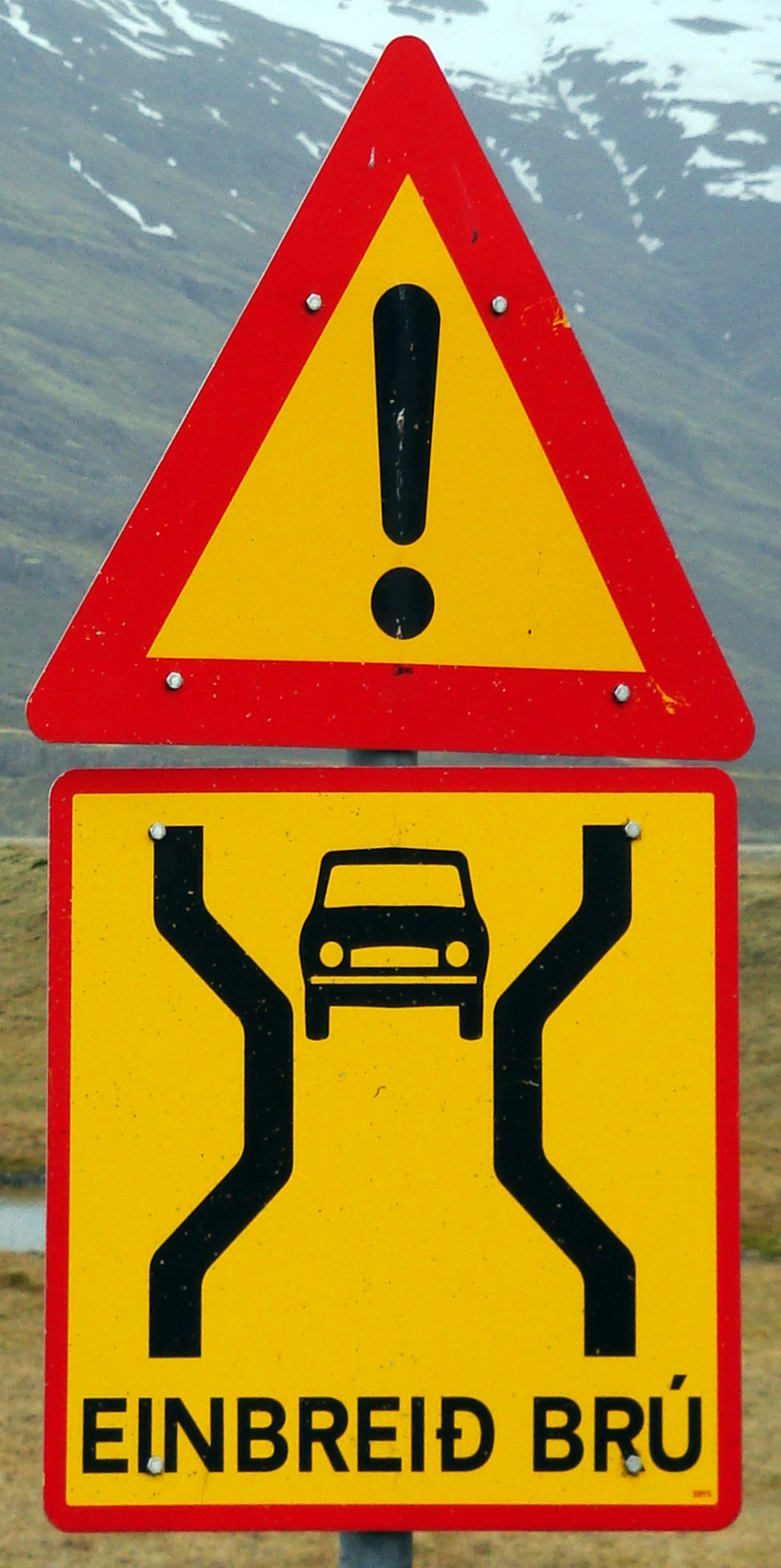

The SafeTravel road-sign guide says the first or closer vehicle has the practical priority at a single-lane bridge, while the Transport Authority leaflet uses the closer-vehicle wording. In both cases, approach slowly and assess the other driver’s intention. Never stop on the carriageway or shoulder for a photograph; use a marked lay-by or attraction car park. Reykjavík’s Parking Service lists P1–P4 paid zones, garages and current payment options such as EasyPark, Parka and Síminn Pay.
Weather, wind and winter decisions
The Icelandic Meteorological Office publishes forecasts, observations and warnings, while IRCA traffic information reports closures, surface conditions and construction. The IRCA’s 1777 traffic service provides road and weather information daily from 06:30 to 22:00; it is a useful human check for a difficult stage, not a substitute for the live map.
Winter conditions can appear in spring and autumn as well as winter. Wind gusts can make an exposed road unsafe and can damage a door if it is opened into the wind. Park with the door away from the wind where possible, hold it firmly and open one door at a time. If a forecast, warning or road closure contradicts the itinerary, wait or shorten the stage. A late arrival is cheaper than a recovery on an exposed road.
Fuel, charging and the Vaðlaheiði tunnel
Fuel stations become sparse outside populated areas and highland roads have no normal refuelling network. Fill before a long coastal or mountain leg, confirm the fuel grade at pickup and save the next two plausible stations. EV charging is strongest around Reykjavík and along the Ring Road; remote or highland routes need a larger buffer and a fallback charger.
Most Icelandic roads have no toll. The Vaðlaheiði tunnel tariff valid from 2 March 2026 lists 2,216 ISK for a vehicle under 3.5 tonnes when paid online or through online banking. The payment window is 24 hours before or after the trip; an unpaid claim can be sent to the vehicle owner’s online bank. Ask the rental company how a plate-based tunnel charge is billed and keep the confirmation.
Emergency response and a usable travel plan
Call 112 for an emergency. 112 Iceland keeps emergency telecommunicators on duty 24/7 and accepts calls, the app, SMS and web chat. Give the road number, direction, nearest landmark or coordinates, rental plate and the number of people involved. For routine road and weather information use umferdin.is or 1777.
Before a remote day, leave the route and expected return time with someone who can act on it. Keep warm layers, water, a charged phone, a power bank and medication in the passenger compartment. After a collision, stop safely, photograph the scene without standing in the traffic lane, exchange details and contact the rental company. Do not attempt a risky river rescue or walk into a closed highland route.
Before the first kilometre
- Send your licence details to the rental branch and obtain written confirmation of IDP, translation, age, licence-history and vehicle-class requirements.
- Photograph the car, plate, fuel or battery level, tyres, existing damage and the contract’s gravel, sand/ash and F-road exclusions.
- Check the weather, warnings and road map before departure and again after lunch; save a turn-back route.
- Confirm whether each planned road is paved, gravel, F-class or closed, and whether the vehicle is allowed on it.
- Save 112, 1777, the rental roadside number, the Vaðlaheiði payment page and the nearest fallback fuel or charger offline.
Official resources and review date
This page was reviewed on 17 August 2026 against the Icelandic Transport Authority foreign-driver material, How to Drive in Iceland leaflet, Vegagerðin road classifications and mountain-road information, IRCA traffic service, SafeTravel, Icelandic Meteorological Office, Vaðlaheiði toll service, Reykjavík Parking Service and 112 Iceland. Road status, weather, rental restrictions and tolls can change; reopen the official pages before every stage.
Related guides and destinations
Frequently Asked Questions
- Can I use my foreign driving licence in Iceland?
- A valid licence may be accepted, but recognition and rental-desk requirements depend on the issuing country, licence format and language. Iceland's Transport Authority directs foreign drivers to SafeTravel. Ask the rental branch in writing whether it needs an International Driving Permit or certified translation, and carry the original licence with it.
- What is the legal driving age in Iceland?
- The national minimum for a category B car licence is 17. Rental companies set higher minimum ages, vehicle-class limits and licence-history requirements, often with separate rules for 4WDs. The rental contract is the rule for the vehicle you collect.
- What are Iceland's speed limits?
- Common limits are 30–50 km/h in urban areas, 80 km/h on rural gravel roads and 90 km/h on paved roads outside towns. Signs can set a different limit, and weather, visibility and surface conditions require a lower safe speed.
- When do Iceland's F-roads open?
- There is no national opening day. The Icelandic Road and Coastal Administration updates mountain-road status as snow, thaw and ground conditions change. Many F-roads are closed from autumn until June or July, but check umferdin.is for the exact road and day. A closed sign means no driving.
- Does every F-road require the same 4WD?
- No. Vegagerðin describes F1 trails for summer general traffic, F2 trails for four-wheel-drive vehicles and F3 trails for large, well-equipped 4WDs or superjeeps. SafeTravel also warns that not every 4WD rental suits every highland route. Match the exact vehicle to the road and contract.
- Can I cross a river on an Icelandic F-road?
- Only if the road is open and you have the vehicle, experience and current conditions for that crossing. SafeTravel says no insurance covers vehicle damage while crossing a river. Water depth and current can change quickly; if the line, exit or flow is uncertain, turn around.
- Who has priority at a single-lane bridge?
- Icelandic guidance gives priority to the vehicle that approaches first or is closer to the bridge, depending on the wording used. Both SafeTravel and the Transport Authority say to slow down, assess the other driver and coordinate. Treat the rule as a reason to communicate, not to accelerate.
- How should I plan for Icelandic wind and winter weather?
- Check the Icelandic Meteorological Office and umferdin.is before departure and again during the day. Snow or ice can occur outside midwinter, and gusts can make exposed roads or an open car door hazardous. Shorten the stage or wait when the forecast and road status do not support the plan.
- Are Iceland's roads toll roads?
- Most roads are toll-free. The Vaðlaheiði tunnel near Akureyri is the notable passenger-car exception. Its tariff valid from 2 March 2026 lists 2,216 ISK for a vehicle under 3.5 tonnes when paid online, normally within 24 hours before or after the trip. Confirm the current price and ask the rental company how the plate charge is settled.
- What should I do in an Iceland driving emergency?
- Call 112. Iceland's emergency service is available 24/7 by phone, app, text and web chat. Give the road number, direction, nearest landmark or coordinates, vehicle registration and the number of people involved. For routine road information use umferdin.is or the IRCA traffic service on 1777.
Information Sources & Disclaimer
This guide compiles information from the official transport authorities, road operators, government travel information, and automobile associations linked for Iceland.
While we strive to keep this information as accurate and up-to-date as possible (last reviewed: August 2026), traffic laws and toll rates can change without notice. We recommend verifying critical information with the local authorities or your car rental agency upon arrival.
Learn more about our Editorial Process →Compare Your Origin and Destination
Use the comparison tool to check driving side, units, documents, and other destination data for your route.