Overview: Oman changes outside the city
Oman is easy to underestimate from a map. Muscat has multilane roads, roundabouts and marked parking, while the Hajar Mountains introduce steep grades and hairpins. A wadi can look completely dry and still carry a fast flood after rain upstream. Desert tracks bring long gaps between services, and Dhofar’s Khareef season can turn a clear mountain road into a foggy, slippery one.
Oman drives on the right. Keep the original licence, passport, rental agreement, insurance details and a charged phone together. The legal visitor rule and the rental contract are separate questions: a licence that is accepted by the authorities may still be excluded by a particular vehicle or route.
Foreign licence, IDP and rental documents
The Royal Oman Police FAQ says that a visitor may drive with a valid licence from their home country while their visit visa is valid, for a period of up to three months. The ROP traffic-law page links the governing regulations. That wording means an IDP is not a blanket legal requirement for every short-term visitor. An IDP or a translation can still be requested by a rental branch, especially when the original licence is not readable in Arabic or English.
Before paying for a car, ask the branch:
- whether it accepts the original licence in its current language and whether it wants an IDP or certified translation;
- how long the driver must have held the licence, the age surcharge and the additional-driver rules;
- whether the car may use gravel, sand, mountain roads or wadi approaches;
- whether one-way returns, border crossings and roadside recovery are covered; and
- which registration, insurance and emergency documents must remain in the car.
The ROP lists 18 as the minimum age for an Omani driving licence. That is not the rental age. A current SIXT Muscat listing uses 21 as its minimum and applies its own vehicle and young-driver conditions.
Speed, cameras and everyday rules
Oman’s traffic regulations classify road design ceilings at roughly 60 km/h for internal roads, 80 km/h for local or service roads, 100 km/h for secondary roads and 120 km/h for main roads. The ROP traffic-law page is the authority; the 2018 regulation amendment records the road classes. A posted limit, temporary sign or police instruction takes precedence over any general ceiling.
| Situation | Practical rule |
|---|---|
| Muscat, villages and internal roads | Read the sign. Internal-road design limits can be as low as 60 km/h, and roundabouts require an approach speed that leaves room to yield. |
| Main and secondary roads | Main-road ceilings can reach 120 km/h and secondary roads 100 km/h, but the signed section and weather control the safe speed. |
| Seat belts | The ROP fine list includes a front-passenger seat-belt offence. Belt every occupant before moving. |
| Phone and alcohol | The ROP lists handheld-phone use and unsafe or alcohol-impaired driving as offences. Stop before using the phone and never drive after drinking. |
| Visibility and children | Use lights when visibility is poor. Arrange a suitable child restraint with the rental branch before arrival rather than assuming a seat is available. |
The ROP traffic-fine list includes phone use, following too closely, roundabout and parking offences, poor-visibility lighting and other behaviours that visitors may overlook. Keep the phone out of your hand, leave space for heavy vehicles and follow the lane markings instead of copying a local driver’s shortcut.
Muscat traffic and paid parking
Muscat’s paid parking is location-specific. The Muscat Municipality notice publishes two paid periods, 08:00–13:00 and 16:00–21:00, with Fridays, Saturdays and public holidays excluded. The municipality describes payment or short-term reservation through SMS to 90091, Baladiyeti and its website; its parking service page explains the available channels.
Read the sign beside the space each time. Do not double-park, block a pavement, stop in a roundabout or use a disabled bay without the required permission. At a mall or hotel, note the entrance and level in the map before walking away. A paid-space rule in one district should not be treated as a city-wide rule.
Hajar Mountains: Nizwa, Jebel Akhdar and Jebel Shams
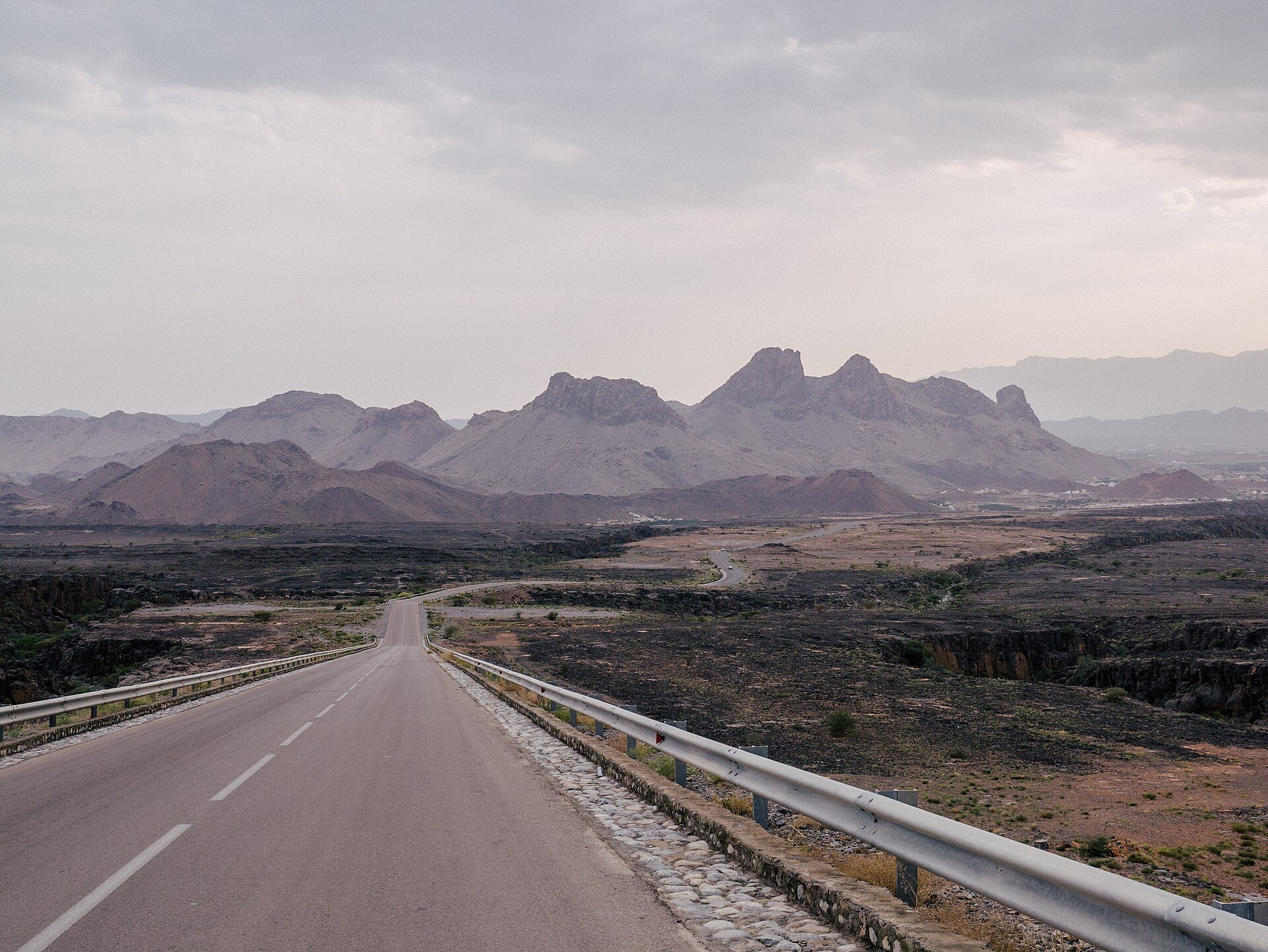
The road to Jebel Akhdar is paved but steep, with hairpins and a mountain checkpoint. A local report describes the checkpoint turning away vehicles that are not fit for the ascent and advises confirming a 4WD and fuel before climbing. Treat that as a route check, not as a promise that every mountain road has the same rule. The rental contract, vehicle registration and the checkpoint on the day decide whether the car may continue.
For Nizwa, Bahla, Muscat and the main coastal links, a normal car is usually the useful choice. A 4WD or approved SUV becomes relevant when the itinerary includes a mountain trail, sand, a rough wadi approach or a route excluded by the contract. The official Experience Oman activities booklet recommends careful 4WD use on mountain trails, checking fuel and tyres, and using lights in mountain fog.

Wadis, rain and flash floods
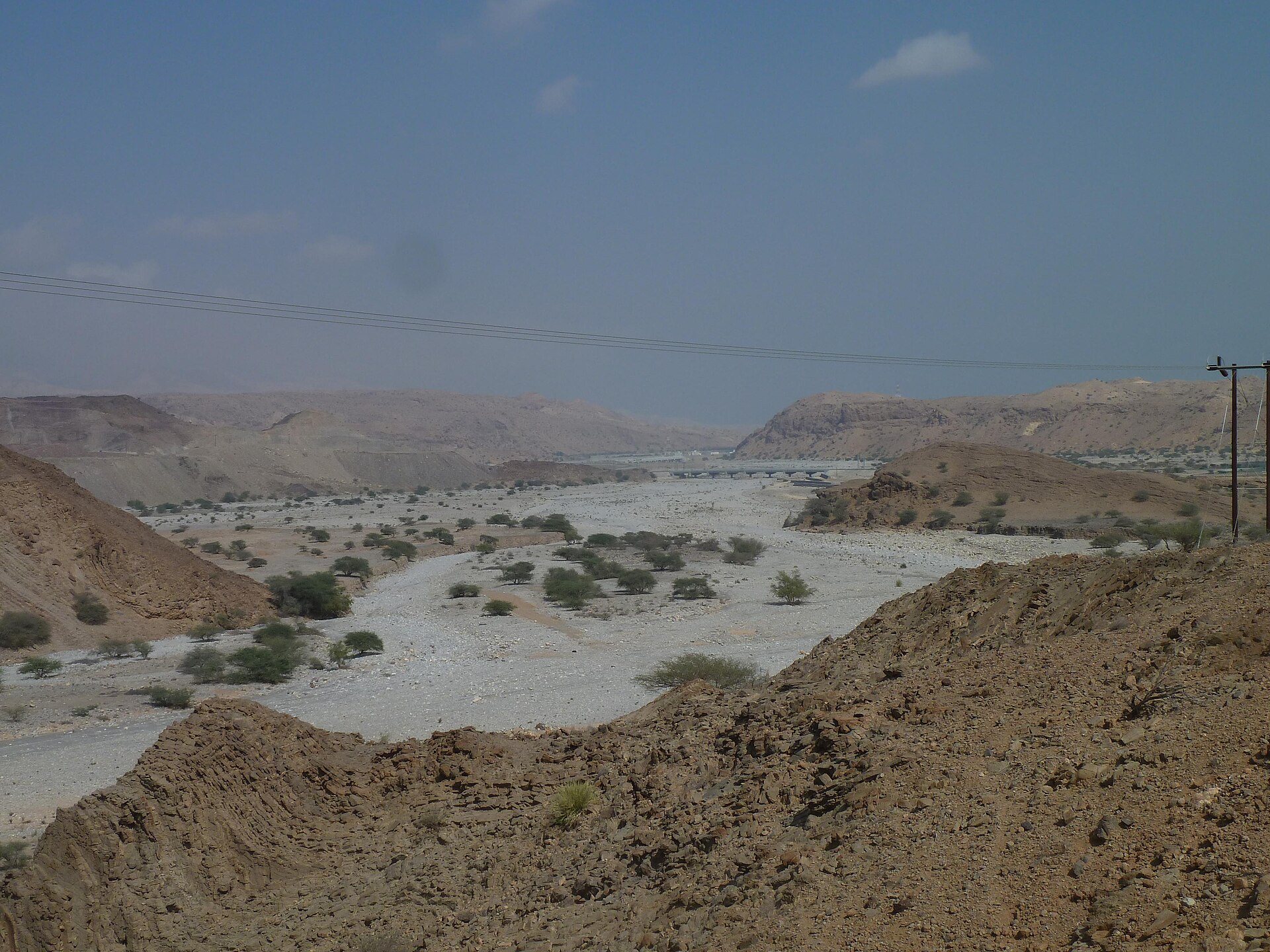
Wadi Shab, Wadi Bani Khalid and other valleys are approached by different combinations of paved roads, parking areas and rough tracks. Do not choose a vehicle from the attraction name alone. Ask the accommodation or operator about the final kilometre, then check the forecast and warnings again on the morning of the drive.
The Oman Meteorology flash-flood guidance says water can rise within minutes. It advises people to avoid camping or parking near wadis, never drive through floodwater or around a barrier, and notes that about 30 cm of moving water can sweep away a small vehicle. Turn around before the water reaches the road. A map route is not an all-clear.

Desert and long-distance routes
The Experience Oman guide to A’Sharqiyah Sands describes 4x4 dune driving, desert camps and visits to Bedouin villages. Carry water, use an established camp or experienced operator, and confirm recovery arrangements before leaving the paved road. For a self-drive excursion, discuss tyre pressure, a spare, a recovery point, an offline track and whether a second vehicle is needed. A rental agreement that says “4WD” does not automatically authorise every dune or wadi.
Route 31 makes the Muscat–Salalah stage roughly 1,000 km. That is a long-distance planning problem, not a guaranteed 10-hour sightseeing day. Fill up before a remote section, split the drive when fatigue or heat rises, and check the road and weather before leaving. The Experience Oman weather page notes lowland summer heat of 35–45°C.
Dhofar’s Khareef normally runs from late June into September. The Oman Meteorology monsoon guidance describes drizzle, fog and slippery roads during the season. Use lights in fog, reduce speed, expect poor visibility around bends and leave extra space for animals, pedestrians and vehicles without clear rear lights.

Fuel, charging and vehicle choice
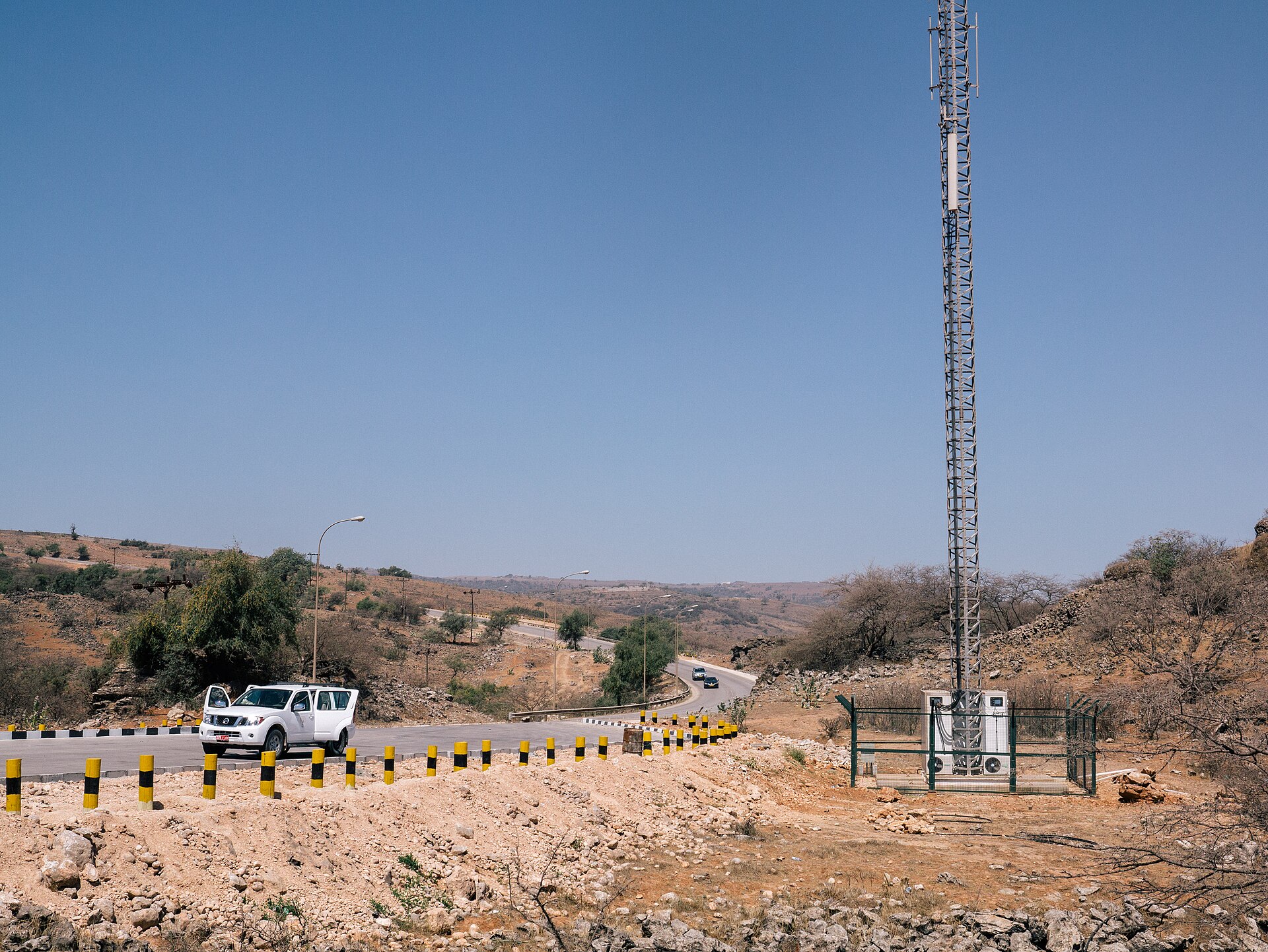
Fuel is easy to find in Muscat and on the main corridors, but the next station is not guaranteed once a route turns toward mountains, dunes or an isolated coast. Top up when the tank is comfortably above half, carry water and keep a small amount of Omani cash for a remote stop. Check tyre pressure, the spare and the cooling system before a hot long-distance stage.
An electric car can work on a route built around confirmed chargers, a short daily range and a backup plan. It is a route-specific decision rather than a national assumption. Ask the rental company for the charging cable, live station information and roadside policy. Petrol is the simpler choice when the itinerary includes sand, long gaps or a vehicle contract with no charging support.
Tolls, borders and rental paperwork
The current SIXT Muscat rental information states that Oman has no toll roads. That corrects the old assumption that Muscat expressways require an electronic toll transponder. Still budget for paid parking, traffic fines, fuel, cleaning, tyre or recovery charges, one-way fees and any border administration. Written approval is essential before taking a rental car across an international border.
At collection, photograph the car, plate, fuel level, tyres, windscreen and existing marks. Save the rental agreement, emergency number and insurance exclusions offline. If the branch says a mountain, gravel or sand route is excluded, change the route or change the vehicle before leaving.
Emergency checklist
Call 9999 for an emergency. Gov.om’s emergency-number page and the Royal Oman Police contact page both list 9999 for the Police Operations Center.
After a collision or breakdown:
- Turn on hazard lights and move people away from traffic if it is safe.
- Call 9999, then the rental company’s assistance line. Give the road number, kilometre marker or saved map pin.
- Photograph signs, plates, damage and the road surface. Do not drive through floodwater or move a damaged vehicle against police instructions.
- Keep the branch’s instructions and the incident number with the rental agreement until the final bill is closed.
Sources and review date
This page was reviewed on 17 August 2026. Licence and traffic-law notes use the Royal Oman Police FAQ, its traffic-law page, the traffic-fine list and the 2018 road-class amendment. Muscat parking uses the municipality notice and parking service. Weather and flood advice uses Oman Meteorology and its monsoon guidance. Mountain and desert preparation uses Experience Oman and its activities booklet. Recheck the named authority, weather warning, road access and rental contract for the actual travel date.
Related destinations
Frequently Asked Questions
- Can I drive in Oman with my foreign licence?
- The Royal Oman Police says a visitor can drive with a valid home-country licence while holding a visit visa valid for up to three months. An IDP is not a blanket legal requirement, but a rental branch may ask for one or for a translation. Carry the original licence, passport and rental papers, and confirm the branch rule before collection.
- What is the minimum driving age in Oman?
- The ROP lists 18 as the minimum age for an Omani driving licence. Rental companies set their own thresholds; a current Muscat rental listing uses 21 as its minimum and may charge more for younger drivers or larger vehicles.
- Do I need a 4WD in Oman?
- A normal car is suitable for Muscat and the main intercity roads. A 4WD or an approved SUV may be required by the route, checkpoint or rental contract for Jebel Akhdar, desert dunes and some wadi tracks. Ask what the vehicle registration allows before leaving the paved road.
- What is the drive from Muscat to Salalah like?
- Route 31 is a long inland journey of roughly 1,000 km. Treat it as a planned long-distance stage, check fuel and weather, and split the drive if the light, heat or fatigue no longer suits you. Salalah can also be reached by air.
- Can I drive through a wadi after rain?
- No. Oman's meteorological authority warns that wadi floods can rise within minutes and says never to drive through floodwater or around barriers. Check official warnings, wait for an all-clear and use a different route.
- Does Oman have highway tolls?
- Current Muscat rental information lists no toll roads in Oman. You should still budget for paid parking, traffic fines, border paperwork and any rental-company administration charge. Confirm the contract before crossing into another country.
- How does paid parking work in Muscat?
- Muscat Municipality uses metered public spaces in selected areas. The published system operates in two daily periods, 08:00–13:00 and 16:00–21:00, excluding Fridays, Saturdays and public holidays; reservations can be made by SMS to 90091, through Baladiyeti or the municipality website. Read the sign at the space.
- What is Oman's emergency number?
- Call 9999 for an emergency. The same number is listed by Gov.om and the Royal Oman Police for the Police Operations Center. Then call the rental company's assistance line and share a road number, kilometre marker or saved map pin.
Information Sources & Disclaimer
This guide compiles information from the official transport authorities, road operators, government travel information, and automobile associations linked for Oman.
While we strive to keep this information as accurate and up-to-date as possible (last reviewed: August 2026), traffic laws and toll rates can change without notice. We recommend verifying critical information with the local authorities or your car rental agency upon arrival.
Learn more about our Editorial Process →Compare Your Origin and Destination
Use the comparison tool to check driving side, units, documents, and other destination data for your route.