Overview: short distances, very different roads
Slovenia is small enough for a traveller to cross the country in a day, but a map hides the decisions that make a road trip comfortable. The A1 and A2 motorways move quickly between Ljubljana, the coast and the north-east. Around Lake Bled, Bohinj, Kranjska Gora and the Soča Valley, the road becomes narrower, parking becomes scarce and a weather change can add an hour to a stage. The official Slovenian traffic centre is more useful than a static itinerary for roadworks, closures, queues and mountain-pass conditions.
Slovenia drives on the right. Plan city visits separately from mountain days: leave the car at a legal lot, then walk or use local transport. For a cross-border trip, keep the passport or identity document, the original driving licence, rental agreement, insurance details and written permission for every country on the route together.
Licence, IDP and rental documents
An EU driving licence is recognised throughout the EU for the categories it covers, as the European Commission explains in its driving-licence and insurance guidance. A non-EU licence needs a country-specific check. Slovenian government guidance for short-term visitors says a valid foreign licence may be used, but a licence that does not conform to the applicable road-traffic convention must be accompanied by a valid international driving permit. That permit is a translation, not a substitute; carry both documents.
Before collecting a rental car, confirm:
- the licence format and whether the branch wants an IDP or certified translation;
- the driver age, licence-held period, additional-driver fee and excess;
- permission and insurance for Austria, Italy, Croatia or Hungary;
- whether the vehicle already has a valid e-vignette and which registration plate it covers;
- the fuel or battery return rule, roadside number and accident procedure.
The legal driving age for a car is 18, but a rental company may set a higher age or restrict larger vehicles. A licence, passport and rental agreement should be reachable without unpacking the whole boot at a border or police check.
Speed, lights and everyday rules
The Slovenian Police traffic-safety page lists these passenger-car defaults:
| Road setting | Usual maximum | What can change it |
|---|---|---|
| Built-up area | 50 km/h | A lower town, school or traffic-calming sign |
| Traffic-calmed or pedestrian area | 10 km/h | The signed zone and local layout |
| Outside built-up areas | 90 km/h | A sign, bend, settlement, work zone or weather |
| Expressway | 110 km/h | A lower posted limit or variable control |
| Motorway | 130 km/h | A lower sign, congestion, weather or vehicle class |
Dipped headlights or daytime running lights are required during the day. Seat belts are compulsory for occupants where belts are fitted, and the police guidance permits only hands-free phone use while driving. The standard private-car alcohol limit is 0.50 g/kg of blood (0.24 mg/l of exhaled air); professional drivers have a zero limit. Treat the legal ceiling as a reason not to drink before driving, especially on a mountain road where a small error has little recovery space.
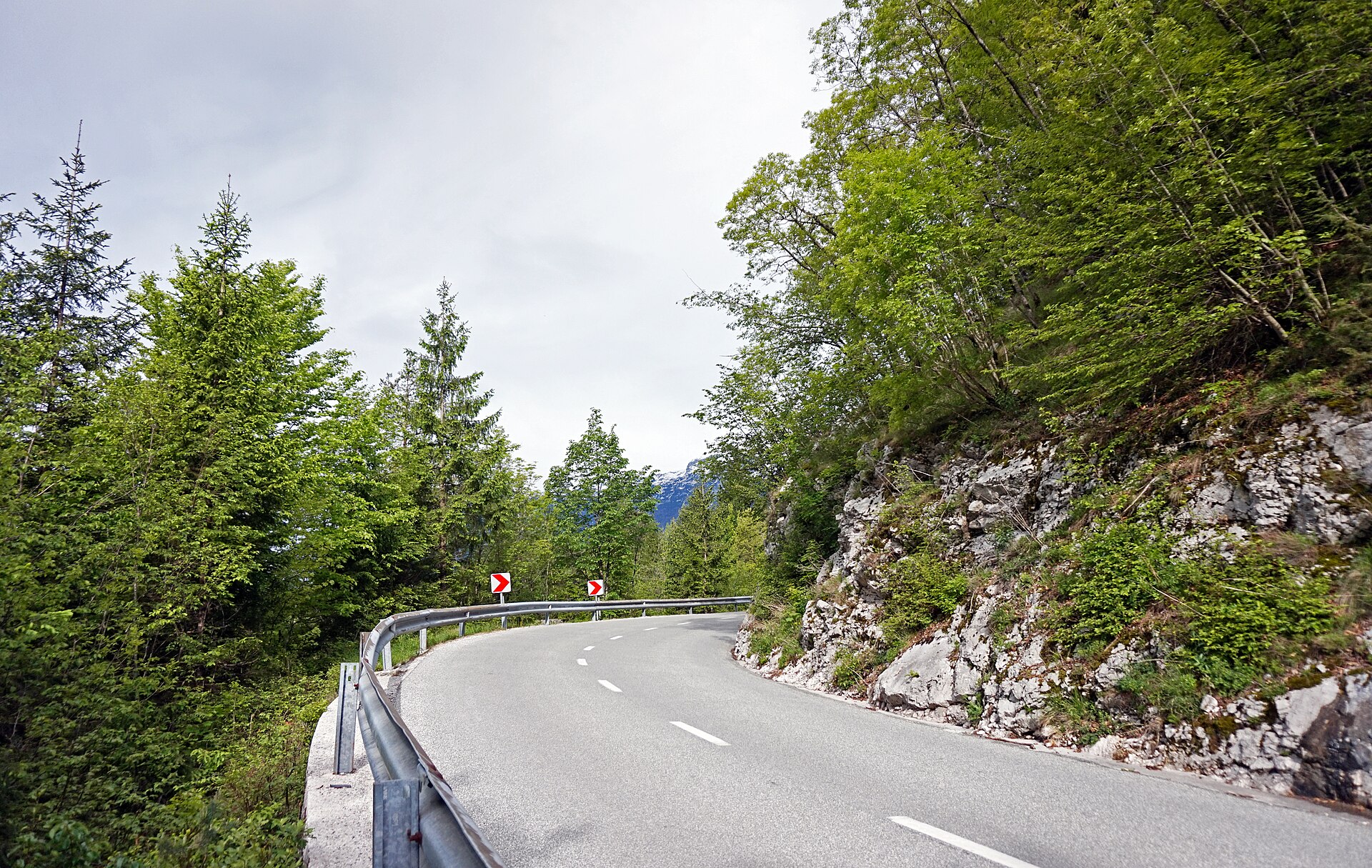
At a motorway queue, leave an emergency corridor and never reverse, walk on the carriageway or use the hard shoulder as a shortcut. On two-lane mountain roads, slow before a blind bend, keep the rock face and the road edge in sight, and use a signed pull-off rather than stopping in the lane.

E-vignette, toll classes and the 2026 coastal exception
Slovenia uses a time-based e-vignette rather than a distance-based charge for most light vehicles. The official DARS shop says the vignette is linked to the registration plate and registration country. Buy it before entering the tolled road, enter the plate twice, select the correct class and save the confirmation. Do not rely on a reseller that appears above the official shop in a search result; DARS published a 2026 warning about unauthorised sellers.
| DARS class | Typical vehicle | Current official prices shown by DARS |
|---|---|---|
| 1 | Motorcycle | €8 weekly; €32 semi-annual; €58.70 annual |
| 2A | Most cars and vans up to 3,500 kg, front-axle height up to 1.3 m | €16 weekly; €32 monthly; €117.50 annual |
| 2B | Vehicles up to 3,500 kg with front-axle height above 1.3 m | €32 weekly; €64.10 monthly; €235 annual |
The vehicle class is measured at the front axle, not guessed from the badge on the bonnet. Use DARS’s class tool when the rental is a tall van, camper or SUV. An annual vignette runs from the selected start date to the same date the following year; a weekly one covers seven consecutive days. The DARS validity page lists the periods and the exceptions.
There is an important 2026 change for the coast. From 1 January 2026, the H5 and H6 sections between Škofije, Koper and Jagodje were reclassified as main roads and are temporarily exempt from the e-vignette for light vehicles. The exemption does not make every nearby A1 or expressway free, and it does not remove the separate Karavanke Tunnel toll. Use the road number when checking whether the exception applies.
Parking, borders and city driving
In Ljubljana, parking rules are local. The Ljubljana LPT payment guide describes three time-limited zones, meters, tickets and Urbana SMS payment. Its P+R Dolgi Most page shows how to leave a car on the edge of the city and continue by bus. This is usually less stressful than taking a rental car into the old centre.
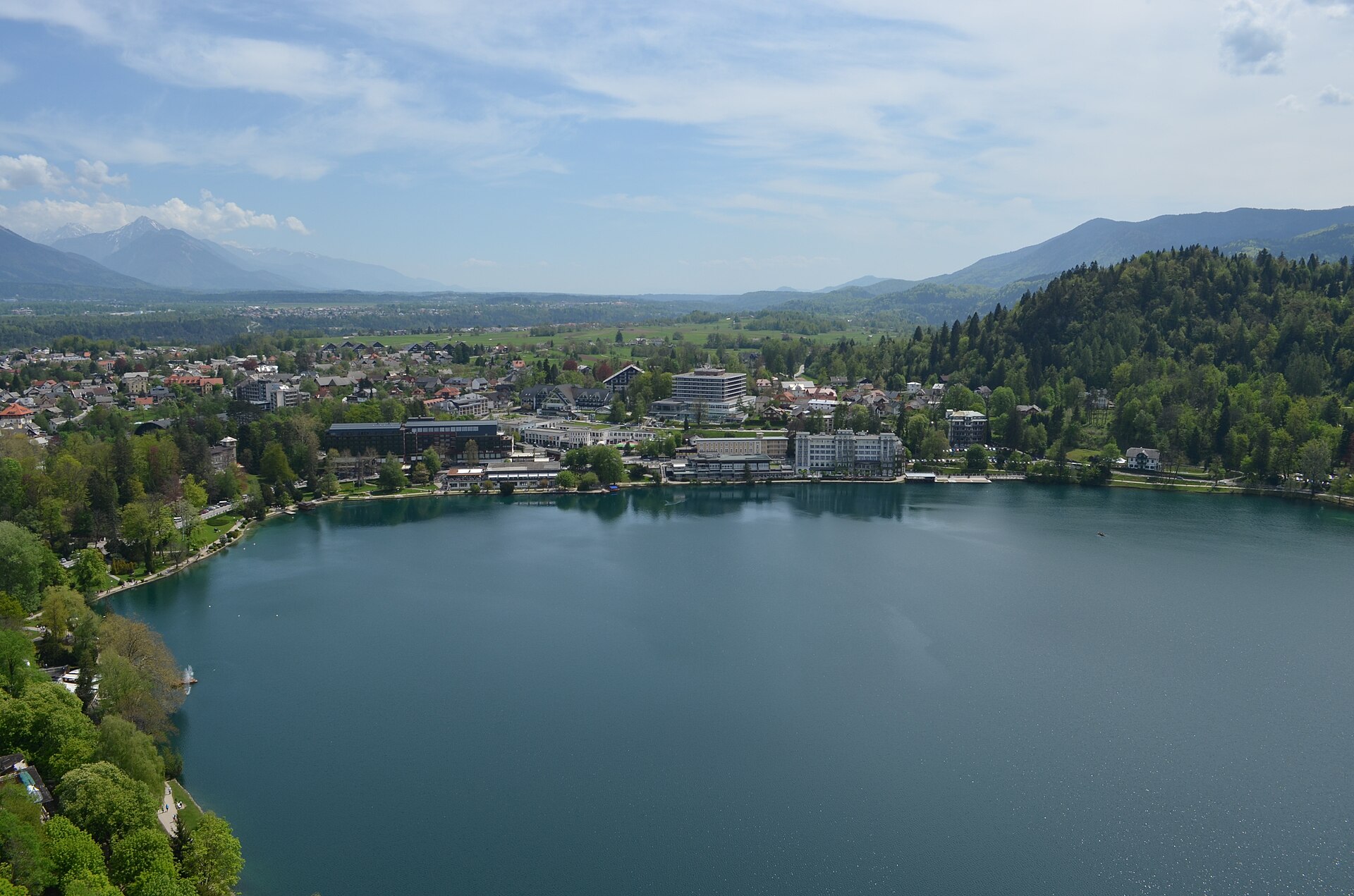
At Lake Bled, the official parking list is the useful starting point. Arrive before the busiest part of the day, use a signed lot and walk the final section. The same rule applies at Bohinj, trailheads and waterfalls: a beautiful view does not turn a grass verge, passing place or farm entrance into a parking bay.
Slovenia shares Schengen borders with Italy, Austria, Hungary and Croatia, but temporary checks, queues and rental restrictions can still affect a cross-border day. Carry the documents and verify that the rental contract allows the crossing. Promet.si and the police are better sources for a current border queue than an old travel forum.

Three useful road-trip patterns
Ljubljana, Bled and Bohinj
Use the motorway for the transfer, then slow down around the lakes. Put the Bled car park in the plan before booking a viewpoint or boat trip. Bohinj sits inside the Triglav area, where access, parking and seasonal bus arrangements can be more restrictive than a map suggests. A day that includes both lakes needs a realistic walking and parking buffer rather than a chain of pins.
Kranjska Gora, Vršič and the Soča Valley
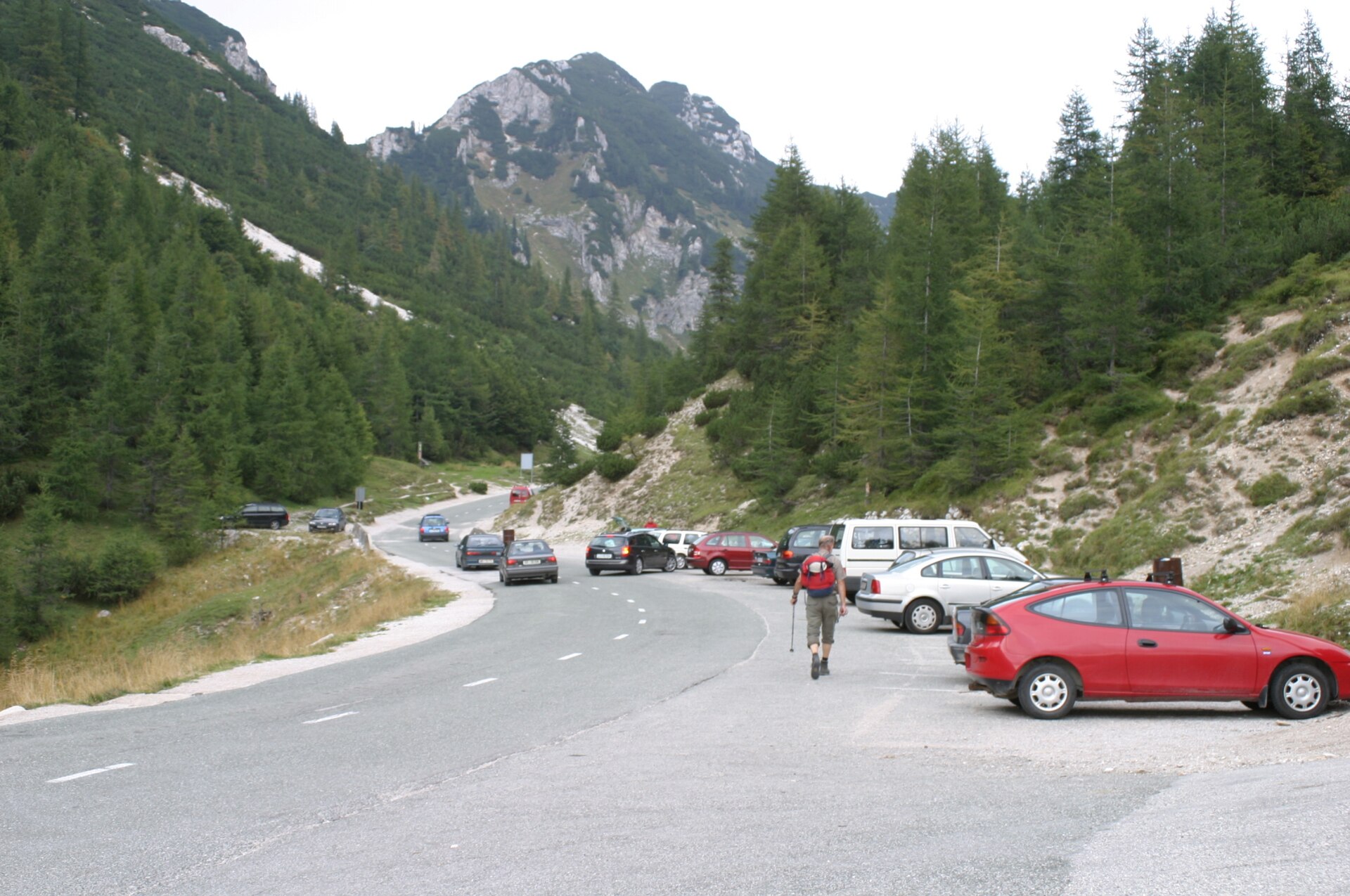
Vršič is 1,611 m high and the highest mountain road pass in the eastern Julian Alps, according to the official Kranjska Gora destination page. The road links Kranjska Gora with the Soča Valley and passes the Russian Chapel and mountain huts. It is a driving route, not a motorway shortcut: expect tight bends, cyclists, walkers, limited passing space and no dependable fuel stop on the pass.
In 2026 the Julian Alps introduced a new traffic-management regime at Vršič. The official tourism-agency notice describes regulated access, paid and limited summit parking and shuttle options. Because the operating period and barriers are seasonal, open Promet.si on the morning of the drive. If the pass is restricted, use the signed route through Italy and Predel only when the rental contract and border conditions allow it.

Koper, Piran and the Karst
The coastal road is a different kind of trip: sun, cyclists, town parking and short tunnels can sit next to a fast motorway transfer. The H5/H6 exemption is helpful for a light vehicle, but it is not a blanket exemption for the coast. Choose a signed car park in Koper or Piran, then walk; do not assume the narrow old-town streets are suitable for a rental car.
Ljubljana, Maribor and Ptuj
For an eastward loop, use the A1/A4 network after buying the correct vignette, then treat city centres as parking-and-walking stops. Maribor and Ptuj have their own municipal signs and event-day restrictions. Keep the live route open for construction and congestion rather than treating the motorway’s normal travel time as a promise.
Winter, weather, fuel and charging
The police’s winter-driving guidance states that winter equipment is required from 15 November to 15 March. Four winter tyres should have at least 3 mm tread, or summer tyres must be paired with suitable snow chains for the driven wheels. When snow covers the road, chains may still be necessary. Ask the rental branch what is actually fitted; “winter package” on a booking page is not a measurement of tread or a promise that chains are in the boot.
Fog, black ice, hail and alpine thunderstorms can change a route between the valley and a pass. Check Promet.si, leave extra time, clean all windows and refuel before the long mountain section. For an electric rental, the Slovenian National Access Point publishes real-time traffic and public charging-point data. Save the provider app, connector type and a second charging option before leaving Ljubljana or the motorway corridor.
If something goes wrong
For a collision or dangerous obstruction, get people out of the traffic lane if it is safe, call 112 or 113, and follow the operator’s instructions. Do not sign a repair agreement at the roadside before calling the rental company. Photograph the registration plate, road signs, lane position and damage; save the Promet alert and the rental assistance reference. For a simple puncture or warning light, use the contract’s roadside number rather than walking on a motorway shoulder.
Before departure, check:
- original licence, passport or ID, IDP or translation if required, rental agreement and insurance;
- plate and toll class in the DARS confirmation, including any cross-border permission;
- Bled/Ljubljana parking facility, opening hours and payment method;
- Vršič, Soča Valley and Karst road status on Promet.si;
- tyre type, tread, chains, fuel or battery level and the emergency numbers 112/113.
Sources and review date
This page was reviewed on 17 August 2026. The rule summary uses the Slovenian Police traffic-safety guidance and winter-equipment guidance; toll details use the DARS e-vignette shop, its validity page and the 2026 coastal-road notice. Route and parking checks use Promet.si, Ljubljana LPT, Bled’s official parking list and the official Kranjska Gora and Soča Valley pages. Laws, prices, closures and rental conditions change; verify the named authority and the road status for the actual travel date.
Related destinations
Frequently Asked Questions
- Can I drive in Slovenia with a non-EU licence?
- EU licences are recognised across the EU. For a non-EU licence, Slovenia's visitor rules depend on whether the licence conforms to the applicable road-traffic convention; a non-conforming licence must be accompanied by an IDP. Carry the original licence, passport and rental documents, and ask the rental branch before arrival.
- Do I need an International Driving Permit in Slovenia?
- There is no single answer for every nationality. Check the Slovenian authority or your consulate for the licence you hold. An IDP translates a national licence; it never replaces the original, and a rental company may require one even when the police would accept the licence alone.
- How does the Slovenian e-vignette work?
- For a vehicle up to 3,500 kg, buy the correct DARS e-vignette before entering a tolled motorway or expressway. It is linked to the registration plate and country, so a single wrong character can leave the vehicle untolled. Class 2A covers most cars; taller vehicles may be 2B.
- Are the H5 and H6 coastal expressways toll roads?
- For light vehicles up to 3,500 kg, H5 and H6 were removed from the e-vignette system on 1 January 2026 and are temporarily toll-free. Other motorways and expressways still require a valid vignette, and the Karavanke Tunnel has its own toll arrangement.
- Is Vršič Pass open all year?
- No. Snow, repairs, traffic controls and parking management can close or restrict the pass. Check Promet.si and the local Kranjska Gora or Soča Valley notice on the day you go; do not treat a clear forecast in Ljubljana as proof that the pass is open.
- Where should I park around Lake Bled and Ljubljana?
- Use a signed public car park and follow the local meter or app. Bled's official parking list and Ljubljana's LPT pages show the current facilities and payment rules. A hotel pin, trailhead verge or lakeside shoulder is not permission to park.
- What winter equipment is required in Slovenia?
- From 15 November to 15 March, the police guidance calls for winter equipment: four winter tyres with at least 3 mm tread, or summer tyres with suitable snow chains for the drive wheels. Snow chains may also be needed when the road is covered in snow.
- Which number should I call after a road accident?
- Call 112 for an emergency and 113 for police. Promet.si publishes road conditions; the traffic information centre can also be reached on 1970 within Slovenia or +386 1 518 85 18. Then call the rental company's assistance line and record the scene before moving the car if it is safe to do so.
Information Sources & Disclaimer
This guide compiles information from the official transport authorities, road operators, government travel information, and automobile associations linked for Slovenia.
While we strive to keep this information as accurate and up-to-date as possible (last reviewed: August 2026), traffic laws and toll rates can change without notice. We recommend verifying critical information with the local authorities or your car rental agency upon arrival.
Learn more about our Editorial Process →Compare Your Origin and Destination
Use the comparison tool to check driving side, units, documents, and other destination data for your route.