Choose the road for the day
Croatia is compact on a map but its driving days are not interchangeable. The A1 motorway links Zagreb with the central Dalmatian corridor and is the useful choice when a ferry, hotel check-in or airport return has a fixed time. The D8 Adriatic road is the experience: a mostly two-lane route with sea views, bends, junctions and town traffic. Treat it as a route to explore in sections, not as a promise of motorway travel times.
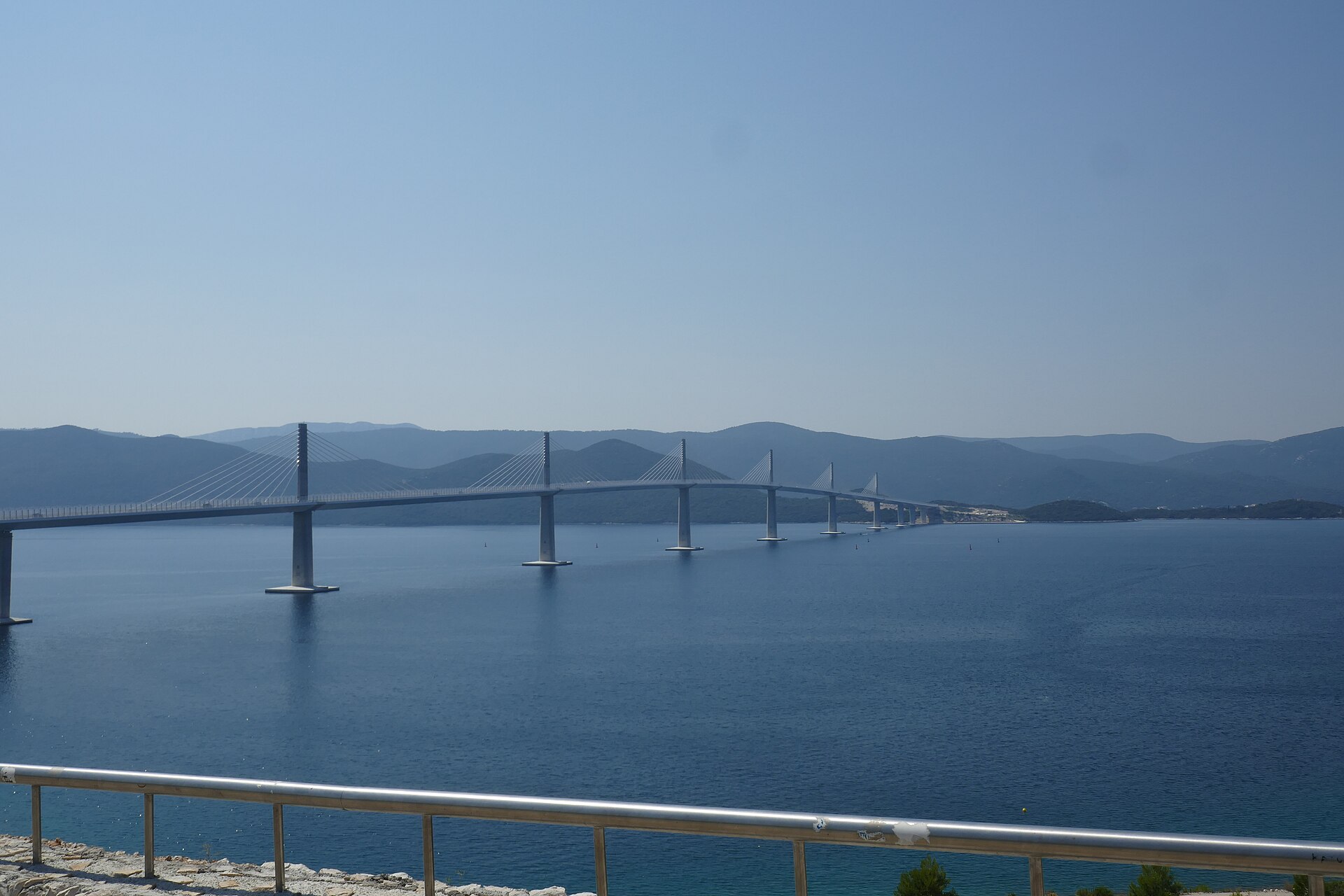
The southern connection changed after the Pelješac Bridge opened. It lets through traffic stay in Croatia instead of crossing the short coastal strip of Bosnia and Herzegovina around Neum. The bridge removes one border decision; it does not remove the need to check the D8, ferry timetable, weather and rental cross-border terms.
Licence, documents and the rental contract
Croatia’s Ministry of the Interior guidance on foreign licences says that a foreigner may drive on a valid foreign licence issued by the competent authority, subject to reciprocity, and that an International Driving Permit is not required in those cases. That is a legal starting point, not a promise that every rental desk can read every licence. Send a scan to the branch before paying and ask whether it requires an IDP, an official translation or a particular licence convention.
Carry the original licence, passport or national ID and rental agreement. For a privately owned vehicle, add the registration document and proof of insurance accepted in Croatia. A border crossing, insurer or rental contract can impose a separate document requirement, especially when the licence is not written in a widely readable Latin format or when the car is taken to Bosnia and Herzegovina, Montenegro or Serbia. Never rely on a phone photograph as the only licence.
At pickup, photograph the plate, registration, fuel or battery level, existing damage, spare wheel or repair kit, warning equipment and any HAC or Bina Istra toll device. Get written answers about authorised drivers, excess, glass and tyre cover, roadside assistance, ferry use, cross-border permission, one-way return and how tolls or parking notices will be billed.
Rules that affect a road-trip day
Croatia drives on the right. The European Commission’s Croatia road-rules page, which is supplied by national authorities, lists a 0.5 mg/ml alcohol limit for standard drivers and 0.0 mg/ml for professional and novice drivers. The safest rental policy is simple: the driver does not drink. Do not turn the published limit into a target, and do not assume a restaurant lunch makes the next stage legal.
The same source lists the usual passenger-car limits as 50 km/h in urban areas, 90 km/h outside urban areas and 130 km/h on motorways. These are defaults, not a route promise. Town entrances, tunnels, roadworks, junctions, weather and variable motorway signs can lower them. Seat belts and child restraints are mandatory, and a handheld phone is not permitted; use a proper hands-free setup before moving.
Daytime lighting for cars follows the winter-time period, while motorcycles and mopeds must use lights throughout the year. On designated major roads, HAK’s winter-equipment notice and the EU road-rules page specify 15 November to 15 April. A car under 3.5 tonnes needs winter tyres on all wheels, or summer tyres with at least 4 mm tread plus chains in the car for the driven wheels. On other roads the requirement is tied to actual snow or ice. Ask the rental branch what equipment is fitted; do not assume a coastal pickup has the same setup as an inland winter route.
A1 motorways, toll tickets and ENC
The A1 is the practical backbone for Zagreb–Zadar–Split–Ploče travel, with tunnels, viaducts and service areas that make a long transfer more predictable. It is not free. Hrvatske autoceste (HAC) explains that Croatia uses open and closed toll systems: a closed system records the entry ticket and settles the distance at the exit, while an ENC user passes through a dedicated lane with a functioning on-board unit.
At a normal plaza, follow the lane sign, keep the entry ticket dry and pay with an accepted card or cash. If the rental car has an ENC unit, ask which operator owns the account, how the balance is funded, how the final passage appears on your invoice and what to do if the unit beeps or the account is empty. HAC says its ENC covers the listed HAC motorways and D425; the Istrian Y is operated by Bina Istra and requires a separate BINA ISTRA ENC account. Do not assume that a tag from one network works on the other.
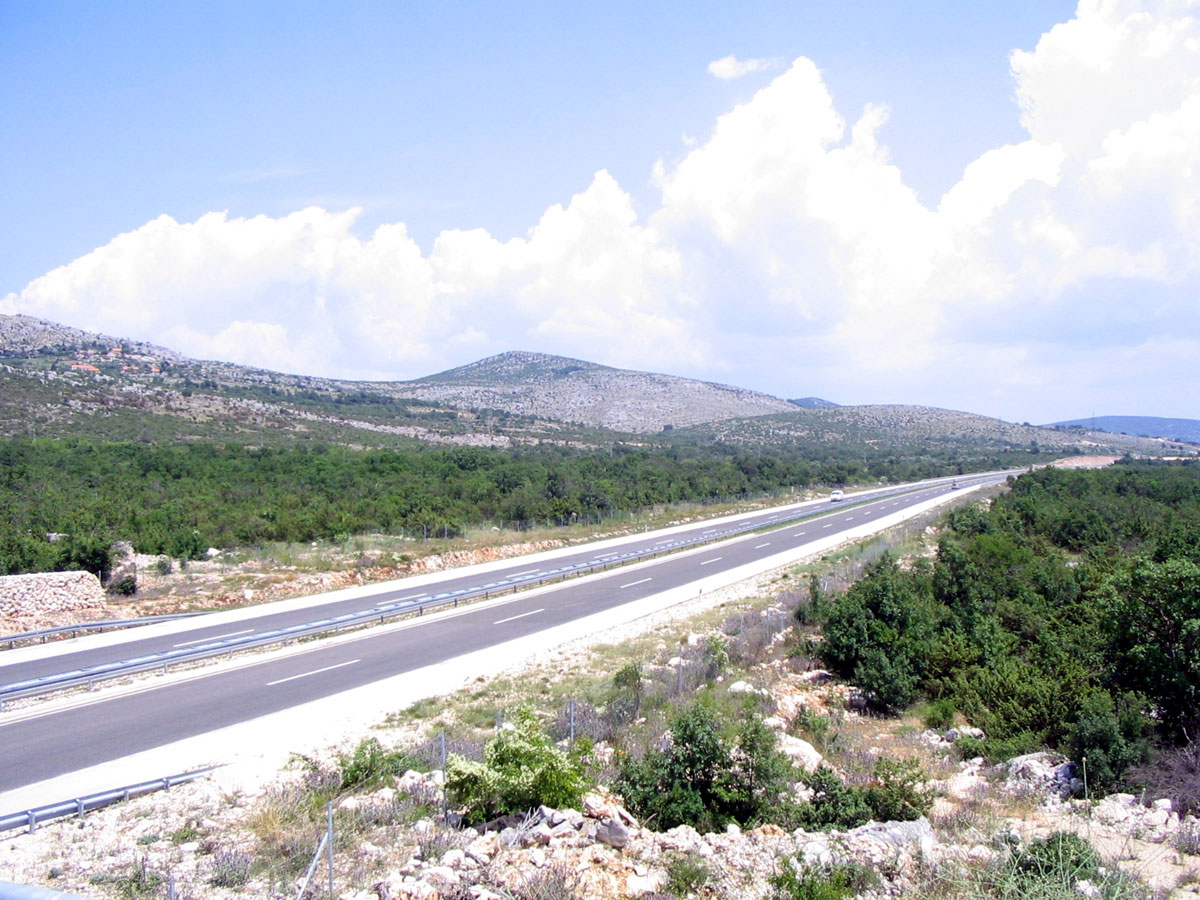
The HAC interactive map is useful for checking toll locations, service areas and current motorway conditions. The Croatian government’s tolls and ferries page links the current price lists across operators. Use those tools for the actual vehicle class and entry/exit pair; old “typical cost” figures are not a dependable trip budget.
D8, the bridge and border choices
The D8 follows the Adriatic coast through a long chain of towns. Sight lines change quickly, overtaking space is limited and a queue behind a slow vehicle can turn a map-short stage into a full afternoon. Leave a margin for a fuel stop and legal viewpoints, and do not stop on a bend or use a passing place as a photo bay. A1 is usually the better choice when a hotel, airport or ferry has a hard deadline.
The Pelješac Bridge is part of the state-road connection to southern Dalmatia. A Croatian government decision on the concession states that Hrvatske ceste will not charge a bridge toll. That does not make every road around it toll-free: the A1 and other tolled facilities remain separate, and road operators can change arrangements. Check the current signs and the HAC/government tariff page before you set a route budget.
The bridge avoids the Neum transit crossing for the through route, but a planned detour into Bosnia and Herzegovina still needs the rental company’s written permission and insurance confirmation. Montenegro and Serbia have their own border and vehicle-document checks. Keep the rental agreement and insurance certificate accessible rather than buried in the luggage.
Ferries and island days
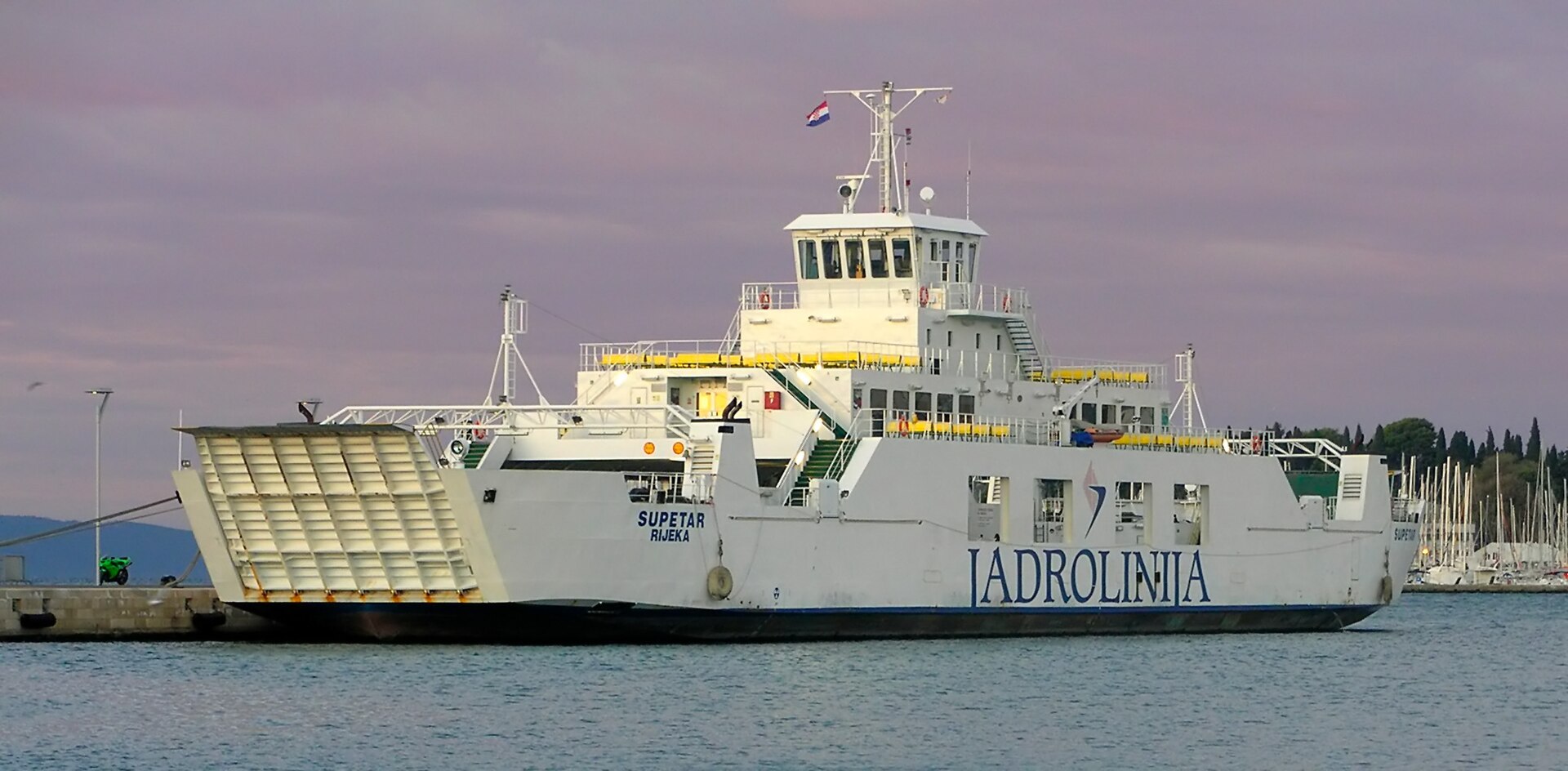
Car-ferry planning is a timetable problem as well as a destination choice. Jadrolinija’s reservation FAQ says vehicle reservations are possible only on listed ferry lines; on services without vehicle reservations, boarding is based on arrival order. Its current reservation-line notice says the vehicle registration document is required when buying a reserved vehicle ticket and advises passengers with a summer reservation to reach the port 60 minutes before departure.
Check the exact sailing, vehicle dimensions, ticket validity and whether the ticket is for a reservation line. A reservation does not make a late arrival safe, and a non-reservation ticket does not guarantee a car space on a busy sailing. Keep a mainland parking plan if the car will stay behind for a foot-passenger day. Summer queues can build before the ticket office, at the ramp and on the approach road.
Mountains, wind and live road information
The coast can be bright while the Velebit, Lika or Gorski Kotar section has fog, ice or a wind restriction. HAK’s English traffic report carries current road, border and ferry notices and gives the HAK assistance number 1987 in Croatia (+385 1 987 from abroad). HAC’s safe-driving guidance specifically warns drivers to follow variable speed signs in strong wind and to leave a safe distance.
Check HAK before leaving, at the next major town and whenever the route crosses an exposed bridge or pass. A bura warning can change the decision even when the sky is clear. If a road is closed, keep the car on the signed detour or stop in a service town; do not improvise a mountain shortcut because a navigation app has not caught up.
Fuel, charging and parking
Croatia uses the euro. Fuel grades and opening hours vary by operator, with fewer options on some islands and remote mountain sections. Ask the rental branch which fuel or charging connector the car takes, whether the contract requires full-to-full return and how receipts are handled. Top up before a ferry or a long D8 stage rather than planning around the next pin on a map.
For an electric rental, confirm the operator’s app or card, connector, cable, idle-fee policy and roadside support. A charger shown on a map can be occupied or offline; save a second option before leaving the mainland. Do not budget an unverified national charging tariff.
City and resort parking is local. Read the sign at the entrance, check the operating hours and record the plate or ticket exactly. Use a marked garage or lot outside the pedestrian core of Dubrovnik, Split, Trogir and similar old towns. A blue or paid zone is not interchangeable with a neighbouring municipality’s app, and a private beach lot may have its own terms. Never block a gate, passing place, bus stop or emergency access for a viewpoint photograph.
Before the first kilometre
- Send the licence details to the rental branch and obtain a written answer about IDP, translation, border permission and ferry use.
- Photograph the car, plate, registration, damage, fuel or battery level, warning kit and toll device.
- Save HAK traffic, HAC motorway and Jadrolinija timetable pages for the actual travel dates.
- Choose A1 or D8 deliberately; add a full buffer to any D8 day that includes a ferry or airport.
- Keep the motorway ticket and toll receipts until the rental bill is settled.
- Save 112, 192, 193, 194 and 1987, plus the rental company’s roadside number offline.
Official resources and review date
This page was reviewed on 17 August 2026. Licence recognition, road rules, toll products, ferry reservations, parking controls, weather and rental terms can change. Reopen the named authority immediately before driving:
- Croatian Ministry of the Interior: foreign driving licences
- European Commission: Croatia road rules and safety
- HAK English traffic report and winter-equipment notice
- HAC toll rates and payment, ENC coverage and interactive map
- Jadrolinija reservation FAQ and reservation-line notice
- Croatian government tolls and ferries
Related guides and destinations
Frequently Asked Questions
- Do I need an International Driving Permit to drive in Croatia?
- Croatia's Ministry of the Interior says a foreign visitor may drive with a valid foreign licence issued by the competent authority, subject to reciprocity, and that an IDP is not automatically required. Carry the original licence and ask the rental branch whether it wants an IDP or a certified translation for your licence format.
- What documents should I have at the rental counter?
- Bring the physical driving licence, passport or national ID, rental agreement and insurance details. If you bring your own car, keep its registration and proof of insurance; confirm cross-border cover before entering Bosnia and Herzegovina or Montenegro.
- What are the usual speed limits in Croatia?
- Unless a sign says otherwise, the common passenger-car limits are 50 km/h in built-up areas, 90 km/h on non-urban roads and 130 km/h on motorways. The sign, a temporary restriction or a variable motorway limit always wins.
- How do Croatian motorway tolls work?
- HAC uses both open and closed toll systems. In a closed system, take the entry ticket and pay at the exit with an accepted card, cash or a working ENC device. Do not enter an ENC-only lane unless the rental branch has confirmed the device and account.
- Is the Pelješac Bridge a separate toll road?
- The bridge and its access roads form part of the southern road connection and the bridge concession does not charge a separate bridge toll. Motorway sections and other tolled facilities on your route can still charge; use the current HAC or government toll list rather than an old itinerary estimate.
- Should I choose the A1 or the D8?
- Choose the A1 when a reliable arrival matters: it is faster and tolled. Choose a selected D8 section when the coast is the purpose of the day; it is mostly two lanes, passes through towns and slows behind traffic. Do not schedule a full coastal sightseeing day as a short transfer.
- Can I reserve a car space on any Croatian ferry?
- No. Jadrolinija lists specific lines where a vehicle reservation is available; on other services boarding is based on arrival order. For a reservation line, the vehicle ticket reserves the selected sailing, the registration document is required at purchase and summer guidance is to reach the port 60 minutes early.
- What winter equipment is required?
- On designated major roads, winter equipment is mandatory from 15 November to 15 April regardless of weather. For cars under 3.5 tonnes this means winter tyres on all wheels, or summer tyres with at least 4 mm tread plus snow chains in the car for the driven wheels. Other roads apply winter-equipment rules when snow or ice covers the road.
- Where can I check a closure or strong-wind warning?
- Use HAK's live traffic report and the HAC motorway information before leaving and again before a mountain or coastal stage. Bura can trigger variable speed limits or closures, so a clear forecast at the hotel is not enough.
- Which emergency numbers should I save?
- Call 112 for a general emergency, 192 for police, 193 for fire, 194 for medical help and 1987 for HAK roadside assistance. Give the road number, direction, nearest town or kilometre marker and the rental plate.
Information Sources & Disclaimer
This guide compiles information from the official transport authorities, road operators, government travel information, and automobile associations linked for Croatia.
While we strive to keep this information as accurate and up-to-date as possible (last reviewed: August 2026), traffic laws and toll rates can change without notice. We recommend verifying critical information with the local authorities or your car rental agency upon arrival.
Learn more about our Editorial Process →Compare Your Origin and Destination
Use the comparison tool to check driving side, units, documents, and other destination data for your route.