Overview: choose the right Italian road for the job
Italy is easier to drive when the itinerary separates city time from road time. A rental car suits the Chianti hills, the Val d’Orcia, Sicily and the Dolomites. It is a liability in the historic cores of Rome, Florence, Bologna and many smaller towns, where a ZTL (Zona a Traffico Limitato) may be camera-controlled and parking is scarce. The official Italy road-rules summary is a useful starting point, but the sign at the junction and the municipality’s current notice control the trip.
Italy drives on the right. Plan where the car will sleep before entering a historic centre, and allow time to read signs before a lane split. A route that is short in kilometres can take longer once a garage entrance, a toll barrier or a mountain pass is added.
Licence, documents and rental conditions
- EU and EEA licences are accepted for the vehicle category they cover.
- A visitor with a licence issued outside the EU or EEA must carry the original national licence together with an International Driving Permit or certified Italian translation. ACI says Italy accepts both the 1949 Geneva and 1968 Vienna permit formats. An English-language licence is not, by itself, a reason to skip the required accompanying document.
- Keep the licence, passport or ID, rental agreement, vehicle registration and insurance details accessible. For a non-EU registered car, check the country-code marking and insurance document before crossing the border.
- A warning triangle must be carried. A high-visibility vest or brace must be worn before leaving a stopped vehicle outside built-up areas at night or in poor visibility; keep it inside the passenger compartment rather than under luggage.
- Eighteen is the legal driving age, while a rental branch can impose a higher age, a young-driver fee, a vehicle-class restriction or an automatic-transmission surcharge. Confirm additional drivers, cross-border travel, one-way return and the fuel or charging policy in writing.
Speed, lights, alcohol and basic road behaviour
For an ordinary passenger car, ACI’s visiting-motorist guidance gives these defaults:
| Road setting | Usual maximum | What changes it |
|---|---|---|
| Built-up area | 50 km/h | Town signs, school streets and temporary controls |
| Secondary or local road outside a town | 90 km/h | Posted limits, bends, settlements and roadworks |
| Main extra-urban road | 110 km/h | Signs, weather and vehicle class |
| Motorway | 130 km/h | 110 km/h in bad weather; a signed limit may be lower |
The ACI road guide also notes that a 150 km/h limit can be signed on some three-lane motorway sections with the required equipment. Treat that as a road-specific exception, never as a national target. Outside built-up areas, motor vehicles use dipped headlights or daytime running lights during the day and at night; tunnels and poor visibility need extra attention.
The legal alcohol threshold is 0.5 g/l for most drivers. It is zero for drivers under 21, newly licensed drivers during their first three years and professional drivers, according to ACI’s alcohol guidance. Seat belts apply to every occupant. Keep to the rightmost available lane and use the emergency lane only for a genuine emergency. A phone in the hand, a rushed overtake before a blind bend and a stop on a cycle lane create problems that a navigation app cannot solve.
ZTL, historic centres and city parking
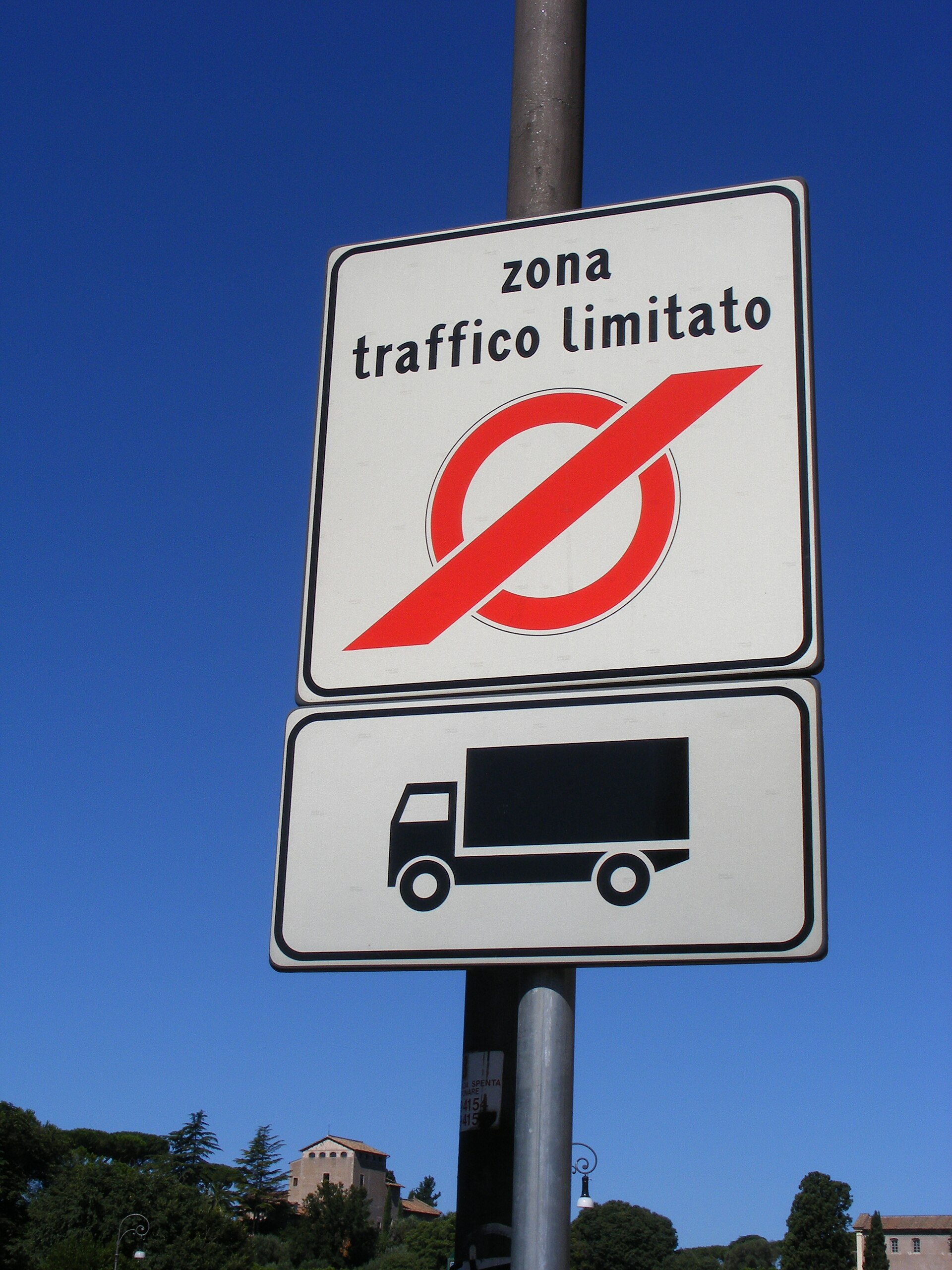
The most expensive Italian driving mistake is often a wrong turn, not a long motorway journey. A ZTL entry sign can state the hours, vehicle class or exemption panel. Rome, Florence, Bologna, Milan and smaller municipalities each set their own boundaries and schedules. A hotel booking or a garage name in a navigation result does not prove that the plate is authorised.
_-_road_sign_with_truck.jpg)
Before driving to a hotel, ask for the exact gate, allowed time window and plate-registration process. Photograph the sign and save the municipality’s map. The Roma Mobilità ZTL service is an example of why a city-specific page matters: boundaries, times and permits are managed locally. If the answer is unclear, leave the car at a garage or park-and-ride outside the zone and continue on foot or by public transport.
Parking colours are clues, not a nationwide contract. Blue bays commonly require payment, white bays can be free or time-limited, and yellow bays are reserved, but the sign beside the space decides the hours, resident permit, cleaning restriction and maximum stay. Enter the correct plate at the meter or app and keep the receipt. Check a garage’s height, opening hours and ZTL access route before following its address.
Autostrada tolls and long transfers
Italy has no nationwide motorway vignette. Most autostrada sections charge by distance and vehicle class. Autostrade per l’Italia’s toll explanation describes the calculation, while its payment-lane guide explains the colour and symbol system.
Take an entry ticket where the lane issues one, then choose the exit lane that matches the payment method. Blue signs generally indicate card payment, white lanes indicate cash options and yellow T signs are for an active electronic toll device. A rental windscreen box may be inactive or billed through the operator, so ask the branch before using it. If a ticket is lost or a machine fails, press the assistance button and follow the operator’s instructions. Never reverse in a toll lane.
Keep the ticket, card receipt and rental plate in the same route folder. An unpaid-toll notice or a separate rental administration charge can arrive after the car is returned. Do not pay an unexpected text-message link; open the named operator’s official site yourself.
Tuscany, the Amalfi Coast and the Dolomites
Tuscany: use the car between the cities
The official Italia.it Tuscany road-trip route follows the SR 222 Chiantigiana from Florence towards Siena and continues through hill towns and the Val d’Orcia. The route works because the car connects villages and viewpoints; Florence and Siena still deserve a parking decision before arrival. Keep the Tuscany seven-day driving plan beside the live route, and recheck restricted streets at every overnight stop.
Amalfi Coast: a road with little spare space
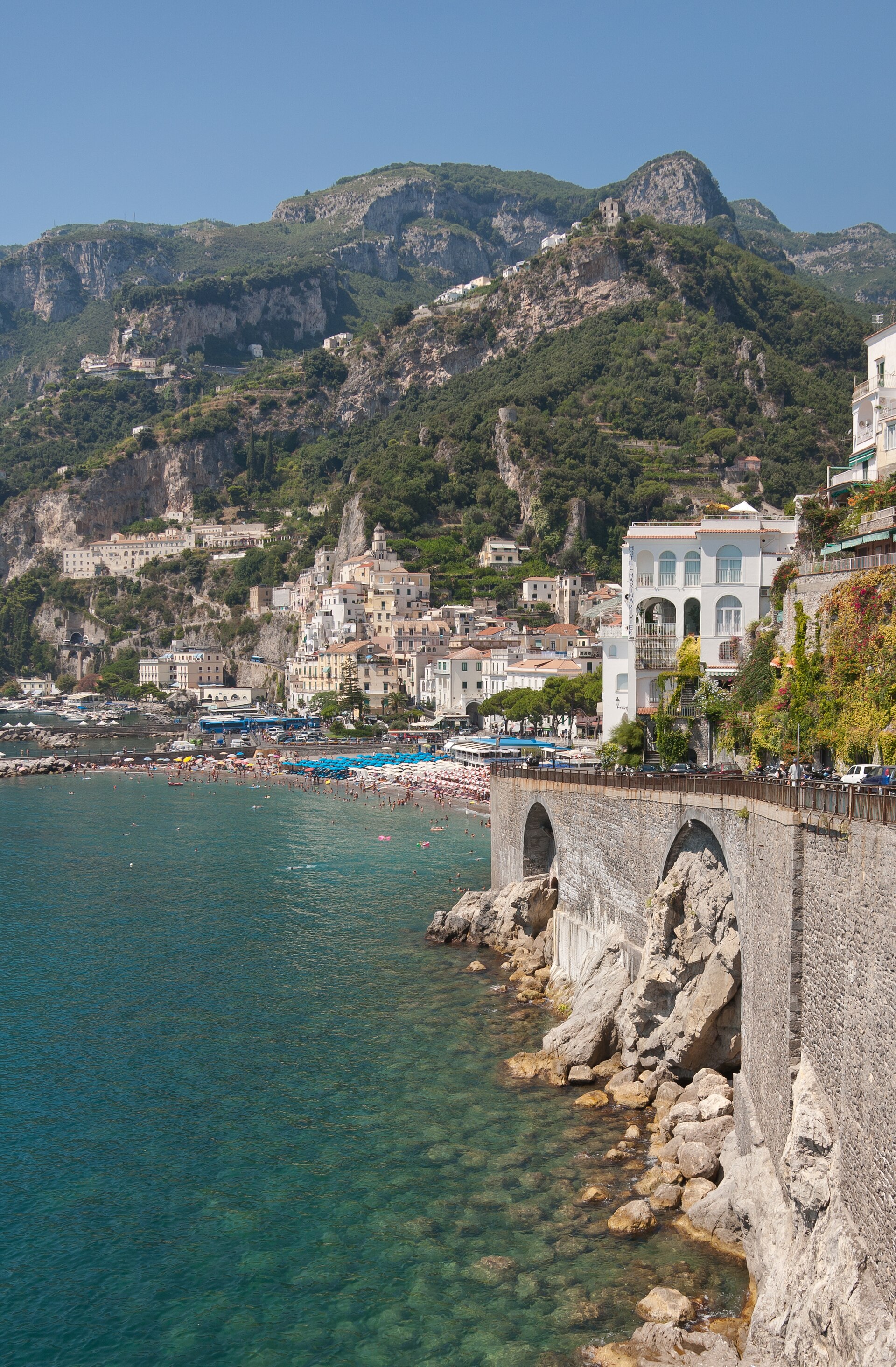
The official Amalfi page describes the coast’s steep settlements and the UNESCO-listed landscape. On the SS163, buses meet parked cars, pedestrians and blind bends in a narrow corridor. Use the smallest suitable car, start before the busiest part of the day, and book a legal parking place. Do not stop in a passing place for a photograph or assume that a beach or hotel pin has room for a vehicle.

Dolomites: check the pass, then the weather
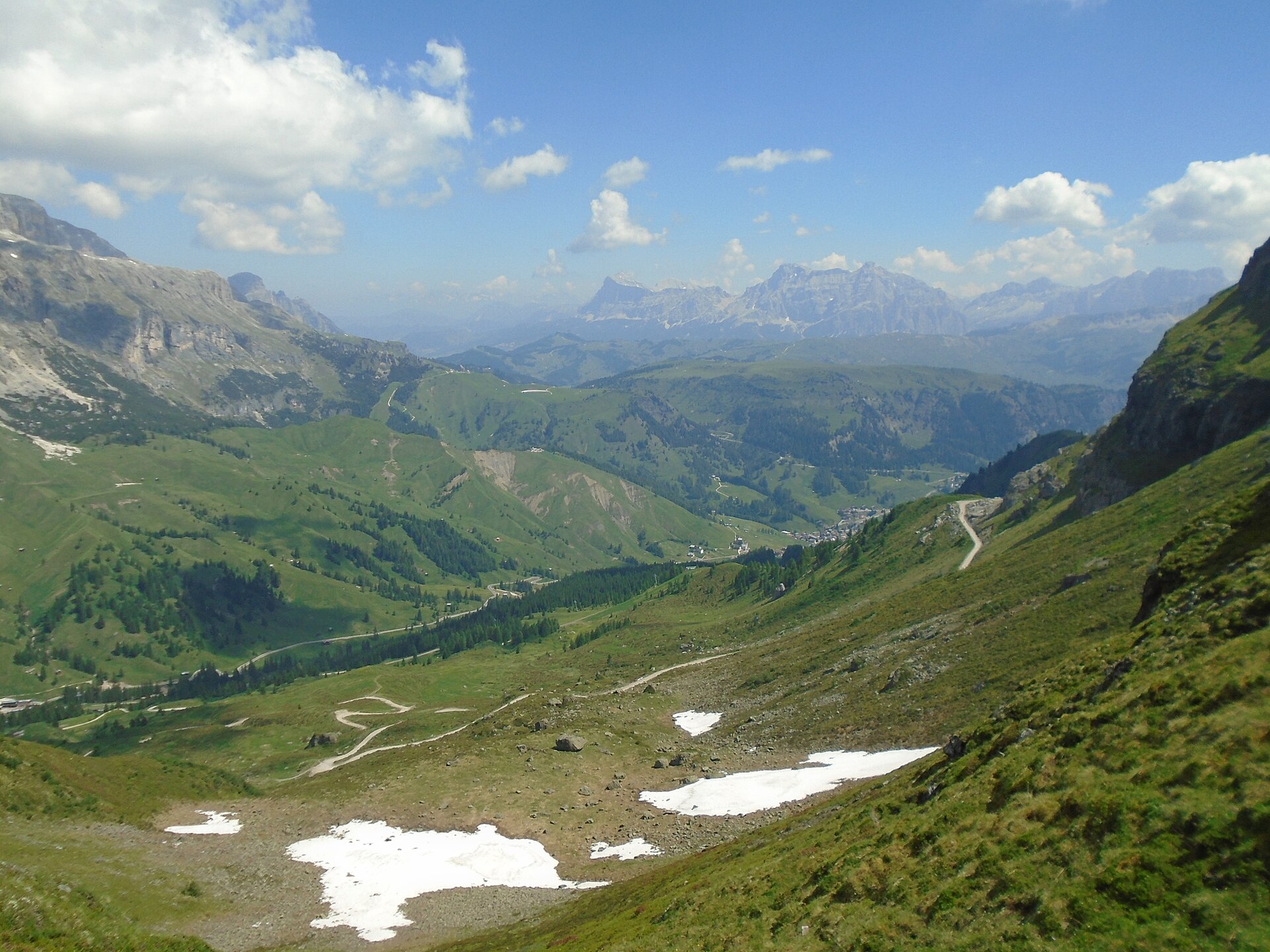
The Dolomiti Superski access guidance identifies the A22 as a toll route and advises winter tyres or snow chains in the Dolomites from mid-November to mid-April. Passes can be crowded in summer and closed or restricted after snow. Check the provincial road service, the pass status and the rental car’s equipment before climbing; a clear valley forecast does not describe a shaded hairpin at altitude.

Fuel, charging and rental records
Pump labels commonly show Benzina, Gasolio and GPL. Match the label to the fuel flap and contract rather than relying on a translation in an app. A staffed servito pump can cost more than self-service, and a rural station may have shorter staffed hours. Keep a second payment method and refuel before a long mountain or island stage.
EV charging is expanding through several operators. Save the provider app, a roaming option and a backup charger before leaving a city. Ask the rental company which cable is included, how the battery should be returned and whether the contract bills a service fee.
At pickup, photograph wheels, glass, bumpers, fuel or battery level, warning lights and the registration plate. If the car is replaced, update every hotel, ZTL authorisation and toll-device record. After a collision, stop safely, exchange details, photograph signs and damage, complete a constat amiable when appropriate, and contact the rental company before arranging repairs.
Emergencies and a departure checklist
| Situation | Number or action |
|---|---|
| European emergency | 112 |
| Police | 113 |
| Fire brigade | 115 |
| Medical emergency | 118 |
| ACI roadside assistance | 803 116 from an Italian phone; check the contract for rental coverage |
ACI’s useful telephone numbers sheet lists the numbers and traffic-information services. When calling, give the road number, direction, nearest exit or kilometre marker, vehicle plate and whether anyone is injured. Move behind a barrier only when it is safe.
Before leaving the depot:
- keep the original licence, ID, registration and insurance documents within reach;
- confirm the IDP or certified Italian translation for a non-EU licence;
- photograph the vehicle and record the fuel or battery return rule;
- save each city’s ZTL map, hotel access answer and garage entrance;
- check toll-device status, winter equipment and the day’s mountain or coastal restrictions;
- store the rental assistance number, 112 and a second payment method offline.
Official resources and review date
This page was reviewed on 17 August 2026. Licence documents, ZTL schedules, toll processes, parking controls and mountain access can change. Reopen the relevant official page immediately before driving:
- ACI: documents and safety equipment for visiting motorists
- ACI: road signs, speed limits and lights
- ACI: restricted traffic areas and roundabouts
- Autostrade per l’Italia: toll payment methods
- Roma Mobilità: ZTL boundaries and permits
- Italia.it: Tuscany by car
- Dolomiti Superski: getting there and winter access
- ACI: useful telephone numbers
For neighbouring routes, compare France, Switzerland, Austria and Croatia before crossing a border.
Frequently Asked Questions
- Can I drive in Italy with a non-EU licence?
- A non-EU visitor needs a valid national licence together with an International Driving Permit or a certified Italian translation. The licence and accompanying document must still be valid, and the rental company may set additional conditions.
- What is a ZTL and how do I avoid a fine?
- A ZTL is a locally controlled limited-traffic zone. Read the sign, active hours and exemptions at the entry, then use an authorised garage or park outside the boundary when permission is not confirmed.
- What speed limits should I remember in Italy?
- The usual passenger-car defaults are 50 km/h in built-up areas, 90 km/h on secondary or local roads, 110 km/h on main extra-urban roads and 130 km/h on motorways. Bad weather lowers the motorway and extra-urban limits; signs always take priority.
- How are Italian motorway tolls paid?
- Most autostrada sections charge by distance and vehicle class. At the gate, follow the lane sign for cash, card or an active electronic device. Keep the entry ticket and do not enter a Telepass-only lane unless the rental device is enabled.
- Is the Amalfi Coast suitable for a rental car?
- The SS163 is narrow and busy, with coaches, pedestrians and limited stopping space. A small car, an early start and a confirmed parking plan are safer than treating the coast as a quick city transfer.
- Do the Dolomites require winter equipment?
- Mountain rules depend on the province, road and season. The Dolomiti Superski access guidance says winter tyres or chains are required on many routes from mid-November to mid-April; check the sign and current pass status before climbing.
- Which numbers should I save for an Italian road emergency?
- Call 112 for an emergency. ACI also lists 113 for police, 115 for fire and 118 for medical emergencies, while 803 116 is its roadside-assistance number from an Italian phone. Use the rental contract's assistance line for a non-dangerous breakdown.
Information Sources & Disclaimer
This guide compiles information from the official transport authorities, road operators, government travel information, and automobile associations linked for Italy.
While we strive to keep this information as accurate and up-to-date as possible (last reviewed: August 2026), traffic laws and toll rates can change without notice. We recommend verifying critical information with the local authorities or your car rental agency upon arrival.
Learn more about our Editorial Process →Compare Your Origin and Destination
Use the comparison tool to check driving side, units, documents, and other destination data for your route.