Start with the road, not the postcard
Chile’s long, narrow geography creates several very different driving trips. Santiago is a dense metropolitan road network with electronic toll gantries. Ruta 5 is the efficient paved spine through the central valley and north. The Carretera Austral is a slow, ferry-linked route through Aysén and Patagonia. Around San Pedro de Atacama, a short map distance can become a high-altitude, low-service day. Choosing the right vehicle and leaving a weather margin is more useful than trying to drive the whole country in one itinerary.
Chile drives on the right and uses kilometres per hour. Keep the physical licence, passport, rental agreement, registration and insurance together. The legal position on foreign licences is more nuanced than “an IDP is always required”: Article 59 of the Chilean traffic law recognises a valid foreign licence or international permit, while the tourist-licence rule reproduced by SUSESO allows tourists to drive during their tourism authorisation with an equivalent home-country licence. An IDP or official translation is still prudent for a non-Spanish licence and may be required by the rental desk.

Licence, IDP and the rental contract
- Carry the original licence: It must be valid for the vehicle class and readable to an officer or rental agent. An IDP is a translation and companion document, not a replacement.
- IDP is conditional: Chile’s tourist rule is not a blanket “IDP always required” rule. Get one when your licence is not in Spanish or Latin characters, your own authority recommends it, or the named rental company lists it as a handover condition.
- Check the contract before paying: Confirm minimum age, licence tenure, named drivers, deposit, one-way fees, gravel-road exclusions, ferry use, border travel and roadside recovery.
- Photograph the handover: Record wheels, glass, bumpers, fuel level, odometer and the spare wheel. Keep the inspection report with the rental agreement.
- Cross-border paperwork: Argentina requires advance authorisation and insurance for a rental car. A border crossing is a separate permission, not an automatic benefit of the rental booking.
Rules that matter on a long stage
Chile’s current traffic-law text sets national speed defaults, but signs and road authorities can vary them:
- Keep right and overtake on the left. Use the marked lane at merges and roundabouts rather than relying on a generic right-of-way rule.
- The default is 50 km/h in urban areas, 100 km/h on a road with one lane each way and 120 km/h on a road with two or more lanes in one direction. Lower posted limits around towns, bends, schools and works are common.
- Wear seat belts in every occupied seat and use a child restraint that matches the child’s age, size and the rental company’s requirements.
- Chile distinguishes legal categories for “under the influence” and “drunkenness”; the safe driving decision is no alcohol before a stage.
- Put a handheld phone away before moving. Set navigation, download the map and save the hotel or camp address while parked.
- Use headlights when signs, visibility or route conditions require them. In dust, snow or ash, slow down and follow official instructions rather than treating lights as permission to continue.
Three routes, three preparations
Ruta 5 and the central valley
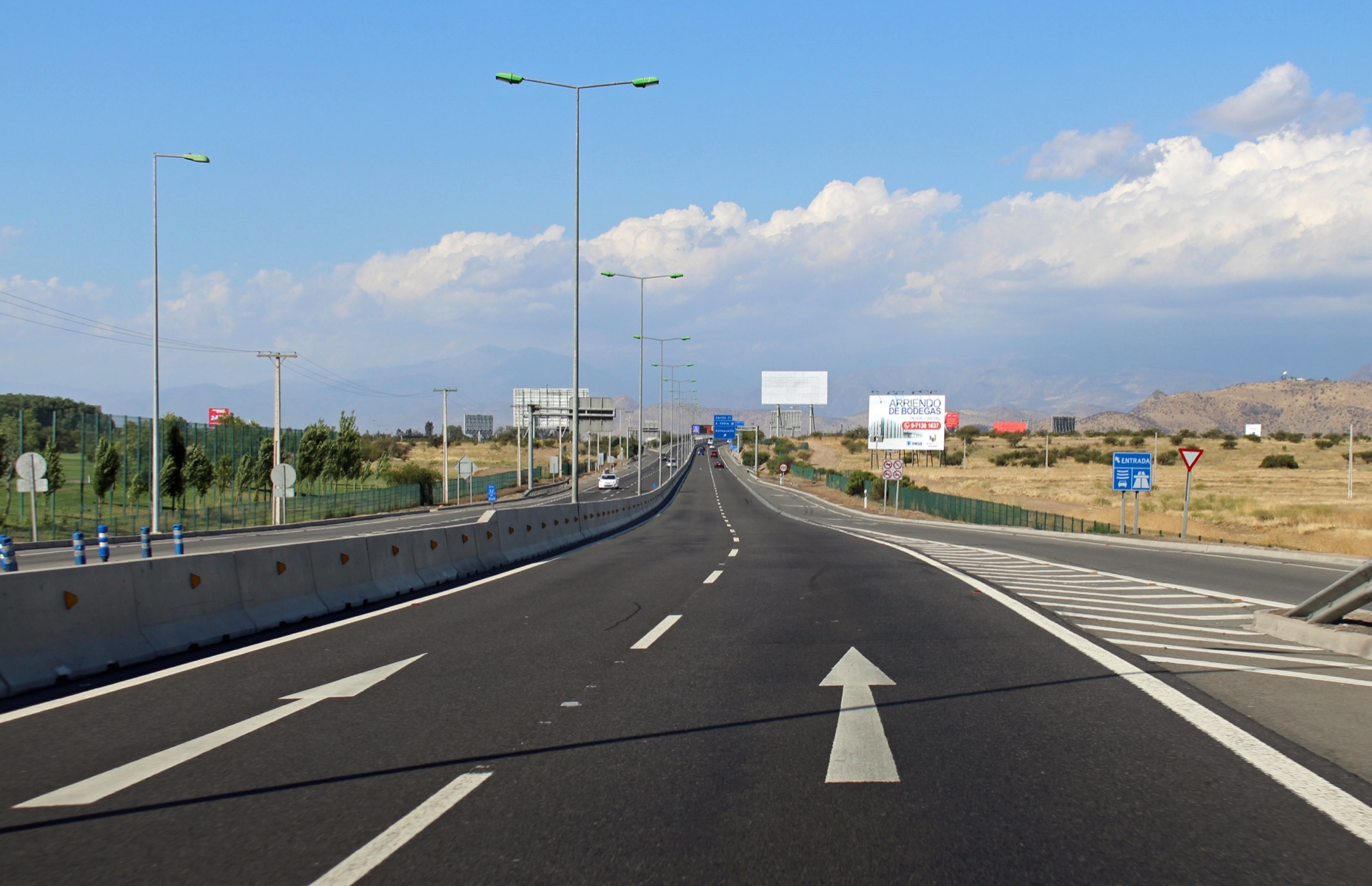
Ruta 5 is the practical north–south backbone, with good paved sections and concessioned toll roads. In Santiago, Costanera Norte, Autopista Central, Vespucio and the airport access use electronic collection. Outside the capital, concessioned sections of Ruta 5 and cross-routes such as Ruta 68 and Ruta 78 can use a mix of TAG, free-flow gantries and staffed toll points. Break a long drive at a known service area instead of assuming the next exit has fuel, toilets or card acceptance.
Carretera Austral (Ruta CH-7)
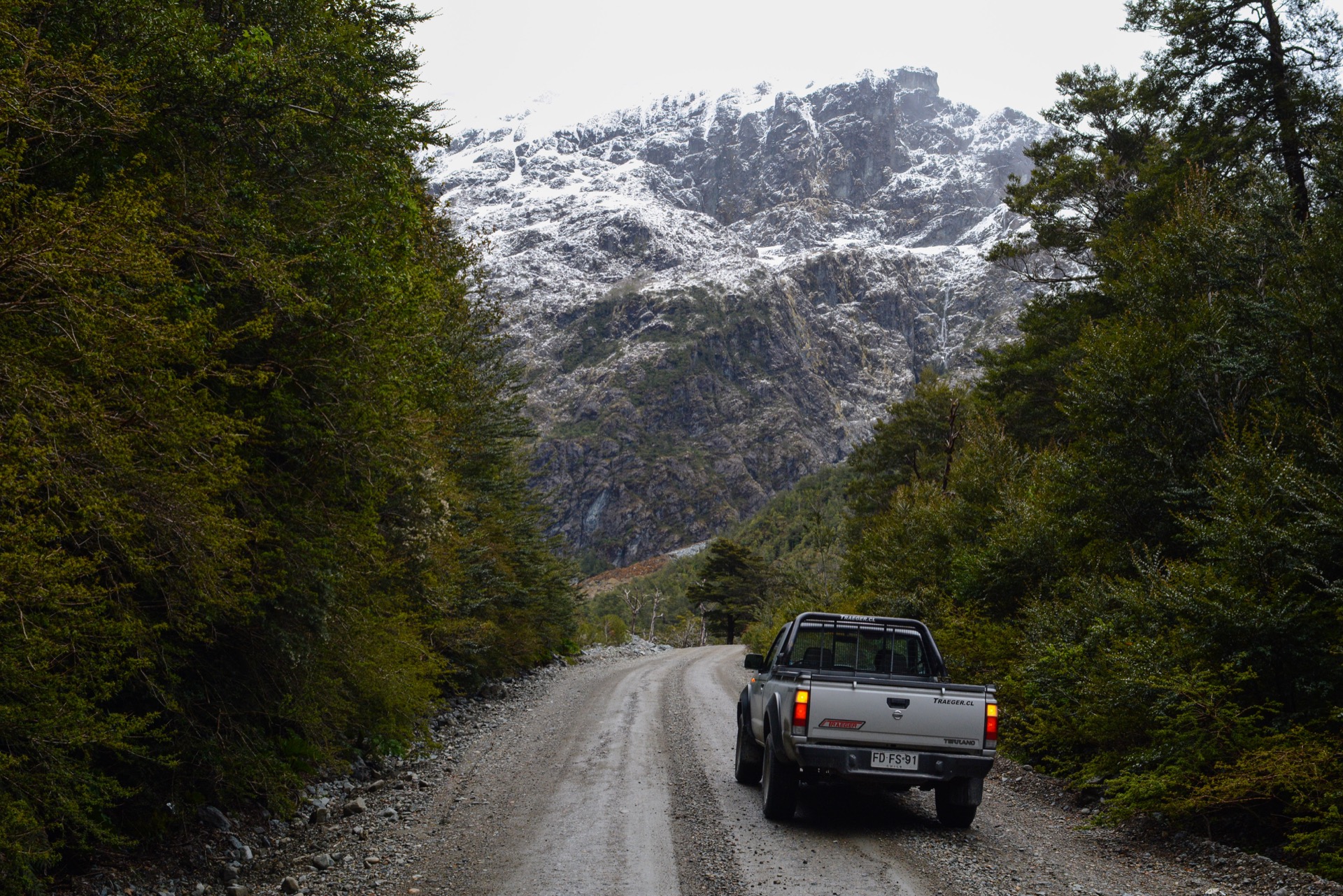
The Carretera Austral links Puerto Montt and Villa O’Higgins over roughly 1,240 km. The route is not a continuous motorway: gravel, construction, narrow bridges, landslide-prone slopes and ferry crossings are part of the itinerary. A pickup or high-clearance vehicle, a full-size spare and recovery cover make sense, but only if the rental contract permits the surface. Check the MOP road information and border/ferry-adjacent route notices before setting off. Keep a spare day for a cancelled sailing or a wet gravel section.
.jpg)
Atacama and the altiplano
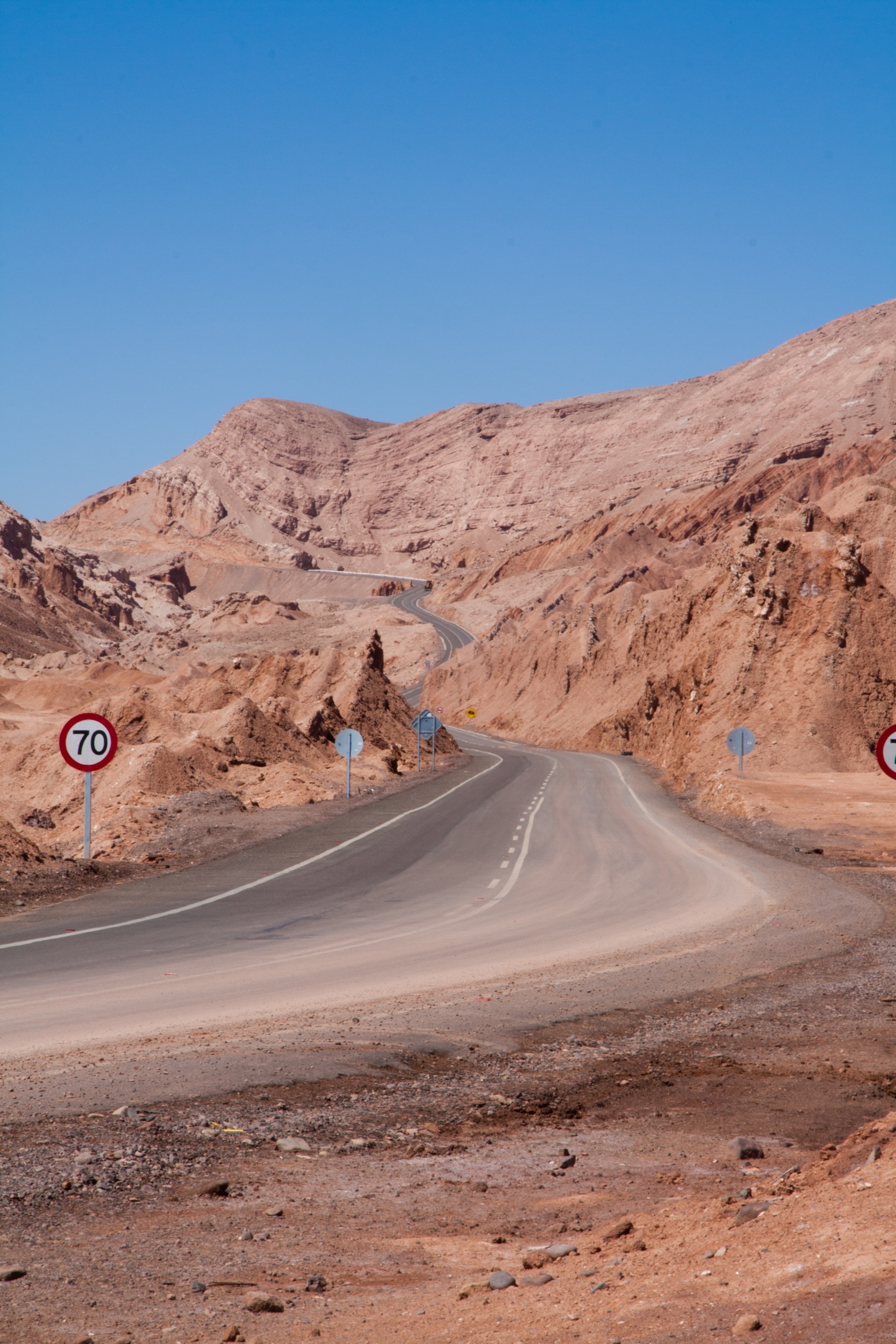
The paved road to San Pedro de Atacama is straightforward; the altiplano is a different proposition. Some routes climb above 4,000 m, with cold after sunset, strong sun, wind and limited mobile coverage. Fill the tank in town, carry water and warm layers, and do not combine a high-altitude excursion with a long return drive on the same day. The SENAPRED guidance on aluviones says not to cross a flooded channel or remain in a quebrada; that advice applies to a driver who meets sudden rain in an otherwise dry landscape.

TAG, tolls and fuel
The MOP concessions page lists current urban and interurban toll routes. The official Pasaste sin TAG portal also distinguishes urban daily passes from free-flow routes that are not covered by that pass. For a rental:
- Ask whether the car has a TAG device and how the company bills tolls, daily passes and administration fees.
- Do not assume “no cash anywhere” or “pay within 48 hours everywhere”; the operator and road type control the process.
- Keep the rental agreement and licence plate number available if you must use an operator portal.
- On Ruta 5 and remote routes, fill up whenever a reputable station is open. The gap between services can be the limiting factor, not the distance on the map.
- Cards are common in cities, but carry a cash fallback for smaller stations, ferries and rural parking. EV charging is concentrated in major cities and selected corridors; verify each leg rather than planning on a national network.
Parking, weather and safety
Use a marked garage or staffed lot in Santiago and Valparaíso, remove bags from sight and photograph the street or level where you left the car. On a gravel pull-off, park fully clear of the travel lane. In Patagonia, wind can make opening doors or loading a roof box hazardous; secure loose items before leaving.
Before a mountain, desert or ferry day, check the MOP road service, border-pass status, Dirección Meteorológica de Chile services and SENAPRED alerts. SENAPRED specifically warns drivers not to cross an aluvión and to avoid quebradas, bridges and riverbeds during risk conditions. Volcanic ash can also reduce visibility and damage an engine; follow the volcano guidance and stop if authorities tell you to do so.
Emergencies
| Service | Number or action |
|---|---|
| Medical emergency (SAMU) | 131 |
| Firefighters | 132 |
| Carabineros police | 133 |
| Rental breakdown | Number on the rental contract |
Call from a safe place where possible. Give the route number, direction, nearest town or landmark, number of people and whether the car is blocking traffic. In a remote area, stay with the vehicle unless responders instruct you to walk; a dropped pin or kilometre marker is more useful than a resort name.
Sources and review date
This page was reviewed on 17 August 2026. Licence and IDP wording was checked against Chile’s traffic law (Articles 59–60) and the tourist licence rule reproduced by SUSESO. Speed defaults were checked against the current Ley de Tránsito text. TAG and free-flow guidance was checked against MOP concessions and tolls and Pasaste sin TAG. Road, border, weather and hazard guidance was checked against MOP Vialidad, border-pass status, Dirección Meteorológica de Chile, SENAPRED aluvión guidance and SENAPRED volcanic guidance. Recheck road status, weather, border access, toll terms and rental conditions for your travel dates.
Related guides
- Chile rental cars, TAG, tolls and mountain roads
- International Driving Permit guide
- Car rental insurance guide
Related destinations
Frequently Asked Questions
- Do I need an International Driving Permit to drive in Chile?
- Not as a blanket rule for tourists. Chilean law allows a visitor with a valid home-country licence equivalent to a Chilean non-professional licence to drive during the period of tourism authorisation. An official translation or IDP is sensible when the licence is not readily readable, and a rental company can set a stricter contract requirement. Carry the original licence; an IDP never replaces it.
- What are Chile's default speed limits?
- The national defaults are 50 km/h in urban areas, 100 km/h on roads with one lane in each direction and 120 km/h on roads with two or more lanes in one direction. Signs, road design and temporary works can lower the limit, so the sign on the road you are actually driving controls.
- How does TAG work in a rental car?
- Urban Santiago concessions and several interurban routes use electronic TAG or free-flow gantries. Rental cars normally carry a device and the company later bills tolls, service fees or daily passes. Ask for the operator's current policy before leaving the depot; do not assume that every Chilean toll is cashless or that one daily pass covers every route.
- Is the Carretera Austral paved?
- No. Ruta CH-7 links Puerto Montt and Villa O'Higgins over roughly 1,240 km, with gravel and works on substantial sections plus ferry connections. Confirm the rental contract, spare-wheel and recovery cover, ferry timetable and the current MOP road report before committing to a long stage.
- Can a normal car reach the Atacama altiplano?
- A normal car is fine for the main paved approach to San Pedro de Atacama. Higher altiplano roads can exceed 4,000 m and combine steep grades, cold, wind and long service gaps. Use the vehicle allowed by the operator or rental contract, fill up in town, carry water and check weather and route notices before ascending.
- Do I need a 4WD in Chile?
- Not for Santiago, Ruta 5 or most paved central-valley itineraries. A high-clearance or 4WD vehicle becomes a practical choice for gravel sections of Carretera Austral and some remote Atacama or Patagonia approaches. Check whether the rental company actually permits those surfaces; insurance exclusions matter more than the badge on the boot.
- Can I drive a Chilean rental car into Argentina?
- Only when the rental company authorises it in writing and supplies the cross-border papers and insurance. Border passes can close for snow or wind, and not every vehicle or one-way booking is eligible. Check the MOP border-pass status on the day you travel and leave a weather buffer.
- What should I do before a Carretera Austral ferry crossing?
- Treat the ferry as part of the route, not a backup. Check the operator's sailing calendar, arrive with fuel and food, allow for weather delays, and keep the rental agreement and vehicle dimensions handy. If the next sailing is full or cancelled, do not plan a night drive to make up the lost time.
- What are Chile's emergency numbers?
- Call 131 for SAMU medical help, 132 for Firefighters and 133 for Carabineros police. Also save the rental company's roadside number. Give the operator the route, direction, nearest town or landmark, number of people and whether the vehicle is blocking traffic.
- Where can I check road and weather conditions?
- Use the Chilean Ministry of Public Works road and border-pass pages, the Dirección Meteorológica de Chile forecasts and SENAPRED alerts. Recheck before a mountain, desert or ferry stage: a route can be open in the morning and restricted after snow, wind, flooding, an aluvión or a volcanic alert.
Information Sources & Disclaimer
This guide compiles information from the official transport authorities, road operators, government travel information, and automobile associations linked for Chile.
While we strive to keep this information as accurate and up-to-date as possible (last reviewed: August 2026), traffic laws and toll rates can change without notice. We recommend verifying critical information with the local authorities or your car rental agency upon arrival.
Learn more about our Editorial Process →Compare Your Origin and Destination
Use the comparison tool to check driving side, units, documents, and other destination data for your route.