Choose the right Brazilian drive
Brazil is too large for one generic driving plan. A short urban rental in Curitiba is a different task from a week on the BR-116, and both differ from a wet-season coastal route. Decide first whether the car is for a city, a transfer between cities or access to a remote region. Keep city days flexible: São Paulo and Rio are usually easier by rail, metro or ride-hailing than by moving a rental car through the centre.
For a road trip, split the itinerary into realistic driving days, leave a buffer for trucks and weather, and identify fuel, rest and mobile-coverage stops before you leave the main corridor. The road number, state and direction are useful details when asking for help.

Licence and documents
Brazil’s Ministry of Transport guidance on foreign licences is more precise than a blanket “IDP required” rule. A visitor covered by a ratified convention can drive for up to 180 days from the date of entry with a valid foreign licence. Carry the original licence, passport or accepted identity document, and proof of the entry date.
If the licence was issued by a country that is party to the 1968 Vienna Convention, carry an International Driving Permit together with the national licence. The IDP is a translation and supplement, never a replacement. If your country is outside the relevant convention or the 180-day period will expire, contact the DETRAN of the state where you will drive before relying on the licence. A rental desk may also set stricter document or age conditions.
At collection, keep the rental agreement, vehicle registration, insurance contact and roadside-assistance number in the car. Tell the company if you will cross a state border or use an unpaved access road; contract exclusions are separate from traffic law.
Rules that matter on the road
The Brazilian Traffic Code (CTB) is the controlling reference. Brazil drives on the right, and signs or road markings take priority over a general rule. Seat belts are required for every occupied seat. Children under 10 and shorter than 1.45 m must use the appropriate restraint in the rear seat.
Use low-beam headlights at night, in tunnels and whenever rain or fog reduces visibility. During daylight, a car without daytime running lights must use low beams on a single-lane highway outside an urban area. Motorcycles have their own daytime low-beam requirement. This is narrower than the old advice that every highway must have headlights on all day.
Holding or manipulating a phone while driving is a gravíssima offence under the CTB. Mount the phone before moving and use voice or hands-free navigation. Brazil’s Lei Seca uses a zero-tolerance approach to alcohol: the practical rule for a visitor is simple: do not drink before driving, and do not assume a small amount is acceptable.
Speed limits: read the sign first
Article 61 of the CTB gives these defaults only when there is no sign. The road authority can post a different limit, and a temporary work-zone or weather sign controls immediately.
| Road setting | Default where no sign is present |
|---|---|
| Urban express road | 80 km/h |
| Urban arterial road | 60 km/h |
| Urban collector road | 40 km/h |
| Urban local road | 30 km/h |
| Divided rural road, car/light vehicle | 110 km/h |
| Undivided rural road, car/light vehicle | 100 km/h |
| Estrada (other rural road) | 60 km/h |
These are not a target speed. Slow down for standing water, animals, pedestrians, bicycles, heavy trucks, gravel and poor visibility. When a rental car receives a camera notice, ask the company how the notice and any administration fee are handled.
Road conditions, rain and mountain routes
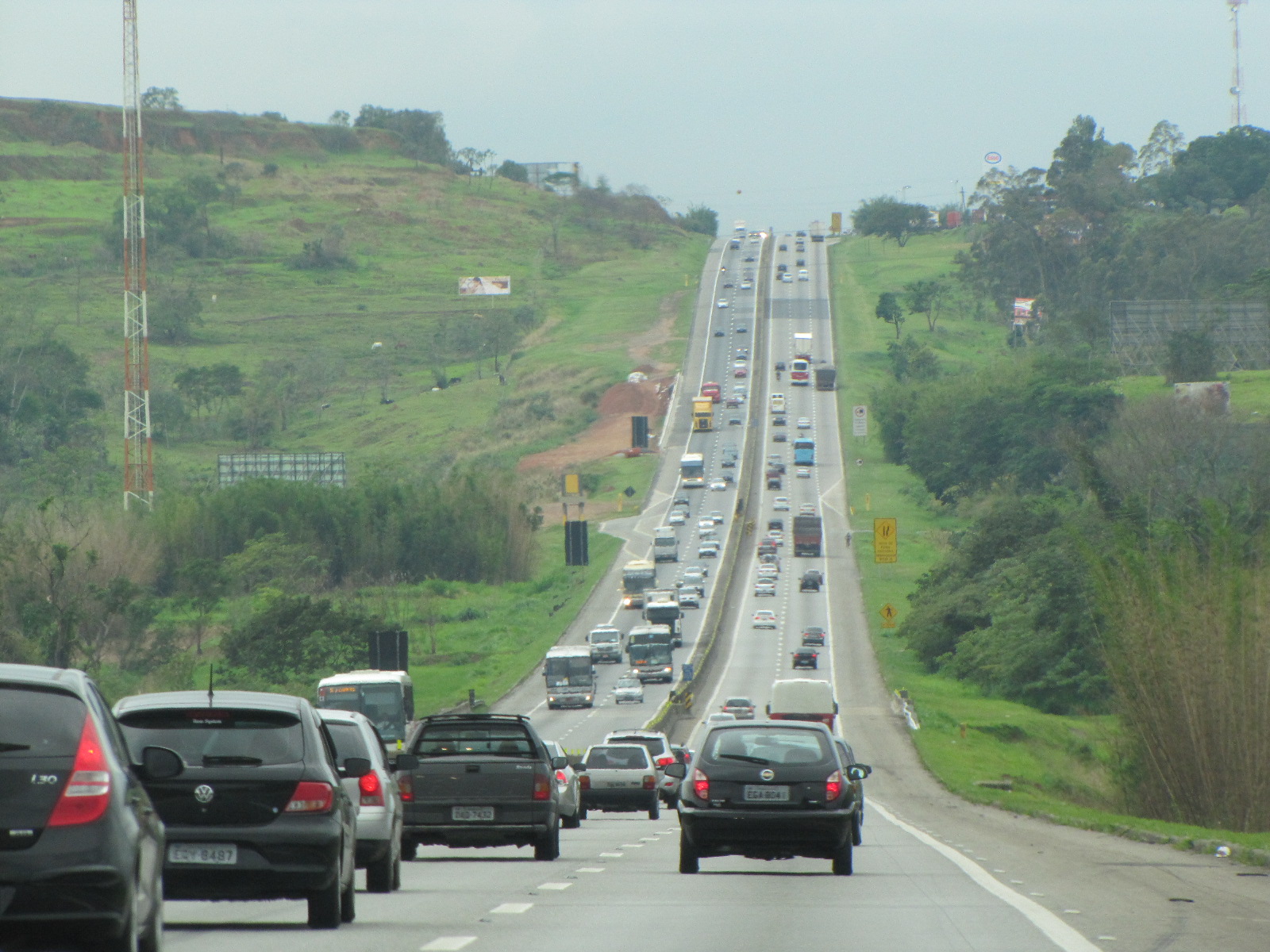
Federal BR roads and state roads can change quickly after a resurfacing project, storm or concession handover. The Ministry of Transport’s road-condition service and DNIT’s management-condition map are useful starting points for federal corridors. Add the concessionaire’s live notices and a local weather check before committing to a coastal or mountain section.
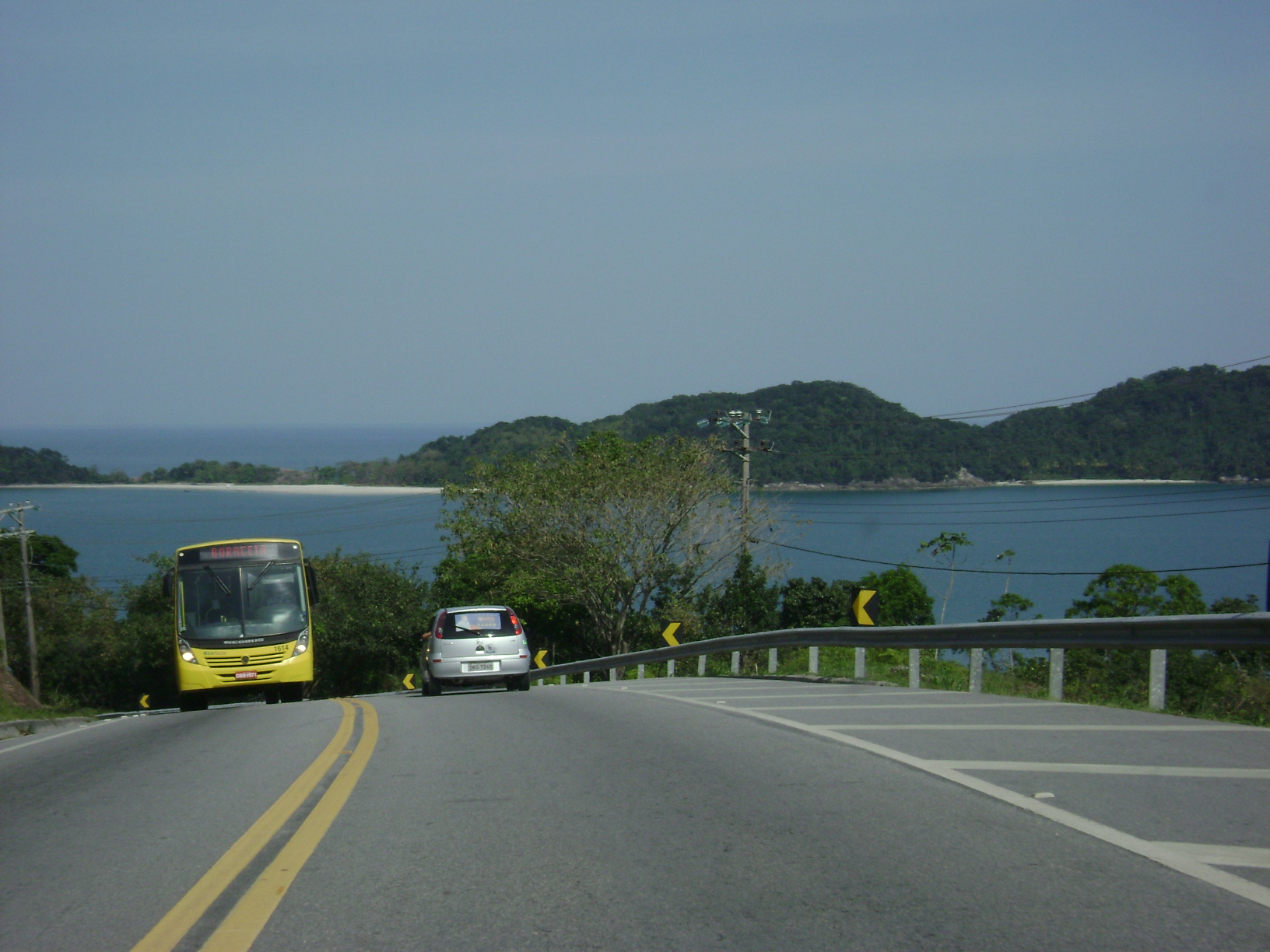
The Rio-Santos and Serra do Mar routes are scenic but combine curves, slopes and heavy rain. A route that is open in the morning can have standing water, fallen branches or a temporary closure later. On an unpaved Amazon or interior road, confirm the wet-season status, river crossings, fuel range and vehicle restrictions with a local operator; a normal city hatchback is not a substitute for local knowledge.

Tolls, tags and Free Flow
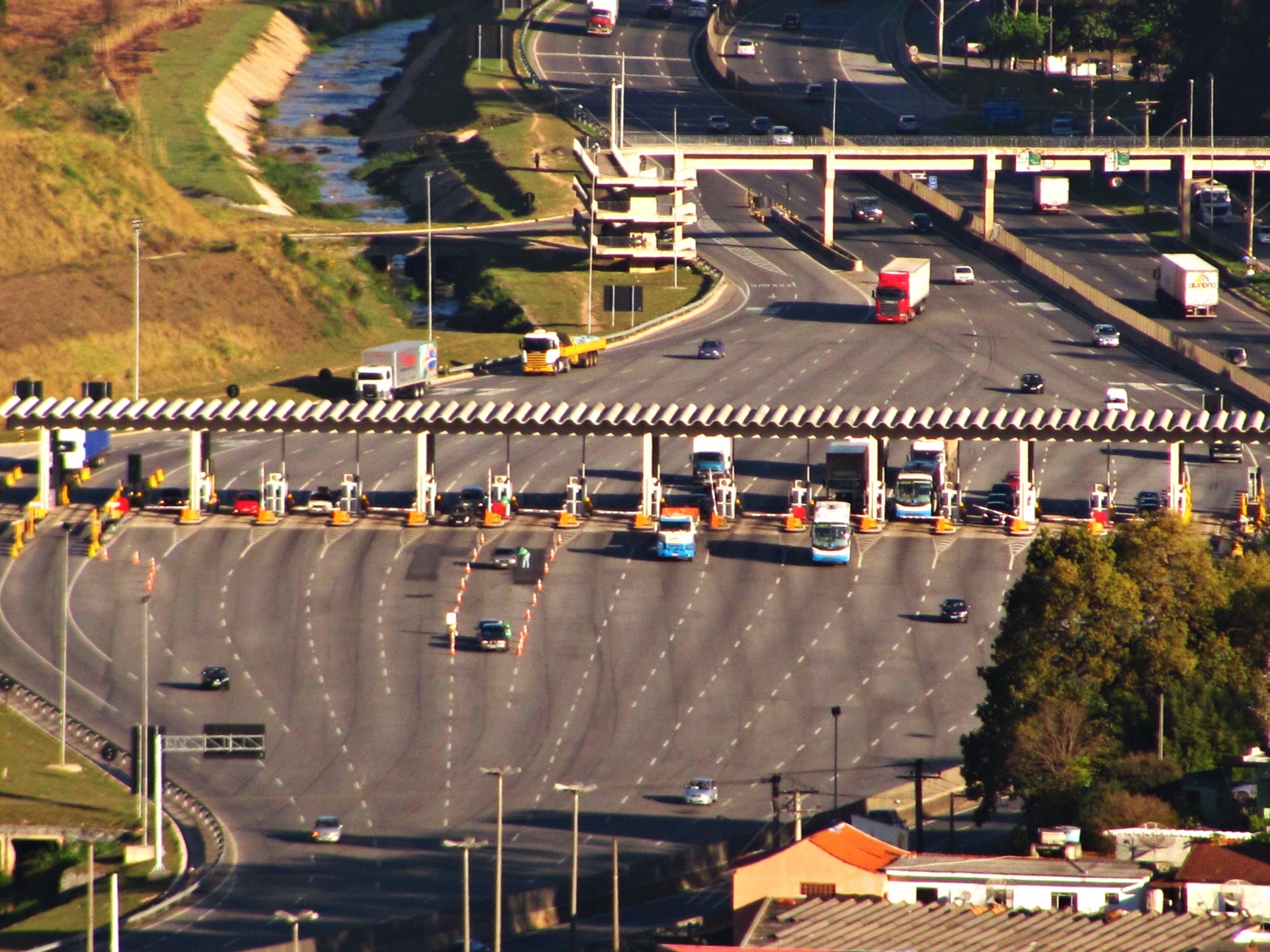
The toll picture is mixed. A route may use a conventional pedágio plaza, an electronic tag lane or a newer Free Flow point with no booth. ANTT’s Free Flow guidance lists a gradual rollout on selected concessions; cameras read a tag or the number plate. A rental vehicle may have a tag, but the company decides whether it is activated and how the charge is passed on.
Before leaving the plaza or Free Flow segment, confirm:
- which concessionaire operates the road and what its payment deadline is;
- whether the rental contract adds a processing fee to the toll;
- whether a tag lane, staffed lane or cash/card lane is available;
- where the official app, website, totem or authorised payment point is located.
ANTT warns drivers without a tag to pay through official concessionaire channels and to ignore unsolicited WhatsApp, SMS or email requests. Never use a search-ad payment page just because it carries a familiar logo.

City traffic and parking
In São Paulo, the CET rodízio notice describes the Central Expanded Area restriction on weekdays, normally 07:00–10:00 and 17:00–20:00. Plate endings 1–2 are assigned Monday, 3–4 Tuesday, 5–6 Wednesday, 7–8 Thursday and 9–0 Friday. The rule can pause for holidays or change through a current municipal notice; out-of-city plates are not automatically exempt. If the trip is a city visit, park once and use public transport instead of crossing the restricted area repeatedly.
Rio’s parking rules are also local. The Rio Rotativo Digital service uses the Jaé app in mapped active areas; other streets retain their existing signs and operators. Read the sign at the exact bay, check the map in the official app, and use a garage when a neighbourhood has no clear legal space. Do not leave passports, bags or electronics visible in the cabin.
Fuel, charging and rental handover
Petrol stations commonly sell gasolina and álcool (ethanol); many Brazilian cars are flex-fuel. Follow the fuel type printed in the rental agreement or on the filler flap, and do not assume ethanol is the cheaper choice after accounting for consumption. Diesel is common in trucks and some larger vehicles but is not the default for a small rental car. On a long rural leg, fill before the tank is low and keep a card and a backup payment method.
Public charging is growing in São Paulo, Rio and other large cities but is less predictable between towns. Check connector type, access hours and the operator’s app before treating an EV as a remote-road vehicle. Photograph the car, fuel gauge, tyres and existing damage at handover; confirm the toll-tag policy, insurance territory, roadside number and one-way or gravel-road restrictions in writing.
Emergencies and breakdowns
ANATEL’s official emergency-number list lists free calls to:
| Service | Number |
|---|---|
| Military Police | 190 |
| Federal Highway Police (PRF) | 191 |
| SAMU ambulance | 192 |
| Fire Service | 193 |
| Civil Defence | 199 |
On a federal road, PRF guidance asks for the BR number, state, direction of travel and a nearby kilometre marker. On a concession road, call PRF and the concessionaire’s emergency service. Turn on hazard lights, move behind a barrier if it is safe, and do not stand in a live lane to photograph a minor collision.
Sources and review date
Key checks for this page:
- Senatran: foreign licences and the International Driving Permit
- Planalto: Brazilian Traffic Code (CTB)
- ANTT: Free Flow
- Ministry of Transport: road conditions
- DNIT: road management-condition map
- São Paulo CET: rodízio and traffic fines
- Rio Rotativo Digital
- ANATEL: public-service and emergency numbers
Reviewed 17 August 2026. Road works, toll payment deadlines, municipal restrictions, weather and rental policies can change; the linked official pages and signs at the location take priority.
Related destinations
Frequently Asked Questions
- Can I drive in Brazil with my home licence?
- Visitors covered by Brazil's ratified conventions can normally drive for up to 180 days with a valid foreign licence, identity document and proof of entry. If your licence is from a 1968 Vienna Convention country, carry an IDP together with the national licence; there is no blanket IDP rule for every visitor.
- Which side of the road does Brazil use?
- Brazil drives on the right. Overtake on the left and follow the lane markings and signs rather than informal gestures from other drivers.
- What are Brazil's speed limits?
- Posted signs control. Where there is no sign, the CTB default is 80/60/40/30 km/h for urban express, arterial, collector and local roads; outside urban areas it is generally 110 km/h on a divided road, 100 km/h on an undivided road and 60 km/h on an estrada.
- Do I need headlights during the day?
- Use low beams at night, in tunnels and in rain or fog. During the day, a vehicle without daytime running lights must use low beams on a single-lane highway outside an urban area; motorcycles have separate daytime lighting rules.
- What child-restraint rule should a rental driver know?
- Seat belts are required for every occupant. Children under 10 who are shorter than 1.45 m travel in the rear seat with the appropriate child restraint; confirm the rental seat and its installation before leaving.
- How do tolls and Free Flow work?
- Brazil has a mixture of staffed plazas, electronic tags and gradually expanding Free Flow gantries that read a tag or plate. Without a tag, pay through the concessionaire's official site, app, totem or authorised point; ignore unsolicited payment links.
- What is São Paulo's rodízio?
- In the Central Expanded Area, Monday-to-Friday restrictions normally run 07:00–10:00 and 17:00–20:00, with plate-ending days 1–2 Monday, 3–4 Tuesday, 5–6 Wednesday, 7–8 Thursday and 9–0 Friday. Check CET before driving because holidays and local notices can change the operation.
- Is street parking in Rio de Janeiro the same everywhere?
- No. Parking is municipal and sign-led. Rio's Rotativo Digital uses the Jaé app in mapped active areas, while other streets follow their existing signs and operators. Check the map and the sign at the exact space before leaving the car.
- Should I drive long rural routes at night?
- Treat this as a route decision, not a national ban. Darkness reduces visibility on unlit or damaged sections, and rain can bring flooding, debris or landslides. A daylight arrival, a charged phone and a checked road-condition report are sensible defaults.
- Which emergency numbers should a driver save?
- Call 190 for Military Police, 191 for Federal Highway Police, 192 for SAMU, 193 for Fire Service and 199 for Civil Defence. Calls to these public-service numbers are free.
Information Sources & Disclaimer
This guide compiles information from the official transport authorities, road operators, government travel information, and automobile associations linked for Brazil.
While we strive to keep this information as accurate and up-to-date as possible (last reviewed: August 2026), traffic laws and toll rates can change without notice. We recommend verifying critical information with the local authorities or your car rental agency upon arrival.
Learn more about our Editorial Process →Compare Your Origin and Destination
Use the comparison tool to check driving side, units, documents, and other destination data for your route.