Overview: route distance is a poor time estimate
Costa Rica’s map is compact, but a short transfer can include town traffic, steep bends, bridge approaches, potholes and an unpaved final road to a lodge. The Pacific side, the central highlands and the Caribbean lowlands also behave differently in the wet season. Drive on the right, leave more time than the straight-line distance suggests, and plan the last kilometre as carefully as the main highway.
The useful question is rarely “Is this country a 4WD destination?” It is “What is the surface, gradient and recovery plan for every part of this particular booking?” A sedan may be fine for San José and La Fortuna, while a cloud-forest lodge or remote beach needs extra clearance, a different contract or a transfer from a local operator. Keep the original licence, passport, rental agreement, insurance details and a charged phone together.
Foreign licences, immigration status and rental paperwork
The current Article 91 of Costa Rica’s traffic law allows tourists and people in transit to drive the same vehicle class with a foreign licence for the period granted by immigration. The official Visit Costa Rica planning page and its visitor FAQ explain the rule in practical tourist terms: a valid legal home-country licence is generally enough, an IDP is not required for a stay of up to three months, and the licence must remain valid.
Those statements answer the government question, not the rental-desk question. Before collection, ask the branch:
- whether the original licence is readable in its accepted languages and whether it also wants an IDP or certified translation;
- how long the driver must have held the licence, the minimum rental age, young-driver surcharge, deposit and additional-driver rules;
- whether the named vehicle may use gravel, sand, mountain roads or a remote beach approach;
- whether roadside recovery, punctures, windscreen damage, flood damage and one-way returns are excluded; and
- which registration, insurance and emergency documents must stay in the car.
For a longer stay or a non-tourist status, do not rely on a tourist summary. The MOPT guidance on homologating a foreign licence describes a personal procedure with current document and appointment requirements. Check the immigration period and the exact vehicle class before assuming that a booking extension also extends the legal driving window.
Speed, signs and city driving
The current Article 98 of Law 9078 makes the posted limit the practical starting point. Where no sign is posted, the law uses different defaults for dense urban roads, other road contexts and areas near schools, health facilities or large events. Temporary signs, road works, police directions and a changed surface override a generic planning number.
Use the signed speed as a ceiling, not as a target for a wet bend. Costa Rica’s transport ministry reported 1,173 speeding citations in the first 90 days of 2026 in its current enforcement report, a reminder that enforcement is active and the risk is not theoretical. Seat belts, child restraints, lights in poor visibility, safe overtaking and hands-free navigation should be treated as part of the route plan. Stop before handling the phone, and do not copy a local shortcut across a centre line.
San José and its approaches deserve a separate buffer. Traffic can make a short airport or hotel transfer unpredictable, while guarded parking is safer than leaving luggage in a visible car. The tourism authority advises travellers to avoid isolated stops, use guarded parking, keep valuables out of sight and call 9-1-1 or the rental company after a mechanical problem. Read the rental contract for tyre, glass and roadside exclusions before leaving the branch.
Tolls, fuel and payments
The ARESEP toll overview identifies CONAVI-operated tolls on Routes 1, 2 and 32 and the Globalvia concession on Route 27. CONAVI’s toll administration page publishes its stations and current notices, while the Ruta 27 operator publishes the concession’s current rates. Amounts and payment arrangements can change, so a price remembered from another trip is not a reliable budget.
Ask the rental company whether the car has a QuickPass or another electronic tag, whether cash is accepted at the station you plan to use, and how tolls and administration fees appear on the final invoice. Keep some colones for small charges and top up fuel before a remote mountain or coastal stage. A route with a full tank in San José may still need a deliberate refuelling stop before Monteverde, the Osa Peninsula or a long Caribbean transfer.
Rain, landslides and the road to the lodge
The official climate guide describes a Pacific dry season from December to March and a wetter period from May to October. November is a transition month, while July and August can bring a short Pacific “veranillo”. The Caribbean pattern differs, with its own relatively drier and wetter periods. Treat these as planning tendencies, not a promise for the day you drive.
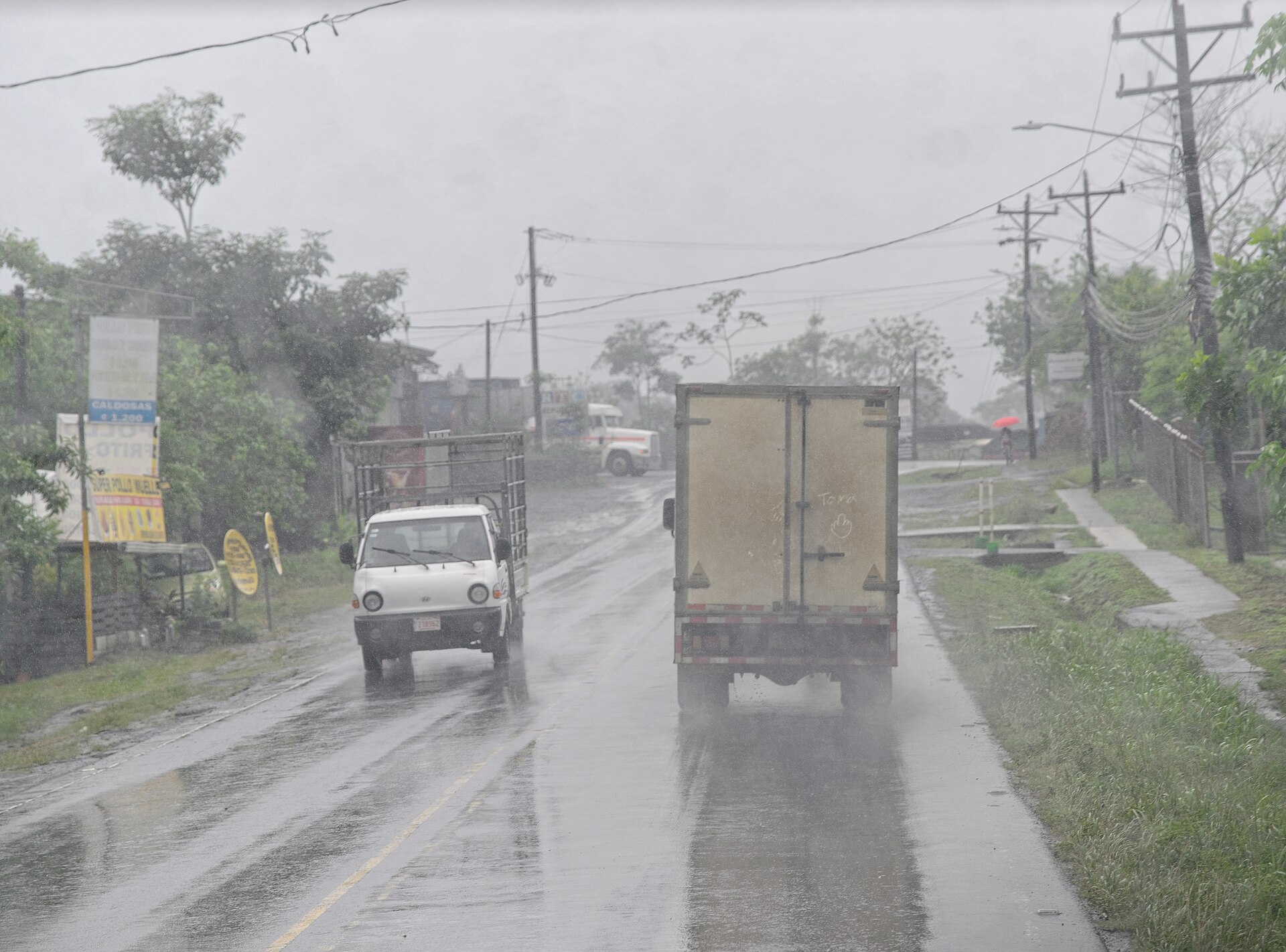
In the rainy season, schedule mountain and rural sections in daylight. Check the National Emergency Commission alert page and current MOPT road notices before leaving. Do not enter moving water, drive around a barrier or continue onto a road that has lost its edge. A navigation app can keep drawing a line after a bridge or slope has become unsafe. Turn around early and ask the accommodation for the current access route.

Monteverde and cloud-forest approaches
Monteverde is a good example of why a national destination label cannot decide the car for you. The main approach can include steep, uneven or gravel sections, and the final road to a hotel may be different from the road to a reserve entrance. Ask the property for a written pin, the current surface, a realistic arrival time and whether a normal car can reach its parking area after rain.
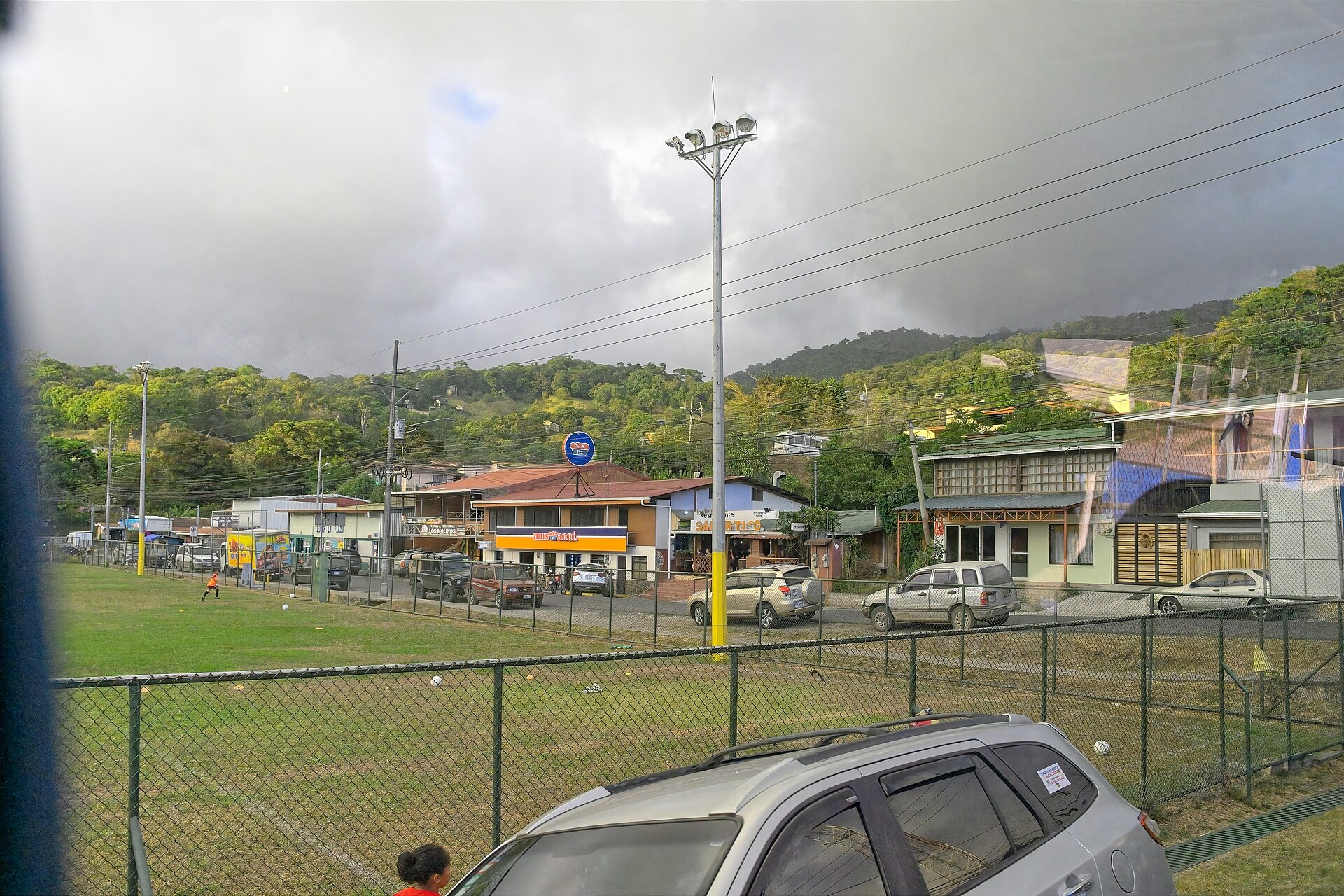

Use a slower arrival plan, avoid descending an unknown gravel track after dark, and leave room for oncoming vehicles on narrow bends. Four-wheel drive helps only when the contract permits the road and the driver understands the surface; it cannot make a flooded or closed road safe.
Arenal, national parks and timed entry
La Fortuna and the Arenal area connect paved highways with short local approaches. The SINAC Arenal visitor page currently says that online reservation is unavailable there and that visitors buy at the park box office on the same day with a card. That is a park-specific instruction, not a national rule.
SINAC’s online services and reservation system is the better starting point for other parks. Tenorio publishes entry hours and capacity controls, while Corcovado requires a reservation and lists its official access sectors. Save the booking confirmation offline, check the correct sector, and ask whether the car park is inside or outside the protected area.
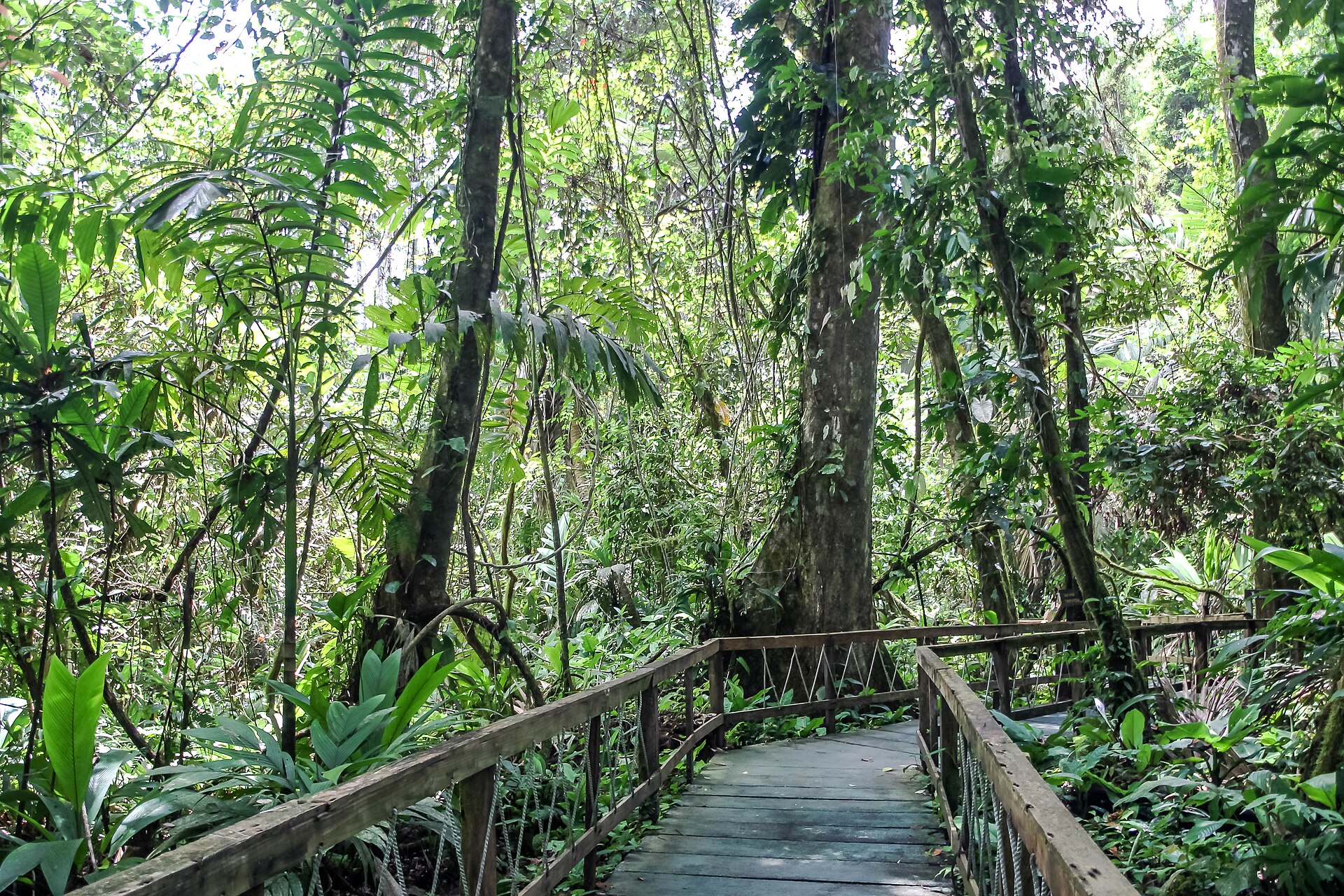
The Veragua Rainforest image is a useful reminder that a rainforest visit can end at a managed boardwalk rather than a road. Park on the designated lot, keep valuables out of the vehicle and follow the ranger’s access instruction rather than attempting an unmarked track.
.jpg)
.jpg)
Pacific and Caribbean coast routes
Route 27 is the main paid corridor from the Central Valley toward the Pacific coast, but the final coastal road can be slower and rougher than the highway. On the Caribbean side, bridges, heavy rain and long stretches between services deserve the same daylight rule. Never assume that a beach hotel permits beach driving or that a 4WD rental is allowed to leave the public road; the tourism authority says driving four-wheel vehicles on beaches is illegal.
Plan a fuel stop before a remote section, use guarded parking and leave passports, camera bags and spare luggage out of sight. At a beach, obey warning signs and stay away from rip currents; a scenic stop is not a reason to leave the car beside an unguarded road.
Equipment, navigation and the return inspection
Visit Costa Rica’s traveller tips tell drivers to check the rental vehicle’s warning triangles, reflective vests, wheel-nut wrench, spare tyre and fire extinguisher. Photograph the tyres, windscreen, fuel level, odometer, plate and existing marks at pickup. Confirm how to report a puncture, lost key or warning light before setting off.
Costa Rican addresses often use landmarks and distance from a church, school or junction. Save the property’s exact coordinates, a second offline map and the name of the access road. Send the arrival time to the lodge and ask if a gate, river bridge or private road closes after a particular hour. At return, photograph the same surfaces and keep the signed inspection or email receipt until the deposit is released.
Emergency checklist
Call 9-1-1 for an emergency. The official Costa Rica 9-1-1 system and the tourism authority both direct visitors to that number. After a collision or breakdown:
- Turn on hazard lights and move people away from traffic if it is safe.
- Call 9-1-1, then the rental company’s assistance line. Give a saved pin, road number, kilometre marker or nearby landmark.
- Avoid isolated roadside arguments or unsolicited help. Follow the operator’s instructions and wait in a visible, safe place.
- Photograph signs, plates, damage and water or road conditions. Keep the incident number, contract and repair records until the claim is closed.
Sources and review date
This page was reviewed on 17 August 2026. Licence eligibility uses Costa Rica Traffic Law Article 91, the Visit Costa Rica planning page, its visitor FAQ and MOPT foreign-licence guidance. Speed and road-rule notes use Article 98. Weather, security, equipment and emergency practice use Visit Costa Rica climate, traveller tips, CNE alerts, MOPT road notices and 9-1-1 Costa Rica. Toll and park details use ARESEP, CONAVI, Ruta 27 and SINAC. Laws, tariffs, closures, park capacity and rental terms can change, so open the named authority again for the actual travel date.
Related destinations and guides
Frequently Asked Questions
- Can I drive in Costa Rica with my home-country licence?
- Current Law 9078 Article 91 links a visitor's foreign-licence authorization to the stay granted by immigration, for the same vehicle class. Visit Costa Rica's visitor FAQ summarizes short tourist stays as up to three months and says an international driving permit is not required when the legal home-country licence is valid. Carry the original licence, passport and entry record, then confirm the rental branch's own rule.
- Is an International Driving Permit required?
- There is no blanket IDP requirement in the official tourism guidance for a valid legal home-country licence. A rental company can still request an IDP or an official translation, especially when the licence is not readable in Spanish or English. Treat that as a booking condition and ask for the answer in writing.
- What is the minimum age for a rental car?
- Costa Rica's legal driving age is 18, but rental companies set their own minimum, often 21 or higher, with young-driver fees and vehicle restrictions. Check the branch's age, licence-held, deposit and additional-driver conditions before paying.
- Do I need a 4WD everywhere in Costa Rica?
- No. San José, Route 27, La Fortuna and many main corridors can be planned with a normal car. Monteverde, remote beaches, mountain lodges and rainy-season final approaches vary by road and property. Ask about the last kilometre, clearance and recovery policy instead of choosing a vehicle from the destination name alone.
- When is the rainy season for a road trip?
- Visit Costa Rica describes a Pacific dry season from December to March and a rainy season from May to October, with a transition in November and a possible July or August dry spell. The Caribbean coast follows a different pattern. Leave daylight for mountain routes, check alerts and never enter a flooded road.
- How do tolls work?
- Route 27 is operated under the Globalvia concession, while CONAVI operates toll stations on Routes 2 and 32. Payment methods and rates vary by station and can change. Ask the rental company about cash, electronic tags such as QuickPass, and any administration fee before using a tolled corridor.
- Do national parks require reservations?
- SINAC uses its online reservation and payment system for many areas, but rules differ by park. The current Arenal page says tickets are bought at the box office on the day and card payment is accepted; Tenorio has timed entry and capacity controls; Corcovado requires advance reservation. Open the exact park page before driving there.
- What should I do after a breakdown or collision?
- Move people away from traffic if safe, call 9-1-1, then call the rental company's assistance line. Share a saved pin, road number or landmark, and avoid accepting unsolicited roadside help in an isolated place. Keep the incident number, photos and rental documents until the claim is closed.
Information Sources & Disclaimer
This guide compiles information from the official transport authorities, road operators, government travel information, and automobile associations linked for Costa Rica.
While we strive to keep this information as accurate and up-to-date as possible (last reviewed: August 2026), traffic laws and toll rates can change without notice. We recommend verifying critical information with the local authorities or your car rental agency upon arrival.
Learn more about our Editorial Process →Compare Your Origin and Destination
Use the comparison tool to check driving side, units, documents, and other destination data for your route.