Overview: a compact country with several kinds of driving
Czechia is easy to cross on a map, yet the driving decisions change quickly. A motorway approach to Prague has different demands from a tram street in the centre, a narrow lane around Český Krumlov or a winter road in the hills. Drive on the right, keep the original licence and rental papers together, and plan parking before entering a historic centre.
The most useful preparation is a short document check at the rental desk. Confirm the licence format, the plate on the actual car, whether the car already has an e-vignette, the permitted countries and roads in the rental contract, and the number to call for a breakdown. Save the same details offline in case a rural stretch has poor signal.
Licences, IDPs and the rental desk
The Czech Ministry of Transport guidance on driving documents separates EU/EEA licences from licences issued elsewhere. A valid EU or EEA licence can be used in Czechia. A third-country licence must conform to the 1949 Geneva or 1968 Vienna convention requirements. If it does not, the driver needs an International Driving Permit corresponding to the convention, or another document accepted under the Ministry’s rules. The Ministry also notes that drivers from Japan, South Korea and the United Arab Emirates still need an IDP for driving in Czechia.
That is a convention-based rule, not a blanket “90 days without an IDP” promise. Check the issuing country, the script and the vehicle category printed on the licence. If the licence is not readily readable in Latin characters, ask the rental branch whether it wants an IDP or a certified translation. The branch can apply stricter contractual terms, and it may refuse collection when the named driver cannot produce the document it requested.
At collection, keep these items within reach:
- the original licence and passport or identity document;
- the rental contract, vehicle registration document and insurance or Green Card information;
- the vehicle plate number and the e-vignette confirmation; and
- the rental company’s collision, tyre and roadside-assistance instructions.
Photograph the plate, wheels, windscreen, fuel level and existing marks before leaving. Ask whether the contract allows travel into neighbouring countries, gravel roads, mountain roads or one-way returns. Those are contract decisions, not assumptions that follow from the country name.
Speed, lights and everyday road rules
The Czech Interior Ministry traffic-rules summary gives the familiar planning numbers: 50 km/h in built-up areas, 90 km/h outside built-up areas and 130 km/h on motorways for passenger vehicles up to 3.5 tonnes. A Czech Police speed notice also distinguishes 110 km/h on motor roads and 80 km/h on a motorway or motor road inside a built-up area. Signs, temporary limits, road works and police directions override the generic number.
The official VisitCzechia transport guidance says that lights are used during the day and at night throughout the year. Do not drink before driving: the practical limit is zero, and police may test drivers. Use a hands-free system for calls and navigation. Children under 150 cm or 36 kg need an appropriate child restraint and seat belt. Leave the phone alone when the vehicle is moving, even on an empty-looking rural road.
Winter-tyre rules are conditional rather than a promise that every road will be dry. From 1 November to 31 March, tyres suitable for winter conditions are required when snow, ice or frost is present or expected, and a signed section can impose the rule. The Czech Police winter guidance specifies winter tyres on all wheels of passenger cars up to 3.5 tonnes and a minimum 4 mm tread. Confirm the tyres, washer fluid and roadside kit at pickup before heading to the higher parts of Bohemia or Moravia.
Motorway e-vignette: buy it against the actual plate
The official eDalnice shop says the obligation applies before entering a charged motorway section to motor vehicles with at least four wheels and a maximum permissible weight of 3.5 tonnes. Trailers and motorcycles are excluded. The vignette is electronic and plate-linked, so a confirmation for a different registration is not a useful substitute. Enter the country of registration and the plate exactly as printed on the rental paperwork, then use the site’s validation tool to check the result.
The official 2026 price list lists the standard-fuel rates as CZK 230 for one day, CZK 300 for ten days, CZK 480 for 30 days and CZK 2,570 for a year. Biomethane, CNG/LNG and plug-in hybrids have lower rates; electric and hydrogen vehicles can be exempt, with an exemption notification required for vehicles registered abroad. Prices and exemptions can change, so use the current state shop rather than a reseller or a cached price table. Official physical sales points include Czech Post and selected EuroOil or RoBiN OIL stations, but the plate and start date still need checking.
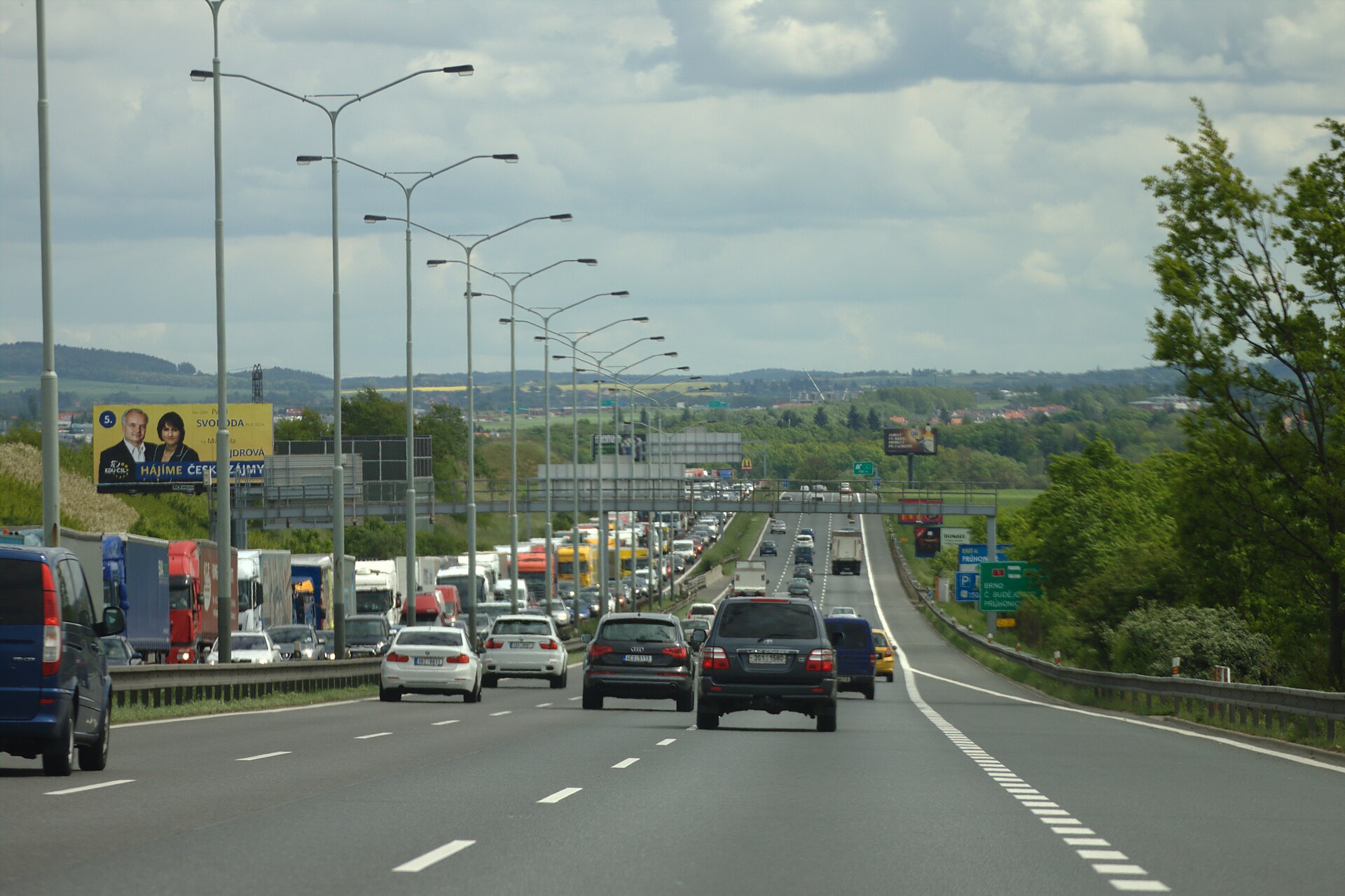

Do not buy the annual product automatically for a short rental. Compare the validity dates with the actual first and last motorway movement, and ask the branch whether a vignette is already registered to the car. Save the payment confirmation until the rental deposit and any toll-related administration have been closed.
Prague: park first, then use the city
Prague’s centre combines tram tracks, tight turns, pedestrian streets, delivery restrictions and paid parking. A navigation app can know the geometry and still miss the sign that limits access at a particular hour. The city’s official public-lot page links to P+R facilities, parking zones and garages. The parking FAQ explains that visitors can pay for short-term parking at a machine or online, with the local sign determining the permitted period and zone.
For a day in the centre, leave the car at a P+R or a confirmed garage and continue by metro, tram or on foot. Check the lot’s opening, height limit and overnight terms before driving there with luggage. Blue, purple and orange zones are not interchangeable; read the panel at the exact bay. Do not treat the motorway e-vignette as a city-access permit. Czech law allows municipalities to establish low-emission zones, so obey any signed local emissions or access restriction and consult the current Prague transport and parking portals before entering an unfamiliar central street.
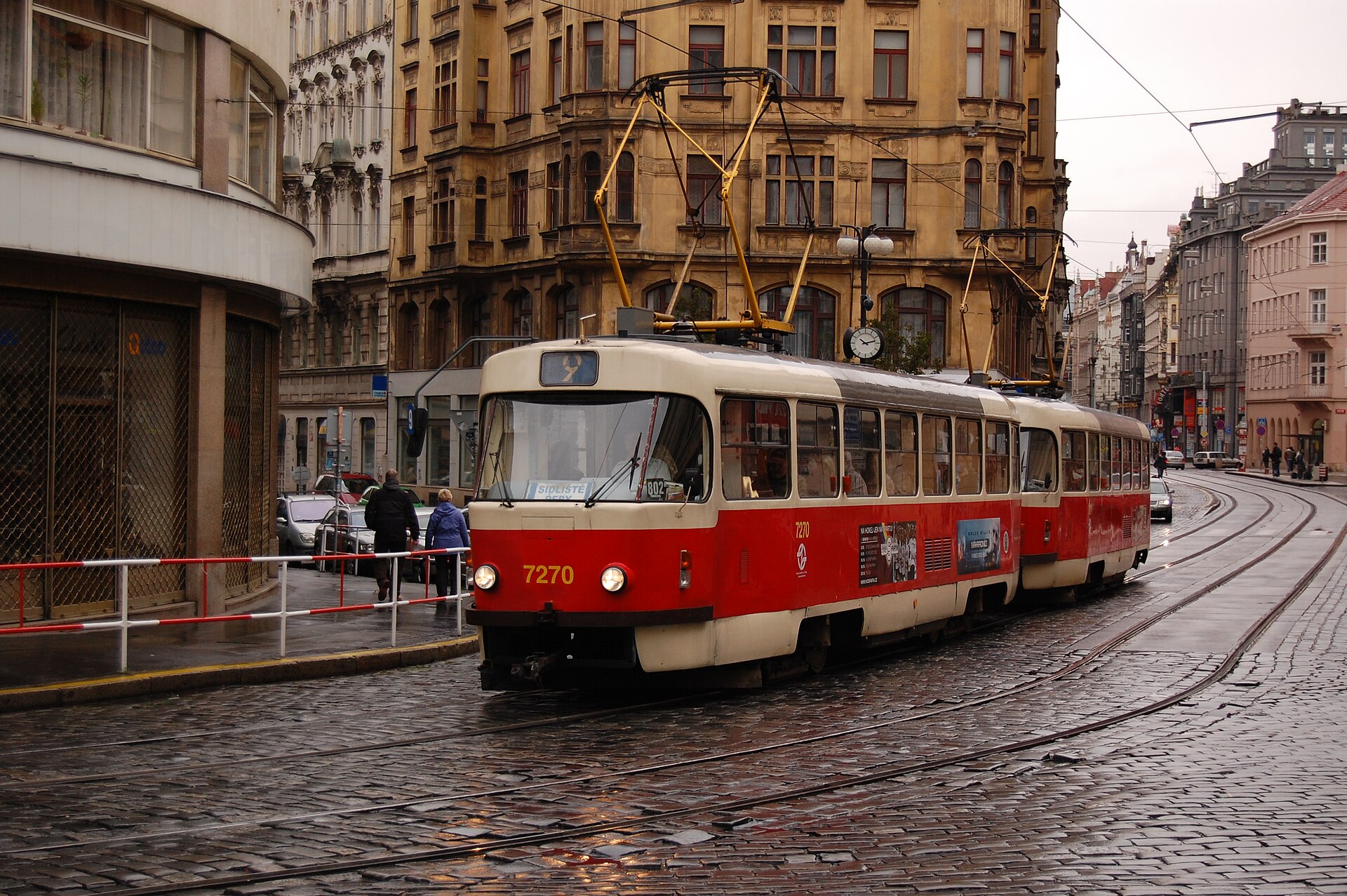

Give trams room at stops and junctions, and do not stop on tracks to load bags. If the hotel is inside a restricted street, ask for its written access instruction and a legal unloading point. A ten-minute walk from a garage is usually less stressful than circling a historic block with luggage visible.
Rural roads, South Bohemia and mountain weather
The official Czech traffic-information portal and the ŘSD road operator are better sources for closures and incidents than a route remembered from another season. Check them before a long D1 movement, then again before leaving a city. A motorway delay can make a scenic detour attractive, but the smaller road may have villages, cyclists, farm vehicles or a narrow bridge with no safe place to turn around.
South Bohemia rewards a slower sequence around Třeboň, České Budějovice and Český Krumlov. Keep the car outside the oldest pedestrian areas, use signed lots and walk the final section. Cobblestones, steep edges and one-way streets are a poor place to discover that the rental car is wider than expected. For a mountain or winter stage, start with daylight, a full washer reservoir and a route that still works if a pass or local road closes.
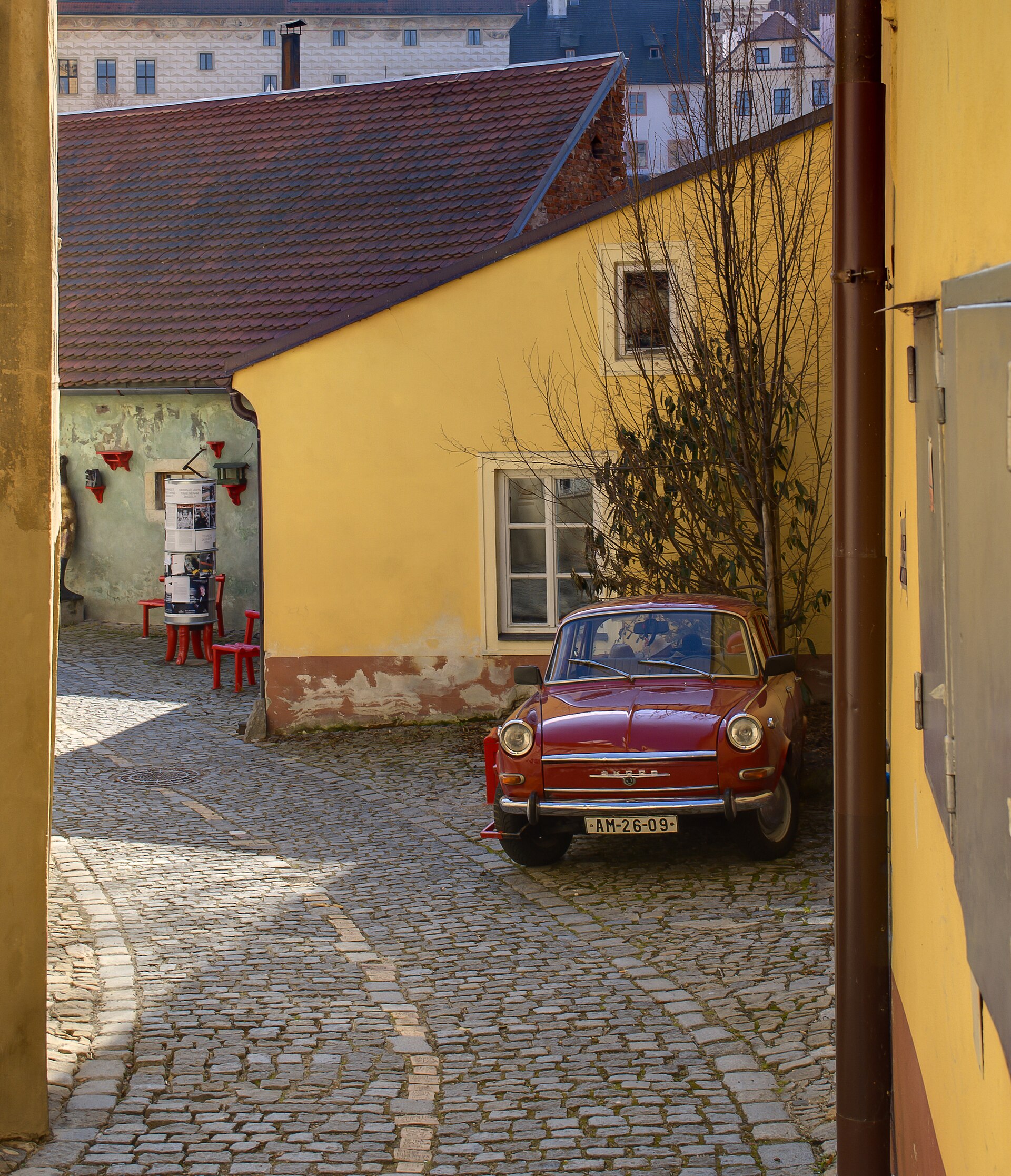

When a road becomes icy or visibility drops, lower the speed before the bend rather than braking in it. Keep a following distance that leaves room for a vehicle emerging from a side road, and do not use a passing place, bus stop or field entrance as an improvised photo stop. If the route looks different from the rental branch’s description, call the accommodation or operator before committing to the final kilometres.
Fuel, accidents and emergency calls
Fuel stations are common on the main corridors, but a rural itinerary still benefits from an early refill. Record the fuel type shown on the filler flap, keep the receipt for a rental dispute and ask whether the contract requires a full tank at return. A warning light, puncture or windscreen chip should be reported through the rental company’s procedure rather than repaired privately without approval.
For an accident, stop safely, use hazard lights and move people away from traffic when possible. VisitCzechia advises involving the police when someone is injured or killed, when third-party property is damaged, or when the damage exceeds the current legal threshold. Complete the European Accident Record if appropriate, photograph the road and signs, and keep the police or rental incident number.
Call 112 for the integrated emergency service. The Czech Interior Ministry emergency-number page lists 158 for police, 155 for emergency medical service and 150 for fire and rescue. Give the operator the road number, direction, nearest exit or a saved location pin. Then contact the rental company’s assistance line and wait in a visible safe place.
Sources and review date
This page was reviewed on 17 August 2026. Licence recognition uses the Czech Ministry of Transport licence guidance. Speeds and winter equipment use the Czech Interior Ministry traffic rules, Czech Police speed guidance and Czech Police winter guidance. Lights, alcohol, child restraints and practical documents use VisitCzechia transport guidance. Vignette scope, prices and sales points use eDalnice, its 2026 price list and purchase instructions. Prague parking uses the official public-lot information and visitor FAQ. Emergency numbers use the Czech Interior Ministry. Local emissions-zone powers are described in Act No. 201/2012. Recheck signs, prices, closures, parking rules, rental terms and the named official pages for the actual travel date.
Related Czech guides
Frequently Asked Questions
- Can I drive in Czechia with my home-country licence?
- EU and EEA licences are accepted when valid. A third-country licence must match the Geneva or Vienna convention requirements; if it does not, carry the corresponding International Driving Permit or another document accepted by the Czech Ministry of Transport. The Ministry specifically lists Japan, South Korea and the United Arab Emirates among countries whose drivers still need an IDP. A rental company may ask for an IDP or translation even when the legal rule does not.
- Is an International Driving Permit always required?
- No. There is no single rule saying every visitor needs one. Check the licence's convention format, the issuing country, the vehicle class and the rental company's terms. Keep the original licence with the passport or identity document; an IDP is a supplement, not a replacement.
- What are the main speed limits?
- The usual limits for a passenger car are 50 km/h in built-up areas, 90 km/h outside built-up areas, 110 km/h on motor roads and 130 km/h on motorways. A motorway or motor road through a built-up area can be signed at 80 km/h. Local signs, road works and police instructions take priority.
- How does the Czech motorway e-vignette work?
- A motor vehicle with at least four wheels and a maximum permissible weight of 3.5 tonnes needs an electronic vignette before entering a charged motorway section. It is tied to the registration plate, while trailers and motorcycles are excluded. For standard-fuel vehicles, the official 2026 prices are CZK 230 for one day, CZK 300 for ten days, CZK 480 for 30 days and CZK 2,570 for a year. Buy and verify it at edalnice.gov.cz.
- What documents should I carry?
- Carry the original driving licence, passport or identity document, rental agreement, vehicle registration document and insurance or Green Card information supplied for the car. The rental desk should explain which papers remain in the vehicle and how to report a collision or breakdown.
- Are winter tyres compulsory?
- From 1 November to 31 March, winter tyres are required when snow, ice or frost is present or expected, and signs can impose a winter-tyre section rule. For passenger cars up to 3.5 tonnes, the Czech police guidance specifies winter tyres on all wheels with at least 4 mm tread. Ask the rental branch what tyres are fitted before a mountain trip.
- How should I handle Prague parking and restricted streets?
- Use the official Prague parking map and signs. Visitor permits in the paid zones can be bought at a machine or through the online service, while P+R lots let you leave the car outside the centre and continue by public transport. Tram tracks, pedestrian streets, delivery windows and local access signs can change the route even when navigation suggests a shorter turn.
- Does Czechia have a national low-emission sticker for rental cars?
- The motorway e-vignette is not an emissions permit. Czech law lets municipalities establish a low-emission zone, so a local signed restriction or access permit must be checked separately. Do not enter a signed restricted street on the assumption that a rental car's Euro class or motorway vignette grants access.
- What should I do after a collision or breakdown?
- Call 112 for the integrated emergency service, or 158 police, 155 medical rescue and 150 fire and rescue. Report a collision when someone is injured or killed, when third-party property is damaged, or when the damage exceeds the current legal threshold. Move people away from traffic if safe, then call the rental or insurer assistance number and keep the incident record.
Information Sources & Disclaimer
This guide compiles information from the official transport authorities, road operators, government travel information, and automobile associations linked for Czech Republic.
While we strive to keep this information as accurate and up-to-date as possible (last reviewed: August 2026), traffic laws and toll rates can change without notice. We recommend verifying critical information with the local authorities or your car rental agency upon arrival.
Learn more about our Editorial Process →Compare Your Origin and Destination
Use the comparison tool to check driving side, units, documents, and other destination data for your route.