Overview
India is not one driving environment. A controlled-access expressway between large cities may have lane markings, toll plazas and service areas, while the final kilometre to a hill homestay can be narrow, unlit and shared with pedestrians, motorcycles and livestock. The practical question is not whether a car can cover the map distance; it is whether the route, vehicle, season and driver all fit together.
India drives on the left. In a dense city, the combination of pedestrians, two-wheelers, auto-rickshaws, buses and stopped vehicles can make a short trip mentally expensive. Outside the centres, a divided highway may be easier, but it can still contain toll queues, local traffic entering from the shoulder and sudden speed changes. Plan the day around daylight and recovery time rather than an optimistic average speed.
Licence, IDP and the rental boundary
The Ministry of Road Transport and Highways FAQ states that an NRI or foreigner cannot drive in India on a foreign licence alone. For a visitor, carry:
- the original domestic driving licence for the vehicle class;
- an IDP issued by the home-country authority under the applicable 1949 Geneva Convention arrangement;
- passport and visa or entry evidence;
- the rental agreement, registration certificate and insurance documents supplied for that car.
The IDP is a companion document, not a replacement for the domestic licence. The Central Motor Vehicles Rules set an IDP validity ceiling of one year or the remaining domestic-licence validity, whichever is earlier. A rental company’s age, licence-history, deposit or vehicle-class requirement can be stricter. Send scans to the branch before payment and ask for written confirmation, especially if the licence is not in English or the planned route enters a mountain region.
Rules that affect a normal day
- Keep left and read the sign, not the traffic mood. Overtake on the right where it is legal and safe, but do not use another driver’s movement as proof of priority.
- Speed is route-specific. The Union government’s M1 table gives maximums of 120 km/h on access-controlled expressways, 100 km/h on four-lane-or-wider divided roads, and 70 km/h within municipal limits or on other roads. Section 112 of the Motor Vehicles Act allows lower state or road-specific limits, so a posted 40, 50 or 60 km/h sign overrides the central ceiling.
- Alcohol is not a planning margin. Section 185 makes driving unlawful above 30 mg of alcohol per 100 ml of blood. Treat the safe travel rule as zero alcohol, particularly when a long return stage or an unfamiliar night road is involved.
- Seat belts and children matter in every seat. Section 194B covers the driver and passengers and requires a child under 14 to use a belt or child restraint. Check the belt hardware rather than assuming the rear bench is exempt.
- Do not handle a phone. Handheld communications while driving are treated as dangerous driving under section 184. Set navigation before moving and pull into a safe place to change the route.
- Use the horn as information, not authority. A brief warning before an overtake or blind bend can be normal; it never gives permission to force a merge or pass a pedestrian.
Choose roads by the job they need to do
Expressways and national highways
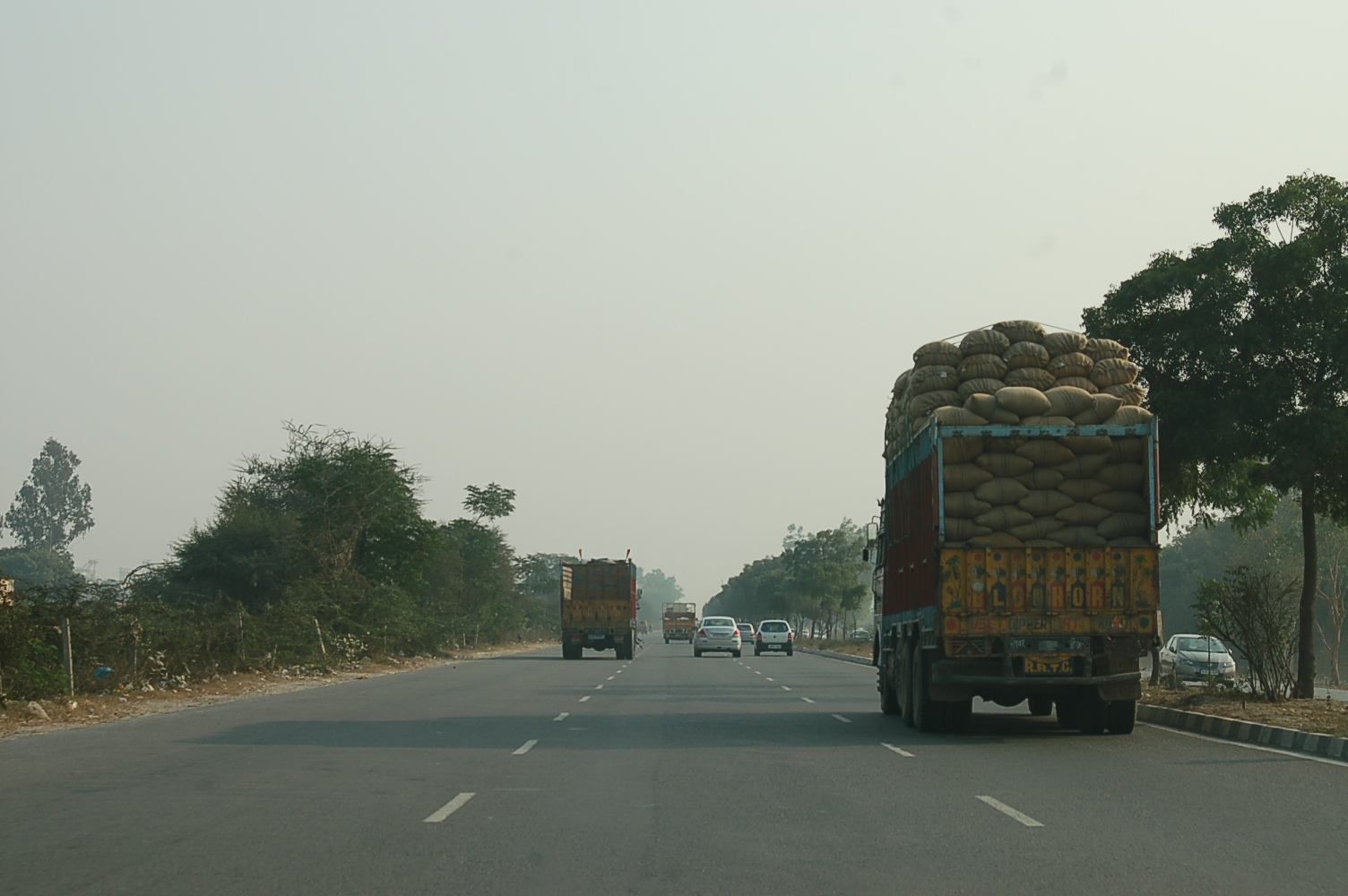
The Golden Quadrilateral and newer access-controlled corridors can make an intercity stage predictable, but the entry and exit plan still matters. Check the route in the NHAI toll information system and leave time for toll plazas, fuel, rest stops and a slower final approach. Do not schedule a city sightseeing loop immediately after a long highway transfer.

State roads, villages and night stages
State roads can alternate between smooth divided sections and narrow stretches through markets or villages. Reduce speed before a crest, junction or settlement, and expect an unlit vehicle, bicycle, pedestrian or animal at the edge of the carriageway. Avoid making a remote rural arrival after dark unless the accommodation has confirmed the final approach and parking.
Cities and regional routes
Delhi, Mumbai, Bengaluru and Chennai each have different one-way systems, parking practices and traffic peaks. The useful strategy is often to leave the car at a guarded lot or accommodation and use rail, metro or a driver for the central day. Outside the big centres, choose the region for the route rather than compressing the entire country into one loop: Kerala’s backwater and Western Ghats roads need short daylight stages, Rajasthan needs fuel and heat buffers, and Himalayan or northeastern roads require current local opening and weather information.
Monsoon, heat and mountain decisions
The India Meteorological Department issues regional forecasts and warnings. June to September is a useful broad monsoon planning marker, not a guarantee for every state. Coastal rain, flooded city underpasses, landslides in the Western Ghats and cloud or snow on Himalayan roads create different risks. If the road authority or weather warning contradicts a saved itinerary, wait, shorten the stage or choose a lower route.
Carry water in the cabin, protect the phone from heat and rain, and keep a charged power bank. On an exposed mountain road, do not stop on a blind bend for photographs. A vehicle that has crossed standing water may have wet brakes; test them gently in a safe place before continuing.
FASTag, fuel, charging and parking
FASTag is an RFID toll device fixed to the windscreen. The NHAI FASTag FAQ says it is mandatory for class M and N vehicles with four or more wheels. The tag is linked to the vehicle and account, not simply to the person driving. Before leaving the branch, confirm the registration, tag status, balance and the procedure for tolls charged after return. NHAI’s 2024 guidance warns that a non-affixed tag entering an electronic lane can attract a double fee.
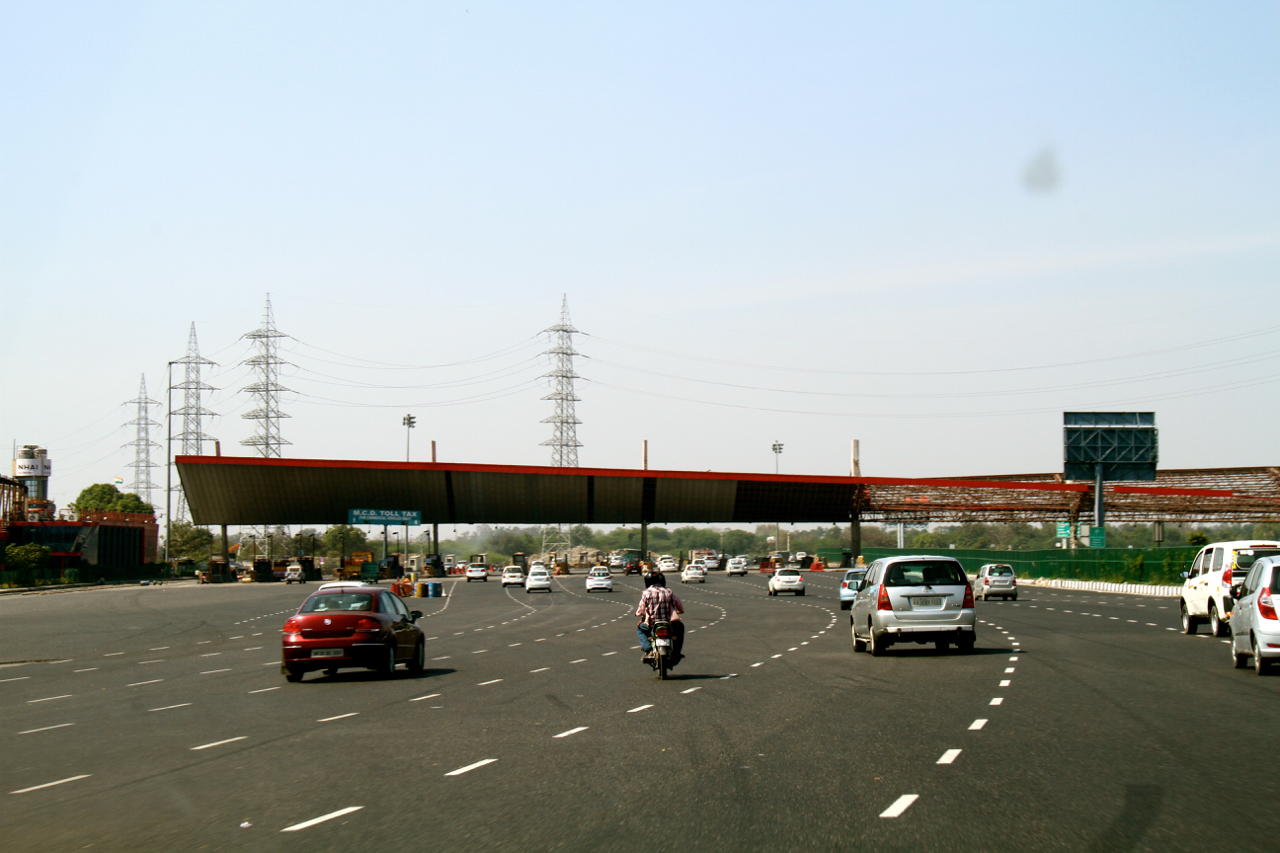

Petrol and diesel are widely available on major corridors, but the gap between pumps grows in desert, high-altitude and remote northeastern stages. Fill up before a long detour and ask whether a remote station accepts cards. Public EV charging is expanding in large cities and along selected corridors, but do not plan a remote loop from a map pin alone; verify the connector, access hours and backup charger.
Parking rules are local. Use a marked or guarded facility, photograph the vehicle and keep bags, passports and electronics out of sight. At a hotel, ask whether the car stays inside the property overnight and whether a parking attendant takes the key. Do not treat an informal roadside fee as proof that parking is legal.
A horn sign is not a right-of-way sign
The Indian road-sign system includes signs that make horn use part of the warning environment. The sign below is a useful reminder that the horn communicates presence; it does not cancel a stop line, a pedestrian or a mandatory direction.


What to do after a breakdown or collision
Stop where the vehicle is visible but not in the traffic line, turn on hazard lights and call the rental operator. If anyone is injured or the scene is dangerous, call 112. On an NHAI National Highway, 1033 can handle emergency and non-emergency assistance, including incidents, toll and road-condition complaints. The ERSS 112 India service accepts calls and other SOS channels; save the road number, direction, nearest toll plaza, kilometre marker and registration number before you need them.
Do not argue about fault in a live lane. Photograph the vehicles, signs, road surface and other driver’s documents from a safe position, notify the rental company’s insurer and follow the police instructions. Never pay for a repair or tow without a receipt and written confirmation of who authorised it.
Before the first kilometre
- Send the original licence and IDP details to the rental branch and obtain written approval for the vehicle class and route.
- Photograph the registration, FASTag, fuel level, tyres, spare wheel, warning triangle and existing damage.
- Check the posted speed and road status for each stage; do not use the national ceiling as a target speed.
- Plan fuel, charging, guarded parking and a daylight fallback before leaving a city.
- Save 112, NHAI 1033, the rental roadside number, accommodation address and a second navigation option offline.
Official resources and review date
This page was reviewed on 17 August 2026 against the MoRTH foreign-driver FAQ, Central Motor Vehicles Rules, Motor Vehicles Act speed-limit provision, MoRTH speed table, India Code sections 184, 185 and 194B, NHAI FASTag FAQ, NHAI toll and route service, India Meteorological Department and ERSS 112 India. Road signs, local speed orders, toll accounts, weather and rental terms can change; reopen the relevant official source before each stage.
Related guides and destinations
Frequently Asked Questions
- Can I drive in India with my foreign licence alone?
- No. The Ministry of Road Transport and Highways says an NRI or foreigner cannot drive on a foreign licence alone. Carry the original licence together with an IDP issued by your own country under the applicable 1949 Geneva Convention arrangement, and confirm the vehicle category and rental company's documents before paying.
- How long is an Indian IDP valid?
- An IDP is normally valid for no more than one year from issue, or until the domestic licence expires, whichever comes first. Your own country's issuing authority and the rental company may impose a shorter practical limit.
- What are India's speed limits?
- For an M1 passenger car, the central maximums are 120 km/h on an access-controlled expressway, 100 km/h on a four-lane-or-wider divided carriageway, and 70 km/h within municipal limits or on other roads. A signed state or road-specific limit can be lower and is the limit you must follow.
- Is FASTag mandatory for a rental car?
- FASTag is mandatory for class M and N vehicles with four or more wheels. Ask the rental desk whether the tag is active, attached to this registration number and funded for your trip; do not assume a tag from another vehicle can be moved across.
- What happens if a FASTag is not fixed to the windscreen?
- NHAI guidance allows a double user fee for entering a toll lane without the assigned FASTag correctly affixed to the inside of the front windscreen. Photograph the tag and vehicle registration at pickup and ask how the operator settles tolls after return.
- Should I self-drive in Delhi or Mumbai?
- It is legal to drive, but dense traffic, limited parking, pedestrians and frequent lane changes make a chauffeur or public transport more workable for many visitors. A self-drive plan is easier when the car is collected outside the busiest centre and the first stage uses a quieter road.
- Is monsoon driving safe in India?
- Safety depends on the state, rainfall and the exact road. Check India Meteorological Department warnings and the road authority before departure, avoid flooded underpasses and moving water, and postpone a mountain stage when landslide or visibility warnings affect the route.
- Why do drivers use the horn so often?
- A short horn can announce a vehicle's presence before an overtake or at a blind bend, but it does not create right of way. Silence zones, pedestrians, cyclists and residential streets still require restraint. Follow signs and leave a margin rather than matching every horn.
- Do children need a restraint in India?
- Section 194B of the Motor Vehicles Act requires a child under 14 to be secured by a safety belt or child restraint system. Rental fleets may not have the right seat, so request the exact equipment in writing and check its fit before leaving.
- Which emergency numbers should I save?
- Dial 112 for the national emergency response system. On a National Highway under NHAI, 1033 can handle emergency or non-emergency highway assistance, including incidents, toll and road-condition complaints. Share the road number, direction, landmark and vehicle registration.
Information Sources & Disclaimer
This guide compiles information from the official transport authorities, road operators, government travel information, and automobile associations linked for India.
While we strive to keep this information as accurate and up-to-date as possible (last reviewed: August 2026), traffic laws and toll rates can change without notice. We recommend verifying critical information with the local authorities or your car rental agency upon arrival.
Learn more about our Editorial Process →Compare Your Origin and Destination
Use the comparison tool to check driving side, units, documents, and other destination data for your route.