Choose the route before choosing the car
Thailand is easier to drive when the rental solves a clear problem. Central Bangkok has dense traffic, limited legal parking and a useful BTS/MRT network; a car often adds time rather than flexibility. A pickup after the city stay makes more sense for a northern loop, a Gulf or Andaman coast route, or a rural itinerary where public transport does not match the schedule.
The driving experience changes by region. Wide divided highways connect major towns, while a mountain road near Chiang Mai or Mae Hong Son can be narrow, steep and slow despite a short map distance. Southern resort roads can be busy with scooters and tour vans, and heavy rain can change visibility and the surface quickly. Keep one unscheduled hour in the plan instead of treating the navigation estimate as a promise.
Licence, IDP and documents
- Drive on the left. Keep the original home licence, passport and the matching International Driving Permit with you; an IDP is a translation or companion document, not a replacement for the licence.
- Which IDP? Thailand’s government guidance lists a 1949 Geneva IDP and licences issued by another ASEAN member as accepted examples. The Department of Land Transport’s Foreign Vehicle Permit manual also describes 1949 and 1968 Convention IDPs for foreign vehicles. Because rental desks can apply their own policy, confirm the convention and vehicle category before paying for the booking.
- If the licence is not recognised: Thailand’s public guidance describes a 30-day temporary Thai licence route through a Provincial Land Transport Office, involving a passport, address evidence, medical certificate, a valid matching foreign licence and an authorised Thai translation. This is not a same-day substitute to assume at the airport; sort the document before driving.
- Minimum age: 18 is the legal baseline for a car, but a rental company may set a higher age, add a young-driver fee or refuse certain categories.
- Motorcycles: A car licence is not a motorcycle licence. A scooter rental is still a motorcycle in law; the motorcycle category and matching IDP or Thai licence must be valid.
At pickup, check the registration copy, insurance details, emergency number, permitted provinces or border crossings and whether the car is fitted for the route. Keep paper and offline copies of the documents.
Rules that matter in daily traffic
- Left-side traffic: stay left, overtake on the right when it is safe, and expect motorcycles to pass on either side of a slow queue. Check mirrors before moving away from a kerb or turning across a motorcycle lane.
- Speed: use the posted sign and vehicle category as the authority. A useful planning reference is about 50 km/h in many urban areas, 90 km/h on ordinary rural roads and up to 120 km/h on some controlled-access routes; local signs, weather and temporary restrictions can be lower.
- Alcohol: the Thai government’s 2024 alcohol-testing notice states 50 mg percent for general drivers and 20 mg percent for drivers under 20. Do not drink before driving, even when a short transfer looks easy.
- Seat belts: use a seat belt in every occupied seat, and make the rental company demonstrate how child restraints fit. Loose local enforcement is not permission to leave a passenger unbelted.
- Motorcycle helmets: the driver and passenger need a proper helmet. A thin novelty helmet or a loose strap is not a safe substitute; Thailand’s own road-safety guidance identifies motorcycle crashes and failure to wear helmets as major tourist risks.
- Phone and attention: set navigation before moving. Do not handle a phone while filtering through traffic, entering a toll lane or crossing a busy junction.
- U-turns and intersections: use marked U-turn bays or signal-controlled openings. Do not copy a local vehicle’s turn across a painted median if the sign or lane marking says otherwise.
Bangkok: use rail, then start the road trip
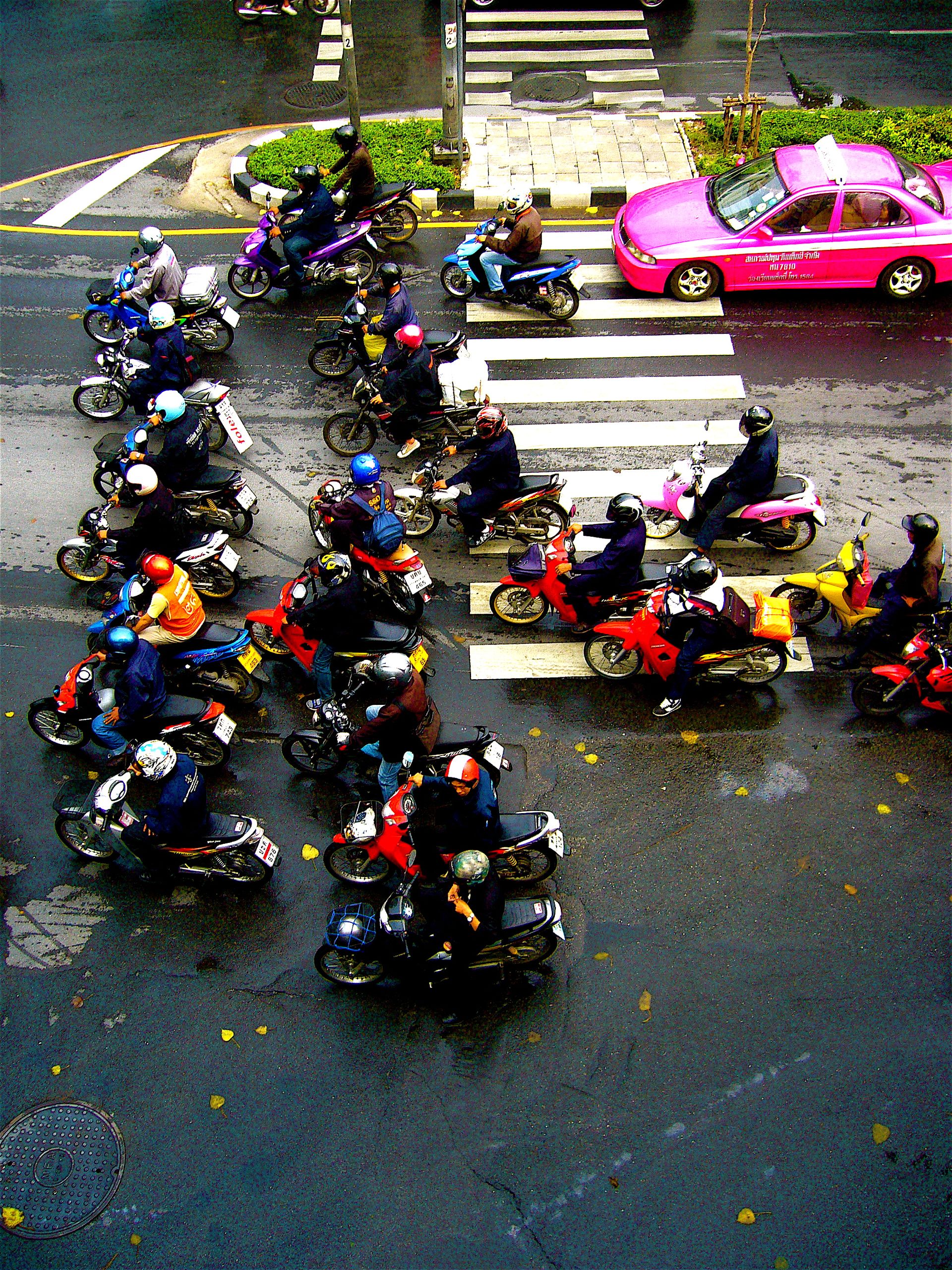
The centre of Bangkok is a poor place to learn a right-hand-drive rental’s dimensions. Queues form around bridges, markets, school times and expressway approaches; motorcycles can sit in the gaps that a car driver cannot see. Use BTS, MRT, taxis or a driver for the city days, then collect the car near a clear departure route.
If a city pickup is unavoidable, choose a hotel or garage with a defined exit, leave outside the busiest periods and put the first destination into the navigation before joining traffic. Do not stop on a pavement or block a shop entrance to check a route. Bangkok district offices actively enforce the ban on parking or riding on pavements, and a rental plate does not provide an exemption.

Highways, tolls and live route information
Thailand’s main road network can make intercity travel straightforward, but a motorway sign does not tell you which payment lane your rental can use. Bangkok expressways and motorways use cash booths, M-Pass, Easy Pass and the barrier-free M-Flow system. The Department of Highways lists M-Traffic, M-Pass and M-Flow services; its current M-Flow notice says the official account is mflowthai.com, not a payment link sent by SMS.
At pickup, ask whether the plate is enrolled in M-Flow, whether the company supplies an M-Pass or Easy Pass device, and which charges are billed later. If the answer is unclear, use a staffed or cash lane where the sign permits it. Keep toll receipts and do not follow a car through a barrier.

For live information, the Department of Highways’ public-service page describes Highway Traffic and M-Traffic tools for CCTV, incidents, toll points, prices and service areas. Recheck the route before leaving Bangkok, especially around holidays and major storms. A route with fewer kilometres may be slower if it crosses a market town or a flooded low point.
Northern mountains and rural roads
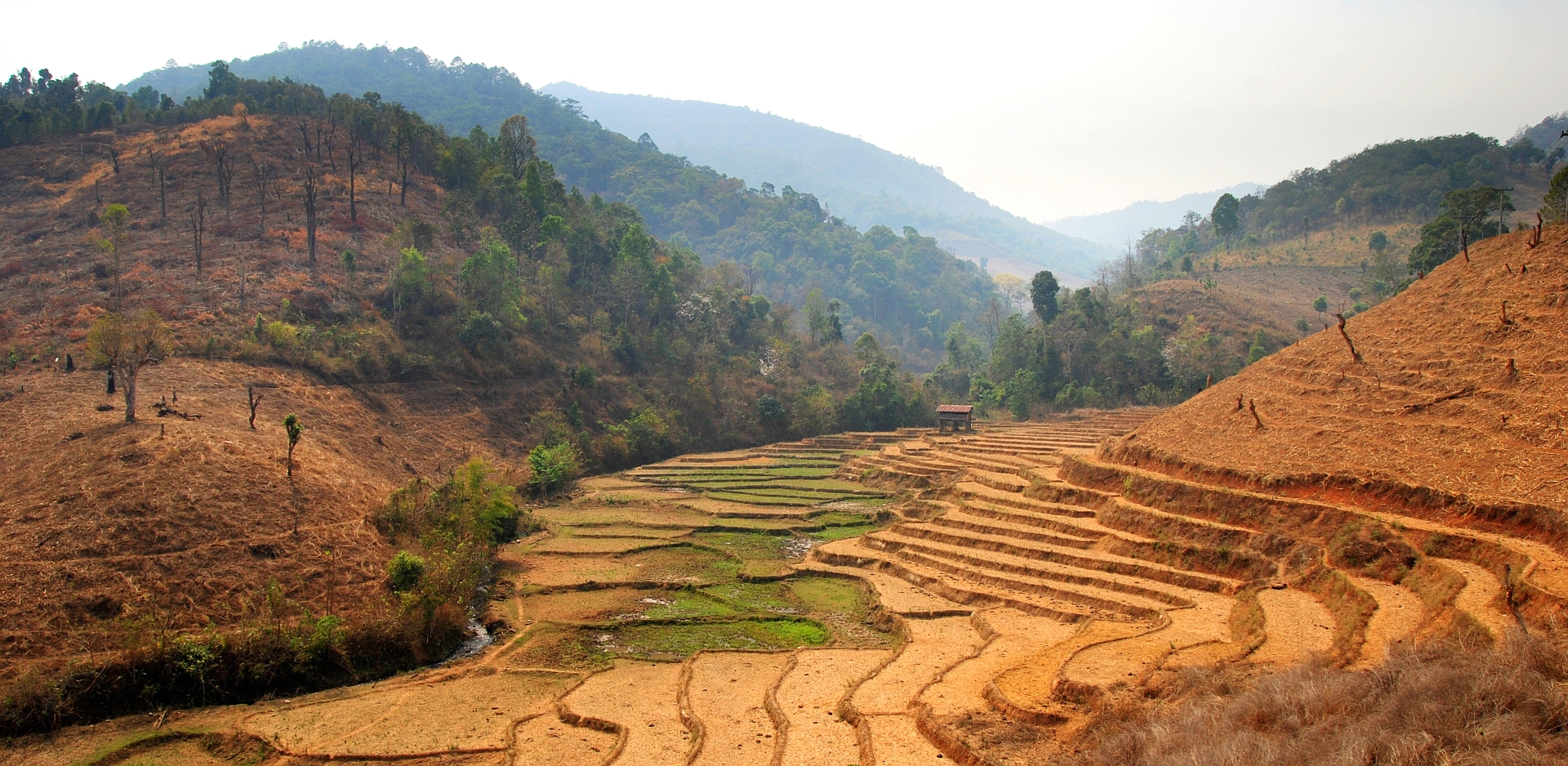
Routes around Chiang Mai, Pai and Mae Hong Son reward a patient driver, not a rushed one. Hairpins, blind bends, livestock, local buses and sudden fog are more important than the posted distance. Descend in a low gear, leave a clear following gap and stop only in a signed pull-off. Do not start a remote mountain stage after a late flight if the return requires driving in darkness.
Secondary roads range from smooth asphalt to broken edges and potholes. Dogs, chickens and water buffalo may enter the carriageway; a horn is not a substitute for slowing. Watch for pickup trucks carrying people or cargo and for scooters that move from the shoulder into the lane without a long approach.

Rain, heat, fuel and charging
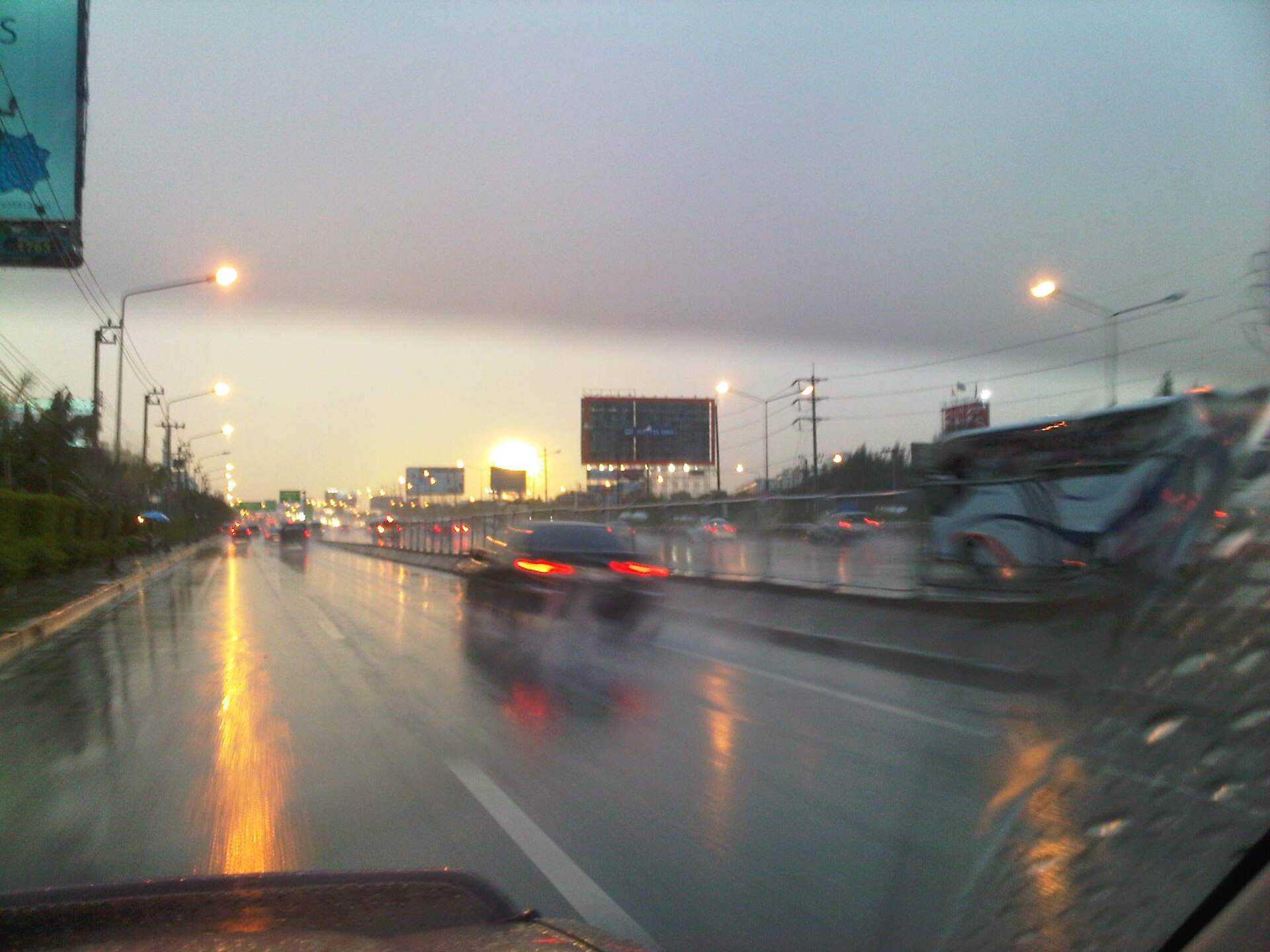
Tropical rain reduces sight distance, covers lane markings and can leave standing water at the edge of a road. Slow before the water, avoid a deep section when you cannot see the surface, and do not cross a moving flood on a scooter. On a coast or mountain itinerary, check a local warning and keep a daylight buffer for a detour.
Gasohol 91, Gasohol 95, E20 and diesel are common labels. Check the fuel flap and the rental contract before filling; do not assume “petrol” means the same blend in every station. Major chains are common on principal roads, but a remote island or mountain leg needs a refuelling plan. EV charging is expanding in cities and along major corridors; confirm a compatible charger and a backup before leaving the main route.
Parking and car-rental checks
Use a marked bay, hotel garage or shopping-centre car park. Read the sign at the exact space and keep the ticket or payment record. Never park on a pavement, block a shop or leave a vehicle where a local sign prohibits stopping; curb paint and informal practice are not a substitute for the sign. Bangkok authorities state that parking or riding on pavements is an offence, so do not copy a scooter parked across the footway.
Before leaving the rental lot, photograph wheels, glass, bumpers, mirrors, the fuel or charge level and the registration plate. Ask for the excess, what counts as an excluded road or island, the breakdown number, child-seat fit and the procedure for a tyre, flood or water damage. For motorcycles, inspect both helmets and refuse a bike with bald tyres, a weak brake or a loose mirror.
Emergencies and accidents
Save the numbers published by the Tourist Police: 1155 for tourist assistance and translation, 191 for urgent police help, 199 for fire or rescue and 1669 for emergency medical services. Thailand’s government phone list also identifies 191 for urgent matters and 1669 for emergency medical rescue.
After a crash, stop safely and switch on the hazard lights. If there is an injury, fire or immediate danger, call the appropriate service before debating liability. Photograph the scene, signs, lane markings, vehicle positions and the other driver’s documents if it is safe. Follow police instructions, contact the rental company and insurer, and do not sign a Thai-language settlement that you do not understand. If everyone is safe and police direct you to clear the lane, record the scene first and move only as instructed.
| Service | Number | Use it for |
|---|---|---|
| Urgent police help | 191 | Collision, threat, theft or immediate danger |
| Tourist Police | 1155 | Tourist assistance, translation and disputes |
| Fire and rescue | 199 | Fire or rescue incident |
| Emergency medical rescue | 1669 | Serious injury or urgent medical help |
| Rental roadside assistance | On the contract | Breakdown, tyre, key or vehicle-specific help |
Foreign-registered vehicles entering Thailand are a different case from a normal airport rental: the DLT Foreign Vehicle Permit system requires a permit process through a Thai licensed travel agency and supporting insurance and vehicle documents. Do not assume a rental car from a neighbouring country can cross the border without prior approval.
Departure checklist
- Original licence, recognised IDP and passport; motorcycle category if riding a motorcycle.
- Rental agreement checked for excess, permitted roads, cross-border use and accident procedure.
- Toll arrangement confirmed: cash lane, M-Pass, Easy Pass or M-Flow; no unconfirmed barrier-free lane.
- Bangkok city days separated from the rural pickup and return route.
- Mountain or coastal stages planned in daylight with a rain and flood buffer.
- Fuel or charging stops, child restraint and emergency numbers saved offline.
- Existing damage photographed before leaving the lot.
Official sources and review date
This page was reviewed on 16 August 2026. Licence recognition, toll systems, weather notices and rental terms can change; check the source pages immediately before driving:
- Thailand.go.th: foreign tourist driving licences
- Department of Land Transport: Foreign Vehicle Permit manual
- Thailand.go.th: road safety measures for visitors
- Thailand.go.th: 2024 alcohol-testing thresholds
- Department of Highways: public traffic and toll services and official M-Flow site
- Tourist Police: emergency contacts and 1155
Related destinations
Frequently Asked Questions
- Can I drive in Thailand with my home-country licence?
- For most non-ASEAN visitors, arrange a recognised International Driving Permit before arrival and carry it with the original licence. Thailand's government guidance lists a 1949 Geneva IDP and ASEAN licences as accepted examples; a traveller whose licence is not accepted may need a 30-day temporary Thai licence with a Thai translation and other documents. Ask the rental company which IDP convention and vehicle category it accepts.
- Do I need a motorcycle licence to rent a scooter?
- Yes. A car licence does not authorise a motorcycle. You need the motorcycle category on your home licence and a matching recognised IDP or Thai licence. If the licence is wrong, a rental contract does not make the ride legal and insurance may not respond.
- Should I rent a car in Bangkok?
- Usually not for central Bangkok. BTS, MRT, taxis and app-based rides avoid parking and long queues. Pick up a car after the city stay for routes where a car solves a real transport gap.
- What are the important toll-road rules?
- Bangkok expressways and motorways use several payment systems, including cash lanes, M-Pass, Easy Pass and the barrier-free M-Flow system. Ask the rental company which lanes and account arrangements are covered; never use an M-Flow lane assuming the bill will be handled automatically.
- What is Thailand's drink-driving limit?
- The 2024 government guidance uses 50 mg percent for general drivers and 20 mg percent for drivers under 20. Treat the practical limit as zero: checkpoints and holiday enforcement are real, and a rental car does not change the rule.
- What should I do after a crash?
- Call 191 for urgent police help, 1669 for emergency medical rescue and 1155 for Tourist Police assistance or translation. Make the scene safe, photograph the vehicles and road, follow police instructions and contact the rental company and insurer before signing a settlement.
- How should I plan a rainy-season road trip?
- Leave a weather buffer, reduce speed on standing water, and check local road or flood warnings before mountain and coastal stages. Do not assume a road that was open in the morning will remain the best route after a storm.
Information Sources & Disclaimer
This guide compiles information from the official transport authorities, road operators, government travel information, and automobile associations linked for Thailand.
While we strive to keep this information as accurate and up-to-date as possible (last reviewed: August 2026), traffic laws and toll rates can change without notice. We recommend verifying critical information with the local authorities or your car rental agency upon arrival.
Learn more about our Editorial Process →Compare Your Origin and Destination
Use the comparison tool to check driving side, units, documents, and other destination data for your route.