Choose the driving job before choosing the route
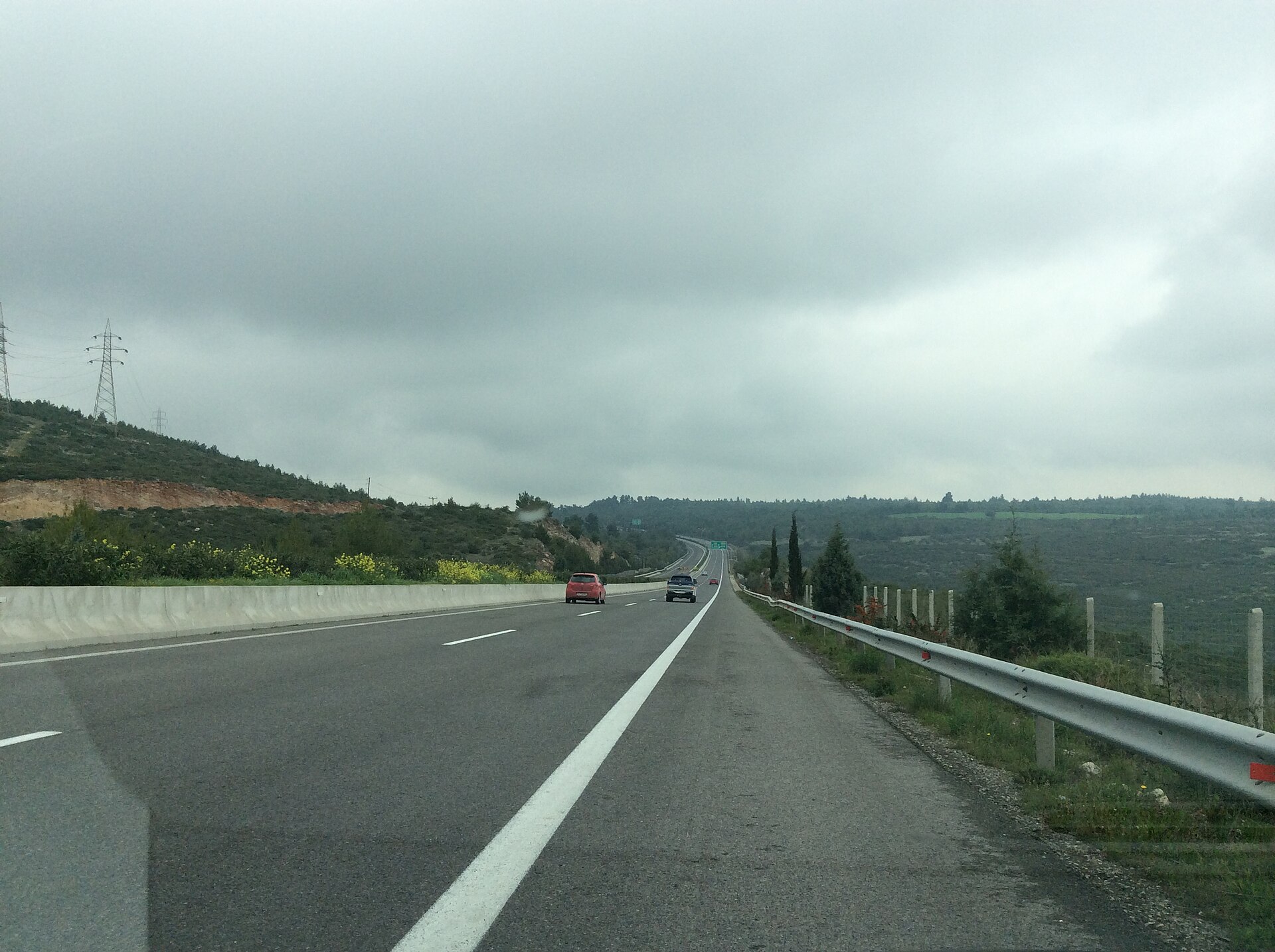
Greece is a country of distinct driving days. The A1 is useful when a flight, hotel check-in or northern border has a fixed arrival time. The A8 Olympia Odos serves the Corinth–Patras corridor, while the A2 Egnatia Odos carries long journeys across northern Greece. These roads make the mainland leg predictable, but tolls, tunnels, interchanges and current lane works still belong in the plan.
The Peloponnese, Laconia, Delphi and Meteora are different assignments. A short map distance can include hairpins, villages, a slow vehicle and limited passing space. On an island, a car is most useful when the plan includes inland villages or beaches beyond the main bus routes; it can be an inconvenience in a dense harbour town. Keep the first day deliberately short until the car, navigation and local road rhythm feel familiar.

Licence, documents and the rental contract
EU and EEA licence holders should carry the physical, valid photocard licence. For a licence issued outside the EU, the Greek gov.gr recognition and exchange page is the legal starting point, but it is not a universal tourist checklist: recognition depends on the issuing country, the licence format and the visitor’s status. Ask the rental branch in writing whether it wants an IDP, a certified translation or another document. An IDP is a translation and permit companion; it is not a replacement for the original licence.
Bring the original licence, passport or national ID, rental agreement, vehicle registration and insurance details. At pickup, photograph the plate, odometer, fuel or battery level, existing scratches, tyres, warning triangle, first-aid kit and fire extinguisher. Ask who may drive, whether ferries and unpaved roads are covered, whether cross-border travel is allowed, how tolls and parking notices are settled, and which roadside number works outside office hours.
Current limits and rules that change the day
Greece’s 2025 Road Traffic Code sets a 30 km/h default inside built-up areas. The same rule keeps 50 km/h for a one-way road with at least two marked lanes, a divided two-way road with at least two lanes in each direction, and a two-way road with a central divider, unless a sign says otherwise. Outside built-up areas, the passenger-car table gives 90 km/h on other roads, 110 km/h on expressways and 130 km/h on motorways. The AADE circular that publishes the law is a useful reference when a rental desk still displays the old 50 km/h city summary.
The European Commission’s Greece road-rules page, supplied by national authorities, lists mandatory seat belts and child restraints, hands-free phone use, helmet rules for powered two-wheelers and the 0.5/0.2 mg/ml alcohol limits. It also identifies the warning triangle, first-aid kit and fire extinguisher as car safety equipment. Use the sign, weather and traffic flow to choose a safe speed; the remembered national number is only a starting point.
Motorways, tolls and electronic tags
Greek motorway payment is operator-based. Nea Odos describes staffed lanes that accept cash or credit/debit cards, automatic machines and Fast Pass electronic lanes. Its Fast Pass service explains that Greek motorway transponders work through the national interoperability arrangement, but that does not tell you whether a particular rental car’s device is active, funded or included in the contract. Olympia Odos also accepts card payment at its plazas.
At the toll approach, follow the lane symbol rather than the car ahead. Keep cash or a working card available, do not enter a dedicated electronic lane when the rental tag is uncertain, and keep the receipt until the final invoice arrives. A toll calculator from a third-party blog can become stale when a concession changes rates or a vehicle class is entered incorrectly. Use the operator’s current table for the actual route and car category.
The Nea Odos traffic-management page and Olympia Odos live service page are better departure checks than an old itinerary. They publish work zones, emergency contacts and motorway-operation information. Leave room for a tunnel restriction, holiday traffic or a diversion at an interchange.
Athens centre and the Daktulos
The Municipality of Athens Traffic Restriction Zone page explains the Daktulos, a plate-based measure intended to reduce central congestion and pollution. Its operating period, hours, exemptions and permit process are revised by season. A foreign visitor or rental driver should open the current municipal and police notice immediately before the trip; an old date range in a guide is not a permanent rule.
Collecting a car at the airport and driving straight into the historic centre adds navigation, parking and possible zone checks to the first hour. Consider leaving the car at a marked garage near a metro station and using public transport for the centre. If the itinerary requires a city pickup, ask the branch whether the plate and rental contract have the documents needed for the current zone and save the hotel address in Greek characters.
Ferries, ports and alternative-fuel vehicles
Vehicle ferries connect Piraeus, Rafina and regional ports with Crete, the Cyclades, the Dodecanese and other islands. A car booking needs the registration number, length or vehicle class and the exact sailing; a passenger booking alone does not reserve space in the garage. Blue Star’s current conditions ask car passengers to report to the embarkation area one hour before departure and require the vehicle’s passengers to leave the car before loading.
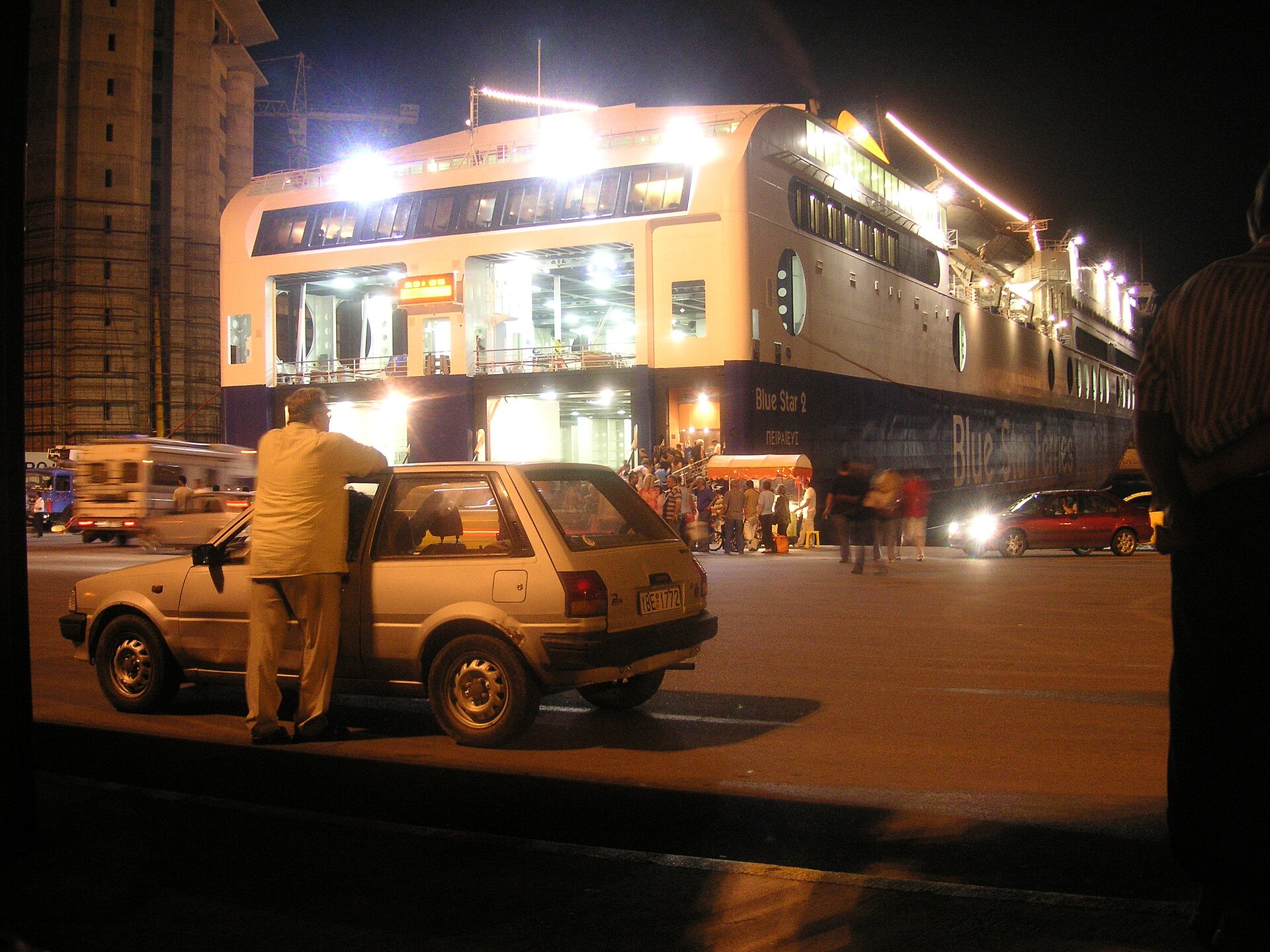

Battery and gas vehicles have an extra check. Blue Star and SeaJets’ published terms require alternative-fuel vehicles to be declared and describe a maximum 40% state of charge for pure electric or rechargeable-hybrid vehicles and a maximum 50% tank level for LPG or CNG vehicles. The carrier can refuse a vehicle with a battery, fuel-system or other safety defect. Confirm the exact operator’s current wording, then ask the rental company whether its insurance and roadside cover remain valid on the ferry.
Mountains, islands and weather
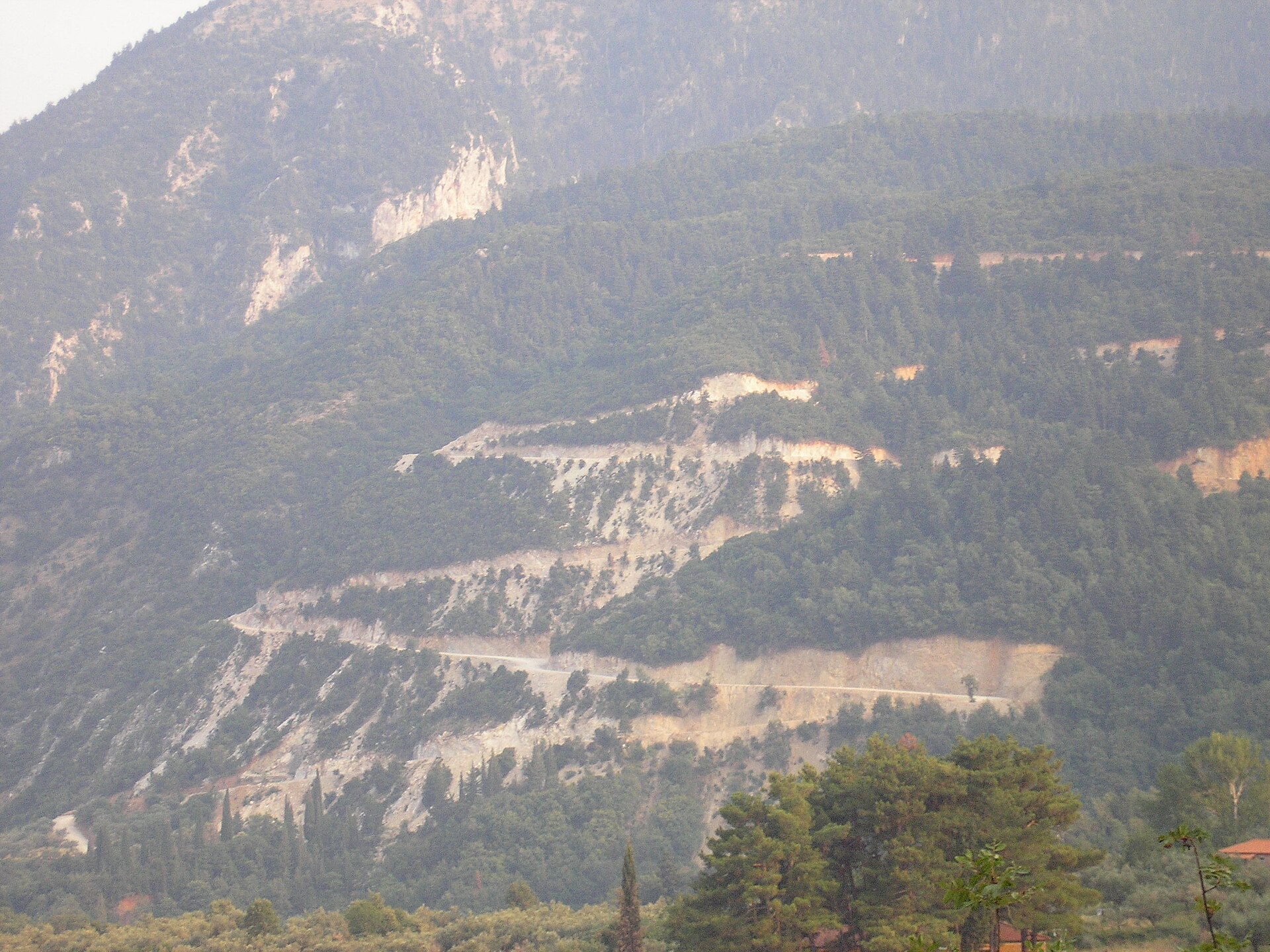

The Peloponnese and mainland mountain routes can change from broad asphalt to a narrow, unlit section within a few kilometres. In Crete, the north-coast corridor is more straightforward than a south-coast gorge or a route across the interior. On smaller islands, scooters, pedestrians, livestock and delivery vehicles share lanes that may have no shoulder. Drive in daylight, use low gears on descents, keep a safe stopping margin before a blind bend and let a faster vehicle pass at a legal, visible place.
In winter, rain, ice and snow can close a pass or require chains. The Code says drivers on snow-covered roads must use suitable tyres or anti-skid chains on at least the driven wheels, with further requirements possible through signs or an authority instruction. Ask for the actual equipment at the counter; a sunny coastal pickup does not prove that an inland car has chains.
Fuel, charging, parking and emergencies
Ask the rental branch which fuel grade or charging connector the car uses, whether the contract is full-to-full, and how a charging app or card is returned. Save a second charger before leaving a ferry port or mountain area. Do not turn a map listing into a guarantee that a rural station is open or that an overseas card will work.
Parking is local and sign-led. Use a marked garage or lot outside a historic centre, read the payment instructions at the entrance and keep the ticket or digital receipt. Never block a gate, bus stop, fire access or a narrow village road for a viewpoint photograph. On a ferry day, confirm whether the port car park accepts overnight stays and whether the vehicle is allowed to remain without the driver.
The Greek Civil Protection emergency guide confirms that 112 is free, operates throughout Greece and can connect callers with police, fire, ambulance and coastguard. The Ministry’s useful contacts page lists 100 police, 166 EKAB, 199 fire and 108 coastguard. On a motorway, use the operator’s emergency phone as well as 112: Nea Odos lists 1075 and Olympia Odos lists 1025.
Before the first kilometre
- Send a scan of the licence and ask the branch to confirm IDP, translation, additional-driver, ferry and border requirements in writing.
- Photograph the car, plate, registration, damage, tyres, fuel or battery level and safety equipment.
- Save the current Daktulos notice, toll operator pages, ferry booking and the rental roadside number offline.
- Decide whether the day is an A1/A8/A2 transfer, a mountain stage or an island town day; give each a different time margin.
- Confirm the vehicle ticket, check-in time, vehicle dimensions and alternative-fuel rules before joining a port queue.
- Keep 112, 100, 166, 199, 108 and the relevant motorway operator number in the phone.
Official resources and review date
This page was reviewed on 17 August 2026. Licence recognition, the Road Traffic Code, toll products, ferry conditions, traffic restrictions and weather responses can change. Reopen the named authorities before driving:
- Gov.gr: non-EU driving-licence recognition
- Hellenic Parliament: Law 5209/2025, Road Traffic Code and AADE circular O.3025
- European Commission: Greece road rules and safety
- Nea Odos tolls, Fast Pass and traffic management, Fast Pass and traffic management
- Olympia Odos card payments, live service and emergency assistance, live service and traveller service
- Municipality of Athens: Traffic Restriction Zone
- Blue Star Ferries conditions and SeaJets terms
- Greek Civil Protection: 112 and emergency contacts
Related guides and destinations
Frequently Asked Questions
- Can I use my foreign driving licence in Greece?
- EU and EEA licence holders can normally drive with a valid licence. For a licence issued outside the EU, recognition depends on the issuing country and the applicable agreement; Greece's gov.gr recognition page is the starting point, while a rental branch may request an International Driving Permit or an official translation. Send a scan to the branch before paying.
- What are Greece's current passenger-car speed limits?
- The 2025 Road Traffic Code sets 30 km/h as the default inside built-up areas, with 50 km/h exceptions for specified divided or multi-lane roads and any different signed limit. Outside built-up areas the table lists 90 km/h on other roads, 110 km/h on expressways and 130 km/h on motorways. A posted or temporary limit always wins.
- What is the alcohol limit for driving in Greece?
- The EU road-rules page lists 0.5 mg/ml for most drivers and 0.2 mg/ml for motorbike and moped drivers, novice drivers and professional drivers. Treat the limit as a legal boundary rather than a target; the safest rental plan is a sober driver.
- How do Greek motorway tolls work?
- Toll plazas use a mixture of staffed lanes, automatic machines and electronic transponders. Nea Odos and Olympia Odos publish their own payment options and current works. Pay with cash or card where the lane sign permits, keep the receipt and ask the rental company whether its transponder is active and how passages will be billed.
- Can I drive a rental car into central Athens?
- The Athens Traffic Restriction Zone, known as the Daktulos, is a seasonal, plate-based measure whose period, hours and exemptions are updated by the city and police. Check the current municipal page before collection. For a city-heavy stay, a legal garage outside the core and metro travel are usually easier than improvising a permit.
- Can I take a rental car on a Greek island ferry?
- Only after the rental company gives written permission and the ferry booking includes the vehicle's registration, dimensions and correct vehicle class. Blue Star's conditions ask drivers with cars to reach the embarkation area one hour before departure. A passenger ticket does not reserve a car space.
- Are electric or LPG rental cars allowed on Greek ferries?
- The carrier's current terms must be checked for the sailing. Blue Star and SeaJets state that alternative-fuel vehicles must be declared; their published guidance includes a maximum 40% battery charge for pure electric or rechargeable-hybrid vehicles and a maximum 50% tank level for LPG or CNG vehicles. The operator can refuse a vehicle with a defect.
- Are Greek island roads suitable for a normal rental car?
- It depends on the island and the route. Crete and Rhodes have longer road networks, while small islands can have narrow lanes, steep ramps, pedestrians, livestock and scooter traffic. Check the rental contract for unpaved roads, use daylight for mountain stages and do not assume a map pin means a two-lane road.
- Do I need winter tyres or chains in Greece?
- Equipment depends on the road, weather, signs and instructions from the authorities. The Road Traffic Code requires drivers on snow-covered roads to use suitable tyres or anti-skid chains on at least the driven wheels, and chains can also be required by signs or authorities when there is ice. Ask the branch what is actually in the car before an inland winter route.
- Which emergency numbers should I save?
- Call 112 for a general emergency, 100 for police, 166 for EKAB ambulance, 199 for the fire service and 108 for the coastguard. On a Nea Odos motorway section call 1075; on Olympia Odos call 1025. Give the road number, direction, nearest exit or kilometre marker and the rental plate.
Information Sources & Disclaimer
This guide compiles information from the official transport authorities, road operators, government travel information, and automobile associations linked for Greece.
While we strive to keep this information as accurate and up-to-date as possible (last reviewed: August 2026), traffic laws and toll rates can change without notice. We recommend verifying critical information with the local authorities or your car rental agency upon arrival.
Learn more about our Editorial Process →Compare Your Origin and Destination
Use the comparison tool to check driving side, units, documents, and other destination data for your route.