Overview
Norway is easy to underestimate on a map. A straight line between two fjord towns can become a ferry crossing, a long tunnel, a narrow road with passing places, or a mountain detour when the weather changes. The useful question is not “How many kilometres?” but “Which parts of this day are controlled by a sailing, a pass or a charging stop?”
The car earns its keep outside Oslo, Bergen and Trondheim, where the landscape opens into fjords, islands and high valleys. In the cities, a train, tram or a hotel garage often saves time. Norway drives on the right, uses kilometres per hour, and has strict rules on alcohol, lights, phones and grip. The practical details below are the ones that tend to alter a rental itinerary.

Licence, IDP and the rental handover
- EU/EEA licence: A valid licence issued in the EU/EEA can be used in Norway. A licence that was obtained by exchanging a non-EU/EEA licence can have a different, three-month rule, so check the issuing history rather than relying on the card’s country alone. The Norwegian Public Roads Administration’s EU/EEA guidance explains the exceptions.
- Non-EU/EEA licence: Most valid licences can be used for three months from arrival. An International Driving Permit or an approved translation is needed when the licence has no photo, uses a non-Latin alphabet, or does not follow one of the Geneva or Vienna models. The NPRA non-EU/EEA page lists the cases.
- Japan, the UK, Switzerland and Ukraine: These licences have country-specific rules on the same NPRA service. Do not infer the rule from a different visitor’s nationality.
- At the counter: Carry the physical licence, passport, rental agreement and insurance details. Ask who is authorised to drive, whether ferries and tolls are billed later, what the excess covers, and which tyre and glass damage is excluded.
- Age: Norwegian law permits car driving from 18, while rental companies commonly set a higher minimum and may add a young-driver fee. A 4WD or premium category can have a separate age rule.
Rules that matter on the road
- Keep right and overtake on the left. At an unmarked junction, give way to traffic from the right unless a sign or road marking changes the priority.
- Speed: 50 km/h is the built-up default and 80 km/h is common outside built-up areas. Motorways may be posted at 90, 100 or 110 km/h. Thirty zones, lower curves and temporary limits are common; signs and conditions win over a route planner.
- Alcohol: The general threshold is 0.2‰ (0.02% BAC). Norway does not publish a separate under-21 threshold for ordinary drivers, so the safe travel rule is simple: do not drive after drinking.
- Lights: Daytime running lights or dipped beams are required. When entering a tunnel or driving in poor visibility, make sure the rear lights are on; the NPRA car-lights guidance explains the combinations.
- Belts and children: Every occupied seat with a belt must be belted. Children need a restraint suited to height and weight; below 135 cm an approved child seat is required, and from 135 to 150 cm one should still be used when available. See the NPRA child-safety guidance.
- Phone and fatigue: Put a handheld phone away, secure luggage and take a proper break. On a narrow road, a tired driver has less room to correct a mistake.
- Roundabouts: Traffic already in the roundabout has priority. Choose your lane early, signal your exit and yield again if changing lanes inside it. The NPRA roundabout guide shows the positioning and signalling practice.
The NPRA traffic-rules hub is the best place to check a rule that is not covered here.
Scenic routes, tunnels and mountain passes
The Norwegian Scenic Routes are 18 selected drives, not a promise that every road is wide or open all year. The official route list includes the 36 km Atlanterhavsvegen (Atlantic Road) and the 104 km Geiranger–Trollstigen route, which includes a ferry crossing. Those numbers describe the signed scenic sections, not the time needed from an airport or hotel.
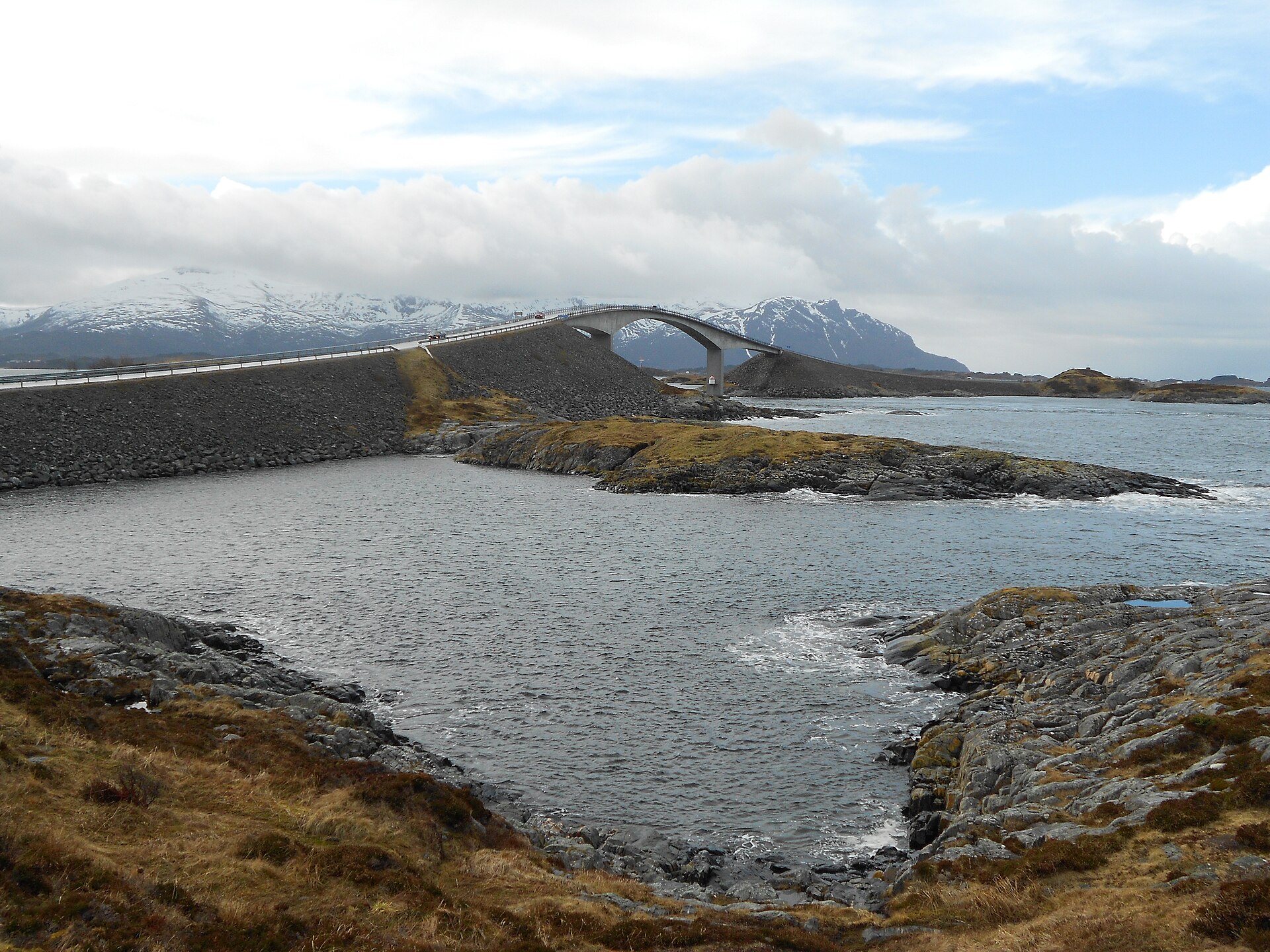
The Atlantic Road is a short coastal stage with seven bridges and open water. Wind and spray can change visibility, and a viewpoint is not permission to stop on the carriageway. The official Atlanterhavsvegen page lists viewpoints and the route map.
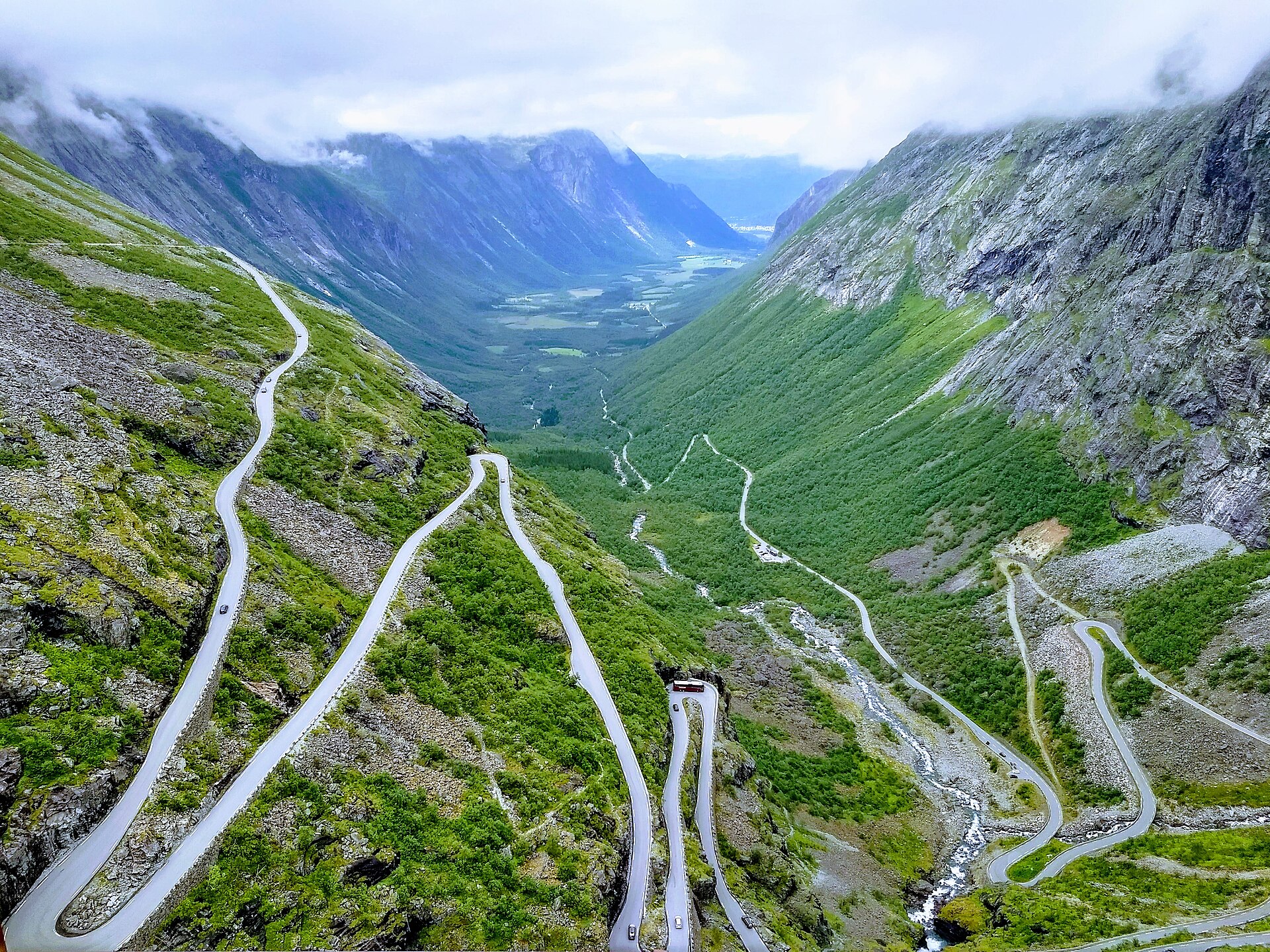
Geiranger–Trollstigen combines hairpin bends, exposed slopes and a ferry. The road can close at night or in bad weather even after its seasonal opening. Check the official Geiranger–Trollstigen travel information and the live NPRA traffic map before committing to the crossing.
.jpg)
Before a mountain day:
- Check the route in the NPRA traffic information service and look for a mountain-pass or weather warning.
- Confirm the ferry timetable and the last practical sailing. A missed ferry can turn a scenic day into a long land detour.
- Leave space for a legal stop, food and a vehicle that is travelling more slowly uphill. Do not use a passing place as a viewpoint; it exists so vehicles can pass safely.
- Keep the offline map and the accommodation address available. Mobile coverage is not continuous in every valley.
Ferries, tunnels and road tolls
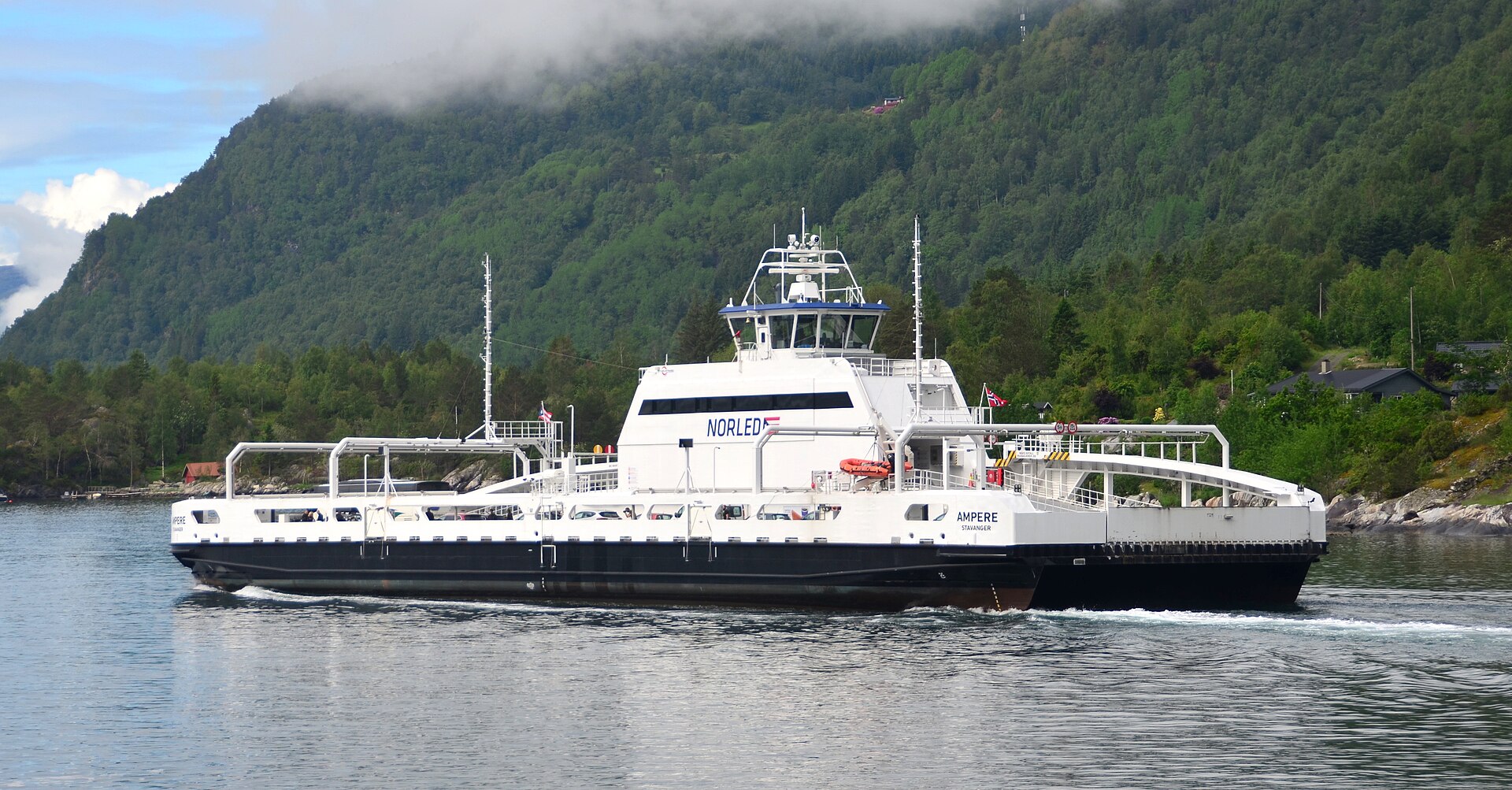
Ferries are part of the road network in western Norway. Most routes in the AutoPASS for ferry scheme read a tag or number plate. Visitors can use a valid AutoPASS tag, register a vehicle for FerryPay, or ask the crew about card payment where it is offered. If none of the no-fee options is set up, the vehicle owner may receive a full-price invoice with a fee. The AutoPASS for ferry payment page has the current options and route-specific price link.
Road tolls are separate from ferry tickets. Every vehicle pays road tolls, including foreign-registered cars. Before a private car enters Norway, choose either an AutoPASS agreement or Epass24 registration. An AutoPASS agreement can provide discounts and records the vehicle’s environmental data; Epass24 avoids a lookup fee but does not give the AutoPASS discount. A light-vehicle tag cannot be collected at the border, so do not leave the decision until pickup day.
Rental companies normally have their own toll and ferry process. The tag may stay in the windscreen while the company bills the plate, or the company may receive the invoice and add an administration fee. Ask for the exact process, the billing currency and the time window for a post-trip charge. Keep the rental contract and final invoice until every crossing has appeared.
Tunnels are often long and well engineered, but they still require dipped or daytime lights, a sensible speed and a plan for a breakdown. Do not stop in a tunnel except for an emergency; follow the signs and emergency bays.

Winter grip, weather and daylight
Norway’s tyre rule is condition-led. For light vehicles, the required tread depth is at least 3 mm from 1 November to the first Sunday after Easter Monday. In Nordland, Troms and Finnmark the period is 16 October to 30 April. Studded tyres follow the same regional windows, but may be used outside them when weather and road surface make that necessary; non-studded winter tyres may be used year-round. The NPRA tyre requirements page also explains the 1.6 mm summer tread rule and the separate rules for heavy vehicles.
That means a calendar date alone is not enough. A wet coastal road in November, an icy shaded bend in April or a sudden snow shower at altitude can require winter equipment outside the main period. Ask the rental branch whether the car has studded or non-studded tyres, whether chains are supplied, and whether the contract limits mountain-road use.
Check Vegvesen traffic for closures, convoy driving, road works and weather-exposed passes. Check Yr for the forecast at the actual pass and valley, rather than relying on the nearest city alone. If a warning removes the margin you need, turn around while a legal turnaround is still available.
City parking and stopping places
Norway does not use the Swiss-style “blue-zone” system described on some generic travel pages. Parking is controlled by local signs, marked bays, meters and operator conditions. EasyPark, Parkster and municipal apps are common in cities, but the sign at the space remains the authority.
The NPRA parking guide says not to park on a pavement, pedestrian crossing, cycle lane, bus lane or passing place; in front of a vehicle entrance or exit; where “No parking” or “No stopping” applies; or less than five metres from a junction. The fine can reach NOK 990, and a dangerous vehicle may be towed.
For Oslo, Bergen or Trondheim, a useful plan is to book a garage or stay near a rail or tram stop, unload luggage, then walk. At a scenic pullout, park fully inside the marked area and leave room for buses, emergency vehicles and other cars. A quiet shoulder is not automatically a legal parking space.
Fuel, charging and a realistic daily stage
Most fuel stations accept cards, including at unmanned pumps, but a foreign card may trigger a temporary authorisation hold. Keep enough fuel for the next town when leaving a city or ferry terminal. Petrol and diesel prices vary by region and time, so a route budget should use a current station app rather than a fixed national average.
An EV is practical on the main corridors and in towns, but a fjord or mountain day can have fewer choices. The Norwegian EV Association’s tourist guide explains the mix of operators, apps and ad-hoc card payment. Check the connector, access hours and payment method for every planned stop, charge before a ferry queue, and keep a reserve for a detour or cold weather. Our Norway EV road-trip guide covers the handover and payment questions in more detail.
Emergencies and roadside recovery
| Service | Number | Use it for |
|---|---|---|
| Fire | 110 | Fire, smoke or a rescue situation involving fire |
| Police | 112 | Immediate danger, a serious collision or urgent police help |
| Medical emergency | 113 | Life-threatening injury or illness |
| Out-of-hours medical care | 116 117 | Urgent care that is not life-threatening |
| Road traffic information in English | +47 22 175 175 | Road closures, flooding and dangerous road conditions |
| NAF roadside assistance | 08505 | Breakdown and vehicle recovery; check rental cover first |
The Norwegian Police confirms 112 for police emergencies, while Helsenorge lists 113 and 116 117. For a breakdown, move to a safe place if possible, use hazard lights, and call the rental company’s recovery line before paying a private tow truck. NAF’s 08505 roadside-assistance service is useful context, but rental coverage and membership terms still apply.
Sources and review date
This page was reviewed on 17 August 2026. The road and legal details were checked against the Norwegian Public Roads Administration, AutoPASS foreign-vehicle guidance, AutoPASS for ferry, Norwegian Scenic Routes, Helsenorge and NAF roadside assistance. Check those sources again immediately before travel because fees, timetables, weather warnings and closures change.
Related Norway guides
- Norway road-trip costs: tolls, ferries and fuel
- Norway EV road trip: charging, range and payment
- Norway winter driving: tyres and mountain passes
- Two days on the Atlantic Road
Related destinations
Frequently Asked Questions
- Can I drive in Norway with my foreign licence?
- A valid EU/EEA licence can be used in Norway. Most non-EU/EEA licences can be used for three months, but an IDP or an approved translation is required in some cases, including licences without a photo or licences written in a non-Latin alphabet.
- What speed limits should I expect in Norway?
- The built-up default is normally 50 km/h and the common outside-built-up limit is 80 km/h. Motorways may be signed at 90, 100 or 110 km/h. Posted limits and conditions always take priority.
- What is Norway’s drink-driving limit?
- The general legal threshold is 0.2‰ (0.02% BAC). The limit applies to drivers generally; do not rely on a calculation of how many drinks might fit under it.
- Are winter tyres required in Norway?
- The driver must maintain sufficient grip all year. For light vehicles, 3 mm tread is required from 1 November to the first Sunday after Easter Monday, or from 16 October to 30 April in Nordland, Troms and Finnmark. Winter tyres, chains or similar equipment may be needed outside those dates when conditions demand it.
- How are road tolls charged to visitors?
- All vehicles pay Norwegian road tolls. A foreign vehicle can use an AutoPASS agreement or register with Epass24; a rental company may pass the charge and an administration fee to you. There are no cash booths to stop at.
- How do car ferries work in Norway?
- Most ferries in the AutoPASS for ferry scheme use a tag, number-plate recognition, FerryPay or card payment. Check the route’s timetable and payment method, then allow for a queue in summer.
- How do I check a mountain road before leaving?
- Use the Norwegian Public Roads Administration traffic map or app for live messages and the status of weather-exposed mountain passes. A route page or navigation app is not a substitute for the live road report.
- What are the main parking mistakes in Norway?
- Park only where signs and marked bays allow it. Do not park on pavements, crossings, cycle or bus lanes, passing places, in front of entrances, or within five metres of a junction.
- Is Norway practical for an electric-car road trip?
- Yes, but remote fjord and mountain stages still need a charging plan. Check connector, access and payment for each stop, and keep a reserve for weather, ferry queues and detours.
- Which emergency numbers should a driver know?
- Call 110 for fire, 112 for police and 113 for medical emergencies. Call 116 117 for out-of-hours medical care, +47 22 175 175 for English road information, and NAF roadside assistance on 08505.
Information Sources & Disclaimer
This guide compiles information from the official transport authorities, road operators, government travel information, and automobile associations linked for Norway.
While we strive to keep this information as accurate and up-to-date as possible (last reviewed: August 2026), traffic laws and toll rates can change without notice. We recommend verifying critical information with the local authorities or your car rental agency upon arrival.
Learn more about our Editorial Process →Compare Your Origin and Destination
Use the comparison tool to check driving side, units, documents, and other destination data for your route.