Plan Paraguay as a city arrival plus four route decisions
Paraguay is easiest to plan when Asunción, the paved national corridors and the Chaco are treated as different driving environments. In the capital, the decision is usually where to leave the car before a dense visit. On PY01, PY02 and PY03, the decision is a corridor, toll and work-zone sequence. On PY09, the decisive input can be rain, flooding or a road surface that a navigation app has not understood. This page was reviewed on 18 August 2026 for private and rental-car travellers.
The useful order is: confirm the foreign-licence window, separate your immigration documents from the vehicle’s border permission, choose a legal parking move in Asunción, then attach a route-status, weather, fuel and payment fallback to each rural leg. The IDP checker, rental cross-border cost and permission planner, border-crossing permission planner, toll and vignette planner and route weather and closure planner keep those decisions separate.

Licence, IDP and rental age are separate checks
For a visitor car, start with the original licence for the vehicle category, a passport or accepted identity document, and the rental agreement. Paraguay’s national traffic law says a current foreign licence is valid for no more than three months from entry. Keep the entry record with the passport. That national clause does not remove the rental desk’s or insurer’s document requirements.
An IDP is a companion translation document, not a substitute for the national licence and not permission to take a rental across a border. The cited law does not create one universal IDP requirement for every licence format. Ask the rental company and insurer before payment, especially when the licence is not in a readable Roman script; carry an official translation or IDP when they require it. The IDP checker helps record the answer, but the issuing authority and written contract control.
The legal particular-licence threshold is 18; the Asunción licensing information also uses 18 as the starting age. Rental companies set a separate contract age: National Paraguay publishes 21, while Sixt’s Paraguay terms vary thresholds and licence history by class. Confirm the named driver, deposit, young-driver fee, permitted countries and return location in writing.
At pickup, verify the original licence, passport, credit card, rental agreement, vehicle registration, insurance territory, roadside number, fuel policy and damage record. Take a photograph of the plate and documents before moving. A rental counter’s age approval is not proof that the car may cross Argentina or Brazil.
Right-hand traffic, signs, speed and everyday safety
Paraguay drives on the right. The traffic-law text gives priority at an unmarked intersection to the vehicle approaching from the right, but route and avenue priority, signs, signals, emergency vehicles, pedestrians, temporary controls and police instructions change the decision. Read the next sign rather than importing a rule from another country.
The national figures need careful wording. The official traffic-law PDF contains 50 km/h for ordinary vehicles in urban route sections and 110 km/h for ordinary vehicles on rural routes. It gives 40 km/h in urban areas for buses, minibuses, trucks and motorcycles and 90 km/h for those vehicle classes on rural routes. The MOPC speed explainer presents 90 km/h as the practical rural speed for light traffic and reserves the possible 110 km/h figure for a clear, non-congested route section. Plan at 90 unless the section is clearly signed and conditions support the lower-risk choice; never exceed the posted limit.
Local authorities set urban controls, and signs at a work zone or town approach win. Special 20 km/h reductions apply around listed schools, public buildings, hospitals, churches, meetings, level crossings and marked curves or hazards. Use dipped headlights on national, departmental and branch roads, wear seatbelts, use the required child restraint for a child under five, do not manually use a phone and do not drink before driving. The law’s zero-tolerance alcohol wording makes a sober driver the only sensible plan.
Asunción: park first, then visit
The city’s current street-parking notice says legal spaces are the signed spaces intended for parking. Do not use a no-parking sign, yellow kerb, red corner, sidewalk, public-transport lane or a space that blocks a driveway. One-way direction and curb treatment can vary by street. Save the exact bay or garage entrance before the final turn and leave the car when the central visit is walkable.
The municipality also maintains a tariffed-parking document page, and it has previously published a suspension notice. That history is a reason to recheck the current sign and municipal announcement, not to assume that a saved app or old price still applies. Keep payment evidence if a live tariffed space is in use. The parking cost and restriction planner is useful for recording hours, plate, backup garage and walking destination.
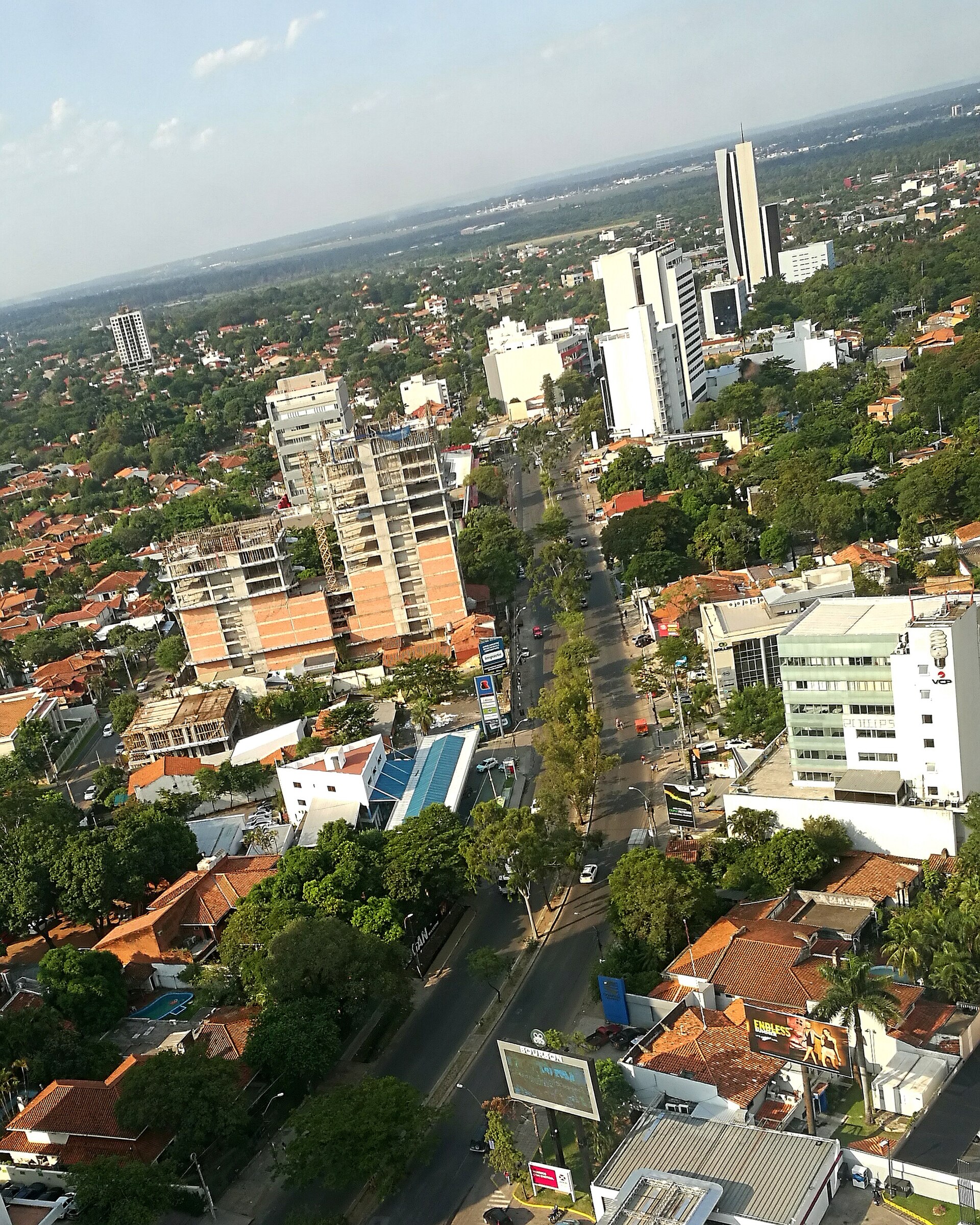
For a first visit, treat the car as an arrival tool. Set the hotel garage, a legal central space or a private car park before navigating toward the old centre, Costanera or a restaurant. Traffic around major business corridors such as Aviadores del Chaco can make the last kilometre slower than the intercity leg; do not circle the block looking for a curb with the rental documents visible inside.
Choose the corridor: PY01 south, PY02 east, PY03 north, PY09 west
Use the MOPC national road map and route-status page immediately before each stage. The map is a planning layer, not a live guarantee that a side road, bridge or work detour is open.
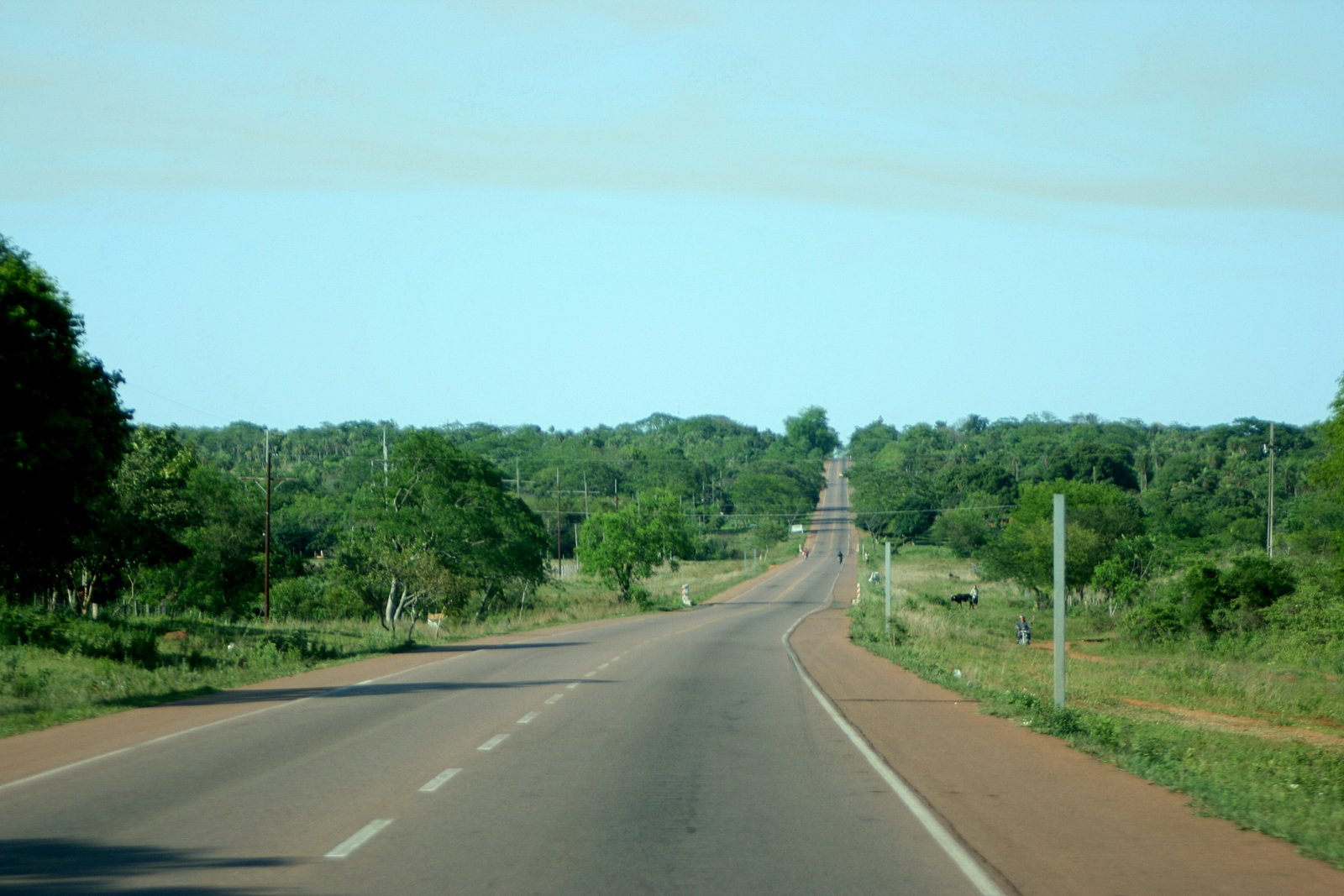
PY01: Asunción to Encarnación
PY01 is the southbound choice toward Paraguarí, Misiones and Encarnación. MOPC has reported maintenance and signage work along the 108 km Cuatro Mojones to Quiindy section. Keep daylight for work zones, expect a lower signed speed and plan a fuel stop before the route branches. An attractive arrival time from a map is not a reason to pass a stopped convoy or ignore temporary markings.

PY02: Asunción to Ciudad del Este
PY02 is the eastbound decision toward Ciudad del Este and the Friendship Bridge area. The MOPC Tape Porã notice identifies toll points at Pastoreo and Minga Guazú, but the notice’s tariff is date-specific. Check the current charge and payment arrangement rather than hard-coding a guaraní amount into the itinerary. If the journey continues into Brazil, finish the written rental and customs checks before leaving Asunción.
PY03: northbound route planning
PY03 serves the northbound decision through the Emboscada, 25 de Diciembre and Guayaiví corridor. Those points appear in MOPC’s electronic-toll announcement, which describes debit, credit-card and QR payment at the 16 MOPC-administered stations. Recheck the current toll-cost page and the road-status page before departure, and keep a small cash or card fallback for a lane or operator with different equipment.
PY09 and the Chaco
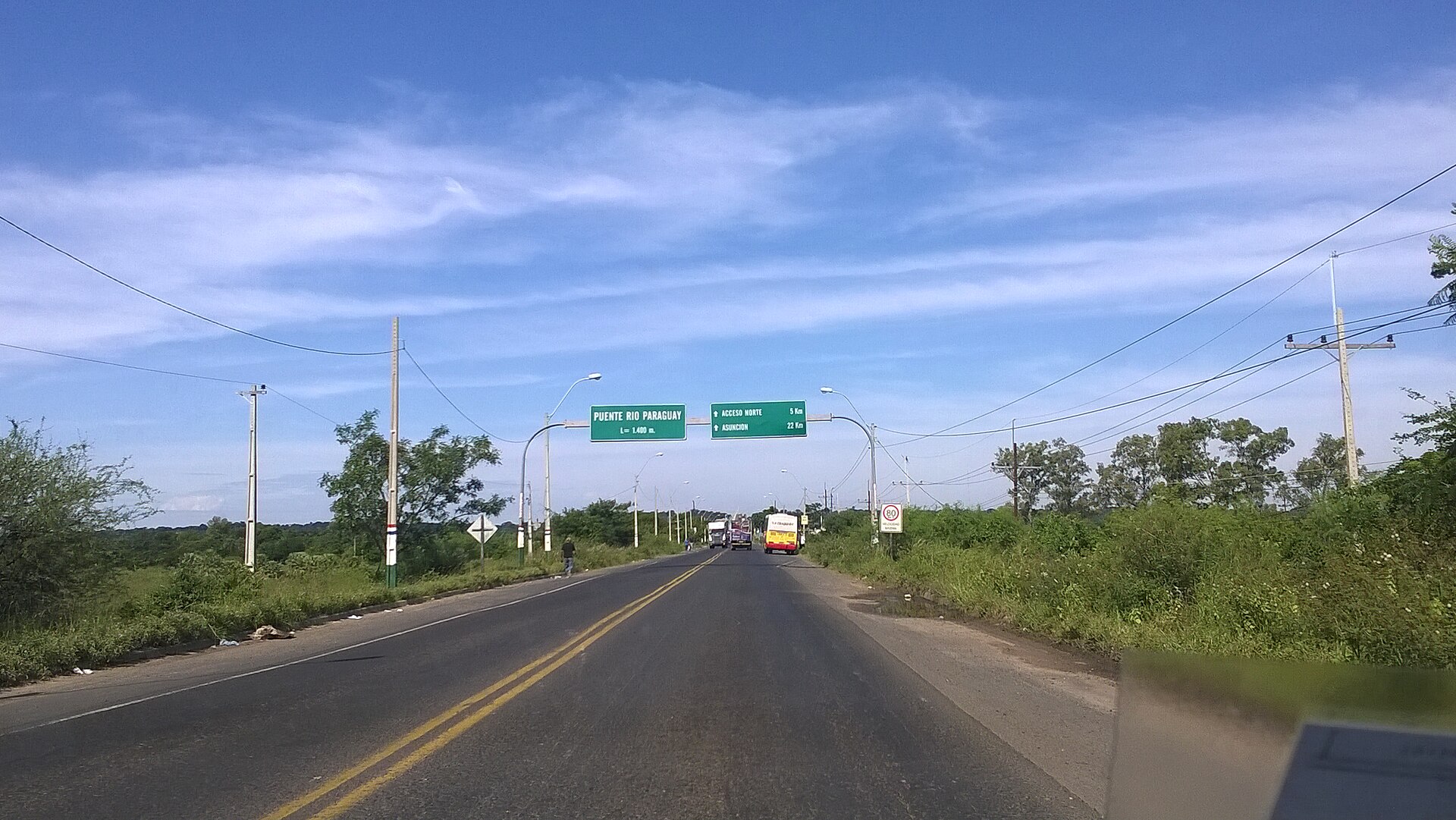
PY09 is a westbound threshold, not simply another paved day trip. MOPC describes 175 km of rehabilitation between Mariscal Estigarribia and La Patria, with the D092 connection toward Infante Rivarola. It also reports a Chaco flood-response plan after heavy rain. The PY12 project page is another reminder that major works and historically rain-sensitive connections can coexist.
Before PY09, check the route status and the official DMH forecast, top up fuel, download an offline map and confirm the rental contract permits the route surface. Use daylight and turn back before water covers the road. Do not let a navigation shortcut move the car onto an unpaved local track or a flooded crossing without local confirmation.

Tolls, fuel and EV charging
The MOPC toll-cost page is the current place to check administered-station tariffs. MOPC’s electronic-payment announcement says all 16 MOPC-administered stations accept debit, credit-card and QR options, and lists stations on PY01, PY03 and PY09. That is useful evidence that electronic payment exists, but it does not mean a PY02 concession lane or every future lane has identical equipment. Keep a small guaraní cash fallback, a working card or QR method, and the receipt.
For fuel, use the MIC service-station map before leaving the metropolitan area and again before a remote detour. Station hours, stock, prices, card acceptance and the next open station are local variables. Confirm whether the rental takes nafta or gasoil, and fill before the Chaco or a route that has just changed because of rain.
EV planning is less certain. ANDE’s fast-charger project information describes a rollout of 150 kW chargers, but project information is not a live nationwide availability guarantee. Check the operator, connector, payment method and current status immediately before departure; charge before the battery is critical and keep an accommodation or fuel fallback. A Chaco leg should not depend on an unverified charger pin.
Rain, flooding, unpaved roads and night driving
Use the DMH forecast and MOPC route status as two separate checks. Heavy rain, standing water, washouts, bridge restrictions and active works can change the safest route even when the destination itself is open. The Chaco sources above document rain and flood intervention; they do not justify a permanent nationwide claim about every road.
After a severe storm, do not drive through moving or unknown-depth water, do not follow a local vehicle into a submerged section and do not assume four-wheel drive makes a rental contract valid for a damaged track. Stop safely, ask MOPC, police, the rental branch or a local authority, and choose a signed route. On any rural leg, daylight leaves more time to see animals, pedestrians, missing shoulders, temporary signs and road edges.
Border documents, rental permission and emergencies
Paraguay’s Migration entry requirements require entry and exit registration. Non-residents use a passport or a valid MERCOSUR identity document where applicable, and must keep proof of entry; a transitory stay is generally up to 90 days, subject to the applicable extension and visa rules. Check the official migration-control posts for the border you actually intend to use.
The person’s immigration permission is not the car’s customs permission. DNIT’s traveller notice says a land traveller using a vehicle should carry the vehicle registration card, identity documents and, when not the owner, a notarised authorisation. Its FAQ is the place to recheck the border document set. For a rental, get the written contract permission, permitted countries, insurance territory, roadside coverage and any Mercosur authorisation from the branch. A private-car authorisation is not automatically a rental-car authorisation.
The government emergency directory lists 911 Police, 132 Volunteer Firefighters and 141 SEME medical emergency; the SEME information page confirms 141 as a free emergency line. Move people away from traffic when safe, use hazards, note the road number, direction, kilometre or landmark, and give the rental plate and blocked-lane details. Then follow police, fire, medical, insurer and rental-assistance instructions.
Spanish and Guaraní phrases for a road stop
Paraguay’s route decisions are usually handled in Spanish, with Guaraní useful for courtesy and connection. Keep these short phrases in an offline note:
- ¿Está habilitada la ruta?: Is the route open?
- ¿Hay camino asfaltado?: Is the road paved?
- ¿Dónde está el peaje?: Where is the toll?
- Necesito una ambulancia / la policía: I need an ambulance / the police.
- Mba’éichapa: Hello; Aguyje: Thank you.
Also recognise nafta, gasoil, banquina (shoulder), desvío (diversion), obra (roadworks), entrada and salida. Keep the rental roadside number beside 911, 132 and 141 rather than depending on a roaming connection to recover it.
Official sources and review boundary
The driving facts and operational links above were reviewed on 18 August 2026. National and municipal rules, speed signs, route works, toll tariffs and payment equipment, fuel availability, EV status, weather, border procedures and rental contracts can change. Re-open the relevant official page on the day of travel; the sign, authority, border post and written rental contract control.
- ANTSV: national traffic law PDF · official traffic-law PDF mirror
- MOPC: speed-limit explainer · Asunción: licence age information
- National Paraguay: rental requirements · Sixt: Paraguay rental terms · Alamo Paraguay: rental FAQ
- Asunción municipality: legal street-parking spaces · tariffed-parking documents
- MOPC: national road map · route status · PY01 maintenance and signage
- MOPC: toll costs · electronic payment at MOPC stations · PY02 Tape Porã toll notice
- MOPC: PY09 Chaco rehabilitation · Chaco flood response · PY12 Chaco works
- DMH/DINAC: official forecast · MIC: service-station map · ANDE: fast-charger rollout
- Migration: entry and exit requirements · migration-control posts
- DNIT: traveller vehicle documents · DNIT FAQ
- Paraguay government: emergency directory · SEME 141
- Wikimedia Commons: Asunción image source · CC BY-SA 4.0
- Wikimedia Commons: PY01 image source · CC BY-SA 3.0
- Wikimedia Commons: PY09 image source
Continue planning
Use the IDP checker, rental cross-border cost and permission planner, border-crossing permission planner, toll and vignette planner, route weather and closure planner, EV road-trip planner, fuel cost calculator and emergency numbers tool before departure. They organise questions and evidence; the local sign, authority, border post and written contract remain controlling.
Frequently Asked Questions
- Which side of the road does Paraguay use?
- Paraguay drives on the right. At an unmarked junction the national law gives priority to the vehicle approaching from the right, but a sign, traffic light, route or avenue priority rule, emergency movement, roadworks control or police instruction overrides that default.
- What speed limits should I plan for in Paraguay?
- Treat 50 km/h as the ordinary urban route figure and 40 km/h for buses, minibuses, trucks and motorcycles. The route-law text contains 110 km/h for ordinary vehicles on rural routes, while MOPC traveller guidance uses 90 km/h in normal rural planning and allows 110 km/h only on clear, non-congested sections. Posted and local limits always win.
- Do Paraguayan signs override a general speed number?
- Yes. Read the sign at the section, including temporary work-zone signs and special 20 km/h areas near schools, public buildings, hospitals, churches, meetings, level crossings and marked curves or hazards. A local authority controls urban limits, so do not carry a capital-city number onto every municipality's road.
- Can I drive in Paraguay with a foreign licence?
- The national traffic law says a current foreign licence may be used for no more than three months from entry into Paraguay, for the category it authorises. Keep the licence current and carry your passport or entry evidence; a rental provider, insurer or border authority may ask for more documents.
- Is an International Driving Permit required in Paraguay?
- The cited national-law clause does not create one blanket IDP rule for every foreign licence. Carry the original licence, ask the rental desk and insurer about the licence format, and add an IDP or an official translation when the card is not in a readable Roman script or the provider requires it. An IDP never replaces the original licence.
- What is Paraguay's minimum legal driving age?
- The particular driving-licence category starts at 18 in the national framework and in Asunción's licensing information. That is a legal threshold, not a promise that a rental company will hand a car to every 18-year-old.
- How old must I be to rent a car in Paraguay?
- Rental contracts are stricter than the legal licence age. National Paraguay publishes a minimum of 21, while Sixt's Paraguay terms show age and licence-history thresholds that vary by vehicle class. Confirm the named-driver age, licence history, deposit and young-driver fee in writing.
- Which documents should I carry at a Paraguayan rental pickup?
- Bring the original driving licence, passport or accepted identity document, booking, credit card in the main driver's name, and the rental agreement and vehicle documents issued at pickup. Before leaving, verify the plate, insurance territory, roadside number, damage record and whether the car's registration document is in the glovebox.
- Can a Paraguay rental car cross into Argentina or Brazil?
- Never assume it can. The rental branch must approve the country and route in writing, issue the vehicle authorisation, confirm insurance and roadside territory, and state whether a one-way return is allowed. Alamo Paraguay, for example, describes a limited Brazilian-side crossing near Foz do Iguaçu and an international-insurance requirement, not a general permission for every border.
- What written permission is needed when a rental car is not mine?
- For a land vehicle, DNIT tells travellers to carry the vehicle registration card and, when the traveller is not the owner, a notarised authorisation from the owner. A rental traveller should carry the rental contract plus the provider's written cross-border authorisation, insurance proof and any Mercosur document requested by the border post. Migration permission for the person is separate from customs permission for the car.
- Where can I park in Asunción?
- Use a signed legal space or a private car park. The municipality's current notice says street spaces with the relevant signs are for parking, while no-parking signs, yellow kerbs, red corners, sidewalks and public-transport lanes are not parking spaces. One-way and curb rules vary by street, so inspect the exact block.
- How should I visit central Asunción by car?
- Plan the parking or hotel garage before the final turn, leave the car and walk the dense central section. Do not rely on an old tariff screenshot: the city maintains tariff-system documents and has previously suspended application, so the sign and current municipal notice control on the day. Use the Aviadores del Chaco image and address only as orientation, not as a parking guarantee.
- What is the practical PY01 plan from Asunción toward Encarnación?
- Use PY01 as the southbound corridor, but check MOPC route status and current works before leaving. MOPC has reported maintenance and signage work on the 108 km Cuatro Mojones to Quiindy section; plan daylight, fuel and a lower speed through work zones. Tolls and route timing are live inputs rather than fixed promises.
- How should I plan PY02 toward Ciudad del Este?
- PY02 is the eastbound decision toward Ciudad del Este and the Brazil border. MOPC's Tape Porã notice identifies toll stations at Pastoreo and Minga Guazú, but tariffs can change; check the current operator information and rental border clause separately before continuing to Foz do Iguaçu.
- What should I know before taking PY03 north?
- Use MOPC's road map and route-status page to confirm the corridor, signs and active works. The MOPC electronic-toll list includes Emboscada, 25 de Diciembre and Guayaiví on PY03, so carry a payment fallback and do not treat a map's estimated travel time as a guarantee through town approaches or work zones.
- Is PY09 through the Chaco suitable for an ordinary rental car?
- It depends on the exact section and current conditions. MOPC describes rehabilitation on 175 km between Mariscal Estigarribia and La Patria, with a connection toward Infante Rivarola, and separately reports rain and flood responses in the Chaco. Check the route-status page and official forecast, use daylight, confirm the rental contract permits the surface, and do not enter an unpaved or flooded detour because navigation suggests it is shorter.
- How do Paraguay's road tolls and electronic payments work?
- MOPC says electronic payment is available at its 16 administered toll stations through debit, credit card and QR, while the current cost page is the place to check rates. PY02's concession may have different conditions. Carry a small cash and card or QR fallback, follow the lane sign and keep the receipt; the 2024 electronic-payment announcement is evidence of the option, not a promise that every operator or lane has identical equipment today.
- Where should I buy fuel on a Paraguay road trip?
- Use the Ministry of Industry and Commerce service-station map and refuel before a remote leg, especially before the Chaco or a route diversion. Station hours, stock, brands, card acceptance and prices are local and changeable. Check whether the rental takes nafta or gasoil, and do not plan a long section on the assumption that the next pin is open.
- Can I rely on an EV charger in rural Paraguay?
- The network is developing. ANDE describes a fast-charger rollout, but that official project information does not confirm live availability, connector compatibility, payment or uptime on every route. Verify the current operator, charge before a remote leg, and carry a petrol or accommodation-charging fallback; do not plan a Chaco crossing on an unverified charger pin.
- What should I do about rain, flooding and unpaved roads?
- Check the official DMH forecast and MOPC route-status page before departure and again after a severe storm. MOPC has documented Chaco rain and flood impacts and ongoing works, so local conditions can change faster than a map. Never drive through moving or unknown-depth water; turn back, ask the authority or rental provider, and use a signed detour.
- Which emergency numbers should I call in Paraguay?
- Call 911 for police or an immediate emergency, 132 for volunteer firefighters, and 141 for SEME medical emergency response. The government directory also lists 160 for ANDE and 162 for ESSAP. Give the route number, direction, kilometre or landmark, injuries, blocked lanes and rental plate, then follow the police and rental-assistance instructions.
- Which local phrases help when driving in Paraguay?
- Useful Spanish phrases are ¿Está habilitada la ruta? (Is the route open?), ¿Hay camino asfaltado? (Is the road paved?), ¿Dónde está el peaje? (Where is the toll?), Necesito una ambulancia and Necesito la policía. In Guaraní, Mba'éichapa is a greeting and Aguyje means thank you. Keep the phrases, map pins and emergency numbers offline.
Information Sources & Disclaimer
This guide compiles information from the official transport authorities, road operators, government travel information, and automobile associations linked for Paraguay.
While we strive to keep this information as accurate and up-to-date as possible (last reviewed: August 2026), traffic laws and toll rates can change without notice. We recommend verifying critical information with the local authorities or your car rental agency upon arrival.
Learn more about our Editorial Process →Compare Your Origin and Destination
Use the comparison tool to check driving side, units, documents, and other destination data for your route.