Plan the road before choosing the view
Georgia rewards a route that changes pace deliberately. Tbilisi is a dense urban start with paid parking and one-way decisions; the Georgian Military Road is a major northbound corridor that can become a weather and avalanche problem; Kakheti offers a more manageable regional loop; Tusheti is a high-clearance mountain commitment. Straight-line map time is not a reliable arrival plan once the road climbs.
Start with the car you actually have, not the car shown in a photo. Confirm the licence documents, contract permissions, tyres, fuel type and return conditions at the counter. Then split the itinerary into city, inter-city and high-mountain days. Leave daylight and a turn-back point for every unpaved or exposed section.
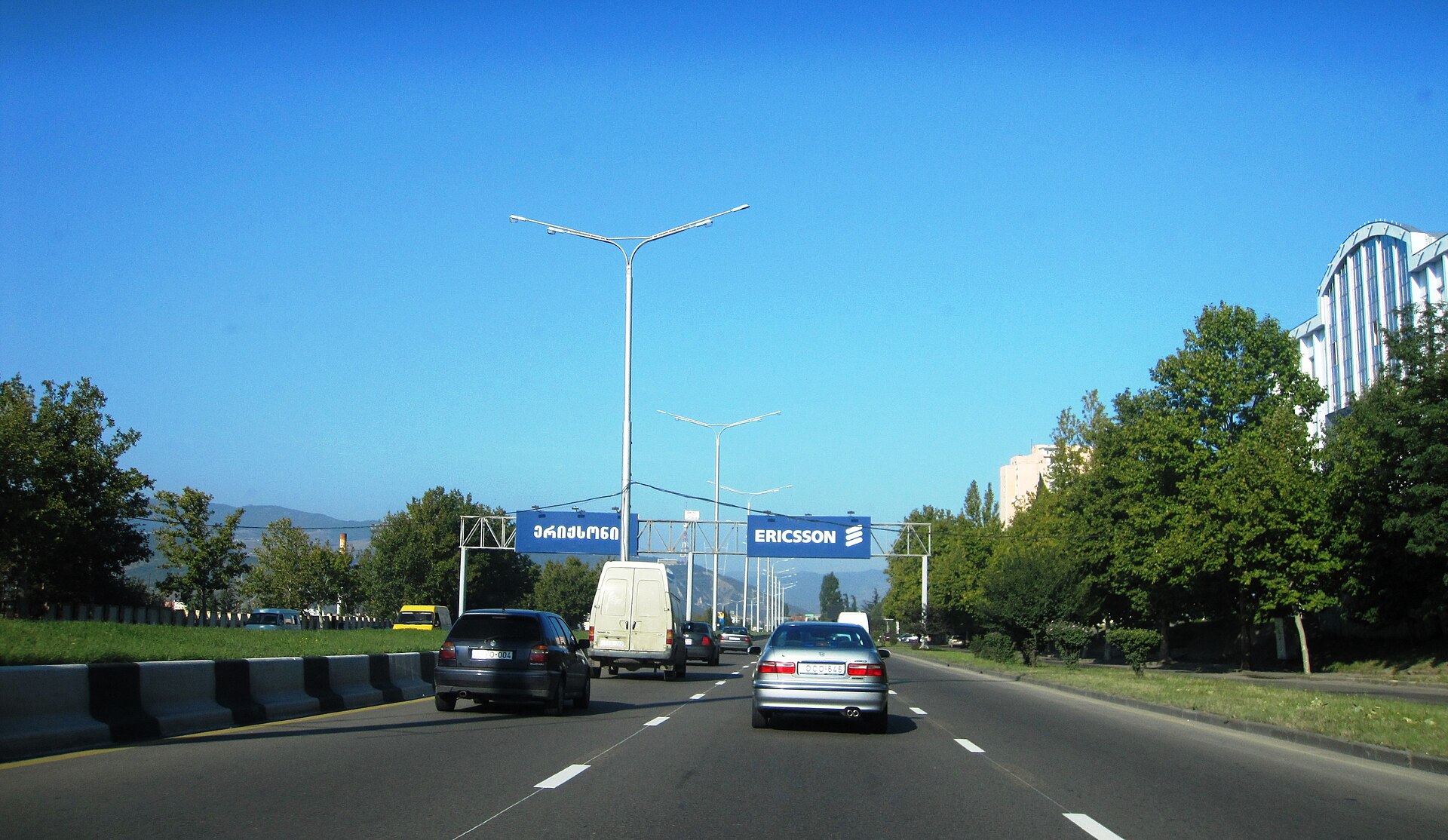

Foreign licences, translations and the rental counter
Georgia’s Law on Traffic requires a driver to carry a licence valid in Georgia for the vehicle category and the vehicle’s registration documents. It also says that a duly certified translation must be carried when the information on those documents is not in the Georgian or Latin alphabet. That is a document-format rule, not a promise that every rental desk will accept every national licence without an extra document.
The same law refers to a document proving the authority to own, dispose of or use a vehicle when its owner is absent and the vehicle is crossing the state border. For a rental, keep the contract, registration document and any power of attorney or cross-border letter together. The Service Agency of the Ministry of Internal Affairs publishes Georgia’s international-driving-permit service, but that service page does not turn an IDP into a universal requirement for incoming visitors.
The practical check is conditional. Send the branch a scan or clear photograph of the exact licence before booking. Ask whether it needs a 1968 or 1949 IDP, a certified translation, a licence held for a minimum period, or a second document for a non-Latin script. The UK government advice for Georgia is a useful example of why the answer varies: it says a UK licence can be used for up to one year, while the hire company may still require a 1968 IDP.
Georgia’s legal minimum for a category B licence is 17, according to Article 55 of the traffic law. A rental company is free to underwrite a different threshold. Enterprise’s Tbilisi terms currently list a minimum rental age of 21. That is an operator example, not a national rental rule. Check the contract for age, driving experience, additional-driver registration, deposit, insurance excess and vehicle class.
At pickup, photograph the plate, registration document, odometer, fuel or battery level, wheels, windscreen, mirrors, lights, warning lamps and every existing mark. Save the images with the pickup time. Ask who handles traffic-camera notices, parking debts, roadside assistance and the return inspection. Keep the original licence and contract in the car only as the rental and local rules permit; keep digital backups separately.
Right-side traffic, speed limits and legal context
Georgia drives on the right. Article 34 of the traffic law says overtaking is on the left in the normal case. The more important habit is to read the road class and the sign before trusting a navigation app. A route number, a divided carriageway and a motorway are not interchangeable descriptions.
For category B cars, Article 33 gives these defaults:
- 60 km/h in built-up areas, unless a sign sets another limit;
- 20 km/h in residential areas;
- 90 km/h on other roads outside built-up areas, unless a sign or another rule changes it;
- 110 km/h on motorways, where that road class and sign apply.
The same article requires speed to reflect relief, road and vehicle condition, load, weather, traffic and visibility. A light trailer lowers the category B maximum to 80 km/h on any road in the cited rule. Slow well before blind bends, settlements, animals, roadside vendors and stopped vehicles. Treat a signed limit, a temporary restriction, a police direction and a dangerous surface as controlling information.
Seat belts, child restraints, hands-free phone use and a zero-alcohol plan should be settled before the first kilometre. The Ministry of Internal Affairs road-safety page also records Georgia’s camera enforcement and penalty-point context. Do not use a legal maximum or another driver’s speed as your target on a mountain road.
Tbilisi parking: read the bay, then pay
Tbilisi is easiest when the car is parked before the city centre becomes the day’s main activity. The municipal Tbilisi Parking portal and the official Tbilisi Parking app information describe zonal hourly parking with a map, vehicle registration, session start and payment. The official mobile instructions also identify the app as bilingual in Georgian and English.
At the exact bay, read the blue parking sign, zone code, road marking, time window and any vehicle restriction. Enter the rental plate exactly as printed, not the booking number. Start the session after checking the code and retain the confirmation or screenshot. If the portal or app does not clearly recognise the plate or zone, move to a signed garage or ask the rental branch rather than leaving the car on an assumption.
Do not carry a Tbilisi parking rule to Batumi, Kutaisi, a hotel courtyard or a protected-area trailhead. Local signs control. A short stop for luggage, a long museum visit and an overnight stay each need a different parking decision. Never use a traffic lane, a narrow shoulder, a passing place or a mountain turn-out as a scenic parking bay.
Fuel, EV charging and the last dependable stop
For a petrol or diesel car, confirm the fuel type, the full-to-full or other return rule and the next dependable station before a highland stage. Fill in Tbilisi or a regional town before committing to a route with long gaps between services. Keep enough range for a turn-around and do not assume that a village station, card terminal or opening hour will match a map listing.
For an EV, ask the rental company which network, connector and payment method are supported. Electrify Georgia’s current guide instructs drivers to use its app to find a station, select the connector, start the session and end it before unplugging. That is an operator workflow, not a guarantee that every mountain destination has a live charger. Download the app before leaving, confirm the live status and keep a petrol or overnight-charging fallback when the route is remote.
Winter, mountain roads and live restrictions
Georgia does not turn every mountain road into a fixed calendar promise. The Roads Department of Georgia publishes an interactive map, road news and a hotline at (+995 32) 2 31 30 76. Its restrictions feed shows how snow, ice, avalanche risk, landslides and construction can temporarily restrict particular vehicle types or all traffic.
Before a winter or shoulder-season departure, check the forecast at both ends of the route, the latest restriction notice and the rental company’s tyre and chain policy. Ask whether the contract permits snow chains, gravel roads and high-clearance tracks. If the weather closes the high section, do not turn the closure into a test of the car. Keep a lower route, a daylight return and enough fuel for waiting.
The official tourism page for Georgia’s road passes describes snow around Gudauri and says the Abano Pass route to Tusheti is generally closed from the end of October until the end of May or the beginning of June. That is a useful seasonal signal, not a live opening notice. Road status and the local authority’s access decision control the day.
Tbilisi to Kazbegi on the Georgian Military Road
The official Georgia Travel region page places Mtskheta, Ananuri, Gudauri and Kazbegi on a coherent northbound region route. The Georgian Military Road follows the Aragvi valley and crosses the Jvari Pass; the tourism authority describes it as one of the country’s main transport arteries. Treat it as a full driving day when adding viewpoints, fortress stops or a winter margin.
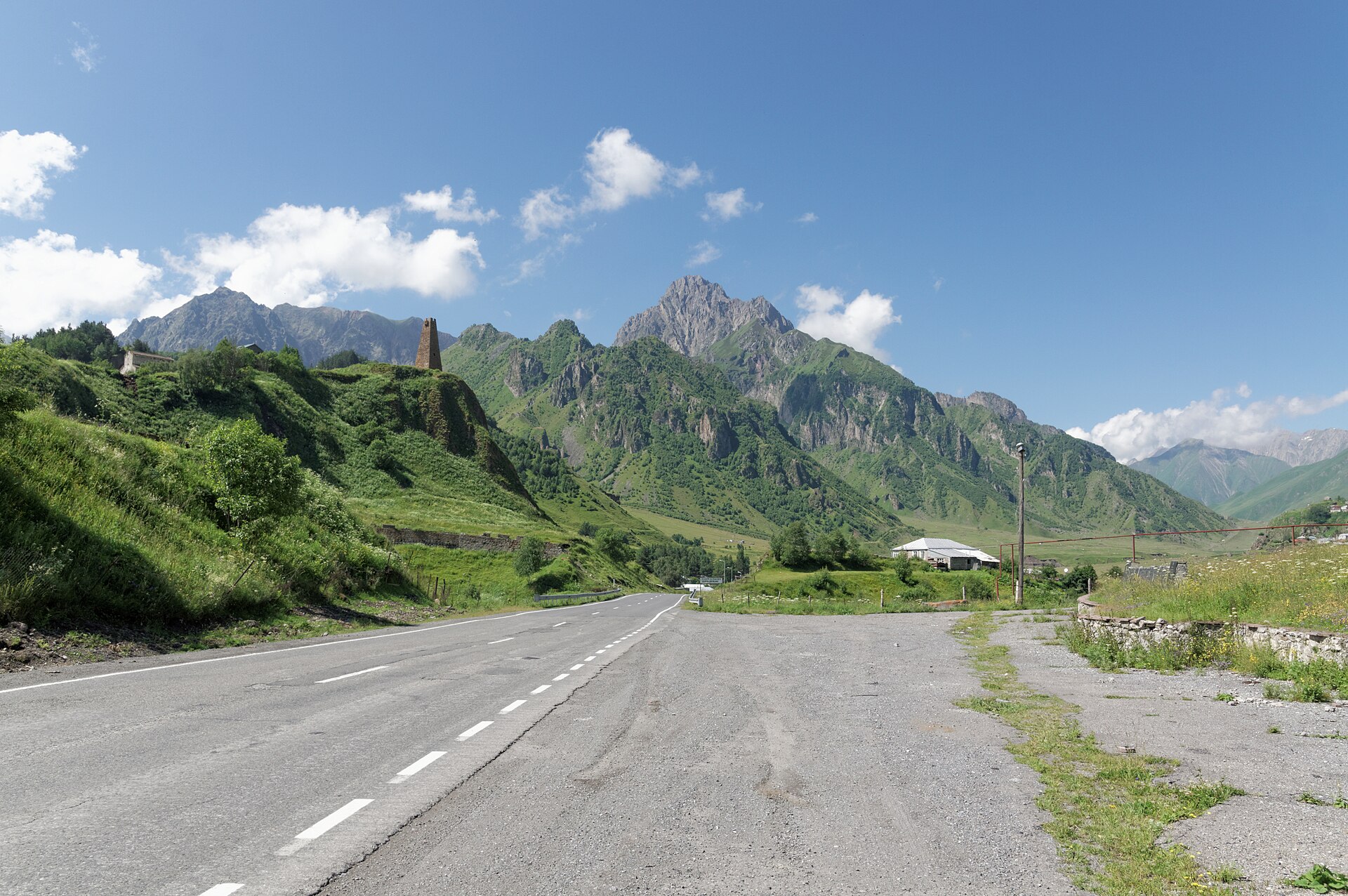

The Kazbegi National Park administration gives a useful distinction between paved access and local spurs. It describes the road from Stepantsminda toward Juta as 24 km, with 8 km paved to Sno and 16 km of gravel beyond. Do not convert that number into a promise that every rental car, weather window or insurance policy covers the route. Confirm the vehicle and access at the time of travel.
At Dariali Gorge and near Upper Lars, the road reaches a border area. A scenic stop is not permission to enter a customs-controlled section. Follow signs, police directions and the protected-area instructions, and never stop in a tunnel, avalanche shelter, bridge approach or active lane.
Kakheti, Tusheti and the high-clearance boundary
Kakheti is a useful contrast to Kazbegi because the route can be built around towns and short regional loops. Use Tbilisi as the document and parking base, then choose a manageable line toward Sighnaghi, Telavi or Kvareli. The official Georgia Travel information-centre list provides current visitor-centre contacts for Sighnaghi, Telavi and Kvareli. Confirm each winery, monument or accommodation’s parking arrangement before arriving with luggage.
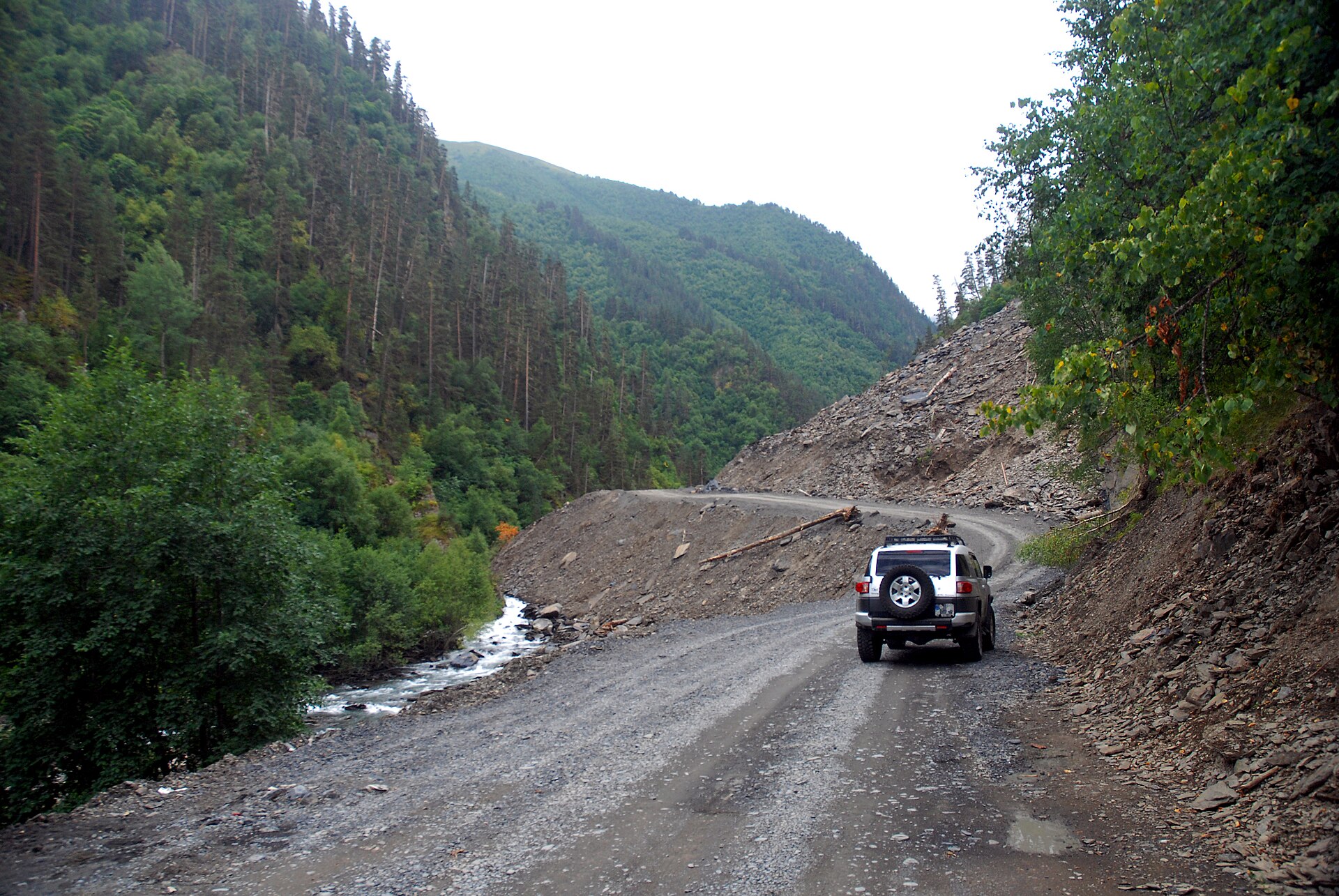
Tusheti is a different category of drive. Georgia Travel describes the Pshaveli–Omalo road over Abano Pass as beginning near Telavi, becoming unpaved after Stori Valley, and requiring a high-clearance SUV. The Agency of Protected Areas information for Vashlovani likewise identifies off-road vehicle access and visitor-centre registration for its boundary areas. Those examples show why a normal rental contract, insurance policy and map route are not enough for every Kakheti-side excursion.

Cross-border permission is a separate product
Tell the rental company at booking if you want to leave Georgia, and name every country, border point and date. Ask for written confirmation of the permitted country, notice period, fee, registration document, power of attorney, insurance territory, roadside support and return location. Georgia’s traffic law requires proof of authority to use a vehicle when its owner is absent in a cross-border situation.
An actual operator’s policy shows why the answer cannot be generalised. Enterprise Tbilisi currently describes Georgia–Armenia crossings as subject to special rules, advance notice of at least 48 hours, an additional fee and permit checks. A different branch may prohibit the same crossing or set another procedure. If the written contract is silent, keep the trip inside Georgia.
The same boundary applies to ferries, unsealed roads, Tusheti, additional drivers and one-way returns. Photograph the signed rental agreement and vehicle handover sheet. A border guard or insurer will use the documents in the car, not the promise made by a booking interface.
112 and a usable departure checklist
Georgia’s 112 emergency service receives emergency calls from across the country 24/7. The Ministry of Internal Affairs says the service is free from fixed and mobile networks, even when the phone has no SIM, and connects patrol police, fire and rescue, and medical services. Call for a serious collision, injury, fire, immediate danger or a mountain rescue need. Give what happened, where you are, your name and the number of people involved.
After a non-injury breakdown, move out of a live lane only when safe, use the rental company’s roadside number and keep the road location visible. Do not walk into a closed pass or under an unstable slope to look for help. If an incident is near a border or protected area, tell 112 the nearest named place, road direction and coordinates.
Before the first kilometre:
- Carry the original licence, passport, registration and rental contract; confirm the IDP or translation question in writing.
- Confirm the registered driver, legal age, rental age, additional-driver fee, insurance excess and permitted vehicle class.
- Photograph the pickup condition, plate, fuel or battery level, tyres, glass and warning equipment.
- Save Tbilisi Parking, the rental branch and 112 offline; test the payment method before the first city stop.
- Check the Roads Department restriction feed, mountain forecast, daylight and a turn-back route.
- Refuel or charge before a remote stage; verify the connector, app, cable and backup plan for an EV.
- Obtain written cross-border or unsealed-road permission before leaving the signed road network.
- Keep the car parked legally, never block a passing place, and leave the mountain before visibility or energy becomes the limiting factor.
Official sources and review date
This page was reviewed on 18 August 2026 against the Law of Georgia on Traffic, the Service Agency international-driving-permit page, UK government travel advice for Georgia, the Roads Department of Georgia, its restrictions feed, the Tbilisi Parking portal, the Tbilisi Parking app information, the 112 emergency service, Georgia Travel, the Agency of Protected Areas, and the Enterprise Tbilisi cross-border terms. These sources cover different layers. A government rule does not override a rental contract, and a tourism route description does not replace live road-status information.
Frequently Asked Questions
- Can I drive in Georgia with my foreign driving licence?
- A foreign licence can have legal force in Georgia, but the document must be valid for the vehicle and readable for the authorities. If its data is not in Georgian or Latin characters, Georgia's traffic law requires a duly certified translation. An IDP is a conditional document, not a universal answer: send the actual licence to the rental branch and ask whether it wants an IDP or translation.
- What is the minimum driving age in Georgia?
- Georgia's traffic law sets the minimum age for a category B licence at 17. A rental contract may set a higher age, driving-experience rule, deposit or vehicle-class restriction; the current Enterprise Tbilisi terms, for example, list a minimum rental age of 21. Treat the legal age and the counter's age as separate checks.
- Which side of the road does Georgia drive on, and what are the limits?
- Traffic keeps to the right and overtaking is normally on the left. For a category B car, the law gives 60 km/h in built-up areas, 20 km/h in residential areas, 90 km/h on other roads and 110 km/h on motorways unless a rule or sign sets a lower limit. Vehicle class, trailers, road works, visibility and weather can change the safe or legal choice.
- Do I need an IDP to rent a car in Georgia?
- There is no safe single answer for every issuing country and licence format. The UK government says a UK licence can be used for up to one year but tells renters to check whether the hire company requires a 1968 IDP. Carry the original licence, passport and any confirmed translation or IDP, and obtain the branch's answer in writing before paying.
- Can a Georgian rental car cross into Armenia or another country?
- Only with the rental company's prior written permission and the documents required for the vehicle. Enterprise Tbilisi says an Armenia crossing must be disclosed at least 48 hours before pickup, is subject to special rules and an additional fee, and is not guaranteed without permits. Other companies differ, so never rely on a verbal promise or a comparison-site summary.
- How does parking work in Tbilisi?
- Use the official Tbilisi Parking portal or app, read the zone code on the street sign and register the exact rental plate before starting the session. The municipal instructions describe zonal hourly parking, a map and payment through Tbilisi Parking. Fees, operating rules and eligible spaces can change, so check the live portal and keep the payment record.
- Is the Tbilisi to Kazbegi drive open in winter?
- Do not assume it is open because a map route exists. The Roads Department publishes restrictions for the Mtskheta–Stepantsminda–Larsi road, including temporary limits caused by snow, ice, avalanche risk and works. Check the restriction feed, hotline, weather and your rental company's tyre policy before leaving, and keep a lower-risk return plan.
- Can an ordinary rental car reach Tusheti or Juta?
- Not automatically. The official tourism material describes the Pshaveli–Omalo road over Abano Pass as a steep, partly unpaved route requiring a high-clearance SUV, while the Kazbegi protected-area page says the road to Juta includes 16 km of gravel after the paved section. Confirm the rental contract, vehicle clearance, insurance and current access before attempting either route.
- What number should I call after a crash or mountain emergency in Georgia?
- Call 112 for an emergency involving police, fire and rescue, or medical help. Georgia's 112 service receives calls nationwide around the clock and is free from fixed and mobile networks, even without a SIM in the phone. Give what happened, the exact location, your name and the number of people who need help, then follow the operator's instructions.
Information Sources & Disclaimer
This guide compiles information from the official transport authorities, road operators, government travel information, and automobile associations linked for Georgia.
While we strive to keep this information as accurate and up-to-date as possible (last reviewed: August 2026), traffic laws and toll rates can change without notice. We recommend verifying critical information with the local authorities or your car rental agency upon arrival.
Learn more about our Editorial Process →Compare Your Origin and Destination
Use the comparison tool to check driving side, units, documents, and other destination data for your route.