Plan San Marino as an Italian approach plus a mountain arrival
San Marino is small on a map but layered on the road. The approach from Rimini is in Italy; the final climb, parking system, historic-centre access and local road orders are in San Marino. A calm plan therefore starts with the rental contract and the Italian approach, then switches to San Marino’s signs before the road rises toward Monte Titano.
This guide was reviewed on 18 August 2026. San Marino drives on the right. The safest sequence is: confirm the driver’s documents and cross-border permission, choose a legal parking strategy, check the approach and closure notices, and only then decide whether the upper city or a lower village is the right first stop.
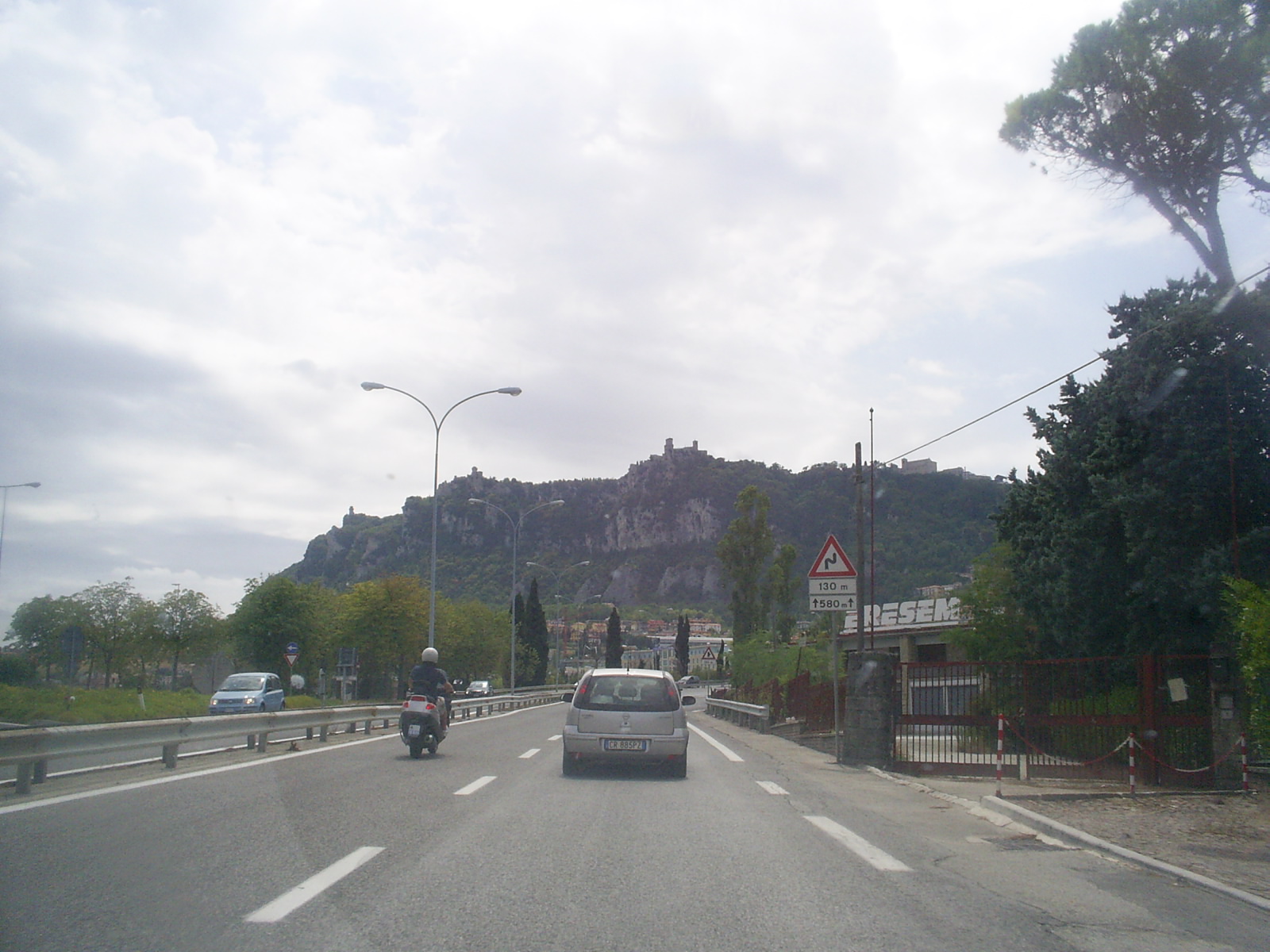

Licence, passport and the Italy–San Marino boundary
The official San Marino border-formalities page explains that there is no routine border post between Italy and San Marino and that visitors must meet the conditions for entering Italy. That is not the same as a universal visa exemption. San Marino is not part of the Schengen Area, so a traveller who needs permission to enter Italy or to return to Italy after the visit should check the Italian Embassy in San Marino visa information and the passport-specific rules before booking.
For the driver, carry the original licence for the vehicle category, passport or accepted travel document, the vehicle registration and insurance evidence. The San Marino government FAQ on driving licences distinguishes local permit administration from international permits. That is why this guide does not promise that an IDP is always required or never required: the issuing country, script, rental branch and current rule can change the practical document set. An IDP supplements the national licence; it does not replace it.
If the car is rented in Italy, ask the branch to record San Marino in the permitted territory in writing. Confirm whether the contract covers collision, theft, glass, tyres, underbody damage and roadside service after crossing the border, whether there is a cross-border fee, and which registration or insurance papers must stay in the car. A border that looks open on the road does not amend a rental contract.
Right-side traffic and San Marino’s speed structure
The official consolidated road-law material and the road-code archive are the references to use for the legal baseline. San Marino uses right-hand traffic. The current published maximum is 70 km/h, and urban sections can carry a 50 km/h or another signed limit according to the road and sign. Use this as a prompt to read the sign, not as a target speed.
San Marino has no motorway network. The SS72 and the Italian A14 are part of the approach, but once the route turns into local roads around Borgo Maggiore, Serravalle, Fiorentino or the capital, Italian motorway and rural-road defaults are irrelevant. Bends, stone walls, pedestrians, coaches, cyclists, rain and parked cars all shorten the safe stopping margin. If a temporary order or police instruction is lower than the general value, the temporary control wins.
Parking the upper city without a last-turn gamble
The official parking guide is more useful than a generic map pin because it explains the numbered car parks and the walking or lift connections. P9 and P10 are practical for the historic-centre side; P11 in Borgo Maggiore is the park-and-ride choice for the cable car. P1–P8 and P12 can become useful when the upper area is busy, but the exact choice depends on the day’s availability, event controls and vehicle size.
Do not treat a parking number as a guaranteed space. Read the entrance sign and machine, confirm the payment method and tariff, and keep the ticket or receipt. The historic centre is a walking destination, not a place to keep circling in a rental car. If luggage, mobility needs or a hotel access permit changes the plan, ask the accommodation or parking operator before driving beyond the signed public area.
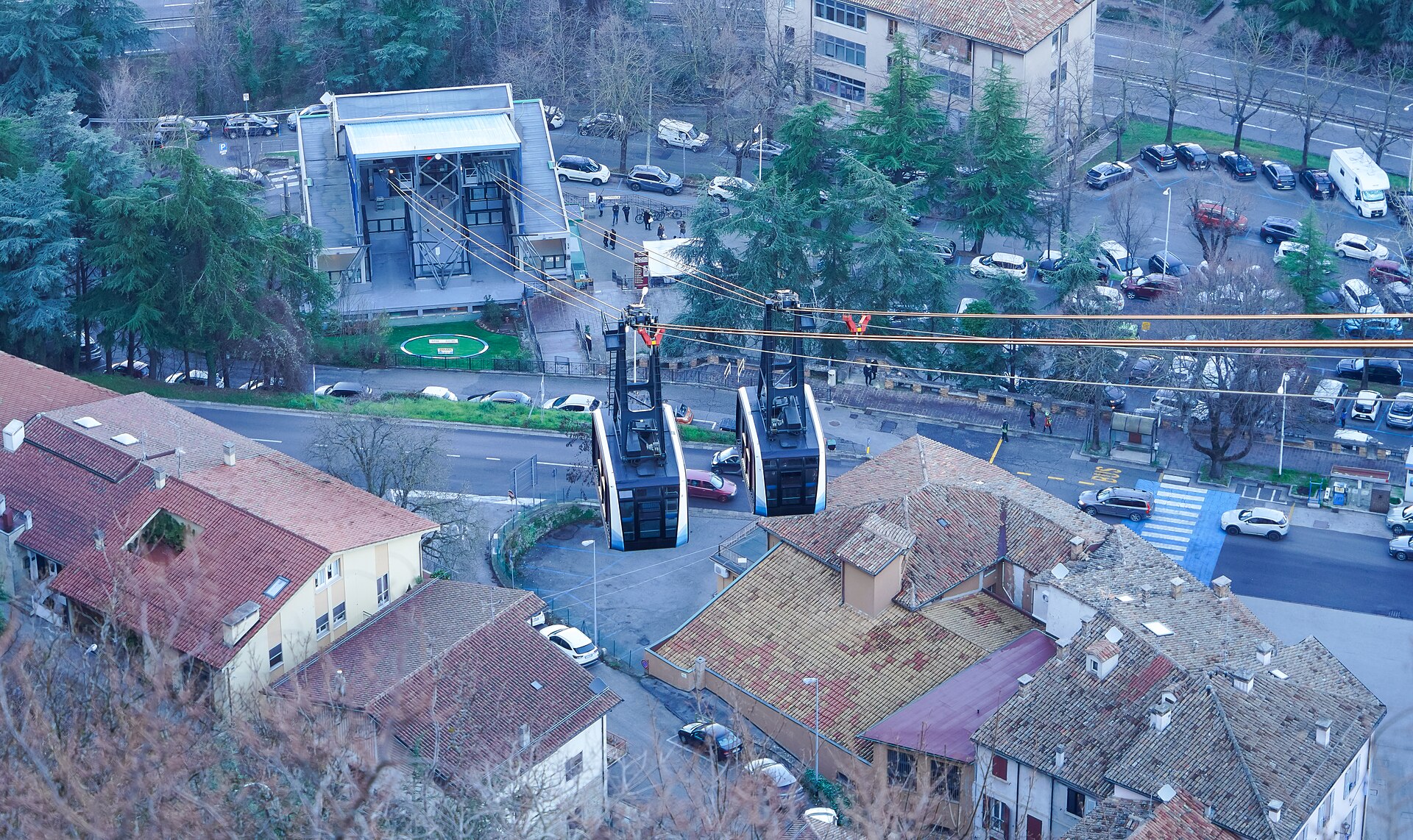

The official cable-car page describes the Borgo Maggiore–San Marino Città connection and its regular service pattern. Check the opening period, fare and weather notice on the day. The cable car is not a substitute for checking P11’s access or closing time; it is a separate transport leg with its own operating conditions.
Restricted roads, walking streets and local access
The old town sits on Monte Titano and contains narrow, steep and pedestrian-priority spaces. A GPS route that ends beside a gate has not discovered a legal loading permission. Follow the sign, barrier and police officer in front of you. When the plan is sightseeing, park at the signed facility, walk, or use the cable car rather than testing a restricted street with a rental car.
Temporary controls matter as much as permanent signs. The government publishes road-closure and circulation orders. Check them before a festival, public event, construction visit or an upper-city hotel arrival. If access is essential, ask the hotel for the current written procedure and vehicle time window.
Three route decisions
1. Rimini → Borgo Maggiore → San Marino Città
This is the cleanest arrival for a first visit. Take the Italian approach from Rimini, keep a time margin for the climb, then decide between an upper car park and P11 plus the cable car. The last choice should be made before the road becomes crowded: a lower park-and-ride stop is often less stressful than searching for a space near the walls. The official “how to arrive” page and the tourism map are the right starting points for the approach, while the parking page controls the final choice.
2. A14 → Rimini Sud → SS72
For motorway arrivals, the official map identifies the A14 connection via Rimini Sud and SS72; Rimini Nord and SP258 are another approach. The A14 toll and traffic belong to Italy, while the local climb and parking belong to San Marino. Before leaving the motorway, confirm the rental territory, fuel or charge margin and the destination car park. If the approach is congested, do not let a shorter app route send you into a residential lane or restricted old-town access.
3. San Marino Città → Fiorentino → Monte Titano viewpoints
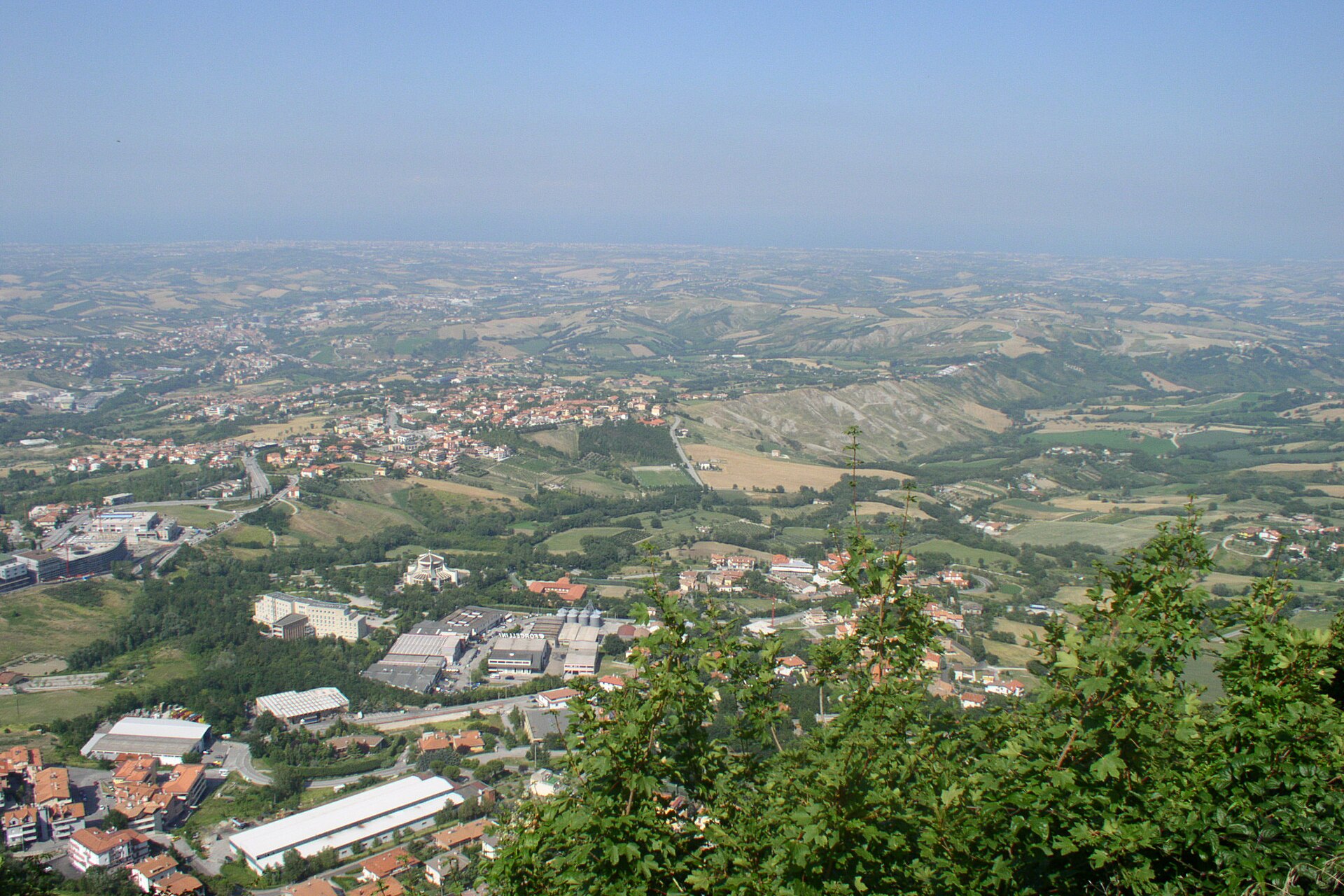
Treat an upper-city loop as a short local road trip rather than a sightseeing walk with a car. Leave the old-town access area legally, follow the signs toward Fiorentino and stop only where a signed facility or lay-by permits it. Monte Titano views are best enjoyed after parking; a narrow road, coach or pedestrian can turn a scenic last kilometre into a reversing problem. Read the current closure orders and keep daylight for the return.
.jpg)
Fuel, EV charging and public transport
Fuel planning is simple when the tank is not left to the last mountain turn. Fill near the built-up approach, keep a return margin and do not assume that a scenic road has an open station. For EVs, the official sustainable-mobility page lists the E-way network, including charging locations around P2, P6, P7, P8 and P10. Confirm the connector, operating hours, payment method and live availability before choosing a remote stop.
When parking or weather makes driving unattractive, the SMUVI page describes an on-demand public-transport service and its current booking information. The tourism site also lists bus and historic-centre shuttle information. Treat the displayed timetable as a service to verify for the day, not as a permanent promise; event traffic and weather can change the practical wait.
Weather, closures and emergencies
Monte Titano is not a motorway environment. Rain reduces sight distance on bends, wind affects exposed sections, and a local event or safety order can close a road that still appears on a map. Check the government closure-order index, current signs and the Italian approach-road service before setting off. If the road feels uncertain, park lower and continue by cable car or public transport.
For immediate danger, injury or a collision blocking traffic, call 112 and give the road, direction, nearest town or landmark, number of people involved and hazards. The Civil Police contact page also publishes 113 and 115 in its current interforce information, together with service contacts. For a routine rental breakdown, use the provider’s roadside number after moving to a safe position; do not use an emergency line to replace the rental contract’s reporting route.
Official sources and review date
The factual set above was checked on 2026-08-18. Laws, parking tariffs, cable-car hours, charging availability, temporary road orders and rental terms can change between reviews. Recheck the relevant source on the day:
- San Marino border formalities · Italian Embassy visa information · URAT driving-licence FAQ
- San Marino consolidated road law · road-code archive
- Parking in San Marino · cable car · how to arrive
- SMUVI · sustainable mobility and E-way · closure orders
- Civil Police
Continue planning
Compare the Italian approach with the Italy driving guide, especially the ZTL, toll-road and city-parking guide. Before departure, use the parking restriction planner, rental cross-border permission planner, EV road-trip planner and route weather and closure planner. These tools organise questions; signs, authorities and the rental contract remain controlling.
Frequently Asked Questions
- Can I drive in San Marino with a foreign licence?
- Usually, if the licence is valid for the vehicle category and is accepted for the visitor's stay. Carry the original licence and passport, and confirm the rental branch's document policy before collection.
- Do I need an International Driving Permit in San Marino?
- Not as a universal rule for every visitor. An IDP may be requested because of the issuing country, licence format or rental contract, and it must accompany the national licence. Check the current URAT guidance and the branch's written terms.
- Is San Marino in the Schengen Area?
- San Marino has no routine internal border control with Italy, but it is not a Schengen state. Entry and re-entry depend on the traveller's passport and the permission needed to enter Italy; use the official border-formalities and Italian consular sources rather than assuming visa-free entry.
- Can a rental car from Italy enter San Marino?
- Do not assume that a rental contract covers every cross-border trip. Ask the branch for written permission, insurance territory, roadside coverage, fees and any required vehicle documents before leaving Italy.
- Which side of the road does San Marino use?
- San Marino drives on the right, like Italy. Keep right, expect tight bends and steep approaches around Monte Titano, and let signs and safe stopping distance override a navigation app's suggested line.
- What are the speed limits in San Marino?
- The currently published national maximum is 70 km/h, while urban roads can show 50 km/h or another signed limit depending on the road section. Posted signs, temporary orders, weather and traffic always control; do not import Italy's 90 or 130 km/h assumptions.
- Where should I park for San Marino Città?
- Use a signed official car park instead of trying to drive into the historic centre. The tourism authority lists P1–P12 around the upper area, P9 and P10 close to the old town, and P11 in Borgo Maggiore beside the cable car. Check the current tariff, payment method and availability on arrival.
- Is the San Marino cable car a good alternative to driving uphill?
- Often, yes. The cable car links Borgo Maggiore and San Marino Città, runs at regular intervals when open, and turns P11 into a park-and-ride option. Check the operator's same-day timetable, fare and weather status; the car park and cable car are separate services.
- Can I drive through every street in San Marino Città?
- No. The historic centre and some access roads have pedestrian, resident, service or event restrictions. Follow the signs, barriers and police instructions, leave the car at an official facility, and do not use a generic GPS route as permission to enter a restricted street.
- How do I drive from Rimini to San Marino?
- From Rimini, follow the signed approach through the Italian side toward Borgo Maggiore and then the upper city, or stop at P11 and use the cable car. The final climb is not a motorway section: allow for bends, pedestrians, buses and a slower search for a legal parking space.
- How do I reach San Marino from the A14?
- The official tourism map points drivers from the A14 to Rimini Sud and the SS72, with Rimini Nord and SP258 as another approach. Confirm the junction, rental permission and live Italian traffic conditions on the day; the last section into San Marino is governed by local signs.
- Can I drive from San Marino Città to Fiorentino or Monte Titano?
- Yes, where the road is open and signed, but treat it as a local mountain-road stage. Leave the historic centre legally, follow the signed route toward Fiorentino, keep a weather and daylight margin, and check current closure orders before committing to a narrow or steep section.
- Where can I refuel or charge an EV in San Marino?
- Fuel stations are easier to plan near the built-up approaches than on a scenic detour. The official sustainable-mobility page lists E-way public charging points, including locations around P2, P6, P7, P8 and P10; verify connector, payment and live availability before the battery becomes critical.
- Can I use public transport instead of driving?
- Yes. The SMUVI on-demand service covers trips within the Republic and provides current booking and service information, while buses and the historic-centre shuttle cover other journeys. Check the day's service area and timetable rather than treating a visitor map as a live schedule.
- What should I check when the weather turns on Monte Titano?
- Delay the climb when visibility, wind, rain or a temporary closure makes the road uncertain. San Marino publishes road-closure orders through the government portal; check those notices, local signs, the tourism transport pages and the Italian approach-road service before departure.
- Which emergency numbers should I save?
- For an immediate emergency, save 112. The Civil Police also publishes 113 and 115 in its current interforce contact information, plus service numbers for non-immediate matters. Give the dispatcher the road, direction, nearest landmark, injuries and hazards.
- What should I do after a collision in a rental car?
- Protect people first, call the appropriate emergency service when needed, photograph the scene and vehicle, obtain the incident or police reference, and notify the rental branch and insurer within the contract deadline. Keep the rental agreement, insurance evidence and written cross-border permission together.
Information Sources & Disclaimer
This guide compiles information from the official transport authorities, road operators, government travel information, and automobile associations linked for San Marino.
While we strive to keep this information as accurate and up-to-date as possible (last reviewed: August 2026), traffic laws and toll rates can change without notice. We recommend verifying critical information with the local authorities or your car rental agency upon arrival.
Learn more about our Editorial Process →Compare Your Origin and Destination
Use the comparison tool to check driving side, units, documents, and other destination data for your route.