Plan the day around three road boundaries
Andorra is compact, but the useful question is not simply how many kilometres the country has. It is which rule set controls the next kilometre. Andorran CG roads, the France-side RN22 or RN20, the Spanish-side routes, the rental contract and the live road-status services are different layers. A route can be visually continuous while its speed rule, toll, insurance permission or closure authority changes.
This guide was reviewed on 18 August 2026. For a foreign visitor, the safe order is: carry the right documents, identify the road jurisdiction, check live snow and closure information, reserve a legal parking place, and only then add the scenic detour. Andorra drives on the right.
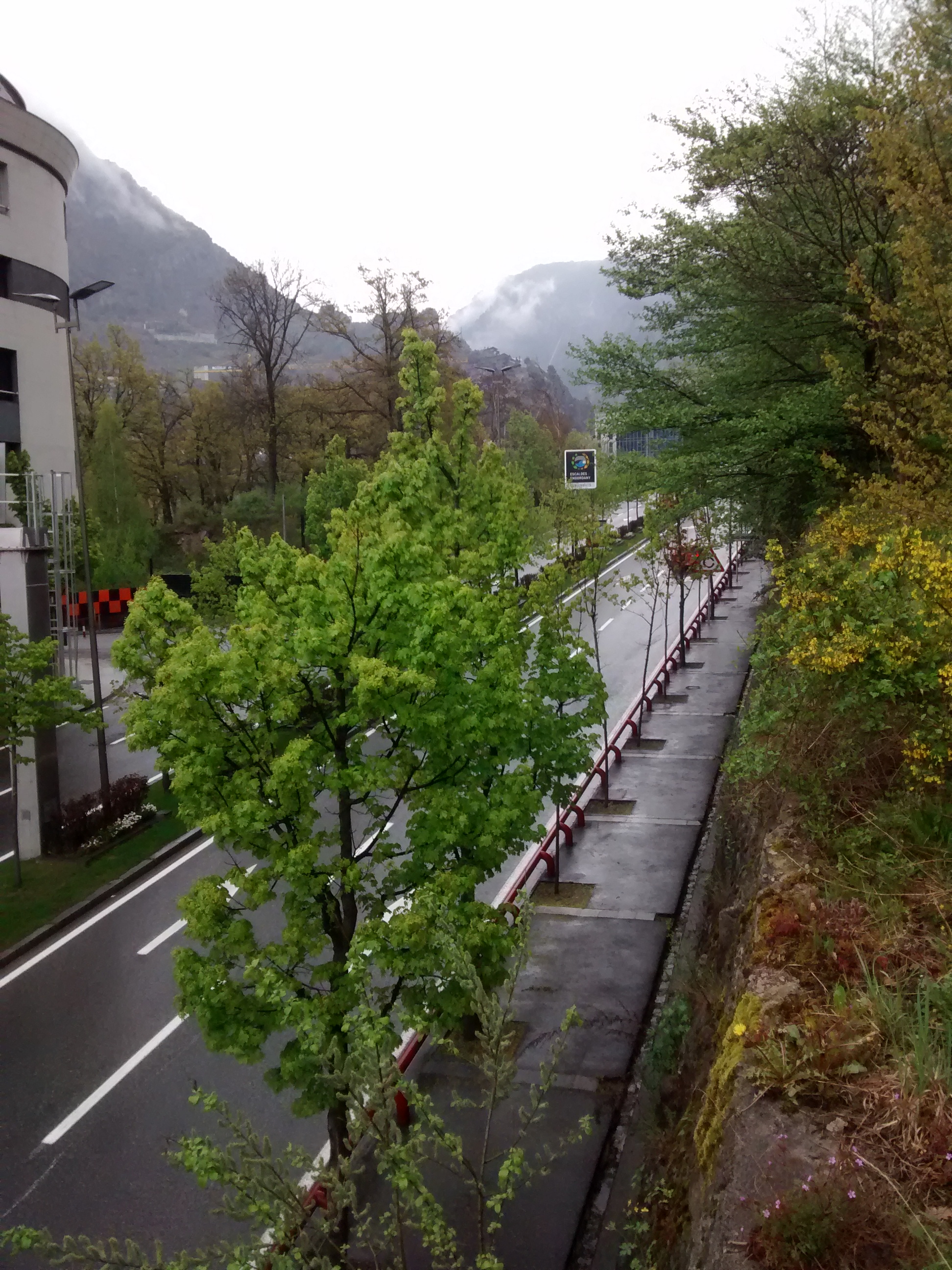

Licence, IDP, visitor status and vehicle papers
The current Andorran driving-permit regulation recognises Andorran, EU and EFTA licences, national licences that conform to the Geneva or Vienna models, and International Driving Permits from those conventions when accompanied by the national licence. A short-stay visitor should bring the valid original licence for the vehicle category and keep it available at the rental desk. If the document is hard for the desk to read, or the branch’s written terms require an IDP or official translation, arrange that supporting document before collection. An IDP never replaces the national licence.
The same regulation has resident and habitual-residence rules for exchange and recognition. Do not turn those rules into a universal tourist deadline. Andorra’s official travel information says that tourists can stay for up to 90 days, but that is an immigration boundary. It does not mean that every foreign licence has one automatic 90-day expiry. A resident’s position needs to be checked against the current permit regulation.
For category B, the current regulation sets the minimum licence age at 18. A rental branch can be stricter: young-driver fees, credit-card rules, vehicle-class restrictions and a higher handover age belong to the provider’s contract. At the roadside, the traffic code’s vehicle-document provisions require the driver to be able to produce the licence, registration, insurance certificate or receipt and, where applicable, the vehicle inspection document. Keep the rental agreement and breakdown number with those papers.
Right-side traffic and the Andorran speed ladder
Article 20 of the official traffic code establishes right-side traffic and tells drivers to keep right in places where visibility is reduced, including bends, gradients, tunnels and bridges. On a narrow mountain road, do not use a distant valley view as permission to accelerate: choose a speed that leaves a safe stopping margin within the visible road.
The same code gives this general speed structure in Article 8:
| Road situation | General maximum | How to use it |
|---|---|---|
| General road | 90 km/h | Only where the road, signs and conditions permit it. |
| Secondary road | 60 km/h | A lower posted limit or poor sight distance controls. |
| Urban area | 50 km/h | Built-up-area signs and local signs apply. |
| Zone 30 | 30 km/h | The zone sign overrides the urban baseline. |
| Zone 20 | 20 km/h | Use the signed low-speed zone and expect pedestrians. |
Andorra does not provide a local motorway baseline to copy from France or Spain. CG-2 is not automatically a motorway, and a map app’s “fastest” route does not change the legal sign. The Mobility Department traffic-code hub and the official traffic service are the right places to check current notices.
France, Spain and the rental-contract boundary
The official visitor information says that the traveller borders with France and Spain are open 24 hours, while customs and goods rules remain separate. Andorra is not in Schengen. A non-EU traveller must check the French or Spanish Schengen visa needed to reach Andorra and to return to Schengen; depending on the itinerary, a double- or multiple-entry visa may be needed. An open traveller border is not a waiver of passport, visa or customs requirements.
For the car, carry the driving licence, registration and insurance evidence. The exact border paperwork for a foreign-registered or rented vehicle depends on the vehicle and the countries crossed; do not invent a universal “green card” rule from a map. Ask the branch for the registration document, insurance evidence and any written authorisation it expects you to show. The Andorran Customs portal is separate from the traffic-code rules.
Cross-border permission is contractual. The tourism guidance says to check the insurance policy if you plan to leave Andorra, but it is not a universal permission for every rental company. Before paying or collecting the car, get written confirmation for France and Spain, territory fees, one-way restrictions, collision/theft/glass/tyre/underbody exclusions, winter equipment and roadside assistance. Then check the French Bison Futé service for the French RN22/RN20 side and the Catalan traffic service or Spanish DGT traffic information for the Spanish side. Andorra’s Mobilitat feed does not replace those country authorities.
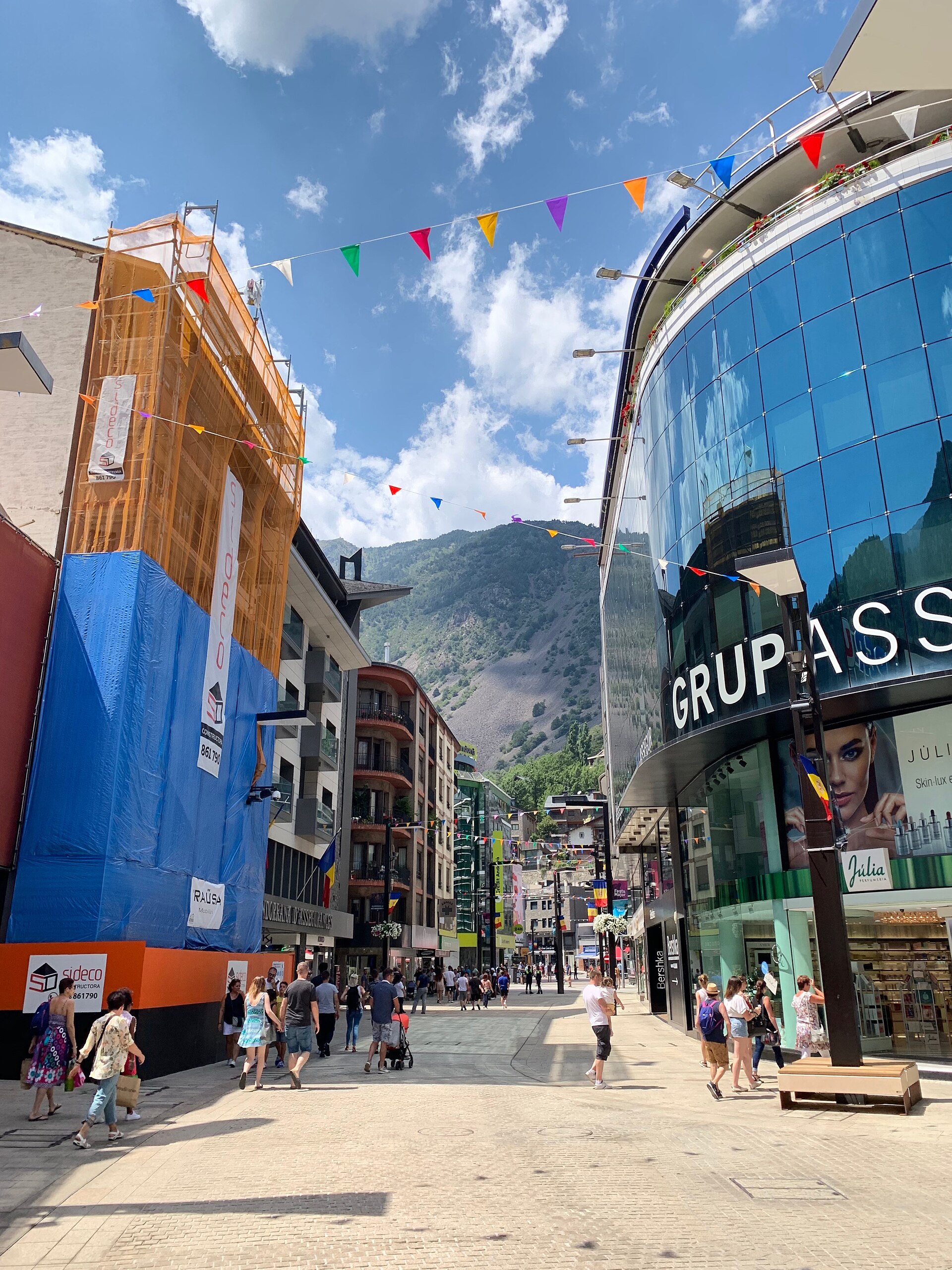
Andorra la Vella: park once, then walk
The centre is a poor place to test a navigation app’s last-turn confidence. The Andorra la Vella municipal parking service lists more than 5,000 spaces across the parish, including 13 public car parks with more than 3,000 spaces, and a live availability map. Use a signed garage or municipal facility, note the payment instruction and continue on foot. The 2026 public-price ordinance controls the current tariff framework; the sign and payment machine at the chosen car park control the transaction.
The pedestrian-area ordinance restricts ordinary vehicle circulation and parking in pedestrian areas to authorised access, with pedestrian priority and a 10 km/h limit for authorised vehicles. Works or temporary access notices can alter the practical route, so do not drive into a pedestrian street because GPS suggests it is the shortest approach. Check current signs and the Comú notice before loading luggage or approaching a hotel.

CG-2, the Envalira Tunnel and winter equipment
The Envalira Tunnel operator describes a 2,879 m, two-way tunnel linking Andorra’s CG-2 with France’s RN22. Its current fare table lists €8.10 for a light vehicle up to 2 m high and 3.5 tonnes; fares and categories can change, so check the operator on the day. This is a toll for the tunnel crossing, not a blanket toll for every CG-2 journey. The alternative Port d’Envalira route is a pass decision: snow, ice, visibility and closure status can make the tunnel the safer choice, or make the entire stage unsuitable.
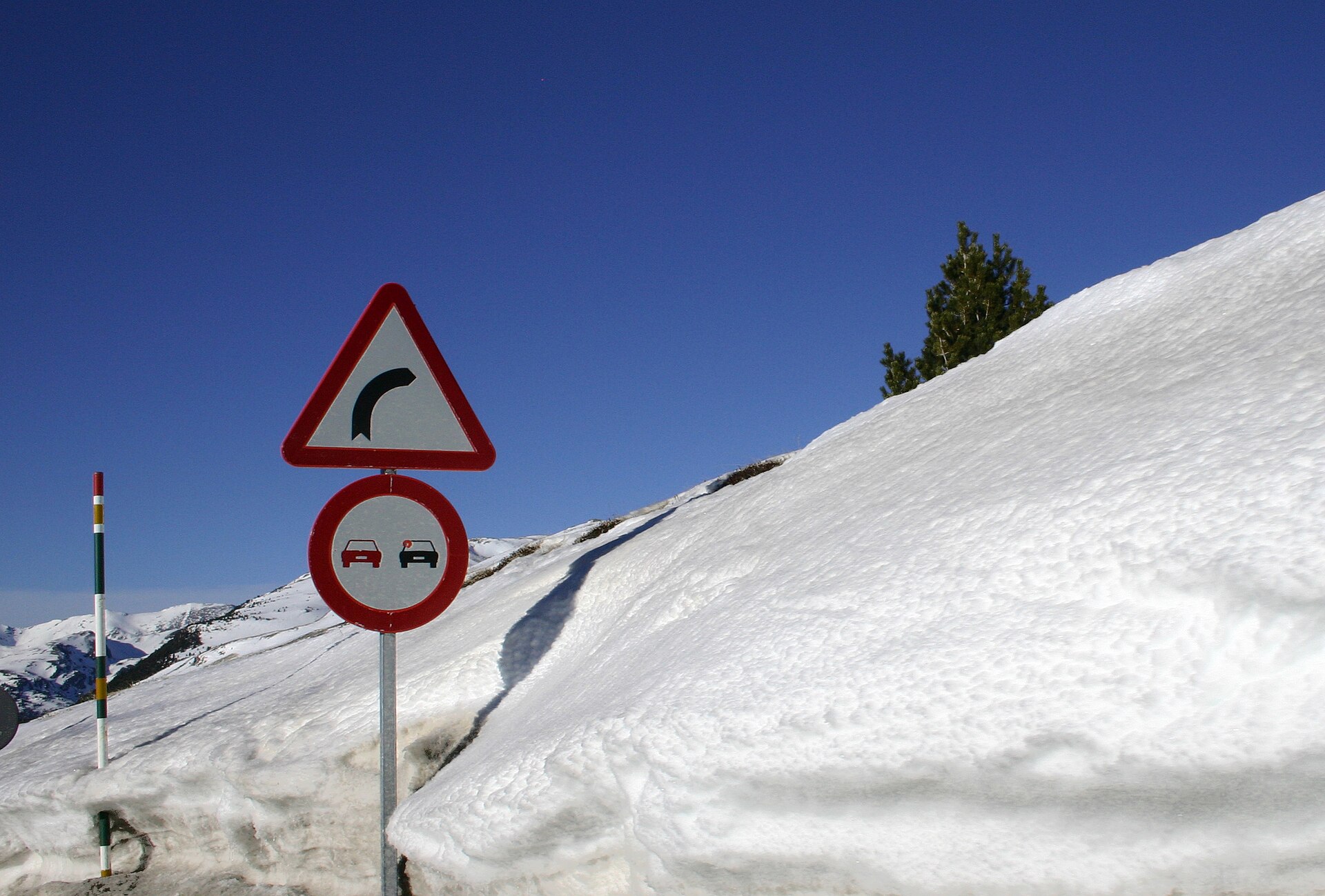
From 1 November to 15 May, the official visitor guidance says to carry snow chains or equivalent equipment unless the vehicle has winter or M+S tyres. Article 72 of the traffic code also covers winter tyres, studded tyres and chains: use the equipment when snow or ice requires it, do not use chains on a clear road, and follow the authorities’ instructions. A rental booking that merely says “winter car” is not enough; confirm the actual tyres and whether chains are supplied and permitted.
Andorra’s snow-colour guidance is a live operational rule, not a decorative forecast. Yellow means snow on the road, special equipment and a maximum of 60 km/h. Orange indicates ice risk, makes chains mandatory for vehicles over 3.5 tonnes and sets 50 km/h. Red requires chains for all vehicles, sets 30 km/h and restricts heavy freight. Black means the road is impassable or the stranding risk is extreme and traffic is prohibited except for authorised winter-service or emergency vehicles. Check Mobilitat’s live incidents, webcams and road status before leaving the valley.

Fuel, charging and public transport
Fuel prices in Andorra are not a fixed national tariff. The government fuel-price table publishes station data, while the energy information page describes periodic updates and freely set retail prices. Check the table and the intended station before the mountain leg; keep enough fuel for a return or weather-related delay rather than assuming that a pass or remote valley has an open station.
For an EV, the FEDA public-charging service lists the public network and current tariff information. The government’s e-Engega information explains that charging points can work with a FEDA or other distributor card and that cards can be managed through FEDA Solucions or the associated Electromaps service. Verify connector, payment, live availability and a reserve to return to the valley; “a charger exists in the country” is not the same as a free charger at the next bend.
If weather or parking makes driving unattractive, the government transport service covers national and international bus lines, airport links and taxis. The visitor mobility guide says the bus network reaches most towns, with frequencies that can range from about 20 minutes to an hour and less frequent service in remote valleys. Check the operator’s live timetable for the exact day.
Three route decisions
1. Andorra la Vella → Ordino → Arcalís
Choose this when the destination is the Ordino valley rather than a generic “north loop”. Leave the car in Andorra la Vella’s signed facility, then follow the CG network north. In Ordino, allow extra time for bends, cyclists, buses and changing sight distance. Arcalís is a high mountain endpoint: before committing, read Mobilitat’s current road status, the Meteo.ad mountain and avalanche bulletin and any operator notice. In summer, a clear sky still does not turn CG roads into motorways; in winter, a safe turnaround is part of the route plan.
2. Canillo → Pas de la Casa
This is the CG-2 / Envalira decision. From Canillo, the route climbs towards Pas de la Casa, and the choice between the pass and the tunnel should be made after checking the snow phase, live closure information, vehicle height/category and the toll. The tunnel’s current light-vehicle example is €8.10; the pass has no tunnel fare but carries mountain-weather exposure. Do not promise a tunnel bypass for the French side: once across, France’s RN22/RN20 status belongs to Bison Futé and the relevant local authorities.
3. France/Spain border loop
For a cross-border day, choose one access side and make the other border a deliberate second check: for example, Andorra la Vella → La Seu d’Urgell → Spanish-side loop → Andorra, or Andorra → Pas de la Casa → France-side loop → Andorra. The Spanish and French road surfaces, speed rules, closures, tolls and fuel stations are not controlled by Andorra. Before departure, obtain written rental permission for both countries if needed, verify insurance territory and documents, and check Catalonia’s traffic map or DGT for Spain and Bison Futé for France. A border that is open to travellers can still be a bad driving choice in wind, snow or a local closure.
Emergencies and a roadside fallback
The current Andorran Civil Protection emergency page lists 110 police, 112 emergencies, 116 medical emergencies and 118 firefighters. This is the number set used here; older official pages may show different service lists, so do not mix them into this guide. Call from a safe position and give the road or tunnel, direction of travel, nearest town or landmark and vehicle details. For a non-life-threatening rental breakdown, use the provider’s roadside channel first. Do not stop on a blind bend, in a tunnel lane or where a snow service vehicle cannot pass.
Official sources and review date
The fact set above was checked on 2026-08-18. Laws, snow phases, road works, parking tariffs, fuel prices, charging availability, bus timetables and rental terms can change; recheck the live source on the day:
- Official traffic code · current driving-permit regulation · Mobility Department traffic code
- Mobilitat live traffic and road status · snow-colour rules · Meteo.ad snow and avalanche bulletin
- Official visitor information · Government travel-to-Andorra guidance · Andorran Customs
- Andorra la Vella parking · 2026 public-price ordinance · pedestrian-area ordinance
- Envalira Tunnel operator and fares · government fuel prices · FEDA public charging · government transport
- Civil Protection emergency numbers
Continue planning
For the adjacent road jurisdictions, compare France and Spain. Before booking, use the parking and access planner, route weather and closure planner, toll and vignette planner, EV road-trip planner and rental cross-border permission planner. These tools help organise checks; they do not replace the road authority, rental contract or live sign.
Frequently Asked Questions
- Can I drive in Andorra with a foreign licence?
- Usually, if it is a valid licence for the vehicle category and is recognised under Andorra's current permit rules. Carry the original licence; an international permit is supplementary, not a replacement.
- Do I need an International Driving Permit in Andorra?
- No, not universally for a short-stay visitor. An IDP can be required by the licence format, an applicable international convention or the rental branch, and it must accompany the national licence.
- Does the 90-day tourist limit define my driving-licence validity?
- No. The 90-day limit is an immigration boundary for tourists. It is not a blanket rule that every foreign licence expires after 90 days; habitual residents must follow the resident permit and exchange rules.
- Which vehicle documents should I carry?
- Carry the valid driving licence, vehicle registration, insurance certificate or receipt, and any inspection document that applies. For a rental, also keep the contract and roadside-assistance details.
- Which side of the road does Andorra use?
- Andorra drives on the right. Keep right, especially on bends, gradients, tunnels and bridges, and let signs and safe stopping distance govern overtaking.
- What are Andorra's speed limits?
- The current legal ladder is 90 km/h on general roads, 60 km/h on secondary roads, 50 km/h in urban areas, 30 km/h in Zone 30 and 20 km/h in Zone 20. Posted signs and conditions override the general numbers.
- What is the minimum driving age?
- The current category B permit regulation sets 18 as the minimum age for a passenger-car licence. A rental company may impose a higher age, surcharge or vehicle-class rule.
- Is Andorra in the Schengen Area?
- No. Visitors reach Andorra through France or Spain, and a non-EU traveller may need a French or Spanish Schengen visa that permits the planned exit and re-entry. The traveller border being open 24 hours does not remove customs or visa rules.
- Can my rental car cross into France or Spain?
- Only when the specific rental contract and branch allow it. Obtain written cross-border permission, confirm the countries covered, fees, insurance territory, roadside service and winter-equipment conditions before collection.
- When are winter tyres or snow chains required?
- From 1 November to 15 May, carry chains or equivalent equipment unless the vehicle has winter or M+S tyres. In snow or ice, special equipment is required; follow the current phase, signs and police instructions.
- What do Andorra's snow colours mean?
- Yellow means snow on the road and special equipment with a maximum of 60 km/h; orange adds ice risk and mandatory chains for vehicles over 3.5 tonnes with a 50 km/h maximum; red requires chains for all vehicles and a 30 km/h maximum; black means the road is impassable and traffic is prohibited except for authorised services.
- Is the CG-2 or Envalira Tunnel tolled?
- The Envalira Tunnel is a separate tolled crossing between the CG-2 and France's RN22; the operator currently lists €8.10 for a light vehicle up to 2 m and 3.5 tonnes. That is not a blanket toll for every kilometre of the CG-2, and the pass has separate weather and closure decisions.
- How should I park in Andorra la Vella?
- Use a signed municipal or official car park and walk into the centre. The parish lists more than 5,000 spaces, including 13 public car parks with more than 3,000 spaces, plus live availability; tariffs and payment rules come from the current 2026 ordinance and on-site signs.
- Can I drive through a pedestrian or controlled-access street?
- Do not follow a generic GPS route into a pedestrian area. General traffic and parking are restricted there; only authorised, service or emergency access applies, and current signs, works notices and access controls govern.
- Where can I refuel or charge an EV?
- Fuel prices are published by the government but freely set and updated by stations, so check the official table before a mountain stage. Public EV charging is available through FEDA and other operators; verify connector, payment method, availability and a return margin before leaving the valley.
- Can I use public transport instead of driving?
- Yes. The national network includes domestic and international bus lines, airport connections and taxis. Buses serve most towns, but remote valleys can be less frequent, so check the current timetable for Ordino, Arcalís or Pas de la Casa.
- Which emergency numbers should I save?
- The current Civil Protection page lists 110 for police, 112 for emergencies, 116 for medical emergencies and 118 for firefighters. Use the rental company's roadside channel for a non-life-threatening breakdown, and do not mix older lists with this current four-number source.
Information Sources & Disclaimer
This guide compiles information from the official transport authorities, road operators, government travel information, and automobile associations linked for Andorra.
While we strive to keep this information as accurate and up-to-date as possible (last reviewed: August 2026), traffic laws and toll rates can change without notice. We recommend verifying critical information with the local authorities or your car rental agency upon arrival.
Learn more about our Editorial Process →Compare Your Origin and Destination
Use the comparison tool to check driving side, units, documents, and other destination data for your route.