Plan the road around the actual day
Liechtenstein is compact enough to cross in a short drive, but that does not make every itinerary interchangeable. The valley roads are the efficient spine between Balzers, Vaduz, Schaan and Ruggell. The road up to Triesenberg and Malbun is a different driving task: it climbs into exposed Alpine terrain, has tighter bends and depends more heavily on weather and closure information. A third task begins as soon as the route uses Switzerland or Austria: the road may look continuous while the toll, rental and legal jurisdiction changes at the border.
The country drives on the right. For a first visit, collect the car with the original national licence, passport or identity document, rental agreement and the provider’s roadside number in the same folder. Save the plan offline, then make the decisions in this order: vehicle documents, road jurisdiction, live weather or closure status, parking, and only then the scenic detour.
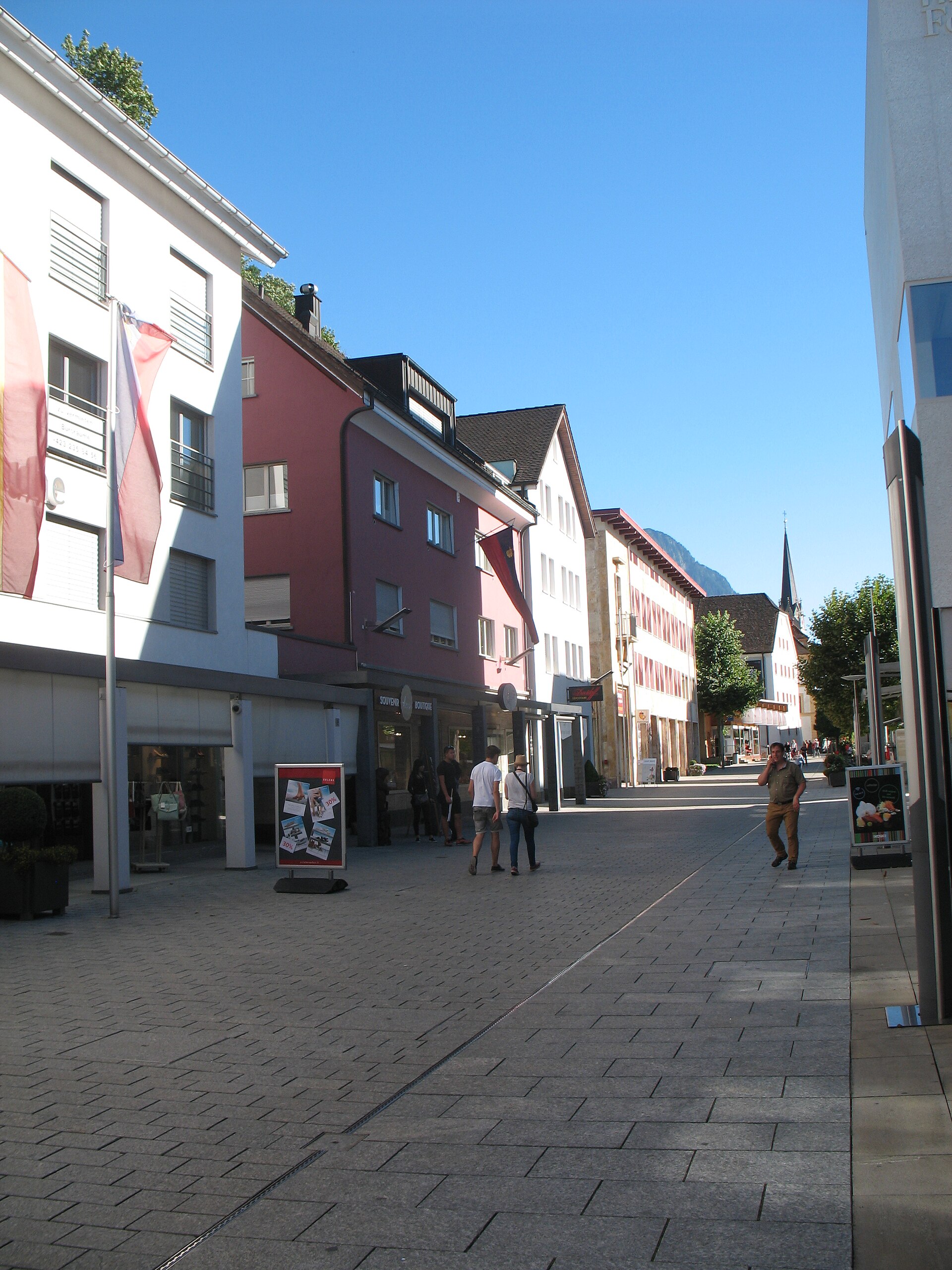

Licence, IDP and the rental handover
The Liechtenstein Road Traffic Office guidance on foreign licences recognises EU and EEA licences in the national licence system. Read that page as a recognition and conversion rule, not as a promise that every short-stay rental handover has identical paperwork. A visitor should carry a current, valid licence for the vehicle category, the original document rather than a phone photo, and the identity documents named in the booking.
The official IDP guidance says that Liechtenstein recommends an international driving licence when travelling outside Switzerland, the EU and the EEA. It describes an IDP as valid for three years, issued for CHF 50 by Liechtenstein’s authority, and valid only with the national licence. That fee is the Liechtenstein-issued document’s current official fee; it is not a universal price for an IDP issued in another country. If your licence uses a script the desk cannot read, or the branch states an IDP or official translation is required, arrange it before collection.
Liechtenstein’s category overview puts a full category B passenger-car licence at 18. That is the legal licence age, not a guarantee that a particular rental class is available at 18. Providers commonly apply higher thresholds, young-driver charges, a credit-card rule or a restriction on larger and higher-powered cars. The rental contract and the branch’s written confirmation control.
The road rules that matter on a small Alpine network
The current Liechtenstein Traffic Regulation Ordinance sets the basic framework:
- 50 km/h is the general maximum in built-up areas.
- 80 km/h is the general maximum outside built-up areas under favourable conditions.
- Signs, temporary work zones, village entries and exits, and the road’s sight distance can impose a lower limit.
- The driver must choose a speed that allows a stop within the visible stretch. On a narrow road where meeting or passing is difficult, the usable sight distance is shorter than the view across the whole valley.
There is no local Liechtenstein motorway baseline to plan around. The European road-rules overview also records no motorway or expressway category in Liechtenstein. The practical rule is simpler than importing a number from a neighbouring country: read the sign, slow before a blind bend, and expect pedestrians, cyclists, buses and farm traffic near villages. The LLV road-traffic hub is the right place to follow local legal updates.
The LLV speeding guidance shows why “only a little over” is a poor mountain-road strategy: after tolerance deductions, licence withdrawal can start at 26 km/h over in a built-up area and 31 km/h over outside one, with aggravating circumstances able to change the outcome. Treat those figures as administrative thresholds, not as a target or a universal fine table.
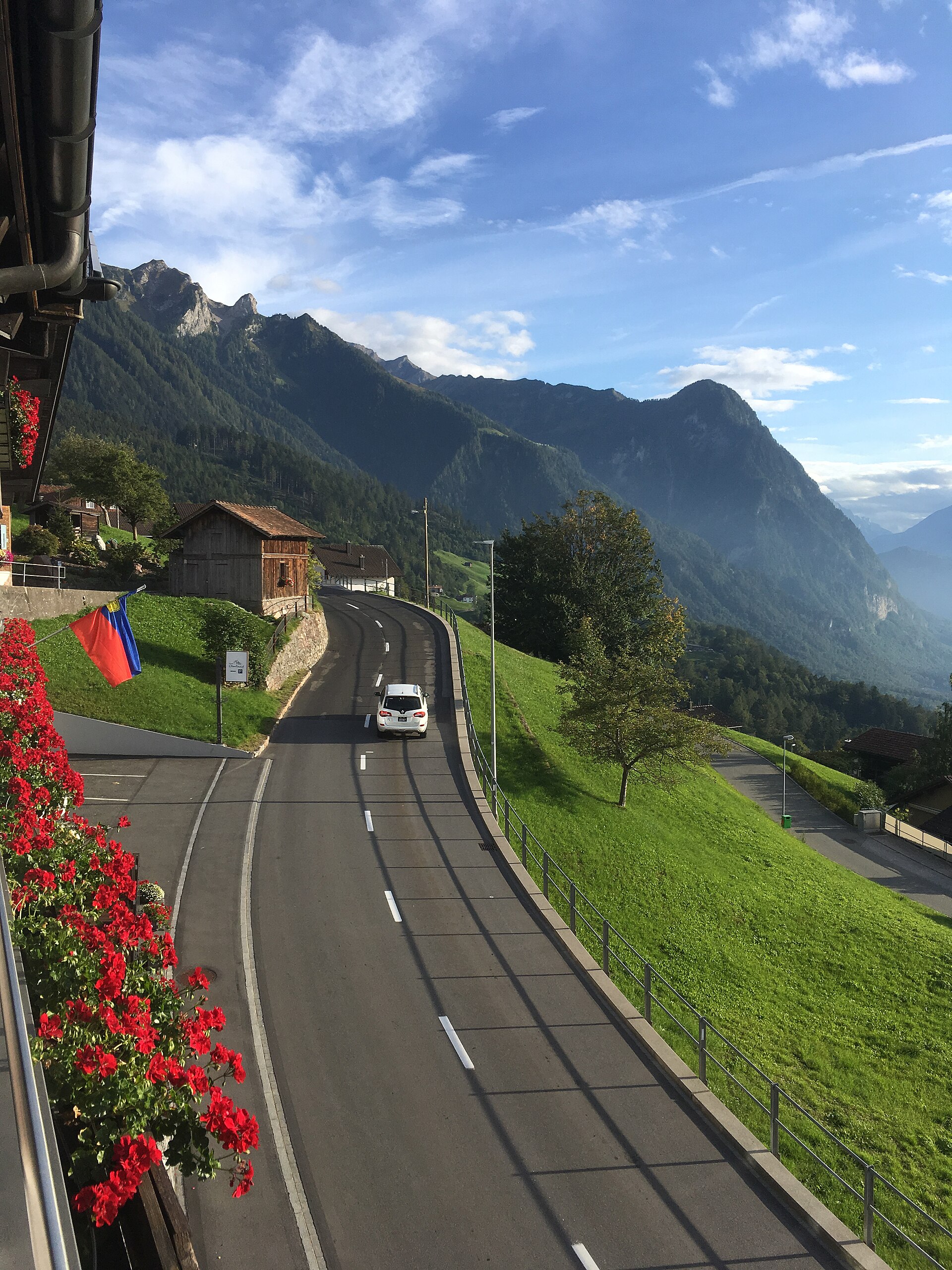

Where the Swiss and Austrian vignette rules begin
The Liechtenstein–Switzerland border is open in the customs sense, but the road network does not become one legal surface. Liechtenstein Tourism’s arrival and mobility guidance describes access through the Swiss A13 and Austrian A14 and warns that a vignette is needed when using Swiss or Austrian motorways. It also notes that there are no customs borders between Switzerland and Liechtenstein. Those are separate ideas: an open border does not waive a motorway charge.
For Switzerland, the Federal Office for Customs and Border Security states that the motorway vignette costs CHF 40. The official e-vignette guidance gives the validity window as 1 December of the previous year through 31 January of the following year, so the 2026 vignette is valid from 1 December 2025 through 31 January 2027. It applies to vehicles up to 3.5 tonnes on chargeable Swiss motorways and expressways; there is no daily, weekly or monthly product. Use the sticker or the vehicle-plate-linked e-vignette and confirm the rental car’s status before entering the Swiss motorway network.
For Austria, ASFINAG’s official product page says vehicles up to 3.5 tonnes need a vignette on Austrian motorways and expressways. Austria has several validity products and separate section tolls on some Alpine routes. Check the current ASFINAG route map and purchase conditions before taking the A14. A drive on a Liechtenstein valley road does not itself need an Austrian vignette; the Austrian road you choose does.
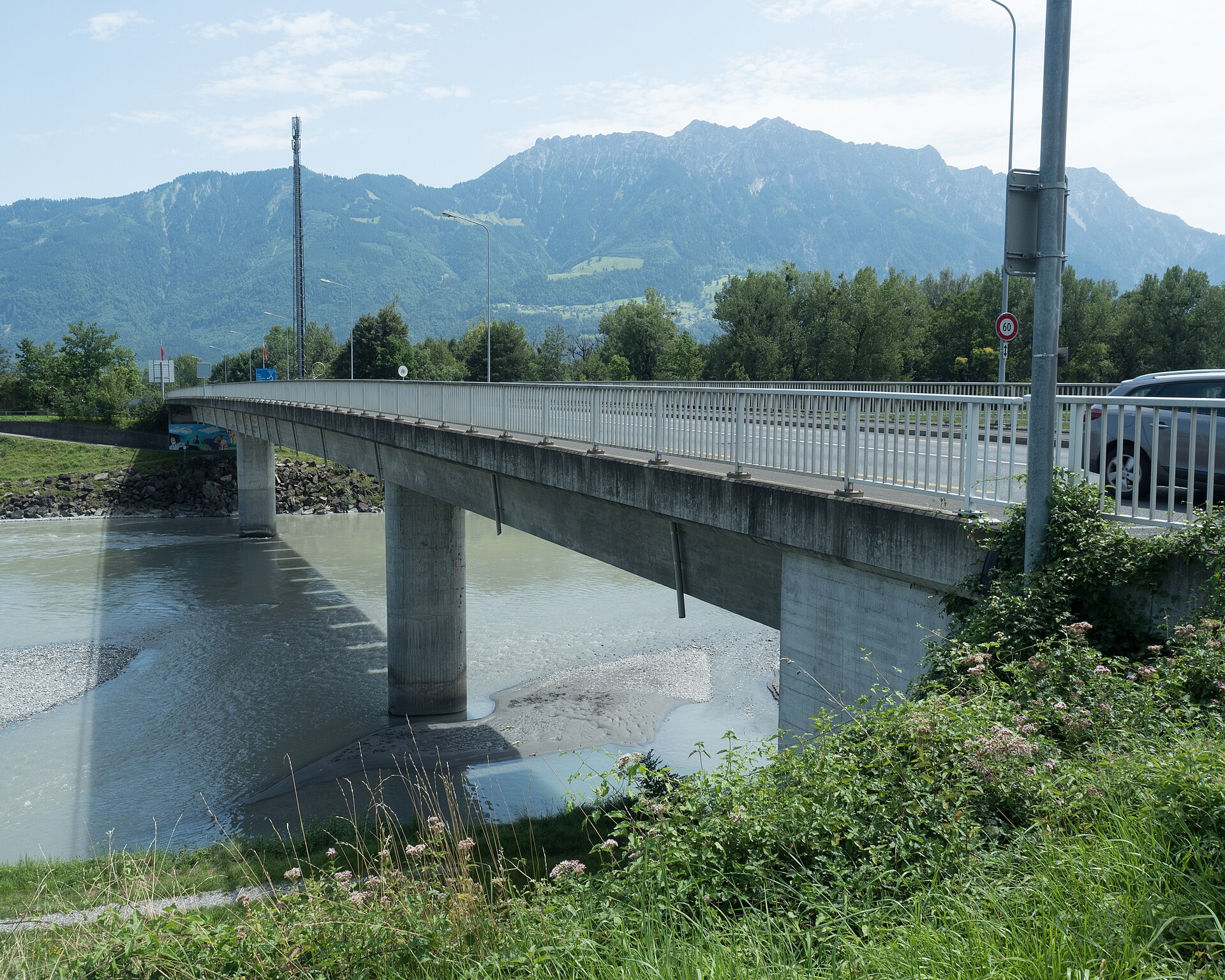

Rental cars, cross-border permission and rescue
Do not assume that a Swiss rental car may enter every neighbouring country just because the map has no checkpoint. Cross-border permission is a provider, vehicle-class and contract question. Enterprise Switzerland publishes one provider-specific policy that includes Liechtenstein and Austria, while Sixt’s Swiss rental terms use country zones and vehicle restrictions. These examples show why a generic “rental cars are allowed” answer is unsafe; the terms can change.
Before paying, ask the branch to confirm in writing:
- entry to Liechtenstein, Switzerland and Austria for this exact car and booking;
- a cross-border fee, one-way restriction or mileage condition;
- whether collision, theft, glass, tyre and underbody protection remains valid after each crossing;
- the international insurance card, registration documents and roadside assistance number;
- winter tyres or chains, if the route and forecast require them.
Some provider terms state that protection can be lost when a permitted territory or border condition is breached. If a vehicle is rented outside Switzerland and will be used there, also read the Swiss customs FAQ for vehicles rented abroad. It is a useful prompt to ask the provider, not a substitute for the contract.
Vaduz parking and visitor transport
The Vaduz municipal parking page is more useful than a generic map pin because it separates short and long stays. In the centre, Parkplatz Zentrum, Parkhaus Zentrum and Parkplatz Äule allow a maximum of three hours. The listed tariff is CHF 1.50 per hour with the first hour free. For a longer central stop, use Parkhaus Marktplatz. Rheinpark Stadion, outside the centre, has no duration limit and is listed at CHF 0.50 per hour with the first hour free. There is no guarantee that a space will be free; the sign beside the bay and the payment machine control on arrival. The municipality lists parkingpay.ch, EasyPark and TWINT as payment options.
Do not drive casually into the Städtle pedestrian zone. Vaduz allows goods loading without a permit Monday to Saturday from 06:00 to 10:00. After 10:00, a driving permit is required; the municipal page lists CHF 10 per day for a car and CHF 20 for a truck. Loading time is not a visitor parking exception.
For a car-light day, LIEmobil connects Sargans, Buchs and Feldkirch stations with the country and continues to Malbun. A day ticket for all zones is currently CHF 12. Participating hotels can issue a Guest Mobility Card that covers the LIEmobil bus network from arrival to departure. Check the live timetable because school holidays, works and mountain weather can change departures.
Winter, Malbun and mountain weather
The Vaduz–Triesenberg–Malbun stage is the route to treat as an Alpine drive, not as a slightly longer town transfer. The official winter tourism page places Malbun at roughly 1,600 m and notes that strong wind or very poor weather can affect lift operations. Before leaving the valley, check the LLV current-closures page, the SLF avalanche bulletin and the local forecast. The SLF bulletin is issued twice daily in winter and covers Switzerland and Liechtenstein; it is an input to the decision, not a promise that a particular access road is open.
There is no safe calendar shortcut for winter equipment in a rental car. Ask what tyres are fitted, whether chains are in the vehicle and what the provider permits. Follow any local chain sign and closure; do not stop on a narrow bend to fit equipment. If visibility, wind or surface conditions are wrong for the car, leave it in the valley and use LIEmobil when the timetable is running.
Fuel, charging and a useful margin
Treat fuel as a valley-stage decision. Top up before the climb rather than assuming that a mountain destination will have a convenient late-night station. The official pages do not promise a particular station’s opening hours or price, so confirm the intended stop on the day and keep a reserve for a return through the same weather window.
For an EV, the Vaduz charging page says public charging infrastructure is being expanded by LKW. For the wider border loop, the Swiss Federal Office of Energy charging-station information points to a real-time public-station map. Connector availability, access hours and prices belong to the operator, so check all three before committing to a mountain detour and keep enough charge to return to the valley.
Three driving patterns that make sense
1. Vaduz → Triesenberg → Malbun
Choose this for a mountain day. Start with a full tank or a comfortable battery, check closures and the avalanche bulletin, and climb in daylight with enough time to turn around before conditions deteriorate. The destination is the experience; a dry road on the descent is not guaranteed. If the forecast turns, keep Vaduz or Triesenberg as the endpoint and use the bus for the higher section.
2. Rhine valley: Balzers → Vaduz → Schaan → Ruggell
This is the practical country-spine loop. Use Balzers or Schaan for a flexible start, leave the car once in Vaduz, and keep the valley section for fuel, charging and weather decisions. Bridges and local roads make the Swiss side look like a natural extension, but the Swiss vignette only becomes relevant when the route joins a chargeable Swiss motorway or expressway. Read the bridge approach signs rather than following a sat-nav’s fastest option blindly.
3. Switzerland–Austria border day loop
For a broader day, run Vaduz → Buchs or Sargans → Feldkirch → Schaanwald/Nendeln → Vaduz, or reverse it. Before departure, get written rental permission for both crossings, carry the original documents, and choose deliberately between local roads and the Swiss A13 or Austrian A14. A motorway choice can add a Swiss CHF 40 vignette or an Austrian vignette and may change the insurance or toll conversation. Check the current Liechtenstein roadwork information, Swiss vignette status and ASFINAG conditions on the same morning.
Emergencies and the roadside decision
The Liechtenstein emergency-number list gives 112 for the European emergency number, 117 for police, 118 for fire and 144 for medical rescue. Use the number that matches the danger. Give the operator the road, direction of travel, nearest town or bridge, vehicle registration and any visible landmark. For a non-life-threatening mechanical problem, call the rental provider’s assistance line and follow its instructions; do not use a toll-road or mountain bend as an improvised repair bay.
Official sources and review date
This page was reviewed on 2026-08-18. Laws, roadworks, weather, parking tariffs, transit timetables, rental terms and vignette products can change before a trip. Recheck the following first-party sources at departure:
- LLV Road Traffic Office and current traffic law · consolidated Traffic Regulation Ordinance
- LLV foreign licences · LLV international driving licence
- Vaduz parking and charging · LIEmobil travel and fares
- Liechtenstein Tourism arrival guidance · Swiss motorway vignette · ASFINAG vignette
- LLV current closures · SLF avalanche bulletin
Continue planning
Compare the neighbouring road systems in Switzerland, Austria and the cross-border driving checklist. The Liechtenstein page should be the country-specific layer; the checklist is where you record the rental authorisation, vignette decision, insurance confirmation and live closure check for the actual vehicle and date.
Frequently Asked Questions
- Can I drive in Liechtenstein with an EU or EEA licence?
- Liechtenstein's official licence guidance recognises EU and EEA licences in its licence system. That page is mainly about recognition and conversion, especially for residents; a short-stay visitor should still carry the valid original licence and confirm the rental desk's document policy.
- Do I need an International Driving Permit for Liechtenstein?
- It is not a universal frontmatter requirement for a short visit. Liechtenstein recommends an international driving licence when travelling outside Switzerland, the EU and the EEA, and it must accompany a valid national licence. For a licence that is not readable to the rental branch, obtain the IDP or an accepted translation before collecting the car.
- Can an IDP replace my national driving licence?
- No. An IDP is a supporting translation and is recognised only together with the valid national licence. Carry both documents, plus the passport or identity document requested by the rental company.
- What is the minimum driving age in Liechtenstein?
- The Liechtenstein category overview sets the minimum age for a full category B passenger-car licence at 18. A rental company can set a higher age, a young-driver surcharge or a vehicle-class restriction, so its written terms control the handover.
- Which side of the road do cars use?
- Drive on the right and overtake on the left where the road and signs allow it. At a narrow Alpine bend, the legal duty to keep a speed that lets you stop within the visible distance matters more than keeping a map app's estimated pace.
- What are Liechtenstein's normal speed limits?
- The general limits in the current traffic regulation are 50 km/h in built-up areas and 80 km/h outside built-up areas. A lower or different posted limit, a work zone, a village entry sign or the available sight distance overrides the general number.
- Is there a motorway in Liechtenstein?
- No. Liechtenstein has ordinary valley and mountain roads rather than a local motorway baseline. Do not copy a Swiss or Austrian motorway number into the country; follow the sign at the road you are actually on.
- Do I need a Swiss motorway vignette to enter Liechtenstein?
- Not for Liechtenstein's own roads. You need the Swiss vignette when your route uses a chargeable Swiss motorway or expressway, such as the relevant A13 approach. The Swiss 2026 vignette is CHF 40, covers vehicles up to 3.5 tonnes and runs from 1 December 2025 to 31 January 2027; Switzerland has no daily, weekly or monthly vignette.
- Do I need an Austrian vignette for a border loop?
- Only if the route uses an Austrian motorway or expressway. Austrian roads have their own ASFINAG vignette system for vehicles up to 3.5 tonnes, with separate validity products and some section-toll roads. Check the current ASFINAG route and product rules before joining the A14; a local Liechtenstein road does not create an Austrian toll obligation by itself.
- Can a Swiss rental car enter Liechtenstein and Austria?
- There is no single rule for every rental car. Ask the branch for written permission for Liechtenstein and Austria, the vehicle category's territory limits, any cross-border charge, the international insurance card and the correct roadside number. A provider's terms can restrict protection when the border conditions are breached.
- What should I ask the rental company about insurance and rescue?
- Ask whether collision and theft protection remains valid in each country, whether glass, tyres and underbody damage are excluded, whether a mountain-road class is allowed, and which number handles a breakdown. If the car is collected outside Switzerland, ask how the provider handles use in Switzerland and any customs conditions.
- Where can I park in Vaduz?
- For a short central visit, Vaduz lists Parkplatz Zentrum, Parkhaus Zentrum and Parkplatz Äule, each with a maximum stay of three hours. For a longer central stay use Parkhaus Marktplatz. Rheinpark Stadion is outside the centre and has no duration limit, subject to availability and the signs on site.
- How much does parking in Vaduz cost?
- Vaduz currently lists CHF 1.50 per hour in the central short-stay locations, with the first hour free, and CHF 0.50 per hour at Rheinpark Stadion, also with the first hour free. Pay in advance where required; parkingpay.ch, EasyPark and TWINT are listed options. Fees and payment instructions on the local sign take priority.
- Can I drive through Vaduz's Städtle pedestrian zone?
- Goods loading is allowed without a permit from Monday to Saturday between 06:00 and 10:00. After 10:00, a driving permit is required; Vaduz lists a daily permit fee of CHF 10 for a car and CHF 20 for a truck. Do not treat the loading window as general visitor parking.
- Can I reach Malbun without driving?
- Yes. LIEmobil runs buses from Sargans, Buchs and Feldkirch stations through Liechtenstein and onward to Malbun. A day ticket for all zones is currently CHF 12, and participating hotels can issue a Guest Mobility Card for free bus travel during the stay; check the live timetable before relying on a connection.
- What should I check before driving to Malbun in winter?
- Check the LLV road-closure page, the SLF avalanche bulletin, the local forecast and the rental car's winter equipment. Malbun is an Alpine destination at about 1,600 m; lifts and mountain access can be affected by wind, snow and poor visibility. Local signs, closures and operator instructions override a planned itinerary.
- Which emergency numbers should I save?
- Liechtenstein lists 112 for the European emergency number, 117 for police, 118 for fire and 144 for medical rescue. For a non-life-threatening breakdown, use the rental company's roadside channel first, move only if it is safe, and tell emergency services the road, direction and nearest landmark.
Information Sources & Disclaimer
This guide compiles information from the official transport authorities, road operators, government travel information, and automobile associations linked for Liechtenstein.
While we strive to keep this information as accurate and up-to-date as possible (last reviewed: August 2026), traffic laws and toll rates can change without notice. We recommend verifying critical information with the local authorities or your car rental agency upon arrival.
Learn more about our Editorial Process →Compare Your Origin and Destination
Use the comparison tool to check driving side, units, documents, and other destination data for your route.