Start with the province, not the country
Canada is a federation of road systems rather than one uniform driving rulebook. A short city stay in Toronto, a Quebec loop and a Rockies itinerary can require different licence documents, winter equipment and toll checks. Decide which provinces and territories the rental will enter, then open their official road and licensing pages before booking.
The long distances shape the day. Toronto to Vancouver is roughly 4,500 km by road, and the Trans-Canada Highway changes route number as it crosses provinces. Remote stretches in Northern Ontario, the Prairies, the Rockies and Atlantic Canada can leave a driver with no fuel, phone signal or food stop for longer than a city map suggests. Build the day around a confirmed fuel stop and a daylight arrival.
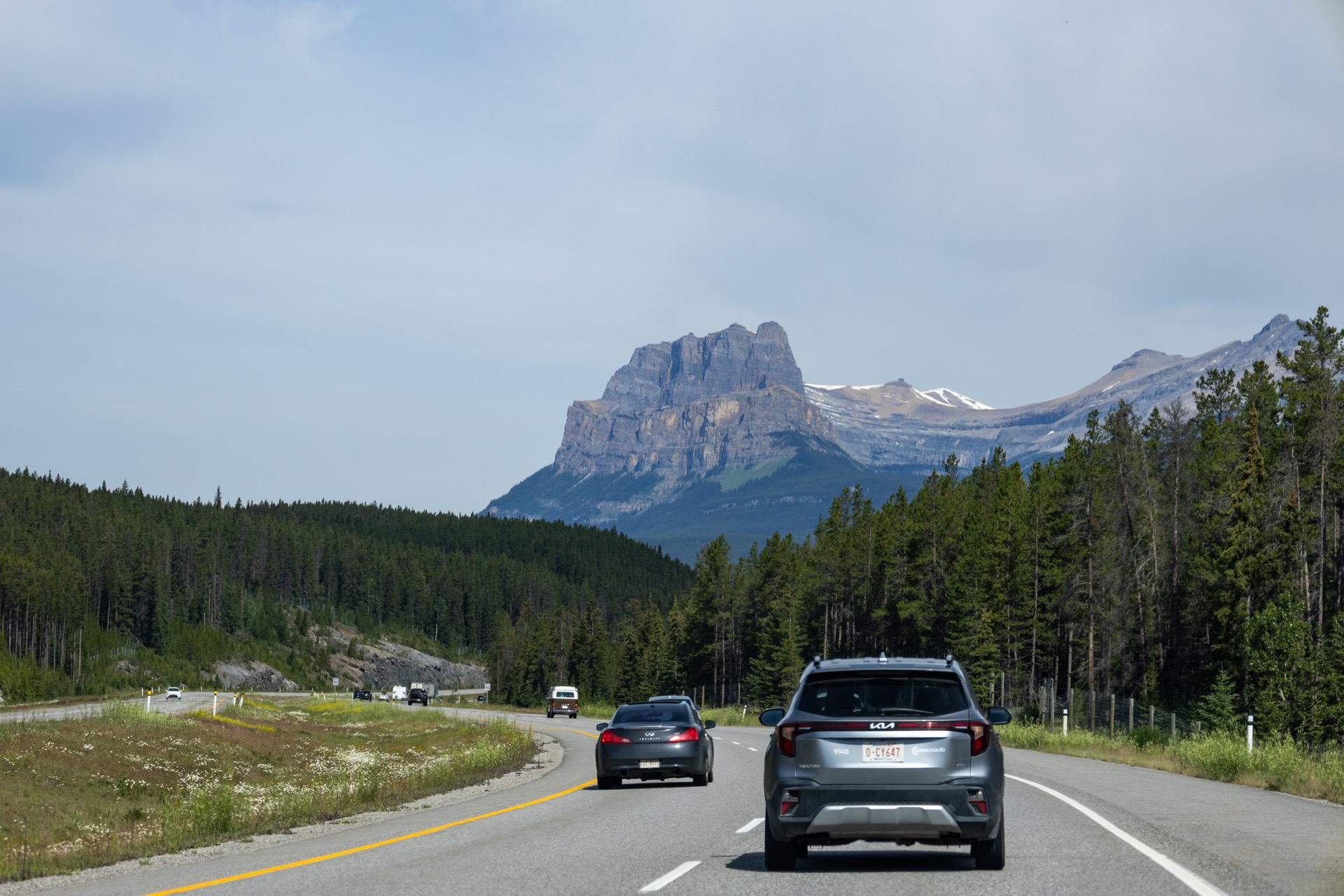

Foreign licences, IDPs and the rental counter
The federal driving in Canada guidance points visitors to the province or territory where they will drive. It recommends an IDP as a translation of a foreign licence, but the permit does not replace the original licence.
Use these examples to plan, not as a nationwide promise:
- Ontario’s visitor rule lets a visitor staying less than three months drive with a valid licence from the home country, province or state. A visitor staying longer may need an IDP obtained before arrival.
- Quebec’s SAAQ guidance allows a valid foreign licence for up to six months. An IDP must accompany the original licence when it is needed for translation or a longer stay.
- British Columbia’s ICBC guidance says a tourist can generally continue using a current licence for up to six months; a resident has 90 days to switch.
At pickup, carry the physical licence, passport, booking and a translation or IDP when applicable. Ask about the minimum age, licence-holding period, additional drivers, cross-border permission, ferry transport and insurance exclusions. Rental policy can be stricter than the legal visitor period.
Road position, signs and the rules visitors notice
Canada drives on the right. At a four-way stop, the first vehicle to stop normally proceeds first; if vehicles stop together, the vehicle on the right usually goes first. Keep the whole junction clear when traffic is backed up, and read lane arrows before entering a large urban intersection.
Right on red is a common North American rule, but it is not an automatic permission. Stop completely, yield to pedestrians and cross traffic, and obey the sign. Quebec’s official rule allows the turn except on the island of Montreal or where a sign prohibits it. In Ontario, the driver handbook also requires a full stop and a clear path.
School buses use flashing red lights and a stop arm. Ontario’s school-bus guidance explains the divided-road exception; elsewhere, check the local rule and stop whenever the road design does not clearly separate opposing traffic. Seat belts and approved child restraints apply to all occupants under provincial law.
Do not drive after drinking or using drugs. Impairment is illegal under federal law and provincial administrative thresholds differ, so a remembered BAC number is not a safe planning tool. Keep the phone mounted and set navigation while parked. Move over and slow down when passing a stopped emergency or roadside-assistance vehicle where the province requires it.
Posted speeds and changing road conditions
The number on the next sign matters more than a country-wide table. Urban limits often fall between 40 and 50 km/h, rural roads commonly use 80 to 100 km/h, and major divided highways often use 100 or 110 km/h. Construction, school, community and variable signs can lower the limit for only a short section.
Ontario announced in 2026 that another 938 km of provincial highway would be raised to 110 km/h, with most of the provincial highway network expected to display that limit by the end of September. The Ontario announcement is a useful warning against copying an old “Ontario is always 100” sentence. Watch for the actual sign after every interchange.
Rain, black ice, blowing snow and wildlife can make the posted limit too fast for the conditions. Leave a larger gap, use dipped lights when visibility is poor, and stop for a break before fatigue arrives. A four-wheel-drive vehicle can help with traction but does not shorten a braking distance or replace winter tyres.
Winter tyres, chains and mountain corridors
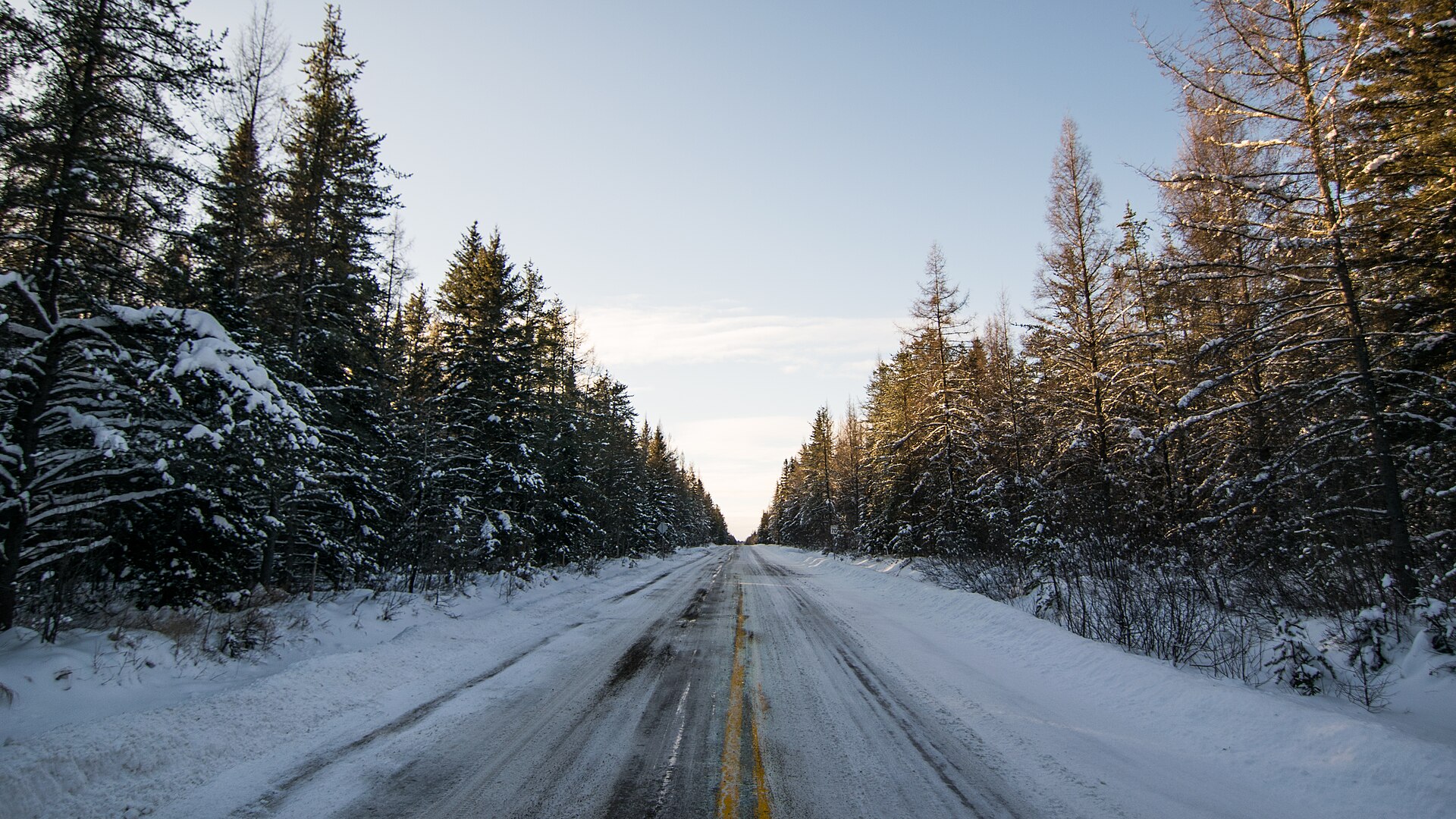
Winter equipment is a route decision. British Columbia’s signed-route rule requires compliant winter tyres or chains on most designated routes from 1 October to 30 April; some routes outside high-snow areas end on 31 March. Read the regulatory sign at the route entrance and confirm the rental vehicle’s tyre marking.
Quebec’s legal season is different: most passenger vehicles registered in Quebec must use winter tyres from 1 December through 15 March. That date does not mean a warm day is safe for summer tyres, and it does not automatically impose the same rule on every out-of-province rental. Check the rental contract and the road forecast.
The Icefields Parkway winter notice is especially concrete. The Jasper to Lake Louise corridor is about 230 km, has no winter services between the communities, and requires snow tyres or chains from 1 November to 1 April. Check Alberta 511 before leaving, fill the tank, carry warm clothing and expect closures for avalanche control or extreme weather.


Choosing a long route and checking the live road
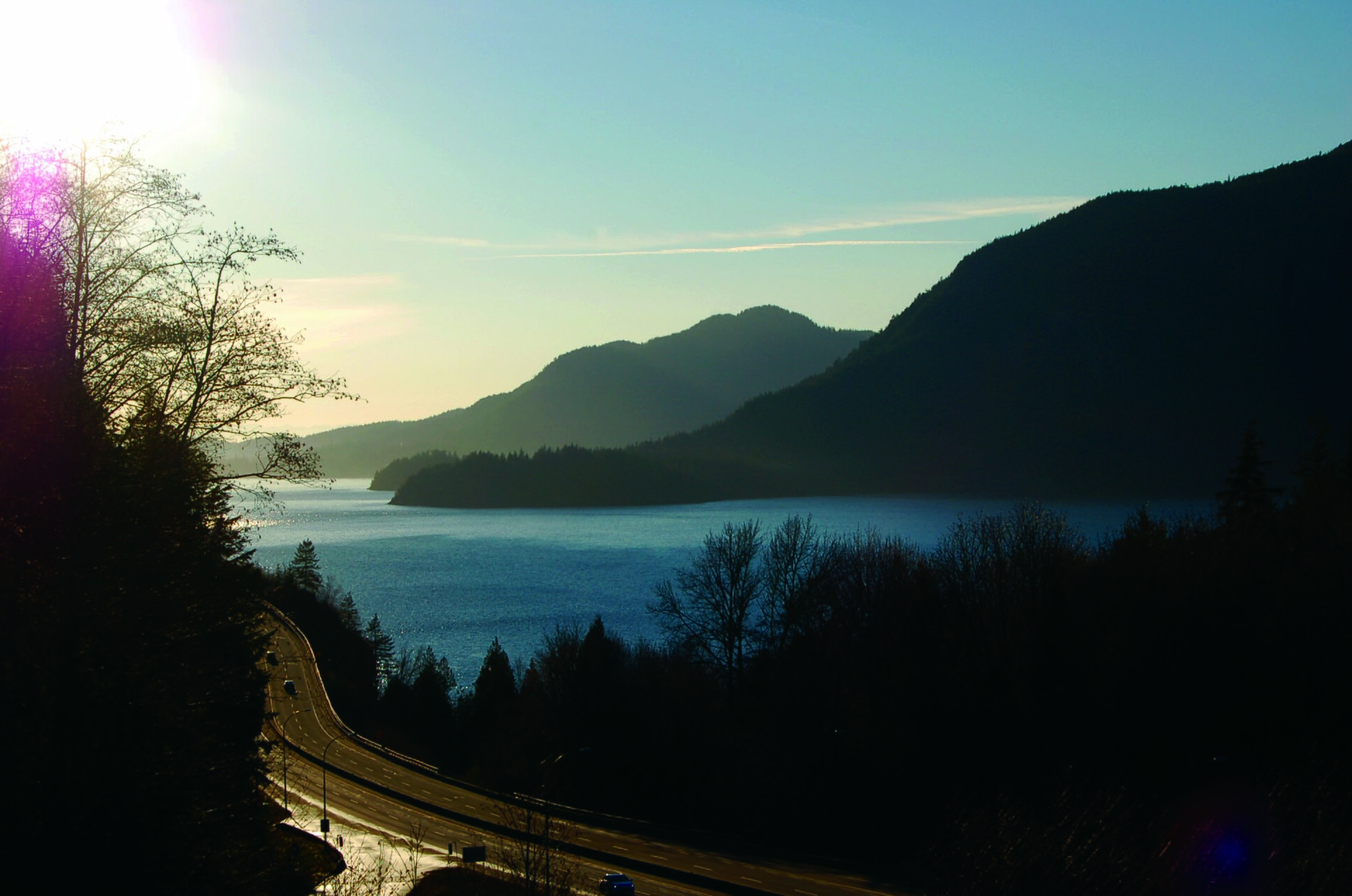
The Trans-Canada Highway is a connected national route, but the number, lane count and service pattern change at provincial borders. The 400-series highways around Toronto are fast but congested. Quebec autoroutes have French signs and electronic toll facilities on selected bridges. In British Columbia, the Sea-to-Sky, Coquihalla and Rogers Pass corridors combine curves, elevation and weather exposure.
For the Rockies, navigation apps are not enough. Parks Canada warns that apps can show inaccurate access information; use Alberta 511 or DriveBC for closures and conditions. The Jasper routes page also notes seasonal restrictions, narrow roads and vehicle limits on routes such as Cavell Road. A map pin is not a guarantee that a large RV, trailer or rental car can reach it.
Plan a turnaround point before a remote road, keep a paper or offline copy of the route, and tell someone the expected return time. On gravel or a single-lane mountain road, reduce speed early for opposing traffic and never stop in a passing space or avalanche-control area.
Tolls, bridges, ferries and Parks Canada access
The 407 ETR rental-car page explains the all-electronic process in Ontario: plate cameras send the trip to the rental company, which may add administration fees. Quebec has selected tolled bridges and highways with similar plate or transponder arrangements. Ask how a rental branch handles tolls before taking a free-flow road.
The Confederation Bridge links New Brunswick and Prince Edward Island. The bridge operator’s 2026 toll table charges by axle count and collects payment when leaving PEI at Borden-Carleton. Ferries in British Columbia and Atlantic Canada can also change the cost and timing of a route, so a “drive time” estimate should include the sailing and check-in window.
Parks Canada fees are date- and site-sensitive. The admission page says the Canada Strong Pass gives free admission from 19 June to 7 September 2026, and that the Discovery Pass lasts 12 months and covers more than 80 destinations. Camping, timed entry, parking, shuttles and special attractions can still require separate reservations or payments.
Cities, parking and language
Toronto, Vancouver, Montreal and Calgary have different street patterns and parking enforcement. Check the municipality’s signs and app rather than relying on a travel blog’s rate. Snow-removal bans can make an apparently legal overnight space unavailable, and a plate-reading camera can issue a notice to the rental company.
Montreal is the detail most visitors get wrong: right turns on red are prohibited on the island, and many signs are French-only. “Arrêt” means stop, “Sortie” means exit, and “Déviation” means detour. In Quebec City and rural Quebec, leave more time to read French signs and confirm the destination address before leaving the car park.
Downtown parking is often the least efficient part of a road trip. Leave the car at a marked garage or transit-connected lot, record the rental plate exactly as shown, and photograph the sign at the space. Never park in a snow-clearing zone, bus stop, fire access or signed permit area.
Fuel, electric charging and the rental handover
Fuel is sold in litres and octane grades. Remote stations can be far apart, and a card that works at a city pump may ask for a Canadian postal code at an unattended terminal. If the terminal rejects it, pay inside rather than driving away with an almost empty tank. Treat fuel-price apps as a current planning aid, not a fixed national price.
An EV itinerary needs live charger status, connector compatibility, opening hours and a backup stop. Main corridors are better served than northern or mountain roads. Ask the rental company whether charging cables, idle fees, bridge tolls and cleaning charges are billed separately.
At handover, photograph the four corners, wheels, glass, dashboard warnings, fuel or battery level and the registration plate. Confirm the tyre type, roadside-assistance number, cross-border permission and who receives parking or toll notices. The car-rental insurance guide explains how to compare the contract excess with separate travel or card coverage.
Wildlife, emergencies and a useful pre-departure checklist
Moose, deer, elk and bears can reach the carriageway at dawn, dusk or after a warning sign. Brake in a straight line, stay in your lane and expect a second animal. Do not stop on the live lane to take a photograph. If a collision or breakdown leaves the vehicle unsafe, move away from traffic only when it is safe and call 911 for immediate police, fire or medical help.
Before the first kilometre:
- confirm the province-specific licence and IDP result with the rental branch;
- save the relevant 511 road service and weather page offline;
- check winter-tyre or chain signs for every mountain route;
- mark the next fuel and charging stop before entering a sparse-service section;
- record the rental registration, emergency number and toll process;
- pack water, warm layers, a flashlight and a charged power bank for remote travel;
- share the route and an arrival time when mobile coverage may disappear.
Official resources and review date
This page was reviewed on 17 August 2026. Provincial licence rules, posted speeds, winter equipment, tolls, park fees, road closures and rental terms can change. Recheck the named authority immediately before driving:
- Government of Canada: driving in Canada
- Ontario visitor driving rules
- SAAQ international driving permit guidance
- ICBC visitors and licences
- British Columbia winter tyre and chain-up routes
- Parks Canada admission and passes
- Canada-wide 511 road information
Related guides and destinations
Frequently Asked Questions
- Can I drive in Canada with my home-country licence?
- There is no single visitor rule for every province. Canada advises visitors to check the province or territory, and an IDP is useful as a translation. Ontario allows a visitor staying under three months to use a valid home licence, while Quebec accepts a valid foreign licence for six months. Check the destination province and the rental company's document list before pickup.
- Do I need an International Driving Permit in Canada?
- Not automatically. Ontario visitors from another country staying under three months can use a valid home licence, and Quebec's six-month visitor rule is tied to carrying the original licence. An IDP is recommended when the licence is not in English or French, or when a province or rental company asks for one. Carry it with the original, never by itself.
- Which side of the road does Canada use?
- Canada drives on the right. Keep the centre line on the driver's left, enter roundabouts counter-clockwise, and expect distances and fuel quantities in kilometres and litres.
- What are Canada's speed limits?
- The sign on the road controls. Many urban roads are posted at 40 or 50 km/h, rural roads often sit around 80 to 100 km/h, and divided highways commonly use 100 or 110 km/h. Ontario is adding 110 km/h signs to more provincial highways in 2026, so do not rely on an old province-wide summary.
- Are winter tyres mandatory in Canada?
- The answer depends on the route. Quebec requires winter tyres on most passenger vehicles registered there from 1 December to 15 March. British Columbia uses regulatory signs on many routes from 1 October to 30 April, with some lower-snow routes ending 31 March. Parks Canada requires snow tyres or chains on the Icefields Parkway from 1 November to 1 April.
- Can I turn right on a red light?
- Usually only after a full stop and yielding to pedestrians and cross traffic, unless a sign forbids it. Quebec permits the turn in most of the province, but not on the island of Montreal and not where a sign prohibits it. Local signs always win.
- How does the 407 ETR toll work with a rental car?
- Ontario's 407 ETR is all-electronic. Cameras read the rental plate and the operator bills the rental company, which may add its own administration fee. There are no cash toll booths, so ask the rental branch how it handles the 407 before using it.
- How much is the Confederation Bridge toll?
- The bridge charges by axle count and collects the toll when leaving Prince Edward Island at Borden-Carleton. The official 2026 table lists CAD 20.00 for a vehicle with the first two axles, but check the current table for your vehicle and travel date.
- Do I need a Parks Canada pass?
- A national-park admission fee or pass may apply. Parks Canada says the Canada Strong Pass gives free admission from 19 June through 7 September 2026, while a Discovery Pass lasts 12 months and covers more than 80 destinations. Check the park page because camping, reservations and special activities are separate.
- What should I do if a road is closed or wildlife is near the car?
- Check the relevant provincial 511 service before leaving, and use Alberta 511 or DriveBC for Rocky Mountain corridors. If a moose, deer or bear is near the road, slow down and stay in your lane rather than swerving. Call 911 for an emergency and follow the rental company's roadside procedure for a breakdown.
Information Sources & Disclaimer
This guide compiles information from the official transport authorities, road operators, government travel information, and automobile associations linked for Canada.
While we strive to keep this information as accurate and up-to-date as possible (last reviewed: August 2026), traffic laws and toll rates can change without notice. We recommend verifying critical information with the local authorities or your car rental agency upon arrival.
Learn more about our Editorial Process →Compare Your Origin and Destination
Use the comparison tool to check driving side, units, documents, and other destination data for your route.