Decide which Cyprus drive you are actually planning
Cyprus is easy to underestimate. Four-lane motorways connect Nicosia with the coastal towns, but a day that includes a capital-city car park, a mountain pass and a coastal archaeological site quickly changes pace. The useful question is not “can the island be crossed?” but “where does a car save time, and where does it create a parking or weather problem?”
This page uses Cyprus as the destination name, but its road limits, parking guidance, emergency number and rental-insurance examples describe the areas under the effective control of the Republic of Cyprus. The European Commission explains that the whole island is in the EU while EU law is suspended in the northern areas where the Republic of Cyprus does not exercise effective control. The Green Line is a regulated crossing line, not a reason to merge two different road and insurance systems into one. Check the boundary section before booking a car for a cross-line itinerary.
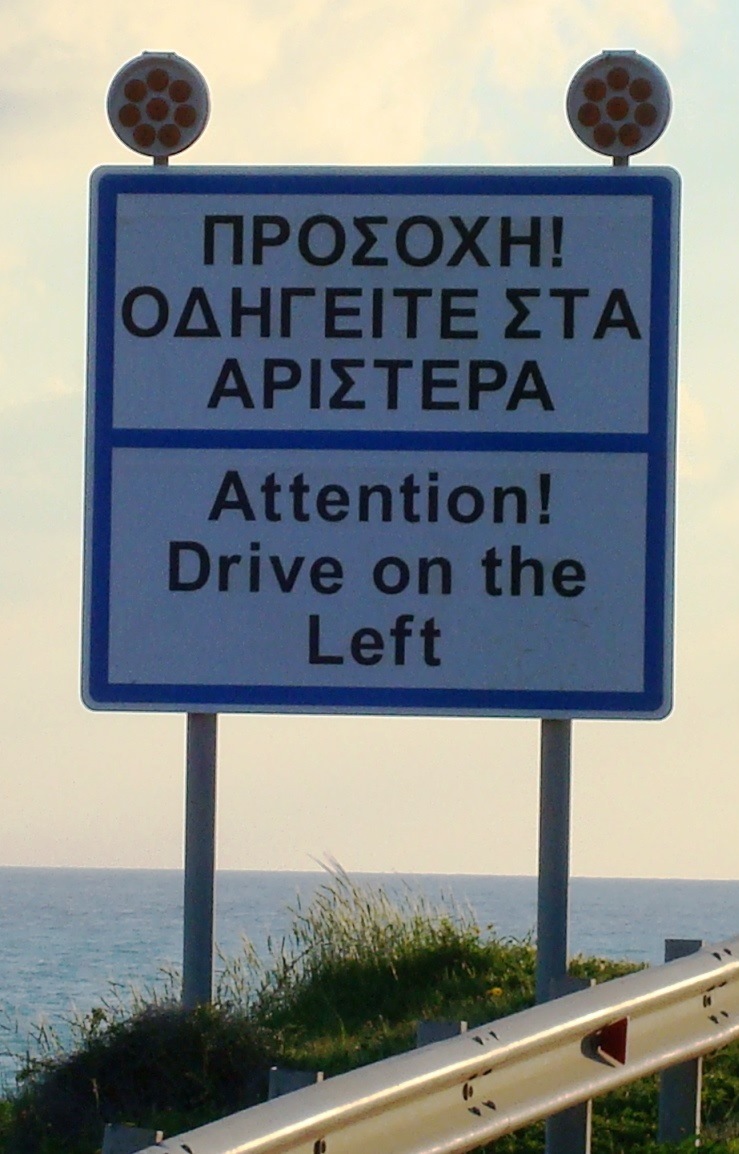
Traffic moves on the left. Keep the physical licence, passport, rental agreement, vehicle registration and insurance details together. At pickup, photograph the red rental plate, body panels, wheels, windscreen, fuel or battery level and dashboard warnings. Ask for the after-hours recovery number and whether gravel roads, forest tracks, ferries or any cross-line travel are excluded.

Foreign licences, IDP and the rental counter
Start with the exact document, not the passport nationality
The official Visit Cyprus guide says visitors can drive with a valid international driving licence or a national licence valid for the class of vehicle. It also describes official recognition for EU licences, six-month use for a list of named non-EU licences and roughly 30 days for other non-European national licences, with the qualification that the period is not strictly restricted. Those categories and time periods are not a substitute for checking your actual document with the Road Transport Department and the rental company.
An International Driving Permit is a supporting document, not a replacement for the original national licence. Carry both, plus your passport. If the licence is not readable in English or another accepted format, ask whether the branch needs an IDP, an official translation or a particular convention format. Keep the answer in writing; a booking website’s generic “international licence accepted” label is weaker evidence than the contract for your exact pickup station.
The normal minimum age for a full car licence is 18, while a rental company can set a higher threshold. The official visitor information says drivers under 25 who have held a licence for less than three years at the time of rental should tell the company so under-age insurance cover can be arranged. Confirm the minimum age for the chosen vehicle group, young-driver fee, additional-driver rule, deposit, payment card, child seat and excess before paying.
Left-side traffic, road classes and speed
The Cyprus road-safety guide gives the baseline that matters to a visitor:
| Road context | Official baseline | How to use it |
|---|---|---|
| Major motorway | 100 km/h maximum; 65 km/h minimum | Stay in the left lane unless overtaking and obey the sign for the actual section. |
| Ordinary inter-urban or rural road | 80 km/h maximum | Expect junctions, villages, cyclists, animals and uneven shoulders; slow before the bend. |
| Built-up area | 50 km/h maximum | A local 30 km/h sign, traffic-calming zone or temporary restriction takes priority. |
Cyprus uses international road signs and displays distances and limits in kilometres. On a motorway, use the left lane for normal travel, move left after overtaking and leave space for vehicles joining. In towns, read the lane arrows before a roundabout and do not copy the line of a car that is turning from the wrong lane.
Seat belts are compulsory front and rear, and children need a restraint appropriate to their size. Hands-free use is required; set navigation while parked. Bright summer glare, wet winter surfaces, pedestrians stepping out near village shops and parked cars around bends are all reasons to drive below the posted ceiling.
City parking and attraction stops
Central Nicosia rewards a planned car park rather than repeated loops around the old city. The Nicosia Municipality parking page lists municipal lots, street meters and Pay & Display spaces, including spaces with 30-minute or one-hour limits. Take a photo of the bay sign and payment record, and enter a rental plate exactly as shown.
Limassol has a municipal parking-lots page, while Paphos provides Smart Parking instructions covering zones, maps and card or e-wallet payment. These systems are local. Do not carry a Nicosia tariff, app assumption or time limit into another city. The current Visit Cyprus transportation guidance gives only an indicative range, about €1–€2 per hour in central city areas on weekdays and about €2–€3 for half a day, so the sign at the actual space controls.
At monasteries, archaeological sites and mountain villages, a marked visitor area may be small or full at the busiest time. Park without blocking a gate, fire route, bus turning area or sight line. Double yellow lines prohibit parking and waiting; a single yellow line allows loading and unloading but not parking. For an attraction with a narrow approach, walk the last section rather than forcing a rental car onto an unmarked track.
Fuel, charging and the mountain reserve
Petrol stations are plentiful in towns and tourist resorts, but the official tourism guidance warns that there are fewer in mountain areas and villages. Unleaded 95 and 98 petrol are available, and fuel is sold by the litre. Refill before leaving Nicosia, Limassol or Paphos for a long Troodos or forest stage; a fuel gauge that is comfortable on the motorway may not be comfortable after a detour and a closed road.
For an EV, confirm the connector, charging card or app, payment method and return-state requirement at the rental desk. The EAC mobile app shows e-charge locations, and the Ministry of Transport has announced fast-charge sites that include points in Troodos, Limassol and Paphos. Check live availability before departing and keep a reserve for elevation, air-conditioning and a diversion. A charger on a map is a planning lead, not a guaranteed open bay.
Heat, rain and Troodos winter decisions
Cyprus has a long, dry Mediterranean summer from roughly mid-May to mid-October. The official climate guidance gives July and August indicative daily temperatures of about 30°C on the central plain and 24°C in Troodos, with average maximums of 38°C and 27°C. Start long exposed drives early, use the air-conditioning sensibly, carry water, protect the fuel or battery margin and never leave a child or animal in a parked car.
Winter is mild on the coast but not uniform across the island. Visit Cyprus describes rain and snow in Troodos, usually beginning before Christmas; January daily temperatures are about 10°C on the plain and 3°C in the higher mountains, with average minimums of 5°C and 0°C. Before a mountain day, check the latest road notice, the forecast for the pass and the rental company’s tyre, chain, underbody and recovery exclusions. Do not treat a clear Nicosia morning as evidence that a Troodos road is clear.

Route choices: Nicosia, Troodos, Paphos and Limassol
Nicosia to Limassol or Paphos
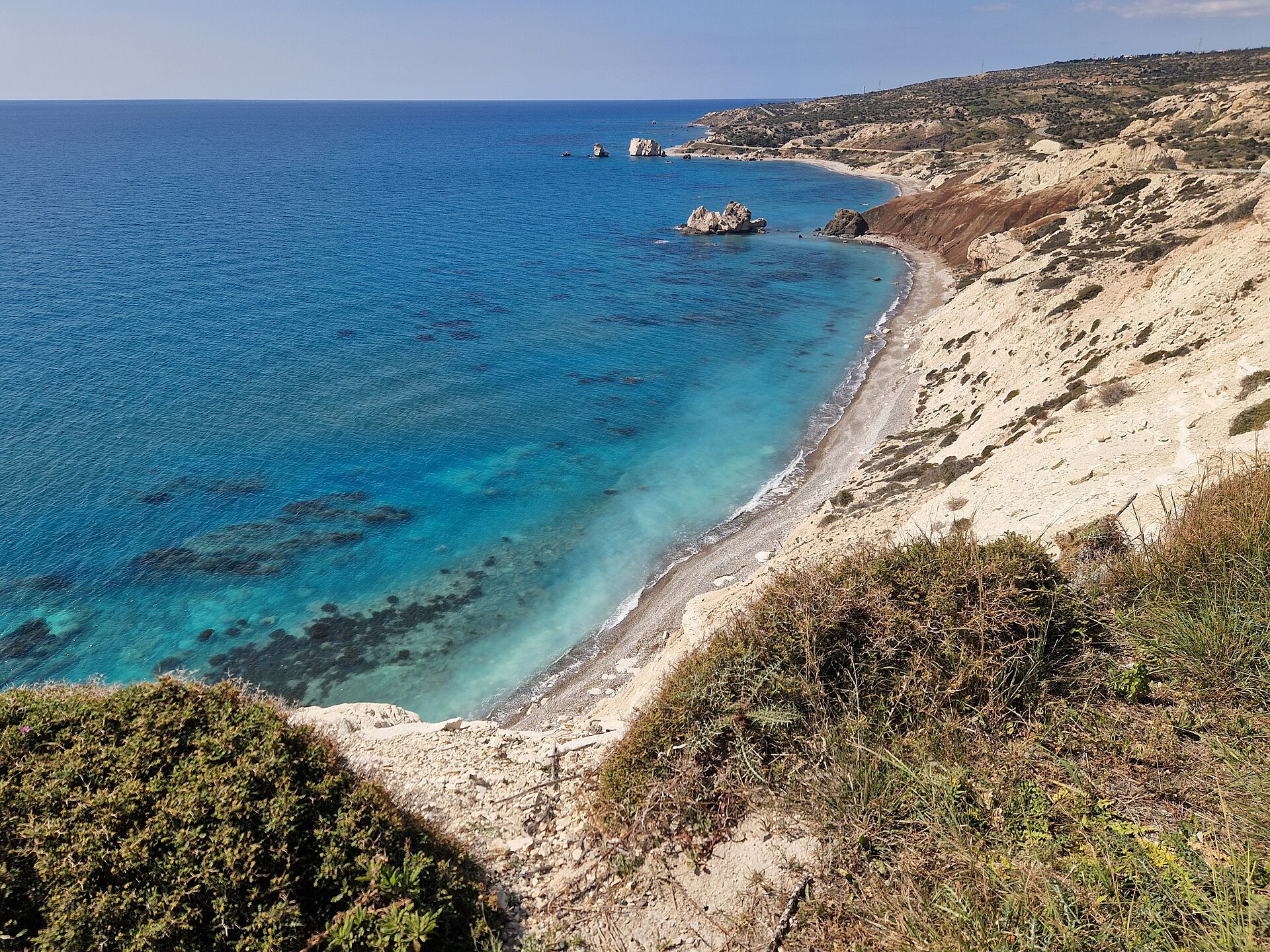
Use the main four-lane motorway network for the long inter-city leg. It is the predictable part of the day: leave after the Nicosia parking session, keep a fuel or charge reserve and arrive before the coastal centre becomes a parking problem. Paphos is a better base for coastal archaeology and the west; Limassol is a useful base for the south coast and the southern slopes of Troodos. Choose one base rather than adding a same-day capital return after a full sightseeing loop.
Nicosia to Troodos
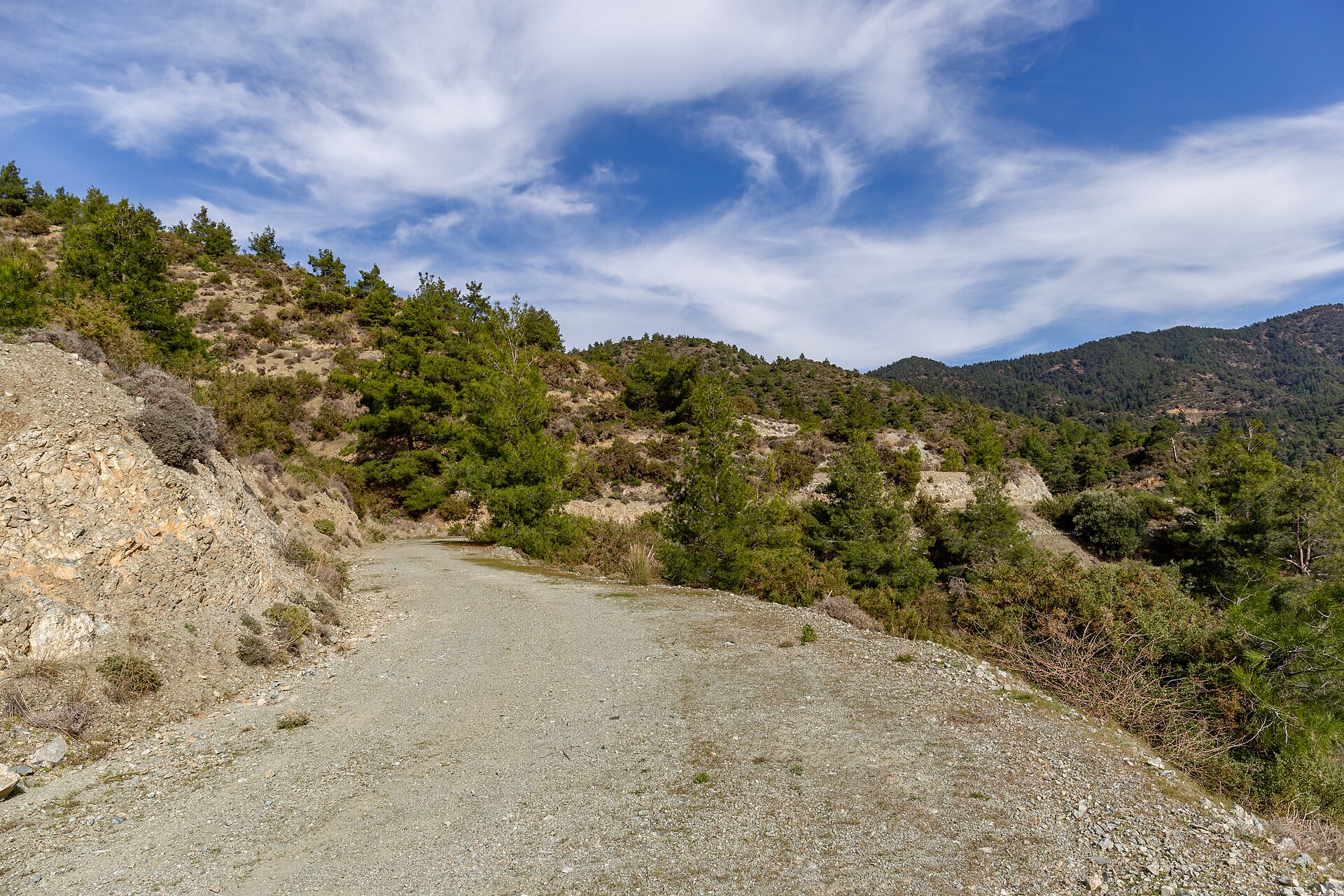
Treat Troodos as a mountain route, not as another motorway exit. A day trip can work when the route has one main objective, daylight margin and a turn-back point. Add time for village junctions, slow vehicles, pedestrians and parking at the square or trailhead. The official Troodos region guide describes the high mountain setting and winter snow; its context is more useful for timing than a distance estimate alone.
Troodos to Paphos or Limassol
The descent is a choice. The Paphos side leads into forest, wine villages and the west-coast area; the Limassol side leads toward the southern foothills and a larger coastal city. Do not plan both descents, an attraction-heavy Paphos detour and a return to Nicosia as one “short” day. The Visit Cyprus route material for the Paphos hinterland explicitly describes village roads, a full-day scale and winter conditions that may call for a different vehicle plan.

Green Line, northern areas and insurance boundaries
The European Commission’s Green Line explanation says that the entire island is part of the EU, but EU law is suspended in the northern areas where the Government of the Republic of Cyprus does not exercise effective control. The Republic of Cyprus Customs and Excise guidance lists authorised crossing points and explains that movement across the line follows special rules.
That public crossing framework does not make a rental car cross-line eligible. The Hertz Cyprus terms are one concrete operator example: they prohibit taking its vehicles outside the boundaries of the Republic of Cyprus or into the north and say that all insurance ceases if the car is taken outside the permitted territory. Other companies may write different terms, but only the named rental provider and its signed agreement can answer for your car. Ask in advance about the exact crossing, permission letter, third-party cover, damage waiver, theft, recovery, breakdown and return plan. A separate north-side rental is a different contract and a different insurance question.
Avoid describing the northern area’s road signs, parking prices, emergency arrangements or fuel rules as if they were Republic of Cyprus rules. Check the current local authority and operator information for that area, and use only an authorised crossing point. If your itinerary depends on the crossing, make a walk-or-separate-car fallback before paying for the south-side rental.
Crash, breakdown and emergency response
The official Cyprus visitor guide directs visitors to 112 for police, fire service and ambulance. Cyprus Police also publishes 199 as an emergency number. Use 112 as the default for an injury, fire, immediate danger or serious collision; keep 199 as the police-published secondary number rather than replacing the rental company’s recovery contact.
| Situation | Action |
|---|---|
| Injury, fire, danger or serious crash | Call 112; give the road, direction, landmark, plate and hazards. |
| Police emergency backup | Cyprus Police also lists 199. |
| Safe vehicle position | Turn on hazards and move only if safe; do not stand in a live lane. |
| Rental vehicle | Call the contract’s accident/recovery number and follow its reporting process. |
Do not agree to a cash settlement that leaves the rental company uninformed. Photograph the position, signs, lanes, road surface, all vehicles and visible damage. The official traffic-police report service explains the kind of report that can be requested after a traffic accident. On a remote mountain road, tell the operator the nearest village, forest road, viewpoint or kilometre marker and wait in a safe visible place.
Cyprus departure checklist
- Original national licence, confirmed IDP or translation if the branch requires it, passport and rental agreement.
- Written confirmation of age, licence-tenure, named-driver, deposit, excess, fuel/charge and cross-line conditions.
- Left-side routine practised before the first city junction; seat belts and child restraint fitted before moving.
- Nicosia, Limassol or Paphos parking sign and payment method checked at the actual bay; no yellow-line shortcut.
- Fuel or EV plan with a reserve before Troodos, Paphos Forest or a remote attraction.
- Summer water and heat plan, or winter mountain forecast, road notice, daylight and tyre/recovery check.
- One route decision for the day: Nicosia–Troodos–Paphos or Troodos–Limassol, not every branch at once.
- Green Line crossing avoided unless the named operator has authorised it in writing and the insurance territory is clear.
- 112 and the rental recovery number saved offline; phone charged before leaving the coast or city.
Official sources and review date
This page was reviewed on 18 August 2026. The source links below support the Republic of Cyprus traffic facts, parking examples, route context, Green Line boundary and emergency guidance:
- Cyprus road-safety guide: Cyprus Police and Ministry of Transport
- Visit Cyprus: transportation, driving, fuel and parking guidance
- Road Transport Department: driving-licence procedures
- Official Guide to Cyprus: licence, rental and emergency information
- Nicosia Municipality: parking places
- Limassol Municipality: parking areas
- Paphos Municipality: Smart Parking
- Visit Cyprus: climate and weather
- Visit Cyprus: Troodos region
- Visit Cyprus: Paphos hinterland route material
- EAC: e-charge locations in the mobile app
- European Commission: Green Line Regulation
- Republic of Cyprus Customs and Excise: Green Line crossing points
- Hertz Cyprus: rental terms and territorial insurance
- Cyprus Police: emergency numbers
Related planning tools and destinations
Frequently Asked Questions
- Do I need an International Driving Permit to drive in Cyprus?
- Not as a universal rule. The official Visit Cyprus guide says visitors may drive with a valid international driving licence or a national licence valid for the vehicle class, and it describes different recognition periods for EU and certain non-EU licences. An IDP should accompany the original national licence; it does not replace it. Send the rental branch a scan of the exact licence before booking, especially when it is not in a readable Latin-script format or your issuing country is not covered by the current guidance.
- What does a Cyprus rental counter require, and can I take the car across the Green Line?
- The legal driving age for a normal car licence is 18, but the rental contract can set a higher age, licence-tenure, deposit, card and vehicle-class threshold. Visit Cyprus says drivers under 25 who have held a licence for less than three years should tell the rental company so under-age insurance cover can be arranged. A Republic of Cyprus rental car must not be assumed to be allowed across the Green Line: Hertz Cyprus currently prohibits taking its vehicles into the north and says its insurance ends outside the Republic of Cyprus. That is an operator term, not a rule for every company; obtain written permission and territorial insurance wording before planning any crossing.
- Which side of the road does Cyprus drive on?
- Traffic drives on the left, and road signs are normally placed on the left. The first error often happens after leaving a roundabout, car park or petrol station, when a driver turns into the familiar right-hand lane. Keep the steering routine deliberate, choose a lane before entering a junction, and look right first when crossing a road.
- What are the speed limits in Cyprus?
- The official road-safety guidance gives 100 km/h as the maximum and 65 km/h as the minimum on major motorways, 80 km/h on ordinary inter-urban and rural roads, and 50 km/h in built-up areas unless a sign says otherwise. A lower temporary, urban, mountain or vehicle-specific limit takes priority. Treat the limit as a ceiling: glare, wet surfaces, pedestrians, junctions and forest bends can require much less.
- How does parking work in Nicosia, Limassol and Paphos?
- Use a marked municipal or private car park and read the bay sign before leaving the vehicle. Nicosia lists municipal lots, street meters and Pay & Display spaces; Limassol maintains a municipal parking-lots page; Paphos operates a Smart Parking system with app, map and payment instructions. Visit Cyprus gives an indicative city-centre range of about €1–€2 per hour on weekdays or €2–€3 for half a day, but local signs and current tariffs control. Double yellow lines prohibit parking and waiting; a single yellow line allows loading and unloading but not parking.
- Is fuel and EV charging easy on a Cyprus road trip?
- Petrol stations are common in towns and resorts but less common in mountain villages, so refill before a Troodos or forest stage. Visit Cyprus lists unleaded 95 and 98 petrol and says fuel is sold by the litre. For an EV, confirm the connector, app, payment method and opening conditions at pickup, then check the EAC e-charge map or app and keep a charge reserve; a station shown on a map is not a guarantee of a free or working connector.
- What should I expect when driving in summer or winter in the Troodos Mountains?
- July and August are hot: Visit Cyprus gives indicative daily temperatures of about 30°C on the central plain and 24°C in Troodos, with average maximums of 38°C and 27°C. Winters are mild on the coast but bring rain and snow to Troodos, often before Christmas; January daily temperatures are about 10°C on the plain and 3°C in the higher mountains, with average minimums of 5°C and 0°C. Start exposed drives early, carry water and check the exact mountain road, weather, daylight, tyres and rental recovery plan before committing.
- How should I plan a Nicosia–Troodos–Paphos or Limassol route?
- Use the main motorway corridor for the long Nicosia–Limassol or Nicosia–Paphos transfer, then treat Troodos as a separate mountain day or an overnight stop. The descent to Paphos and the descent to Limassol are different choices; combining both with city parking and a return to Nicosia makes a tiring day. Visit Cyprus route material shows why the Paphos hinterland and Troodos roads need slower village sections, parking time and a winter fallback rather than a map-only schedule.
- What should I know about the Green Line and driving in the north of Cyprus?
- The European Commission says the Green Line is not an EU external border, while EU law is suspended in the northern areas where the Government of the Republic of Cyprus does not exercise effective control; crossings are governed by special rules and authorised crossing points. Public crossing arrangements and a rental contract are separate questions. Do not drive a south-side rental across the line unless the named operator gives written permission, the exact crossing is open, and vehicle, third-party and recovery cover are confirmed. North-side roads and local rules must be checked separately rather than inferred from this Republic of Cyprus guide.
- What emergency number should I call after a crash in Cyprus?
- Call 112 for police, fire or ambulance when there is an injury, immediate danger, fire or a serious collision; Cyprus Police also publishes 199 for emergencies. Make the scene safe, give the road, direction, landmark, vehicle plate and hazards, and do not admit liability or leave before the police or rental company tells you what to do. Photograph the road, signs, vehicles and damage, then use the rental company's recovery and accident-report number.
Information Sources & Disclaimer
This guide compiles information from the official transport authorities, road operators, government travel information, and automobile associations linked for Cyprus.
While we strive to keep this information as accurate and up-to-date as possible (last reviewed: August 2026), traffic laws and toll rates can change without notice. We recommend verifying critical information with the local authorities or your car rental agency upon arrival.
Learn more about our Editorial Process →Compare Your Origin and Destination
Use the comparison tool to check driving side, units, documents, and other destination data for your route.