Plan Ecuador as three different driving trips
Ecuador is compact on a map but demanding behind the wheel. The Andes, Pacific coast, Amazon and Galápagos are distinct operating environments, and the official tourism atlas uses those regional divisions for a reason. A route that works for a short Quito stay may be a poor plan for a highland loop or a coastal transfer. Choose the vehicle, departure time and backup route after checking the corridor, not before.
The first decision is whether a car saves time. In Quito, a parking-first plan often beats carrying a rental through the historic centre. On an Andean route, daylight and weather margin matter more than the shortest navigation estimate. On the coast, traffic and rainfall can change the practical speed. This guide uses the published traffic regulation as a baseline, current municipal and operator pages as examples, and a review date of 2026-08-18. Recheck changeable facts before pickup.

Licence, IDP and rental contract boundaries
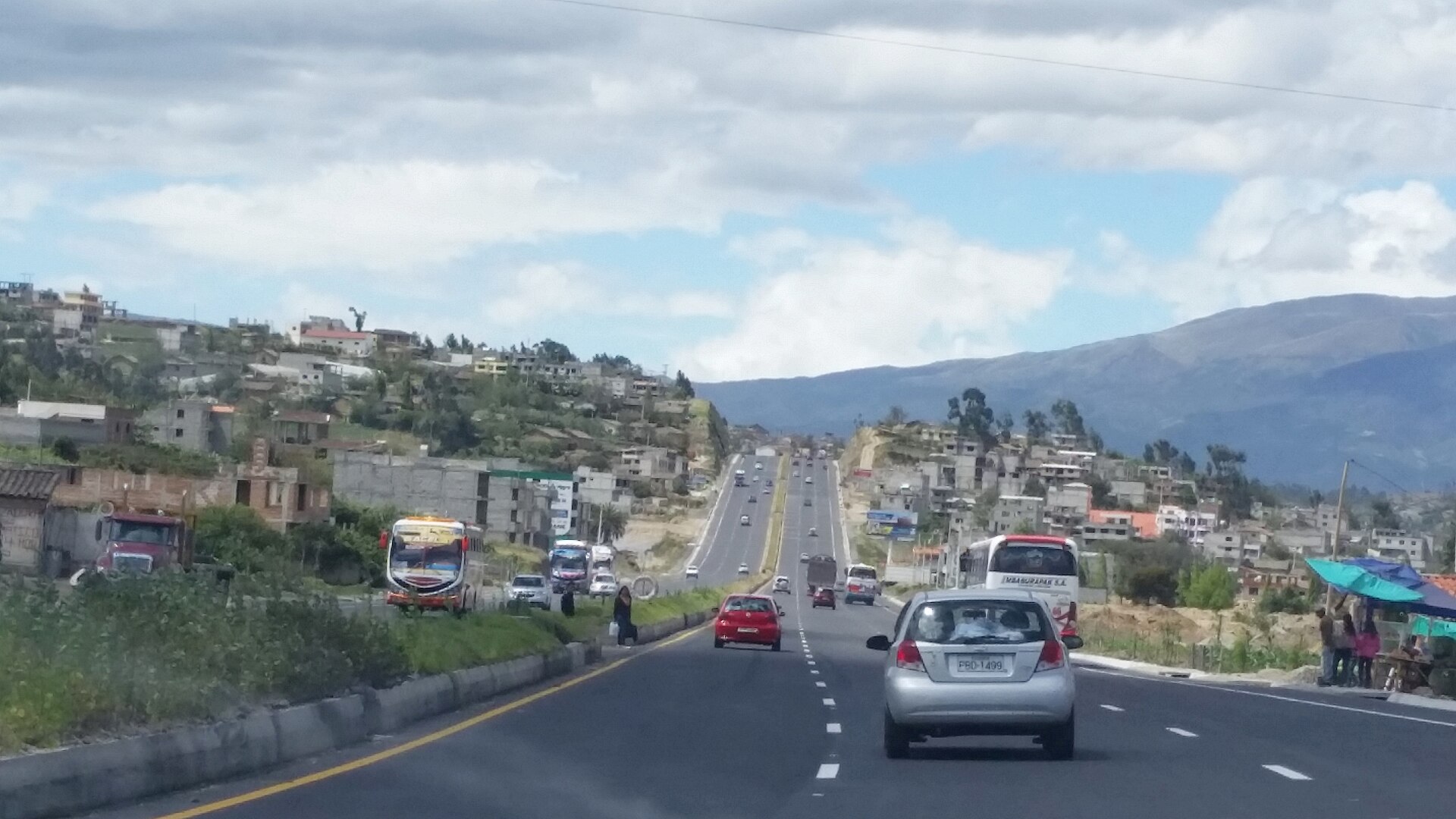
The Ecuador traffic regulation says foreign documents can be valid under applicable law and treaties. It also says a driver should carry the licence, vehicle registration and required insurance evidence, while a foreign driver should carry a passport or notarised copy showing the entry or visa evidence. A foreign licence that is not in Spanish needs the corresponding translation. Read the current published regulation and the later official reform notice together, then ask the rental office for a written document list.
The Ecuador traffic regulation PDF is a legal baseline, not a guarantee that every counter will interpret a foreign licence the same way. The Registro Oficial reform page is a reason to recheck the current text. The SENAE land-travel guidance is especially relevant when a traveller brings a vehicle across a border: it lists passport entry evidence, driving licence, vehicle registration, rental contract and, in some cases, a customs declaration. That is a different case from collecting a normal domestic rental in Ecuador.
Do not buy an Ecuador-issued international permit for use inside Ecuador. The ANT procedure describes that permit as being for driving abroad and says it is not valid in Ecuador. If your home country or rental provider wants an IDP, obtain it from the competent authority in your home country and confirm whether it is being used as a translation or as a contract requirement.
Rental approval is a separate gate. The Avis Ecuador conditions say the reservation, rental contract, required documents, payment and deposit conditions control, and that foreign renters may be asked for a passport, valid foreign licence, IDP or other documents. The Enterprise Quito office page currently publishes a minimum age of 21 for that office. Neither page creates a national rental-age rule. Put the vehicle category, driver names, age, deposit, insurance excess, permitted roads, border permission and roadside number in writing.
Road rules and speed decisions
The published regulation gives these light-vehicle baselines. They are useful for planning, but signs, local rules and safe conditions control in the actual lane.
| Road setting | Published baseline | Decision at the wheel |
|---|---|---|
| Urban road | 50 km/h | Follow a lower posted or municipal limit and expect crossings, buses and motorcycles. |
| Perimetral road | 90 km/h | Treat interchanges, settlements, merges and rain as reasons to slow down. |
| Straight road section | 100 km/h | Use only when the sign, surface, visibility and traffic make it safe. |
| Curve | 60 km/h | Brake before the bend. A sharper, wet or blind curve requires less. |
The traffic regulation also gives local authorities room to set lower limits and links speed to safe conditions. Do not turn the table into a cruise-control setting. Children under 12, and children too short for the front belt, should not ride in the front; use a suitable rear restraint matched to age and weight. Reserve the correct seat rather than assuming a generic booster will be available.
Seat belts, lane discipline and visibility are more important than arriving at the navigation ETA. Keep a larger gap behind buses and trucks, avoid passing into a blind curve, and stop for fatigue. If rain, fog or a landslide warning changes the sight line, the correct speed can be far below the sign.
Quito: plate restrictions and parking before sightseeing
Quito’s Pico y Placa resolution currently applies Monday to Friday from 06:00 to 09:30 and 16:00 to 20:00. The plate schedule is 1-2 on Monday, 3-4 Tuesday, 5-6 Wednesday, 7-8 Thursday, and 9-0 Friday. The resolution states that weekends and holidays are not restricted under that plan, while exceptions and amendments still need checking.
Ask for the rental plate before leaving the office. If the itinerary crosses Quito during a restricted period, either move the transfer outside the window, park before the restricted area or use another permitted connection. Do not rely on a navigation app or a hotel message to override the municipal rule. Check whether a vehicle type or official exception applies to the particular rental.
The municipal EPMMOP parking page lists public car parks and Zona Azul information. Hours, sectors, payment and rates can change, so check the current page on the day. Quito also publishes information about electric-vehicle parking treatment, but an EV benefit does not automatically waive a traffic restriction, and eligibility evidence may be required.

Andes, coast and Amazon: separate route assumptions
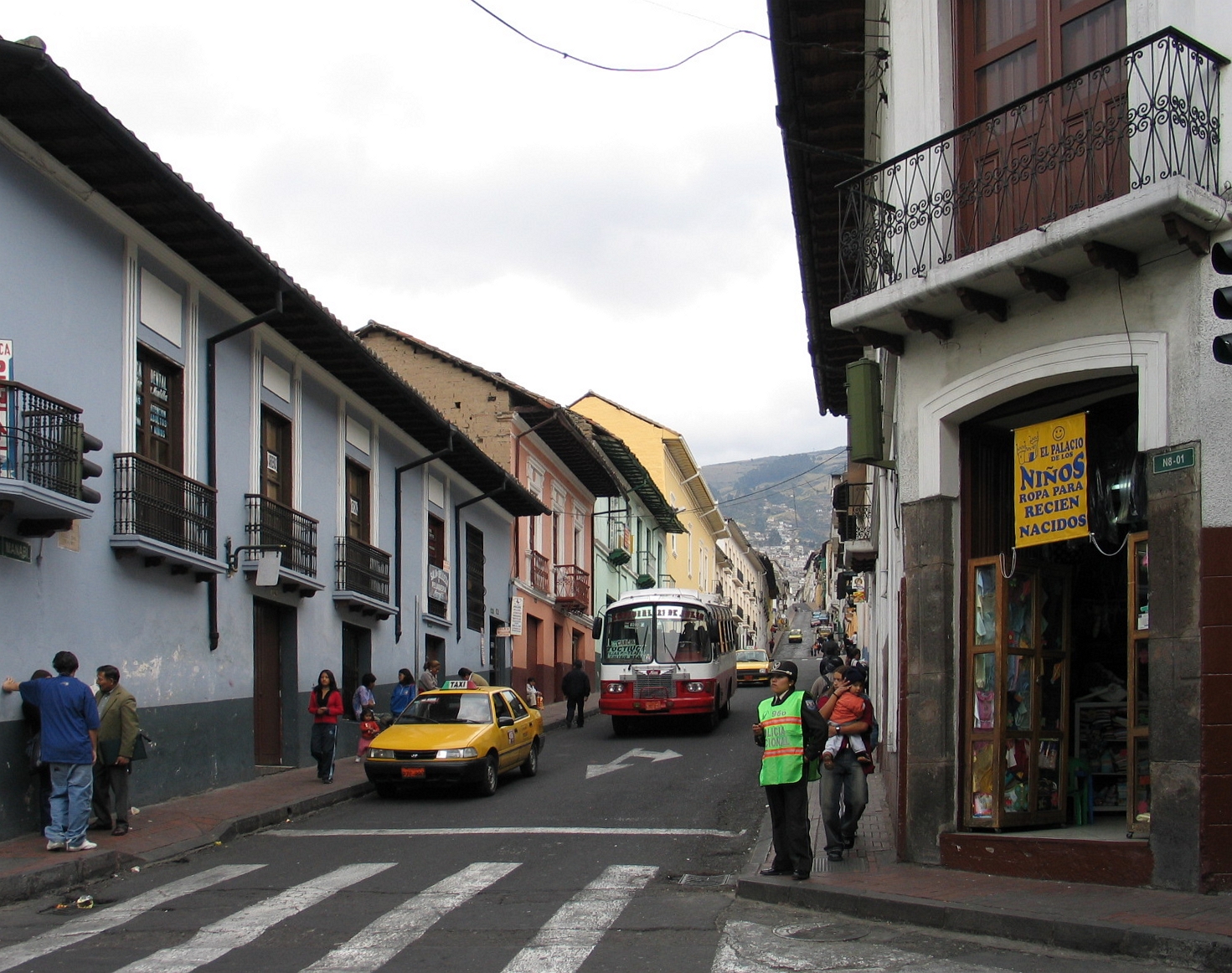
The Quito tourism material places Quito at about 2,850 m. The Cuenca municipal tourism page gives Cuenca as about 2,538 m. These numbers are planning context, not medical advice. If you arrive from low elevation, give yourself time before a long mountain drive and stop driving if illness affects concentration or coordination.
In the Andes, the most useful margin is daylight, fuel, visibility and a safe place to turn back. Curves can tighten after a seemingly open section. Fog can remove the view beyond the next reflector. Heavy vehicles and settlements make the 100 km/h straight-road baseline irrelevant in practice. Keep navigation running, but do not follow it onto a closed or visibly unsafe road simply because it is shorter.
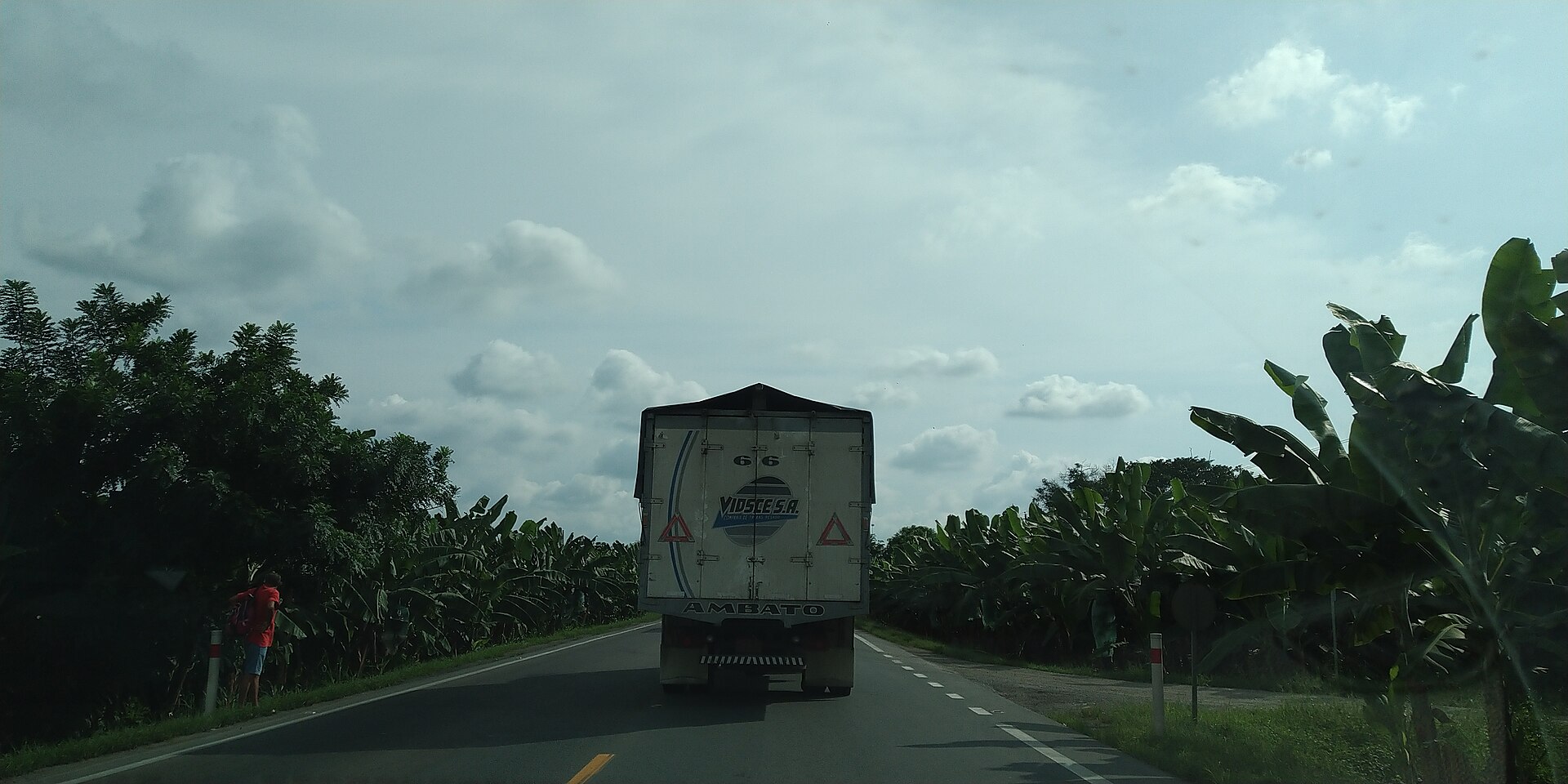
The coast can be flatter without being predictable. The E25 and urban approaches can bring overtaking, motorcycles, pedestrians, standing water and sudden traffic queues. After heavy rain, ask whether the low section is passable before entering it. A route that is comfortable in dry daylight can be a poor night transfer.

Rain, mountain roads and live route checks
There is no single reliable national rainy-season rule for a driving itinerary. The INAMHI national forecast and its regional forecast and warning publications show why the route needs a regional check. INAMHI’s Inter-Andean October transition note describes a transition toward wetter conditions in much of the corridor, while also showing that timing can vary by year.
Before a long leg, check the forecast for the provinces on the route, then check the current SITOP transport platform and road authority notices. Treat older maps as background. If the route has a landslide, flood, volcanic, earthquake or heavy-rain alert, pause at a safe location and choose a current alternative. Keep offline navigation, a charged phone and enough fuel to avoid making a marginal stop.
Fuel, charging, tolls and roadside help
The ARCH fuel information page is the right place to check current official price information; the 1800LOJUSTO channel is for fuel price, quality and service complaints. Station stock, card acceptance and operating hours are not guaranteed by a national map. Refill before remote or highland sections and retain the receipt.
For an EV, the ARCONEL charging-service page explains that authorised providers operate under utility contracts and regulated conditions. Empresa Eléctrica Quito describes 11 rapid 93 kW stations in Quito at the review date. That is useful city infrastructure, not proof of a continuous national corridor. Confirm connector, payment, access and live availability, and choose a backup stop.
Major interurban roads can have tolls. Panavial’s tariff page and TAG page are the direct sources for its current information. Ask the rental company whether the car’s TAG is active, how tolls are charged, whether a handling fee applies and what to do if the lane does not accept your payment method.
For danger, injury or an obstruction, call 911. ECU 911 says the service operates 24/7 and coordinates road assistance. Give the road number, direction, nearest kilometre or landmark, plate, number of people and immediate hazard. Call the rental provider separately for towing, a replacement vehicle or contract instructions.
A practical Ecuador departure checklist
- Save the rental confirmation, contract, driver names, plate, deposit terms and roadside number offline.
- Carry the original licence, passport and entry evidence, plus the translation or home-country IDP requested by the provider.
- Photograph the car, wheels, glass, fuel level, warning lights and odometer before leaving the pickup bay.
- Check the Quito plate restriction if the route enters the city, and choose legal parking before the historic centre.
- Check INAMHI and SITOP for the actual provinces and corridors, rather than relying on the destination weather icon.
- Refill before remote or highland sections, confirm toll and TAG billing, and verify EV backup options where relevant.
- Keep mountain and uncertain-weather transfers in daylight, with a turnaround point and a 911 plan.
Official sources and review date
The following direct sources were reviewed for this page on 2026-08-18. Rules, prices, weather, road status, rental inventory and municipal schedules can change, so recheck the source that governs the decision on the day of travel.
- Ecuador traffic regulation, including foreign documents, speed baselines and child-restraint provisions.
- Registro Oficial reform page, for current legal amendments to recheck.
- SENAE land-travel guidance, for vehicles entering from abroad.
- ANT international permit procedure, which states that the Ecuador-issued permit is for driving abroad and is not valid in Ecuador.
- Avis Ecuador rental conditions and Enterprise Quito office requirements.
- Quito Pico y Placa resolution, EPMMOP parking and Quito EV parking information.
- INAMHI national forecast, regional forecasts and warnings and Inter-Andean transition note.
- SITOP transport platform for current transport and route checks.
- ARCH fuel prices and 1800LOJUSTO complaints.
- ARCONEL charging service and Empresa Eléctrica Quito electromobility.
- Panavial tariffs and TAG information.
- ECU 911 road assistance information.
- Quito tourism altitude material, Cuenca municipal tourism information and the Ministry of Tourism atlas.
Related planning tools and destinations
Use the IDP checker, rental-car handover checklist, route weather and closure planner, parking and restriction planner and EV road-trip planner to turn the source checks into a departure plan. For neighbouring route comparisons, see the Colombia driving guide, Peru driving guide and Chile driving guide.
Frequently Asked Questions
- Which side of the road do people drive on in Ecuador?
- Ecuador drives on the right. A rental car is left-hand drive, and overtaking, turning and lane-position decisions should be made for right-hand traffic. The driver remains responsible for following the current sign and lane marking.
- Can I drive in Ecuador with my foreign licence?
- Ecuador's published traffic regulation provides for foreign documents under applicable law and treaties. Carry the original valid licence, passport and entry evidence, and confirm the rental company's document policy before paying. A legal document boundary and an agency's acceptance checklist are separate questions.
- Do I need an International Driving Permit in Ecuador?
- The schema flag is false because there is no blanket national requirement stated here for every visitor who holds a valid foreign licence. A licence that is not in Spanish may need a corresponding translation, and a rental desk may still request an IDP or another translation. Ask the issuing authority and the rental office in writing.
- Is an Ecuador-issued IDP valid for driving in Ecuador?
- No. Ecuador's ANT procedure describes its international permit as a document for driving abroad and expressly says it is not valid in Ecuador. That does not prevent a foreign issuing country from requiring its own IDP for use as a translation or rental document.
- What is the legal minimum driving age?
- The Ecuadorian licensing baseline is 18 for an ordinary adult licence. This is a legal floor, not a promise that a rental office will rent every category at that age.
- How old must I be to rent a car in Ecuador?
- The operator and vehicle category decide this. An Enterprise Quito office page currently lists 21 as its minimum, while Avis Ecuador says age varies by category, city, office and commercial policy. Treat 21 as an operator example and obtain the age rule on the reservation and contract.
- Can another person drive the rental car?
- Only drivers named or expressly authorised in the rental agreement should drive. Add every intended driver at pickup or in the reservation, and check the fee, licence, age and insurance conditions for each one.
- Can I take an Ecuador rental car across a border?
- Do not assume that a normal rental agreement permits it. Avis Ecuador says leaving the country requires express written permission, and vehicle restrictions can apply to dangerous, unsuitable or restricted areas. Cross-border travel is a contract question even when a particular office advertises a different policy.
- What speed limits should I plan around?
- The published regulation baseline for light vehicles is 50 km/h in urban areas, 90 km/h on perimetral roads, 100 km/h on straight road sections and 60 km/h on curves. Local signs and lower municipal limits control, and the figures are not permission to use that speed in poor visibility or traffic.
- Does the curve limit mean I can always drive at 60 km/h?
- No. The regulation applies a safe-driving condition and authorities can post lower limits. Reduce speed before a bend, junction, settlement, work zone, fog bank or wet section. A posted limit is a ceiling, not a target.
- What is Quito's current Pico y Placa schedule?
- The Quito resolution currently applies Monday to Friday from 06:00 to 09:30 and 16:00 to 20:00. Plate endings 1-2 are restricted Monday, 3-4 Tuesday, 5-6 Wednesday, 7-8 Thursday, and 9-0 Friday. Weekends and holidays have no restriction under that resolution, subject to its exceptions and later amendments.
- Does Pico y Placa apply to rental cars?
- Plan as if it does unless the current resolution clearly places the vehicle in an exception. Ask the rental office for the plate number and check the official Quito resolution before entering the restricted zone. A rental company's route suggestion does not override a municipal restriction.
- Where can I park in Quito?
- Use an official municipal car park or the Zona Azul system where appropriate, and check the current sector hours, rates, payment method and maximum stay on the EPMMOP page. A parking space is not permission to stop in a restricted lane or historic-centre access area.
- Should I drive inside Quito's historic centre?
- Usually plan the day around parking first, then walk or use a permitted local connection. Narrow streets, pedestrians, bus lanes, plate restrictions and scarce legal parking can make a car slower than an edge-of-centre car park. Keep the rental parked when the itinerary is concentrated in the centre.
- How should I plan for high-altitude driving?
- Quito is about 2,850 m above sea level and Cuenca about 2,538 m according to official tourism material. Build in an acclimatisation margin, avoid starting a long mountain leg immediately after arrival if you feel unwell, and do not let fatigue, headache or shortness of breath turn into a driving risk.
- Are Ecuador's mountain roads difficult?
- Treat the Andes as challenging. E35 and other mountain routes combine curves, elevation change, heavy vehicles, fog, rain, cyclists, settlements and possible landslide exposure. The road surface can be good while visibility is poor. Drive in daylight when possible and keep a large stopping margin.
- Is the coast easier to drive than the Andes?
- It can be less steep, but it is not automatically easy. The E25 and urban approaches can have dense traffic, motorcycles, pedestrians, overtaking pressure and flooding risk after heavy rain. Route difficulty changes with the corridor, season and time of day, so a regional label is not enough.
- When is Ecuador's rainy season for a road trip?
- Do not use one national rainy-season label. INAMHI publishes regional forecasts and warnings; its Inter-Andean material describes October as a transition toward wetter conditions in much of the corridor, with year-to-year variation. Check the forecast for every province and travel day rather than relying on a brochure season.
- How do I check road closures and weather before leaving?
- Use the current INAMHI forecast and warnings, then check the Ministry of Transport SITOP platform and local road notices for the corridor. An older road map is background only. Recheck after heavy rain, an earthquake, a volcanic alert or a landslide report, and keep a route with a safe turnaround option.
- How do fuel stops work in Ecuador?
- Fuel grades, queues, card acceptance and station opening hours can vary by corridor. Refill before a long highland or remote segment, keep the receipt, and use the ARCH price information and complaint channel if the displayed price, quality or service needs to be checked. Do not plan on a particular grade being available at every station.
- Can I rely on an electric-vehicle charger across Ecuador?
- No nationwide route guarantee should be inferred. ARCONEL regulates authorised charging service, and Empresa Eléctrica Quito describes a Quito network of 11 rapid 93 kW stations at the review date. Confirm connector, access, payment, opening status and the next backup stop before taking an EV into a long or mountainous corridor.
- Are there tolls on Ecuador's main roads?
- Yes, major interurban corridors include toll stations and Panavial publishes current tariff information and TAG options. Ask whether the rental vehicle has a TAG, how a pass is billed, and whether an administration fee is added. Carry a payment fallback and never turn around or stop on a live toll approach.
- What number should I call after a crash or road emergency?
- Call 911. ECU 911 states that its service operates 24/7 and coordinates road incidents reported by phone or the ECU911 app. Give the road name or number, direction, nearest kilometre or landmark, vehicle plate, injuries and hazards. The rental company's roadside line is a separate contract service.
- What should I do if a rental car breaks down?
- Move only if it is safe, switch on hazard lights, leave the traffic lane when possible and keep passengers away from the carriageway. Call 911 for danger or injury, then use the rental contract's roadside number. Photograph the position and warning signs without standing in traffic, and wait for the provider's instructions before authorising repairs.
- Is night driving or a remote route a good idea?
- Keep remote mountain and coastal transfers in daylight unless you have a current route status, reliable navigation, fuel margin, working lights and a clear support plan. Darkness reduces sight distance around bends and makes pedestrians, animals, roadworks and stopped vehicles harder to see. Do not treat a map estimate as a rescue plan.
- What child-restraint rule should I remember?
- The regulation places children under 12, or children not tall enough for a front belt, out of the front seat and requires an appropriate rear restraint based on age and weight. Reserve the correct child seat with the rental provider and verify its installation before departure.
Information Sources & Disclaimer
This guide compiles information from the official transport authorities, road operators, government travel information, and automobile associations linked for Ecuador.
While we strive to keep this information as accurate and up-to-date as possible (last reviewed: August 2026), traffic laws and toll rates can change without notice. We recommend verifying critical information with the local authorities or your car rental agency upon arrival.
Learn more about our Editorial Process →Compare Your Origin and Destination
Use the comparison tool to check driving side, units, documents, and other destination data for your route.