Key takeaway
Estonia is compact enough to make a multi-region drive feel easy, but its best roads change character quickly. A lit, signed approach into Tallinn is not the same driving problem as a dark forest road in Lahemaa, and a Saaremaa day trip is not complete until the ferry booking and return buffer are protected. Drive on the right, plan around the posted conditions rather than an assumed motorway speed, and separate three questions at the rental desk: may this driver use the car, may this vehicle enter the road, and may the car cross the next border or ferry?
This page was reviewed on 18 August 2026. Traffic law, parking tariffs, ferry capacity, border controls, charger status and rental conditions are live information: the official pages linked below are the controlling sources for the date of travel.
Before collecting the car
Foreign licences, IDP and rental permission
The Estonian Transport Administration’s foreign driving licence guidance is the starting point for a visitor. A foreign licence is generally usable during a temporary legal stay when its entries are readable in Latin characters and show the vehicle categories, descriptions or pictograms, maximum masses and passenger limits required for recognition. A temporary visitor’s licence is not automatically converted into an Estonian licence just because the driver rented a car.
The exception matters for licences with non-Latin entries or missing data. The Transport Administration says an International Driving Permit, or an officially certified translation issued or recognised through the appropriate authority, can accompany the national licence where the recognition conditions are not met. The IDP must be carried with the original licence and is not a standalone driving document. The frontmatter therefore says idpRequired: false as a no-blanket-rule summary, not as permission to leave the national licence at home.
At the counter, match the driver name and licence categories to the reservation. Ask the rental company in writing about:
- minimum rental age, young-driver fees and the number of named drivers;
- cross-border permission for Latvia, Finland or any other country on the itinerary;
- ferry transport, unsealed roads, forest tracks, towing and roof equipment;
- glass, tyre, underbody and wheel cover, especially for winter roads;
- insurance excess, roadside assistance, accident reporting and after-hours return;
- whether an EV may be charged with a personal account and what battery percentage is required at return.
Take time-stamped photographs before leaving: four corners, wheels and tyre markings, windscreen, lamps, bumpers, underside if visible, fuel or battery level, odometer and all paperwork. This is a practical handover record, not a substitute for the rental agreement.
Estonia’s road logic
Right-hand traffic and speeds
Estonia drives on the right. The current Road Traffic Act sets the general framework, but the sign at the road and the actual condition are the decision point. For trip planning, use this deliberately conservative reading:
| Setting | Planning baseline | What can override it |
|---|---|---|
| Built-up area | 50 km/h | A lower sign, school or work zone, visibility and pedestrian activity |
| Calm traffic area | 20 km/h | Signs, markings and the end-of-zone sign |
| Outside built-up areas | 90 km/h | Weather, ice, road works, a lower sign or a signed higher limit |
| Selected rural roads | Up to 120 km/h where posted | The sign, temporary restriction and surface condition |
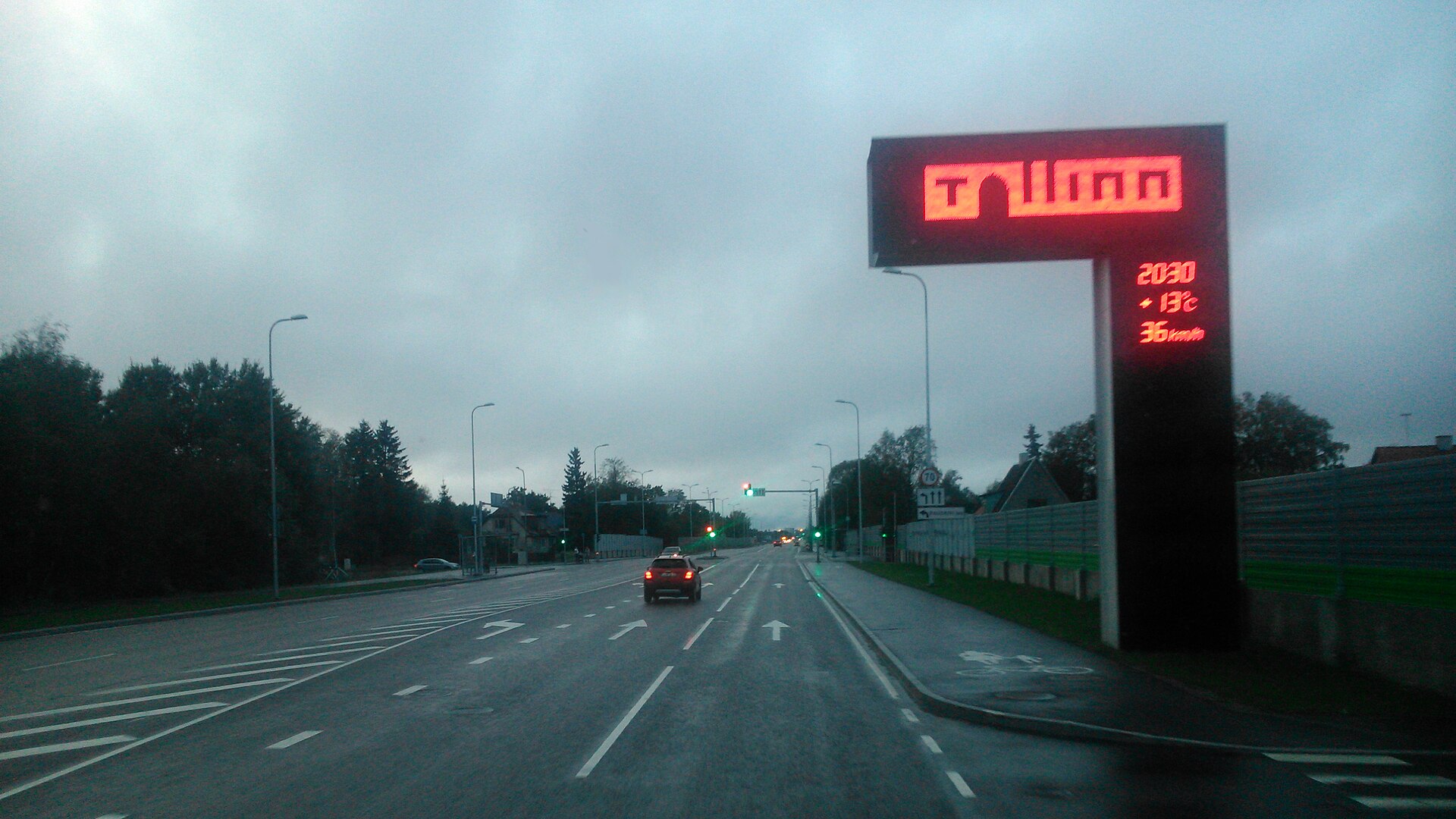
Do not turn the last row into a universal “motorway speed”. Estonia’s higher limits are road- and condition-dependent. On the Tallinn approach, lane changes, bus stops, cycle traffic and urban parking decisions arrive together; on a two-lane road, an apparently clear straight can hide wildlife, an unlit junction or a slower vehicle. Leave a longer following distance than the dry-road estimate, especially when spray or frost hides markings.

Winter tyres and road conditions
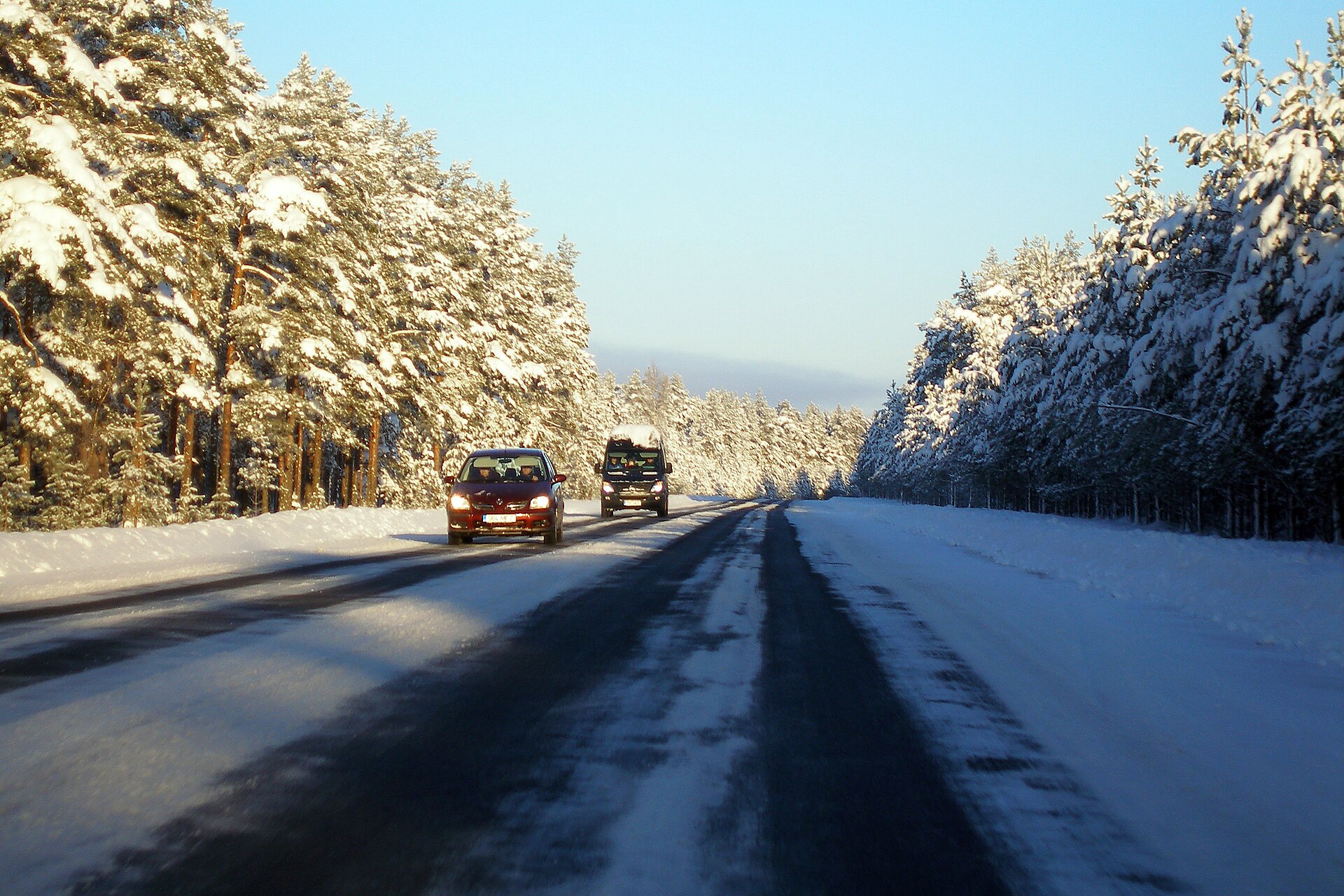
For the applicable M1, N1 and O2 vehicles, the Estonian Transport Administration’s current winter-tyre guidance makes winter tyres mandatory from 1 December to 1 March. A studless winter tyre must carry the three-peak mountain snowflake marking; M+S by itself is not enough under the current requirement. The minimum winter tread is 3 mm. Studded tyres have a normal seasonal window of 15 October to 31 March, with an earlier/later weather exception described by the authority. A rental firm’s installed tyres and the day’s conditions still need checking at handover.
The Transport Administration winter-maintenance page distinguishes national maintenance levels. The main Tallinn–Narva, Tallinn–Tartu–Võru–Luhamaa and Tallinn–Pärnu–Ikla corridors receive the highest level, but a maintained main road can still be icy. The authority uses at least 60 m of braking distance at 90 km/h in the best winter conditions as a warning, not a promise. Local roads in a forest or on a coast may retain packed snow, slush or black ice for longer.
Check TarkTee before a long leg and again after a weather change. Reduce speed before a bend, avoid abrupt steering on ice, expect an unlit cyclist or animal outside towns, and keep the windscreen, lamps and number plate clear. In winter, a short-looking detour to a lookout can be the part of the day with the least reliable surface.

Heavy-vehicle road user charge, not a passenger-car vignette
The Estonian road user charge is a time-based charge for heavy goods vehicles over 3.5 tonnes using the public road network. It is paid before proceeding through the official road-user-charge service. This is not a general vignette for an ordinary M1 passenger car.
The trap is vehicle classification. A large van, camper or commercial vehicle should be checked by its registration and the rental operator’s paperwork; body shape alone does not prove whether the charge applies. A normal small passenger rental, a ferry ticket and municipal parking are separate matters. If the reservation is for a heavy goods vehicle or a special conversion, ask who is responsible for the charge and keep proof of payment in the vehicle.
City parking without guesswork
Tallinn
Tallinn’s official parking page currently describes four public paid zones: City Centre (Kesklinn), Downtown (Südalinn), Old Town (Vanalinn) and Pirita. They do not share one schedule. City Centre has weekday and Saturday paid periods, Downtown and Old Town operate 24/7, and Pirita’s public paid season is 15 May–15 September, 10:00–22:00. Treat those periods as a reviewed snapshot, not a permanent tariff: confirm the zone sign at the space.
The public paid-zone first-15-minute rule requires the start time to be shown with a clock or paper note and does not automatically apply to a private garage or car park. For a foreign visitor, the Tallinn parking-permit and payment guidance points to Pargi.ee and the current operator options. Start the session before walking away and wait for payment confirmation. Do not assume a hotel loading space, resident permit area, Old Town access restriction or private lot follows the public-zone rule.
Tartu
Tartu uses municipal A, B and C zones. The official Tartu parking page lists different rates and paid hours, including a €3/hour example for A, €1.50/hour for B and €0.20/hour for C in the reviewed information; exact signs and tariff updates control. The common weekday paid period is 08:00–19:00, while Zone A also has a Saturday period, and Sundays and public holidays are generally free under the municipal rule.
Tartu’s start-time concessions are zone-specific: the official page describes 15 free minutes in A and C and a longer, up-to-90-minute period in B when the start time is correctly displayed. SMS parking may require an Estonian mobile number; Pargi.ee, Flowbird, Autlo and Snabb are listed alternatives. Private university, hotel and shopping-centre lots can have different terms.
Pärnu
Pärnu is seasonal in a way that matters to a coastal itinerary. The city’s official parking page currently describes a centre area paid Monday–Friday 08:00–18:00 and Saturday 08:00–15:00, with a marked first 60 minutes free, plus a beach area paid every day 08:00–18:00 from 1 May to 31 August, with a marked first 30 minutes free. The reviewed examples are €2/hour and €10/24 hours in the centre, and €3/hour and €15/24 hours at the beach; signs and the municipal page should be rechecked before arrival.
Pargi.ee and Flowbird can be useful for visitors without an Estonian mobile operator; SMS m-parking has a different phone requirement. The same page contains a time-limited EV-parking provision, but do not infer that every foreign-registered rental EV qualifies: check the vehicle and user eligibility on the current municipal terms. Private beach or hotel parking is a separate contract.
Islands, ferries and the coast
Treat the sailing as a booked road segment
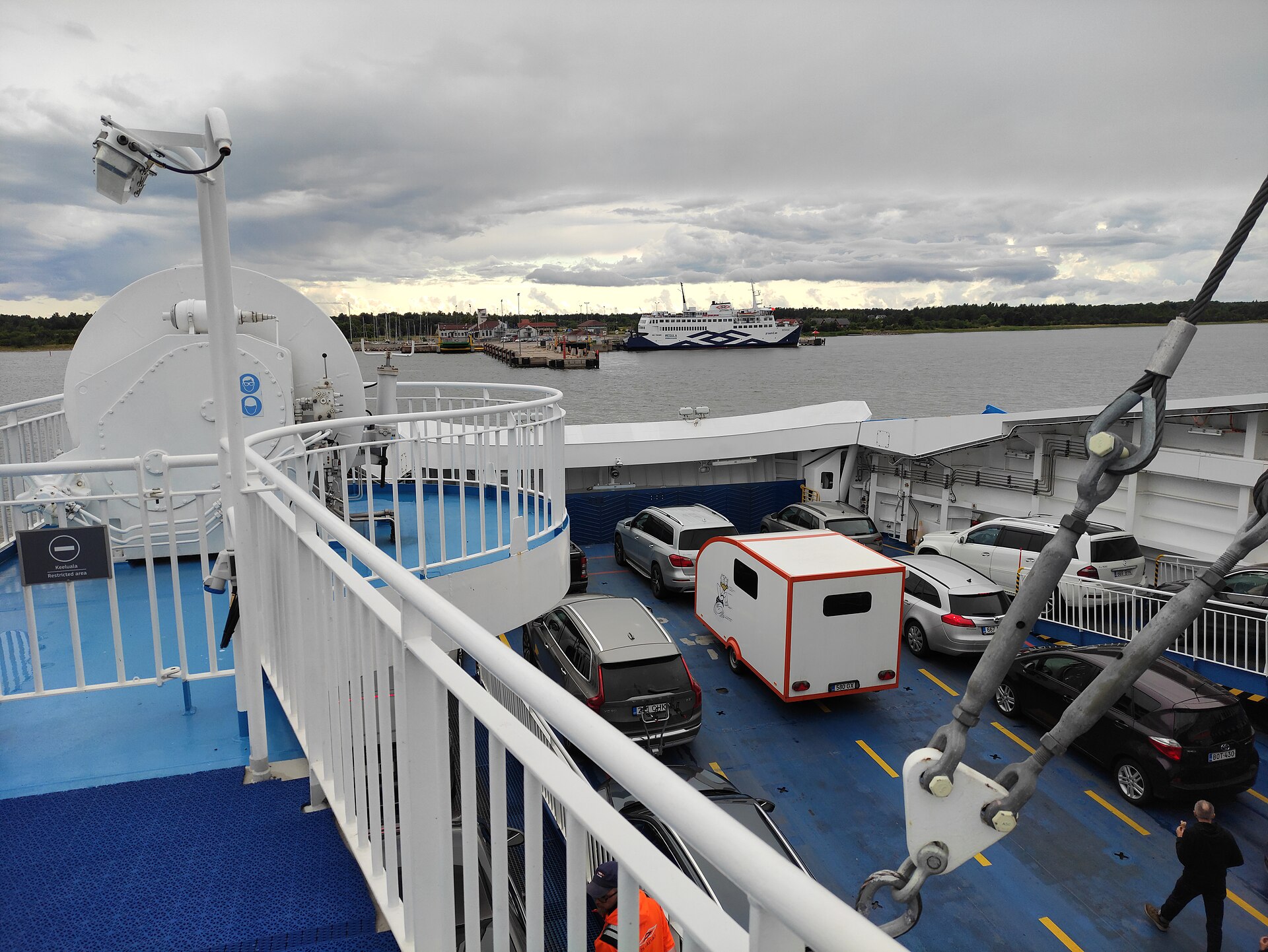
TS Laevad operates the mainland links to the islands: Virtsu–Kuivastu carries traffic via Muhu to Saaremaa, and Rohuküla–Heltermaa serves Hiiumaa. A vehicle e-ticket is tied to the indicated departure and gives priority boarding for that sailing. The vehicle ticket does not automatically include each passenger ticket. Enter the rental plate exactly as shown on the handover document, and read the operator’s change, cancellation and vehicle-size conditions.
Online capacity is deliberately limited, while port tickets join the general queue and do not guarantee the next departure. In peak weekends, summer beach days, storms or ice, a missed sailing can reorder the whole day. Leave room for refuelling, returning a city parking session, finding the correct lane and a late arrival at the port. Check current prices and schedules on the travel day; the crossing time and timetable are operational facts, not map estimates.

Forest roads, national parks and shoreline access
Estonia’s visual promise is often a narrow road through pines, a boardwalk car park or a coastal village. The legal access question comes first. The Environmental Board’s visitor-management guidance says to use public roads and designated parking, follow movement restrictions and respect private land. Its permission guidance for other activities explains why driving outside roads or on off-road tracks is not a casual sightseeing option in protected areas.
For Lahemaa, Matsalu, Soomaa and smaller coastal reserves:
- choose a signed public access road and a marked car park, even when a map shows a shorter track;
- never drive along the beach, dunes, reedbed or shoreline conservation belt;
- do not block a forestry gate, passing place, farm entrance or emergency access;
- expect mud, thaw damage, fallen branches, cyclists, hikers and animals on local roads;
- read the seasonal sign before leaving the main road, and check whether the rental contract excludes gravel or unsealed surfaces.
“Quiet” does not mean low-risk: a moose or deer can appear at the edge of the beam, and a narrow road offers little recovery space. Turn around at a closure instead of using a private driveway or creating a new track.
EV charging and fuel
An EV is workable for Estonia’s main-city and island routes when charging is treated as a reservation of time, rather than distance alone. Before leaving Tallinn, Tartu or Pärnu, use a live operator service such as Elektrum Drive’s charging guidance to check connector type, availability, authentication and current price. Roaming or RFID access may add a fee, and a charger shown in a directory can be occupied or offline.
For a forest or ferry day, start with a generous battery margin, keep a second town or charger as the fallback and reduce the detour when cold weather cuts range. For a petrol or diesel car, do not wait for a capital-city station: refill before the island crossing or a long evening leg, check the fuel-return policy and keep the receipt if the rental company requests it. Do not assume a ferry terminal, nature reserve or small village has an open station or a compatible fast charger.
Three concrete routes
1. Tallinn → Lahemaa → Võsu/Altja → Rakvere
Take the Tallinn–Narva corridor east, then turn toward Lahemaa’s public visitor facilities and coastal villages. This is the best first route for seeing the change from a controlled interurban road to forest lanes, with Palmse, Võsu and Altja as possible stops rather than a promise that every local track is open. Check the winter road picture at TarkTee and the Environmental Board’s current restrictions before choosing a coastal spur.
Return through Rakvere or stay overnight if daylight is short. In winter, do not schedule the final forest section by the summer map time: ice, animals and a parked-car walk can consume the buffer. A full tank and offline destination pin are useful once the route leaves the main road.
2. Tallinn → Tartu → Otepää
Use the Tallinn–Tartu–Võru–Luhamaa route as a clean interurban baseline, then make Tartu the deliberate parking and charging stop before continuing to Otepää. The route is a good test of following distance, overtaking judgement and winter-tyre confidence without forcing the driver into a remote track on day one.
In Tartu, choose the zone and payment method before entering the centre. Around Otepää, treat secondary roads, hills and snow as a separate driving phase. An EV should leave Tartu with a fallback plan; a combustion car should refuel there rather than relying on a late rural stop. In summer, give cyclists and walkers more space near recreation areas.
3. Pärnu → Virtsu → Kuivastu → Muhu → Kuressaare → Sõrve
Begin with Pärnu’s parking season in mind, follow the Pärnu–Ikla and Virtsu road system toward the port, and take the booked Virtsu–Kuivastu sailing. After landing, cross Muhu and continue to Kuressaare, then use public roads toward Sõrve if time, weather and the rental agreement allow. This is a ferry-linked route: the vehicle plate, passenger tickets, queue lane and sailing buffer matter as much as the kilometres.
Do not make a same-day return sailing your only plan after a long coastal loop. Charge or refuel in the larger towns, keep the sea and wind forecast in mind, and use a marked car park at viewpoints. If you want Hiiumaa instead, use the Rohuküla–Heltermaa route as a separate schedule problem; do not combine both islands without checking daylight, ferry capacity and return terms.
Cross-border and border restrictions
Latvia is the natural southbound extension, and Finland is reachable by an international ferry, but neither is automatically covered by a car reserved for Estonia. Request written rental permission for every country, confirm insurance and roadside assistance, and ask whether a ferry boarding, one-way return or a vehicle with special plates changes the contract. Schengen convenience for the traveller does not remove the vehicle operator’s permission requirement.
Russia-facing travel is a different category. The Estonian Tax and Customs Board crossing-point page says all motor vehicles travelling in the Russian direction must reserve an electronic border queue through Eesti Piir or the Estonian border portal. The State Borders Act distinguishes internal Schengen movement from the external border: a Russia-bound crossing must use an open border point during its operating conditions and is subject to checks.
Opening hours, night restrictions, security controls, nationality requirements and foreign-affairs advice can change quickly. Recheck the Police and Border Guard, customs and Estonian Ministry of Foreign Affairs travel advice on the day. A rental contract that says “Europe” is not written permission for Russia, and a driver should never improvise a crossing via a closed road, river, port or forest track.
Emergency and safe recovery
For injury, fire, immediate danger, a crash in a live lane or a road obstruction that puts people at risk, call 112. The official 112 instructions say the call is free and available even without a SIM card or normal network connection. Explain what happened, how many people are affected, the exact road or nearest place, direction of travel and GPS coordinates if available. Answer the questions and let the operator end the call.
If there is no immediate danger, move to a safe place only if the vehicle can do so without crossing traffic, switch on hazard lights and use a reflective vest or warning triangle when it is safe. Call the rental company’s assistance number for a puncture, dead battery or mechanical issue. Use the road-information service 1247 for non-emergency state-road information. If a pothole or carriageway defect caused damage, the Transport Administration’s carriageway-damage guidance advises recording the exact location, time, circumstances, witnesses and photographs after everyone is safe.
Do not stand between the car and moving traffic, do not walk along a motorway shoulder to find help and do not accept an improvised tow without checking the rental and insurer procedure.
Practical departure checklist
- Carry the original driving licence, passport or accepted identity document, payment card and any required IDP or certified translation.
- Confirm that every driver is named and that age, licence category and insurance excess match the contract.
- Get written permission for Latvia, Finland, a ferry, Russia-facing travel or any other border. A verbal “it should be fine” is not enough.
- Photograph the car, tyres, windscreen, underside, fuel/battery level, odometer and existing damage.
- Verify the tyre marking and tread for the season; in winter, check the actual road surface on TarkTee.
- Read the first Tallinn, Tartu or Pärnu parking sign before leaving the car and save the payment confirmation.
- Reserve the TS Laevad departure, enter the vehicle plate exactly and buy every required passenger ticket.
- For an EV, confirm connector, app account, roaming price, state of charge and one fallback charger; for fuel, refill before a long island or forest leg.
- Download an offline map pin for the accommodation, ferry port and emergency meeting point; note the route number and travel direction.
- Keep 112, 1247, the rental assistance line and the insurer’s claim route accessible without searching while stopped in traffic.
- In protected areas, use public roads and marked car parks only; turn around at a gate, closure or flooded section.
- Leave a time buffer for animals, winter darkness, city parking, ferry queues and a missed sailing.
Official sources and review boundary
Reviewed 18 August 2026. These are the primary sources used for the rule-sensitive parts of this page. Each applies within its own scope; local signs, current notices, rental contracts and the official departure-day page remain exceptions.
- Riigi Teataja: Road Traffic Act, current consolidated text: road side, speed framework and traffic duties; signs and temporary measures still control.
- Estonian Transport Administration: Foreign driving licence: recognition conditions, temporary stay and translation/IDP exceptions.
- Estonian Transport Administration: International Driving Permit: IDP format and the requirement to carry the national licence with it.
- Estonian Transport Administration: Winter-tyre requirements and winter-tyre season notice: dates, 3PMSF, tread and studded-tyre exception.
- Transport Administration: Winter road maintenance and TarkTee: maintenance context and live road conditions.
- Transport Administration: Road user charge and Teetasu payment service: heavy goods vehicles over 3.5 tonnes; not a passenger-car vignette.
- Tallinn: Parking and parking permits and concessions: public zones, payment and first-minutes conditions.
- Tartu: Parking: A/B/C zones, hours, apps and municipal exceptions.
- Pärnu: Parking: centre/beach seasons, free-minute rules and current municipal terms.
- TS Laevad: Island ferries, boarding and prices and discounts: vehicle/passenger tickets, sailings and capacity.
- Environmental Board: Visitor management in protected areas: public-road, parking, private-land and restriction principles.
- Emergency number 112 and road-damage guidance: emergency response and evidence after road damage.
- Estonian Tax and Customs Board: Authorities and crossing points, Eesti Piir and State Borders Act: external-border points and vehicle queue reservation.
Related tools and guides
Use the site’s IDP checker, rental-car handover checklist, toll and vignette planner, parking planner, route weather and closure planner, EV road-trip planner, cross-border driving checklist and roadside incident recovery planner before departure.
For comparison, see the adjacent Latvia destination page, Lithuania destination page, Finland destination page, the Finland winter-driving guide and the general car-rental insurance guide. These pages are related references, not substitutes for Estonia’s official sources above.
Frequently Asked Questions
- Can I drive in Estonia with a foreign driving licence?
- Usually yes for a temporary visitor, provided the licence is valid for the vehicle and its entries can be read in Latin characters and show the required categories and restrictions. If the licence does not meet the recognition conditions, carry an IDP or an officially certified translation as described by the Estonian Transport Administration.
- Is an International Driving Permit required for every visitor?
- No blanket rule makes an IDP necessary for every tourist. It is a supplement to the national licence, not a replacement; it becomes important when the licence is not readable or does not contain the required categories and information. Check the issuing-country and residency branch before collecting the car.
- What should I confirm at the rental desk?
- Bring the physical licence, passport or identity document and payment card, then confirm the driver age, insurance excess, tyre type, fuel and charging policy, damage-report procedure, ferry use and written permission for every foreign country you may enter. Photograph wheels, windscreen, lights, bumpers, underside and the fuel or battery level.
- Does a normal passenger car need an Estonian vignette?
- Estonia does not use a general passenger-car vignette for an ordinary M1 rental car. The time-based road user charge applies to heavy goods vehicles over 3.5 tonnes using public roads; vehicle classification, not the fact that it is a van or camper, decides the branch. Confirm any commercial or heavy vehicle with the operator before driving.
- Which side of the road does Estonia use?
- Traffic keeps to the right. At an unfamiliar junction, give priority according to signs and markings rather than assuming the larger road has priority, and expect pedestrians, cyclists and wildlife on quieter roads.
- What speed should I use in Estonia?
- The Road Traffic Act baseline is 50 km/h in built-up areas and 90 km/h outside them; calm traffic areas are 20 km/h. Selected rural roads can be signed up to 120 km/h. Temporary signs, work zones, visibility, ice and the road surface always take priority over a planning estimate.
- When are winter tyres required in Estonia?
- For the relevant M1, N1 and O2 vehicles, winter tyres are mandatory from 1 December to 1 March. Studless winter tyres need the three-peak mountain snowflake marking; M+S alone is not enough under the current requirement. The minimum winter tread is 3 mm. Studded tyres have their own seasonal window and weather exception, so check the current Transport Administration wording.
- Where can I check snow, ice and road closures?
- Use the Transport Administration's winter maintenance guidance and the live TarkTee road-information service before leaving a city. A main road may be maintained to a higher level than a local road, but neither label guarantees grip; postpone a forest or coastal detour when visibility and braking distance are poor.
- How does parking work in Tallinn?
- Tallinn has public paid City Centre, Downtown, Old Town and Pirita zones. Their paid hours are not identical: City Centre has weekday and Saturday hours, Downtown and Old Town operate around the clock, and Pirita is seasonal. The public-zone first-15-minute rule requires the start time to be displayed and does not apply automatically to private car parks. Read the street sign, start the session in Pargi.ee or the approved provider, and wait for confirmation.
- Can I use the same parking assumption in Tartu and Parnu?
- No. Tartu uses A, B and C zones with different rates and hours, while Pärnu separates a city-centre area from a seasonal beach area. Apps and the first-free-minutes rules differ, and an Estonian mobile number may be needed for SMS parking. Use the municipality page and the sign at the exact space rather than a remembered tariff.
- How do I take a rental car to Saaremaa or Hiiumaa?
- Book the TS Laevad vehicle ferry for the correct departure and enter the vehicle registration exactly as supplied by the rental company. A vehicle ticket does not automatically include every passenger ticket. An online ticket gives priority for its indicated sailing, while an unbooked car joins the port queue and may not fit on the next departure.
- May I drive on a beach, forest track or protected-area trail?
- No. A road visible on a map is not permission to use a private track, shoreline or protected-area trail. Use public roads and marked car parks, obey seasonal and area-specific restrictions, and never bypass a gate. Off-road driving in protected areas generally needs a justified permission; a rental contract may also prohibit unsealed roads.
- Is Estonia practical for an electric rental car?
- Yes for a planned route, but do not treat a map pin as a guaranteed charger. Check the live operator app for connector type, status, payment and roaming price, and keep a town-based backup. Cold weather, heating, ferry queues and forest detours reduce range; agree in writing how the battery must be returned.
- Can I take an Estonian rental car into Latvia, Finland or Russia?
- Latvia and Finland may be feasible, but the rental company must authorise each country and confirm insurance, roadside assistance and ferry or border terms. Russia is a separate high-risk external-border decision: check current Estonian border, foreign-affairs and operator guidance, and never assume a Schengen rental contract covers it.
- What is the rule at Estonia's Russia-facing border crossings?
- External crossings are limited to open crossing points and their operating conditions. Estonia's customs authority says motor vehicles travelling in the Russian direction must use the electronic border-queue reservation system. Check the current Estonian border portal and Police and Border Guard information on the day; opening hours and controls can change.
- What should I do after a crash, puncture or road hazard?
- Move beyond the live lane only if it is safe, switch on hazard lights, keep passengers away from traffic and call 112 for injury, immediate danger, fire or a blocked hazardous road. Give the route, direction, nearest place and coordinates, answer the operator's questions and do not hang up first. Use 1247 for non-emergency state-road information and call the rental company's assistance line.
- Which three routes make a good first Estonia road trip?
- Choose Tallinn–Lahemaa–Rakvere for forest and coast, Tallinn–Tartu–Otepää for a strong interurban-road baseline, or Pärnu–Virtsu–Kuivastu–Muhu–Kuressaare–Sõrve for a ferry-linked island circuit. Each needs a different buffer: wildlife and winter on the first, city parking and secondary roads on the second, and the booked sailing on the third.
Information Sources & Disclaimer
This guide compiles information from the official transport authorities, road operators, government travel information, and automobile associations linked for Estonia.
While we strive to keep this information as accurate and up-to-date as possible (last reviewed: August 2026), traffic laws and toll rates can change without notice. We recommend verifying critical information with the local authorities or your car rental agency upon arrival.
Learn more about our Editorial Process →Compare Your Origin and Destination
Use the comparison tool to check driving side, units, documents, and other destination data for your route.