Overview: a short map with several different driving decisions
Latvia is compact enough to cross in a day, yet a useful self-drive plan changes character several times. Riga is a zone-and-sign parking problem, Jūrmala adds a marked entry regime, the Gauja region mixes main roads with local forest approaches, and the Baltic coast can change the value of a route when wind, rain or visibility deteriorate. The Latvian State Roads road-information hub links current road conditions, works, traffic restrictions, weight limits and the national-road map; check it close to departure.
Latvia drives on the right. Treat the rental counter, the first city parking bay, the last fuel or charging stop and any international border as separate checkpoints. The International Driving Permit Checker, Rental Car Handover Checklist and Route Weather & Closure Planner cover the document and route checks that are easiest to miss when an itinerary looks short.
Foreign licences, IDP and the rental counter
The CSDD guidance for licences issued outside the EU says Latvia recognises licences issued in EFTA states and licences granted for categories covered by the 1968 Convention. If the licence does not specify categories but allows car driving in the issuing country, CSDD describes recognition for category B; if the entries are not in the Latin alphabet, it requires a notarised Latvian translation. The CSDD general licence information gives the Latvian category baseline, including B from age 18.
That is not a universal promise for a short-term rental. The page’s idpRequired: false value means there is no blanket national IDP rule for every issuing country. An IDP is a translation companion and never replaces the national licence. Ask CSDD or the rental branch whether your issuing country, script and licence format require an IDP or certified translation; keep the original physical licence with it.
Bring the original licence, passport or identity document, booking details and payment card in the main driver’s name. Confirm the minimum rental age, licence-tenure rule, additional-driver registration, deposit, insurance excess, vehicle registration class, fuel or charge policy and roadside-assistance number. Photograph the plate, registration paper, existing damage, tyres, fuel or battery level and warning lights before leaving the desk.
Cross-border use is contractual. Your Europe car-rental guidance advises telling the rental company in advance when a hired car will be driven in several countries so it can arrange the right documents, insurance and breakdown cover. Ask for the permitted countries, insurance territory, border fee, recovery cover and return procedure in writing; a booking confirmation or a verbal answer at the counter is not enough.
Right-side traffic, road classes and sign priority
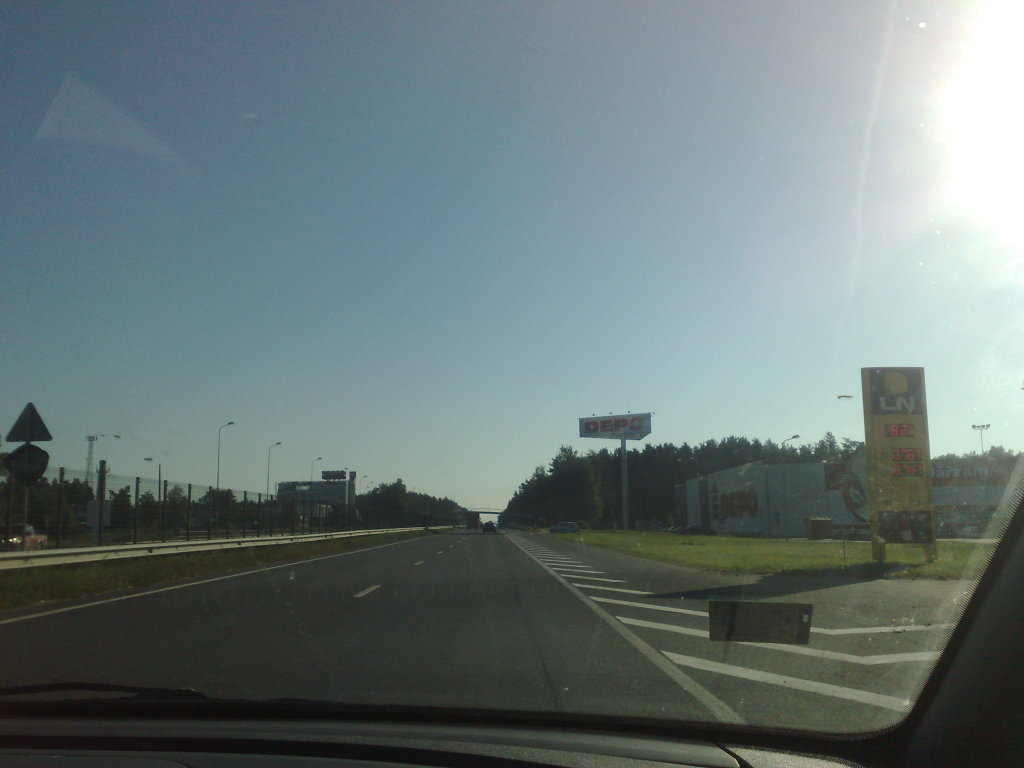
Latvia’s consolidated Road Traffic Regulations set the general speed framework. In a built-up area the baseline is 50 km/h. A residential zone, apartment courtyard, petrol station or parking area has a 20 km/h baseline unless a sign sets another limit. Outside built-up areas the baseline is 90 km/h, while gravel or broken-stone roads use 80 km/h. The road sign, temporary order, surface and weather can always require a lower speed.
The same regulations set a higher ceiling where sign 552 applies. For the relevant passenger-car category, plan around 120 km/h in the general period and 110 km/h from 1 December to 1 March. Do not turn that into a blanket motorway promise: read the sign, the vehicle category and any temporary restriction. The Latvian State Roads classification distinguishes main, regional and local roads; a local road can be legally open yet much slower, narrower or more weather-sensitive than the main-road leg that reaches it.
| Road setting | Planning baseline | What overrides it |
|---|---|---|
| Built-up area | 50 km/h | Posted sign, school or residential sign, works, traffic and visibility |
| Residential zone, courtyard, petrol station or parking area | 20 km/h | Posted sign and the actual access arrangement |
| Outside built-up area | 90 km/h; 80 km/h on gravel or broken stone | Road surface, signs, works, vehicle status and weather |
| Road marked with sign 552 | Up to 120 km/h for the applicable passenger-car category; 110 km/h from 1 December to 1 March | Sign, road condition, temporary restriction and vehicle category |

Seasons, road conditions and winter tyres
For passenger vehicles up to 3.5 tonnes, CSDD requires winter tyres from 1 December through 1 March. The tyres must be designed for snow and ice, carry the mountain-and-snowflake marking and have at least 4 mm tread; CSDD’s winter-tyre notice says M+S alone does not satisfy the winter-period marking requirement. Check the actual sidewall and tread at the rental handover rather than accepting “winter package” as a description.
The calendar is only the legal floor. LVC’s road hub separates road conditions, works, restrictions and maps, while Latvia’s open transport data includes live or continuously updated indicators such as snow, sand and poor road surface in its road-condition dataset. State-road maintenance and municipal-road maintenance are different responsibilities; the Ministry of Transport’s winter-maintenance FAQ explains that roads are assigned maintenance classes according to traffic and local importance. A gravel approach or municipal lane may not be cleared on the same timetable as an A-road.
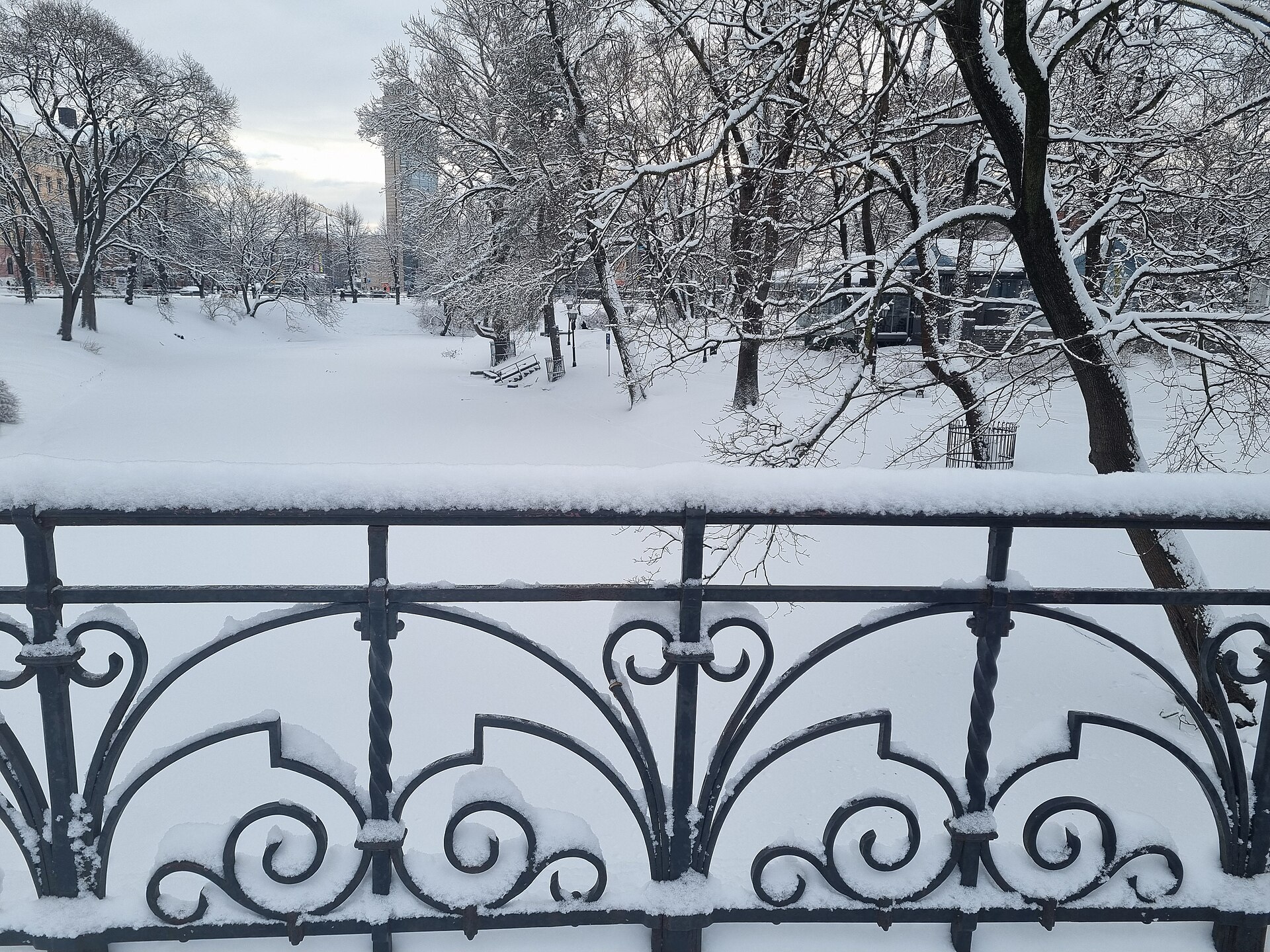
In winter and shoulder seasons, plan for black ice, wet snow, fog, crosswinds on the coast, short daylight and a longer stopping margin. Use LVC’s 24-hour road-information number, +371 80005555, when the online road picture is unclear. The snowy Riga image below is an illustration, not a forecast; the current route and endpoint weather remain unknown until checked.
.jpg)
Road-user charge and the e-vignette boundary
Latvia does not use a simple “every rental car needs a vignette” rule. CSDD’s vehicle-operation tax guidance and the Latvian State Roads vignette control page describe a road-user charge on specified national main and regional road sections, excluding junction crossings and use in populated areas, for goods vehicles over 3,000 kg and goods vehicles or combinations over 3,500 kg.
An ordinary M1 passenger rental car is outside the cargo scope described by those pages. That conclusion cannot be transferred to a van, camper, minibus, commercial registration, trailer combination or a vehicle whose category is unclear. Read the registration document, ask the rental company for the category in writing and use the current official charge information. A body-style label such as “SUV” or “large car” does not answer the legal category question.
If the vehicle is in a charged category, do not assume the rental company has paid for it. Confirm the plate, country, category, validity and receipt before using a charged section. The Toll and Vignette Planner can hold that evidence; it cannot replace the official current check.
Riga, Jūrmala and other-city parking
Riga: the sign beside the bay wins
Riga’s Rīgas satiksme parking service lists paid parking areas, car parks and payment methods. Its new payment and control system notice says the newer system can accept payment at machines across zones, while the 2025 app update lists the Rīgas satiksme app, bank-card options and continued Mobilly and EuroPark channels. Use the sign at the exact space for the zone, operating hours, payment method and receipt. Tariffs and app behaviour are time-sensitive, so this page does not copy a permanent price table.
Jūrmala: entry control is separate from parking
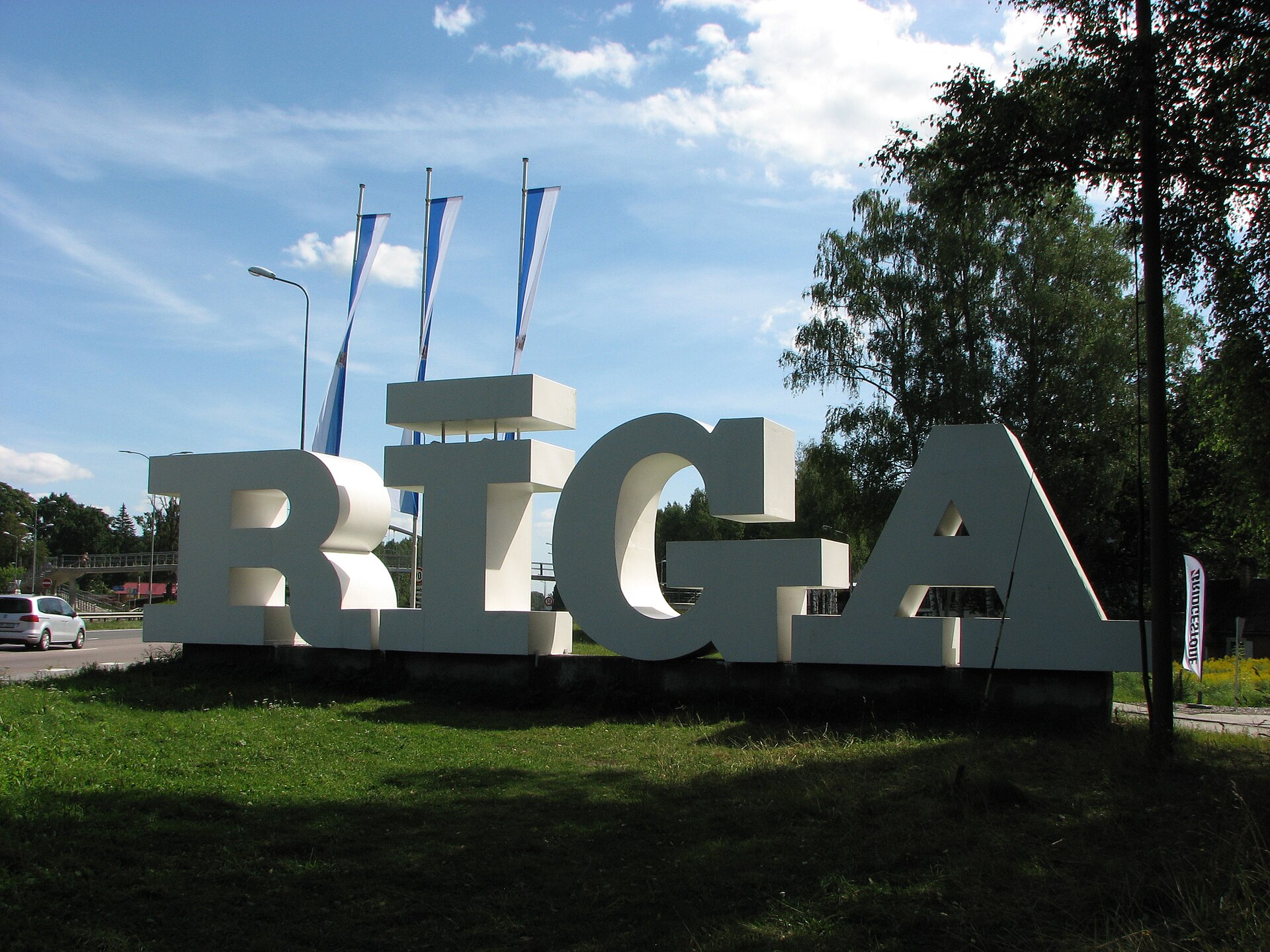
The current Jūrmala entry-pass page says that from 1 January 2026 a vehicle entering the marked Paid zone / Maksas zona special regime needs a €5 day pass, purchasable by 23:59 on the entry day. The page also lists 7-day, 30-day, 90-day, 180-day and 365-day passes. Electric vehicles and registered disability-adapted vehicles are exempt under the current notice, but a rental EV’s registration status must be confirmed. Entry payment does not pay for a parking bay; check both signs.
.jpg)
Other cities: read local practice
Municipal parking is not standardised across Latvia. The official Cēsis parking guidance says there are no paid parking zones in Cēsis, but many locations have time limits and require a parking disc. Liepāja’s municipal page lists paid lots and payment by machines, Mobilly and EuroPark. Those are useful examples, not a national rule. Choose the exact space after reading its sign, especially in a centre, seaside area or event street. The Parking Cost & Restriction Planner is useful for recording a city-specific choice.
Fuel, EV charging and vehicle choice
Fuel prices, opening hours and station availability change, so plan a reserve around a town rather than a copied price. At handover, confirm the fuel type, fuel-card restriction, return level and roadside-assistance procedure. For an EV, check the connector and charging curve against the rented model, then confirm access hours, payment or roaming, live availability and a backup charger.
Latvia Travel’s EV guide points drivers to the CSDD e-mobi and Latvenergo Elektrum networks. The official transport-data portal also publishes public charging-point data, described as continuously updated data from operators. It is a planning source, not a promise that a connector will be free, working or reachable after a muddy forest detour. Keep a town-based energy reserve and a fuel or charger fallback where the route is remote.
Coast, forest roads and mud
Latvia’s protected-area rules matter at the point where a road turns into a track. The Nature Conservation Agency protected-areas overview describes national parks and other protected categories, and its notice on damage from off-road driving states that motor vehicles must stay on roads and trails in specially protected territories and the coastal dune protection belt. Do not drive along a beach, dune, wet meadow or marked trail because a map application draws a line there.
Latvian State Forests describes forest roads as management infrastructure in its forest-road information. A forest road can connect to municipal roads or natural driveways without becoming a public tourist road. Gates, forestry traffic, thaw, standing water and a rental contract’s unsealed-road exclusion can all end a route. If the surface, access owner or seasonal status is unclear, mark it verify and turn back before the muddy section.
Coastal wind and rain can make a road legal but impractical. Use the road authority’s current status, local signs and the rental company’s permitted surface before choosing a beach or forest stop. A four-wheel-drive badge does not create access rights, and a vehicle that can physically cross mud may be the wrong vehicle for the contract or the recovery plan.
Three concrete Latvia routes
1. Riga–Sigulda–Līgatne–Cēsis–Valmiera
This is the Gauja-region route: start on the Riga–Sigulda corridor, then use the towns and marked access roads around Līgatne, Cēsis and Valmiera. The official Gauja National Park route information gives staged distances between stops, while the culture route from Riga through Sigulda and Cēsis describes a 170 km, two-to-three-day pattern. Park in a marked town or visitor car park, and treat a forest trail as a walking destination unless its access is explicitly open to your vehicle.
2. Riga–Jūrmala–Tukums–Kuldīga–Liepāja
The official Kurzeme road-trip guide provides a western-Latvia pattern through Jūrmala, Tukums, Kuldīga and Liepāja. Before departure, resolve the Jūrmala paid-zone pass, Riga or Jūrmala parking, the fuel or charging reserve and the coastal weather. Use the main road for the transfer, then inspect local signs before taking a beach, dune or forest approach. The guide is route inspiration; current works, surface condition and access remain a live check.
3. Riga–Rēzekne–Ludza–Kārsava
The Northern Latgale winter itinerary describes a two-to-four-day eastward pattern from Riga through Vidzeme and Latgale toward Kārsava. This route is useful for testing winter visibility, town-based charging or fuel stops and the difference between a main road and a local approach. If you continue toward Terehova, Grebņeva or Pāternieki, or plan to enter Russia or Belarus, stop the domestic itinerary and start the separate border and rental-permission check below.
For any of these routes, open LVC’s current road map, check endpoint weather and save a town-based fallback. Exact travel time, road condition and parking availability are unknown until the travel date.
Eastern border, Russian-language context and cross-border permission
Latvia’s border with Russia and Belarus is an external EU border, not the same decision as a trip from Latvia into Estonia or Lithuania. The State Border Guard border-crossing page explains that border control of persons and vehicles is carried out at the EU’s external borders with Russia and Belarus, as well as at airports and harbours. The Foreign Ministry entry page and its current Russia FAQ show why traveller status, vehicle registration and current restrictions need a date-specific check.
Russian-language assistance at a counter or near the border does not itself grant a right to cross. For Estonia, Lithuania or another permitted EU country, ask the rental company for written permission, insurance territory, vehicle papers, border fees and recovery cover. For Russia or Belarus, also check the State Border Guard, Foreign Ministry and the named checkpoint on the travel day. A route line, a language ability or an apparently open road is not permission; the current border and rental status are deliberately verify items.
Use the Cross-Border Driving Checklist and Border Crossing Permission Planner to record each country, plate, document and approval. If the provider will not issue written permission, keep the route within Latvia even if a map suggests a shorter extension.
Crashes, breakdowns and emergency response
The Latvian Emergency Response Centre says 112 is the free single emergency number for danger to life, health, safety, the environment or property, and connects police, medical, fire and rescue services. The 112 calling guidance asks for the exact address or landmark, what happened and the caller’s details when requested; do not hang up first. For urgent medical assistance, the Emergency Medical Service also lists 113 or 112.
After a crash or breakdown:
- Turn on hazard lights and stop where people are safest. Leave the vehicle only when doing so does not place anyone in traffic.
- Call 112 for injury, fire, immediate danger, a dangerous obstruction, suspected crime or any uncertain safety situation. Give the road number, direction, nearest settlement or landmark, kilometre marker and GPS position if available.
- Put on the reflective vest before entering the carriageway and use the warning triangle only from a safe position.
- Call the rental company’s roadside-assistance number and insurer after the emergency call. A private recovery number is not a replacement for 112.
- Photograph the scene, signs and damage only from a safe place, and keep the police or emergency reference. Do not sign a document you cannot understand.
Departure checklist
- Physical driving licence, passport or identity document, and an IDP or certified translation if CSDD or the rental branch requires it.
- Rental agreement, additional-driver record, vehicle registration, insurance proof, payment card and roadside-assistance number.
- Written permission and insurance territory for every cross-border country, including the exact plate and any ferry or one-way segment.
- Vehicle-category check: M1 passenger car versus goods, camper, commercial or combination registration before deciding whether a road-user charge applies.
- Current LVC/CSDD charged-road information and an offline copy of any required e-vignette evidence.
- Riga zone and payment method, Jūrmala entry-pass decision, and local parking signs for each other city.
- Winter tyres from 1 December to 1 March, mountain-and-snowflake marking, at least 4 mm tread, daytime lights and reachable safety equipment.
- Fuel or charging stop, connector and payment check, reserve and a second town-based option.
- LVC road status, endpoint weather, visibility, daylight turn-back time and an offline map.
- 112 saved, with road number, direction, nearest landmark and vehicle details ready for the operator.
Official sources and review date
This page was reviewed on 18 August 2026. Licence recognition uses CSDD’s non-EU licence guidance, CSDD general licence information and Your Europe car-rental guidance. Road-speed and classification claims use the Latvian Road Traffic Regulations and Latvian State Roads classification. Winter claims use the CSDD winter-tyre notice.
Road-charge claims use CSDD vehicle-operation taxes and LVC vignette control. Parking claims use Rīgas satiksme, Jūrmala entry passes, Cēsis parking and Liepāja parking lots. EV claims use Latvia Travel’s EV guide and the official charging-point dataset. Protected-area and forest-road boundaries use the Nature Conservation Agency, its off-road notice and Latvian State Forests.
Route context uses the official Gauja National Park route, Sigulda–Cēsis culture route, Kurzeme road trip and Northern Latgale itinerary. Border and emergency guidance uses the State Border Guard, Foreign Ministry, Emergency Response Centre, 112 calling guidance and Emergency Medical Service. Current tariffs, road works, weather, charging availability, entry conditions, border status and rental terms must be reopened on the actual departure date.
Related tools and destinations
- International Driving Permit Checker
- Rental Car Handover Checklist
- Route Weather & Closure Planner
- Toll and Vignette Planner
- Parking Cost & Restriction Planner
- EV Road Trip Planner
- Cross-Border Driving Checklist
- Border Crossing Permission Planner
- Emergency Numbers tool
- Driving in Lithuania
- Driving in Estonia
- Driving in Poland
Frequently Asked Questions
- Can I drive in Latvia with a foreign driving licence?
- Often, but the answer depends on the issuing country, licence format, category and your status in Latvia. CSDD recognises licences covered by the applicable European or 1968 Convention rules; a licence whose entries are not in the Latin alphabet may need a notarised Latvian translation. Carry the original licence and passport, and ask the rental branch to confirm acceptance before pickup.
- Do I need an International Driving Permit in Latvia?
- There is no blanket IDP requirement for every foreign driver. Latvia's recognition rules and the rental company's policy are separate checks. Keep the national licence with any IDP, and arrange an IDP or certified translation if CSDD, your issuing-country guidance or the branch says it is needed.
- What should I bring to a Latvian rental counter?
- Bring the physical driving licence, passport or identity document, booking, payment card and any IDP or certified translation requested in writing. Confirm licence tenure, driver age, additional-driver registration, vehicle category, excess, fuel or charge policy, roadside assistance and cross-border permission before leaving the desk.
- Does an ordinary rental car need a Latvian e-vignette?
- CSDD describes the road-user charge for goods vehicles over 3,000 kg and goods vehicles or combinations over 3,500 kg on specified national roads. An ordinary M1 passenger car is not in that described cargo scope, but a van, camper, commercial vehicle or combination must be checked from its registration category.
- Which side of the road does Latvia use and how fast may I drive?
- Latvia drives on the right. Plan around 50 km/h in built-up areas, 20 km/h in residential zones and parking areas, 90 km/h outside built-up areas, and 80 km/h on gravel or broken-stone roads. Where sign 552 applies, the passenger-car ceiling can be 120 km/h, reduced to 110 km/h from 1 December to 1 March; signs, works and weather still control.
- Are winter tyres mandatory in Latvia?
- For passenger vehicles up to 3.5 tonnes, winter tyres are required from 1 December through 1 March. CSDD says the tyres must carry the mountain and snowflake marking and have at least 4 mm tread; M+S alone does not satisfy the winter-period marking rule. Check the rental tyres at handover.
- How do I park in Riga?
- Riga uses paid parking areas, machines and operator or partner payment channels. Read the sign at the exact bay and confirm the current zone, hours, payment method and receipt before walking away. Rīgas satiksme, Mobilly and other listed channels can change, so an old tariff screenshot is not enough.
- Do I need a Jūrmala entry pass?
- From 1 January 2026, entering Jūrmala's marked paid-zone special regime requires a €5 day pass, payable by 23:59 on the entry day; longer passes are also listed. Electric and registered disability-adapted vehicles are exempt under the current notice, but confirm the vehicle's status and the exact zone. This entry pass is separate from parking.
- What is parking like in other Latvian cities?
- Municipal rules differ. Cēsis tourism guidance says there are no paid parking zones but many places have time limits and require a parking disc, while Liepāja lists municipal paid lots and several payment methods. Read the local sign at the specific space rather than carrying a Riga assumption into another city.
- Can I drive on Latvian forest, coastal or muddy roads?
- Only when the road is legally open, the rental contract permits its surface and the current condition is safe. Forest roads can be management roads or private routes, and protected areas and the coastal dune belt prohibit off-road driving by mechanised vehicles. A muddy track shown on a map is not proof of public access.
- Can I take a Latvian rental car to Russia or Belarus?
- Never assume that a map, Russian-language service or an EU route grants permission. Russia and Belarus are Latvia's external EU borders with formal vehicle and person controls, and current entry rules can change. Obtain written permission from the rental company and check the State Border Guard and Foreign Ministry notices on the travel day; an Estonia or Lithuania extension is a separate contract question.
- How should I plan fuel or EV charging in Latvia?
- Use live operator information and keep a town-based reserve. Latvia Travel points drivers to the CSDD e-mobi and Latvenergo Elektrum networks, but connector, payment, access hours and availability must be checked for the rented car and travel date. Fuel prices and station availability are dynamic, so do not build a route around a copied price.
- What should I do after a crash or breakdown in Latvia?
- Call 112 for immediate danger, injury, a dangerous obstruction, fire or an unclear safety situation; 113 is also used for urgent medical assistance. Give the road number, direction, nearest settlement or landmark and GPS position, answer the operator and stay reachable. Then call the rental company's roadside-assistance number.
- Which Latvia routes are suitable for a first self-drive trip?
- Three useful patterns are Riga–Sigulda–Līgatne–Cēsis–Valmiera through the Gauja region, Riga–Jūrmala–Tukums–Kuldīga–Liepāja through western Latvia, and Riga–Rēzekne–Ludza–Kārsava in Latgale. Each needs its own parking, weather and road-condition check; any extension toward an eastern border crossing needs a separate permission plan.
Information Sources & Disclaimer
This guide compiles information from the official transport authorities, road operators, government travel information, and automobile associations linked for Latvia.
While we strive to keep this information as accurate and up-to-date as possible (last reviewed: August 2026), traffic laws and toll rates can change without notice. We recommend verifying critical information with the local authorities or your car rental agency upon arrival.
Learn more about our Editorial Process →Compare Your Origin and Destination
Use the comparison tool to check driving side, units, documents, and other destination data for your route.