Overview: a small country with several different driving decisions
Lithuania is easy to cross on a map, but a useful self-drive plan changes character several times. The A1 Vilnius–Kaunas–Klaipėda corridor is a high-speed transfer; Vilnius Old Town and Kaunas require a parking decision before the centre; and the Klaipėda–Neringa leg adds a vehicle ferry, a local entry fee and a narrow, weather-exposed peninsula. The state road company Via Lietuva links current road information through Eismoinfo and its road-service pages, so check that information on the day rather than trusting a saved arrival time.
Lithuania drives on the right. Treat the first destination parking bay, the final ferry queue and any international border as separate checkpoints. The planned Border Crossing & Permission Planner is intended for the document and approval layer; use the existing Cross-Border Driving Checklist and Route Weather & Closure Planner for the route-specific checks that are available today.
Foreign licences, IDP and the rental counter
Regitra’s driving-licence service is the Lithuanian authority reference for licence services and links to its information on international driving permits. Your Europe’s Lithuania road-rules page is a useful country-level cross-check, but it is not a substitute for a decision about a licence issued outside the EU or EEA.
Bring the original physical licence, passport or identity document and the booking details. If the issuing country, licence script or document format is not obvious to the branch, arrange the appropriate IDP or certified translation before pickup. Keep the national licence with the IDP: the permit translates or complements the licence and does not grant a new driving entitlement.
The legal driving-age field on this page is a broad road-use baseline, not a promise about the desk. A rental company can set a higher age, licence-tenure, deposit or vehicle-category requirement. Ask for the answer in writing, register every additional driver, and photograph the vehicle’s plate, registration, existing damage, fuel or battery level and warning lights before leaving.
Cross-border use is contractual. Your Europe’s car-rental guidance says to tell the rental company in advance when a hired car will be driven in several countries so it can provide the appropriate documents, insurance and breakdown cover. That is especially important for a Lithuania itinerary that approaches Latvia, Poland, Belarus or the Russian Federation. A booking confirmation is not written permission; request the permitted countries, insurance territory, border fee, recovery cover and return procedure in the contract.
Right-side traffic, road classes and sign priority
Lithuania’s official Police speeding guidance says that a driver must choose a speed that allows a safe stop for the road, vehicle, traffic and weather, and that poor visibility requires slowing or stopping. It also gives the general urban limit and the seasonal motorway and highway figures. The Your Europe country table adds the vehicle and new-driver exceptions.
| Road setting | Passenger-car baseline to plan around | What can override the baseline |
|---|---|---|
| Built-up area | 50 km/h | A posted limit, school or residential sign, temporary traffic order, visibility and traffic |
| Outside built-up areas | 90 km/h on asphalt or concrete; 70 km/h on other roads | Signs, the road surface, vehicle or trailer class, new-driver status, works and weather |
| Motorway | 130 km/h from April to October; 110 km/h from November to March for the listed category | Signs, works, congestion, weather, new-driver status, trailer and vehicle category |
| Highway / expressway category | 120 km/h from April to October; 110 km/h from November to March for the listed category | The exact sign, road class, vehicle category and temporary restriction |
The table is a planning aid, not permission to ignore a sign. On an A-road or motorway approach, read the sign at the lane and the next junction; a navigation app may lag behind a work zone, variable sign or local restriction. Residential areas and parking lots have a 20 km/h general limit on the country page, which is a useful reminder not to carry the open-road rhythm into an apartment courtyard or hotel car park.
Lithuania requires daytime running lights even in daylight. The country guidance also lists a fire extinguisher, warning triangle, first-aid kit and reflective vest or reflector as car safety equipment. Confirm that the rental vehicle has them and that the vest is reachable without unloading luggage. Phone use should be hands-free, and seat belts and child restraints are mandatory under the published country rules.
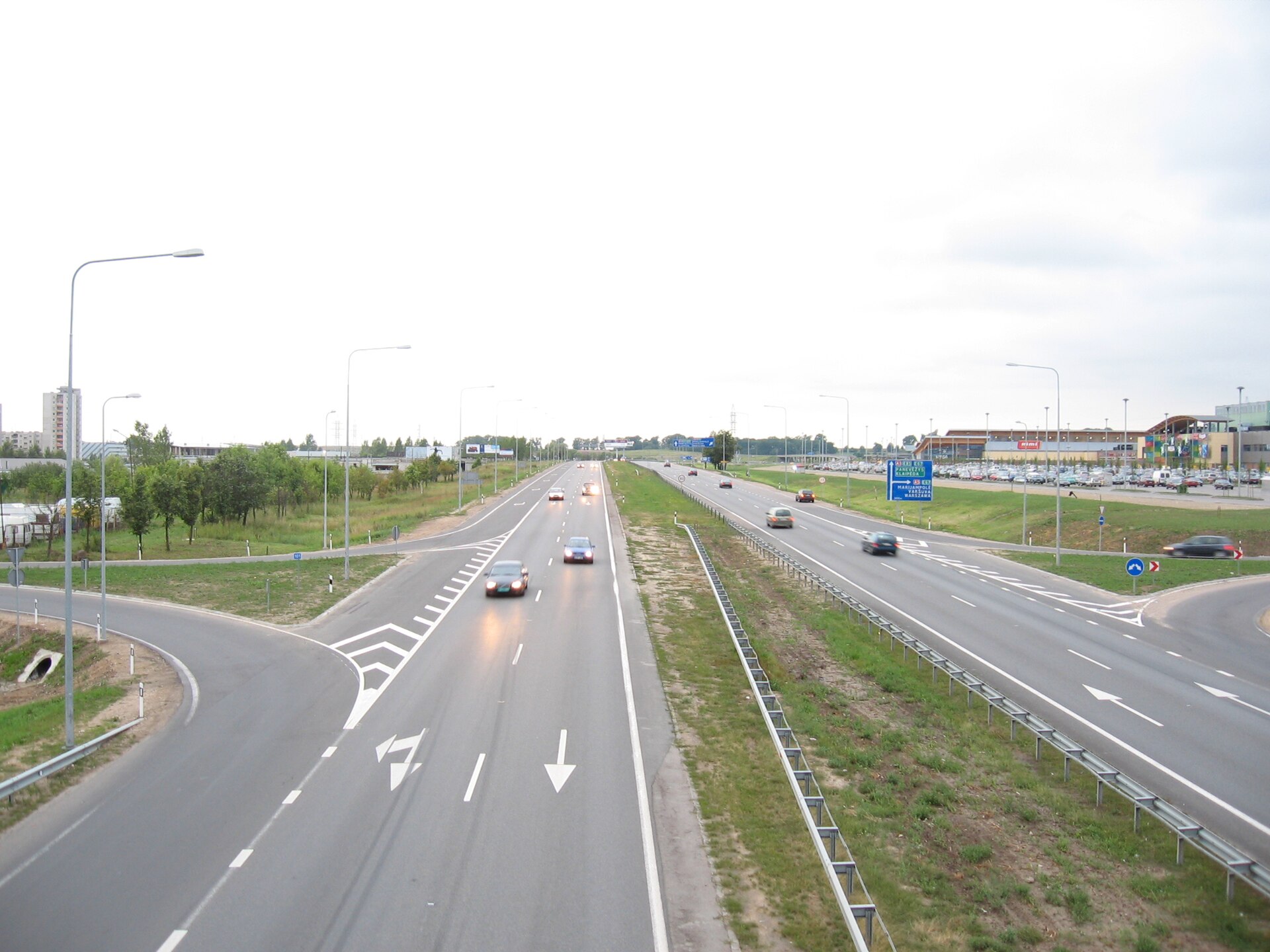

Road-user charge: separate M1 passenger cars from N-class vehicles
Lithuania does not use one simple “every motorway rental car needs a vignette” rule. The Lithuanian Transport Safety Administration (LTSA) describes the road-user charge for M2, M3, N1, N2 and N3 vehicles or combinations on the listed main roads. Via Lietuva’s road-charge page repeats that the electronic vignette is required before buses and freight vehicles in those categories use the charged roads.
That means an ordinary M1 passenger car is not in the categories listed by LTSA for this road-user charge. It does not mean every vehicle booked as a “car” is M1: a commercial N1 van, camper, minibus, trailer combination or converted vehicle needs its registration category checked. Read the vehicle document and the current charged-road map instead of relying on the rental website’s body-style label.
If the category is covered, use the official keliumokestis.lt purchase and verification portal. The portal currently displays a notice that annual electronic vignettes are no longer sold from 1 July 2026, so old articles and rate tables are not a safe source for a new booking. Enter the registration number, country, category and validity period exactly as shown; save the confirmation offline and ask the rental desk whether the exact plate already has a valid record.
The charge is a vehicle-category and listed-road question, not a replacement for the live road check. Before a long transfer, open Via Lietuva and Eismoinfo, then separate the A1/A5/A14/A16 fast-road section from the local approach, works and parking decision.
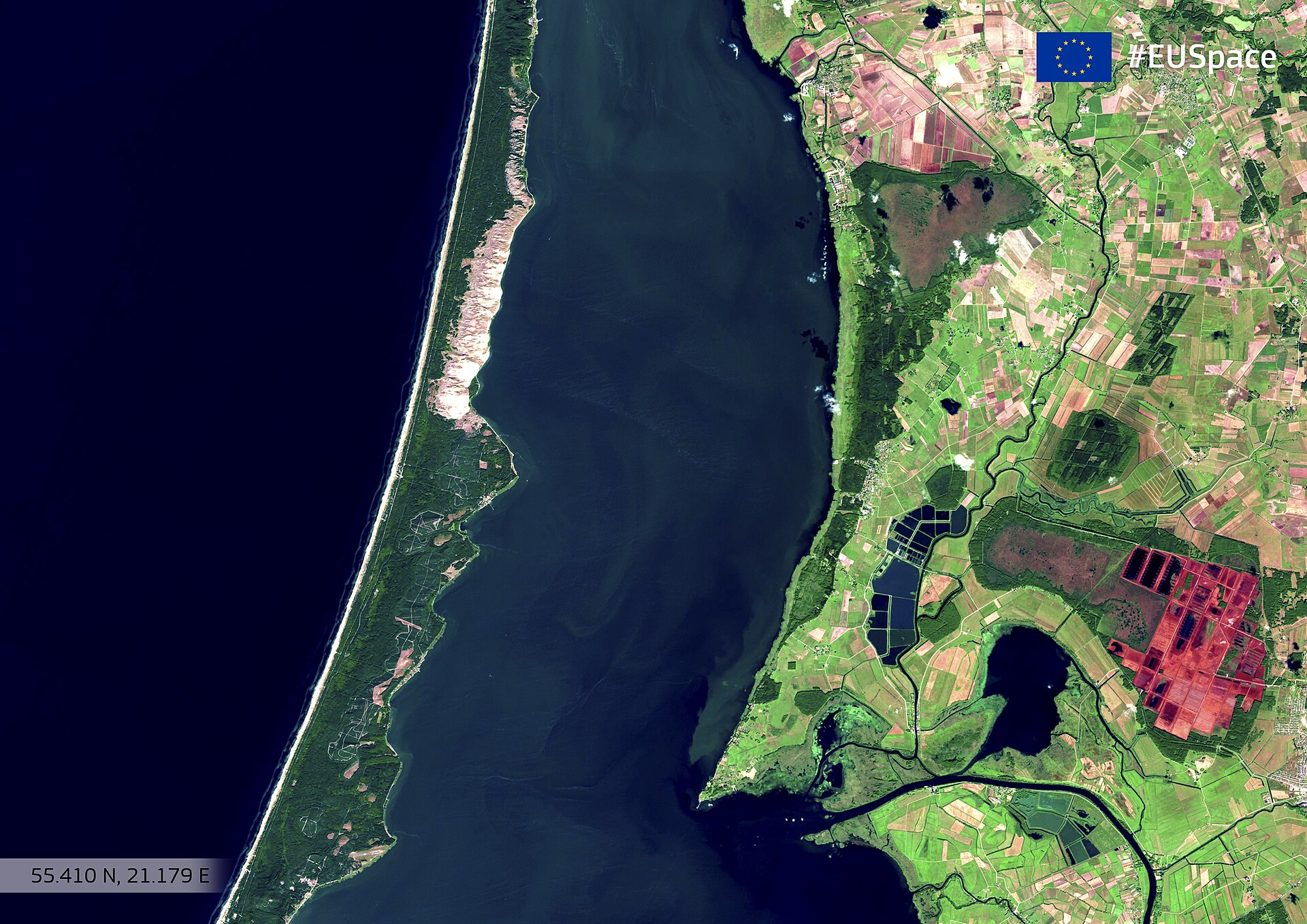

Vilnius, Kaunas, Klaipėda and Neringa: park before the difficult part
Vilnius: the Old Town is a zone-and-sign decision
The official JUDU parking page says central Vilnius and the Old Town are paid and divided into blue, red, yellow and green zones; the zone page publishes the current boundaries, hours and tariffs. Use the sign at the exact bay and the live map before walking away. JUDU lists meters, its app and partner apps; its payment-method page warns that SMS parking payment requires a Lithuanian phone number.
For a short Old Town visit, choose a marked car park or park-and-ride option before entering the centre. A loading space, resident permit space, pedestrian access street or hotel forecourt is not made legal by an empty-looking map pin. Rates, hours and white-zone local arrangements can change, so this page intentionally does not copy a permanent price table.
Kaunas: use the municipal links, then read the bay
Kaunas publishes parking locations and long-term car parks and links to the operator’s paid-street map and payment methods. Use those official links for the current central-area arrangement, then read the sign beside the exact space. A city-centre event, street work or private car park can have different conditions from the next block.
Klaipėda: city parking and the ferry queue are different clocks
The official tourism authority’s Klaipėda parking page links the current zone map, payment procedures, apps and long-term car parks. It also lists seasonal operating periods for the red and seaside zones. Check whether a planned overnight or beach stop crosses the seasonal period; do not carry a Klaipėda city ticket to the ferry terminal or Neringa.
The Klaipėda ferry guidance distinguishes the old ferry, which carries people, bicycles and pets but no motor vehicles, from the new ferry terminal, whose ferries carry cars and buses. Timetables and prices are operator-controlled and can change with season, traffic or service notices. Arrive with the rental plate, payment method and a queue buffer; a ferry booking or app route is not proof that a vehicle is permitted under the rental contract.
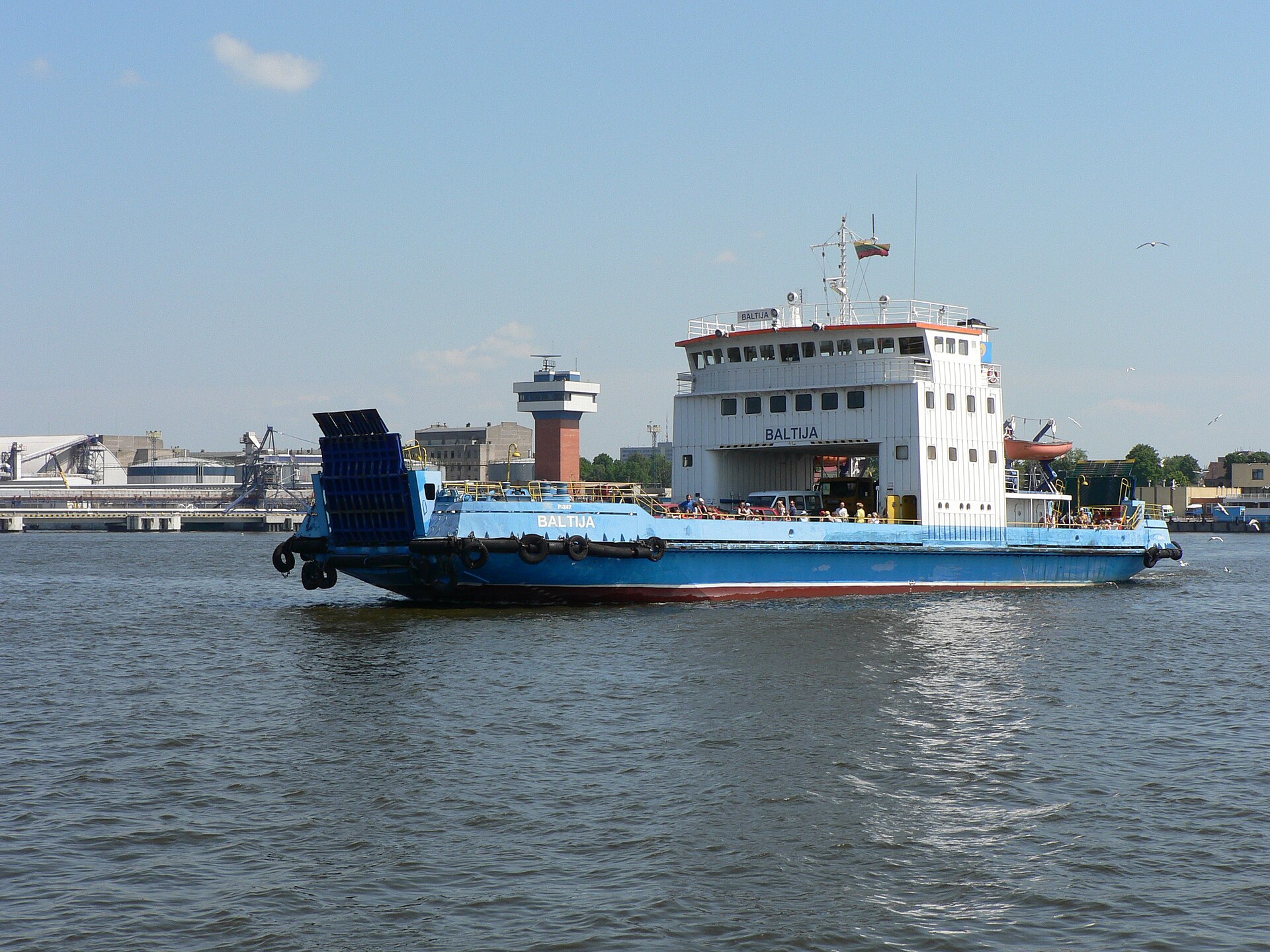

Neringa: entry fee, ferry, parking and the southern boundary
The official Neringa local-fee page says the fee for mechanical vehicles entering the Neringa-administered Curonian Spit National Park is collected at the Alksnynė control post and can be paid by card, cash or the listed advance-payment system. The fee is seasonal and vehicle-category dependent; use the current municipal table for the travel date. It is separate from the ferry fare and from any parking charge in a settlement or beach area.
Neringa’s tourism information explains that the Lithuanian part of the spit ends at a border with the Russian Federation’s Kaliningrad region. That geography is not permission to continue south. Do not approach a border crossing or restricted track because a route planner draws a line there. For any international movement, check VSAT, the Lithuanian State Border Guard Service, current official travel notices and the rental company’s written permission, insurance and vehicle documents. This page makes no claim about which crossings are open on a future date.
Fuel, EV charging, winter tyres and visibility
Fuel planning is more reliable when it is tied to a town and an opening-time check, not to the next map icon. For EVs, the Klaipėda tourism charging page links to a current local charging map. Confirm connector, charging speed, payment or roaming, access hours and a fallback location with the rental company. An operator map shows a service listing; it does not promise an available connector or a battery-safe detour.
The Your Europe Lithuania rules list winter or M+S tyres as mandatory from 10 November to 31 March, and daytime running lights as mandatory in daylight. Ask the branch whether the vehicle has the required seasonal equipment, inspect the tyre markings and keep the warning triangle and vest accessible. The calendar is only the legal baseline: wet snow, black ice, fog, crosswinds and low daylight can make a lower speed or a postponed route the safer decision.
Before a winter or shoulder-season stage, check Via Lietuva’s road information, the weather for both endpoints and the actual route elevation. A clear Vilnius forecast does not describe the coast, forest road or ferry approach. Put a hard turn-back time in the Route Weather & Closure Planner and keep a town-based alternative.
Three Lithuania routes with different failure points
1. Vilnius–Kaunas on A1
This is the most straightforward fast-road transfer, but it still needs a current works and weather check. Use A1 between Vilnius and Kaunas when Via Lietuva and Eismoinfo show a usable route; then switch from motorway assumptions to local parking rules before entering either centre. If the car is N1 or another charged category, resolve the vignette before the first charged section. For an M1 passenger car, do not buy a vignette merely because a booking site calls A1 a motorway.
For a day trip, choose one city parking location before departure and avoid turning a traffic delay into an improvised Old Town approach. The official Trakai tourism centre is a useful local reference if you extend the day toward Trakai, but its visitor information does not replace the road authority’s current work notices.
2. Vilnius–Trakai–Aukštaitija
Use the A16 direction toward Trakai only after checking current works and the final parking arrangement. Trakai’s official visitor centre provides current arrival and map information; the castle area, lakeside paths and event days can make the final kilometre much slower than the intercity leg. Continue toward Aukštaitija only if the Aukštaitija National Park and Labanoras regional-park authority and Via Lietuva information support the planned access. Park in an authorised place and confirm any local trail or seasonal restriction rather than driving onto a narrow forest track.
This route is a good test of the difference between a road being legally open and a scenic stop being practical. Carry fuel or charge reserve, daylight margin and an alternative town stop before committing to the lakes and park roads.
3. Vilnius–Klaipėda–Neringa / Curonian Spit
Plan the A1 leg to Klaipėda, the correct new vehicle-ferry terminal, the ferry queue and the Neringa entry fee as four separate checkpoints. The old ferry does not take cars. After landing at Smiltynė, keep the Neringa local-fee confirmation, follow the posted road and parking signs, and check weather and wind before a beach or dune approach.
The Curonian Spit route is not a shortcut to the Russian side. The southern international boundary is a hard safety and permission boundary; its current status, any crossing availability and the rental company’s policy must be verified on the travel date. If any one of those checks is unresolved, turn the plan around in Neringa rather than improvising at the boundary.
Border, ferry and rental-permission boundaries
Lithuania’s EU/Schengen geography does not erase the rental contract. A Latvian or Polish extension may be possible under one provider’s terms and forbidden under another; a Belarus or Russia plan can additionally involve border, security, insurance and current foreign-affairs restrictions. VSAT’s official site is the starting point for border-guard information, not a promise that a named crossing will be open.
Before booking a cross-border rental, request a written answer to all of these questions:
- Is each country on the route allowed, including a one-way return or ferry segment?
- Does the permission cover the exact registration number and vehicle category?
- Which insurance, Green Card or assistance documents must be carried?
- Are border fees, extra-country charges or an advance notice required?
- Is travel to Belarus, Russia or a border-zone road prohibited by the provider even if an authority page describes a crossing?
- What is the recovery plan if the car cannot cross, the ferry is suspended or a border decision changes?
The planned Border Crossing & Permission Planner will hold those answers. Until it exists, keep them in the Cross-Border Driving Checklist and do not mark an unresolved route as permitted.
Crashes, breakdowns and emergency calls
Lithuania’s official 112 service says 112 is free, available 24/7 and connects requests to police, fire and rescue, emergency medical and environmental services. The calling guidance asks callers to give what happened and the exact location or the best description available, answer the operator’s questions and stay on the line until told to end the call.
After a crash or breakdown:
- Switch on hazard lights, stop where it is safest and move people away from traffic only if that can be done without creating another risk.
- If there is injury, fire, a dangerous obstruction, a suspected crime or uncertainty about safety, call 112 first. Give the road number, direction, nearest junction or settlement, kilometre marker and GPS location if available.
- Put on the reflective vest before entering the carriageway and use the warning triangle and vehicle equipment according to the road situation.
- Call the rental company’s roadside-assistance number and insurer, follow the accident form process and keep the police or 112 reference. A private recovery service is not a replacement for emergency response.
- Photograph signs, lane positions, damage and the registration plate only from a safe place; do not sign a document you do not understand or admit liability at the roadside.
Departure checklist
- Physical driving licence, passport or identity document, and the IDP or certified translation if the issuing-country or rental check requires it.
- Rental agreement, additional-driver record, vehicle registration, insurance proof and roadside-assistance number.
- Written cross-border permission and insurance territory for every planned country, including the exact vehicle plate and any ferry segment.
- Vehicle category check: M1 passenger car versus M2/M3/N1/N2/N3, trailer or commercial registration, before deciding whether a road-user charge applies.
- Current LTSA/Via Lietuva charged-road information and an offline copy of any required e-vignette confirmation.
- JUDU zone and payment method for Vilnius, municipal parking choice for Kaunas, Klaipėda parking or ferry terminal plan, and Neringa local-fee confirmation.
- Ferry terminal, current timetable, queue margin and a legal fallback if Smiltynė service is delayed.
- Fuel or charging stop, connector and payment check, second charger or town-based fallback.
- Winter tyres from 10 November to 31 March, daytime lights, warning triangle, first-aid kit, fire extinguisher and reachable reflective vest.
- Via Lietuva road information, endpoint weather, visibility check, daylight turn-back time and an offline map.
- 112 saved, with road number, direction and vehicle details ready to give the operator.
Official sources and review date
This page was reviewed on 18 August 2026. Licence and IDP checks use Regitra driving-licence services, Regitra’s IDP information and Your Europe Lithuania road rules. Speed and road-safety claims use the Lithuanian Police speeding rules and the Police road-safety hub. Rental and cross-border contract questions use Your Europe car-rental guidance.
Road-user-charge claims use the LTSA vignette page, Via Lietuva road charges and the official purchase portal. Live road checks use Via Lietuva and Eismoinfo. Parking and ferry claims use JUDU parking, JUDU payment methods, Kaunas municipal parking, Klaipėda parking and Klaipėda–Smiltynė ferry information. Neringa entry-fee and geography checks use Neringa’s local-fee page and Neringa visitor information.
Border and emergency guidance uses VSAT, Lithuania’s official 112 service and 112 calling instructions. Route context uses Trakai Tourism and the Aukštaitija National Park authority. EV context uses Klaipėda Tourism’s charging-station page. Current prices, opening times, road works, weather, ferry service, charging availability, border rules and rental terms must be reopened on the actual departure date.
The visible images are destination-specific files: A1 highway near Kaunas, Smiltynė ferry and Copernicus Sentinel view of the Curonian Spit. The satellite image contains modified Copernicus Sentinel data 2022 and is credited in the figure caption.
Related tools and destinations
- Border Crossing & Permission Planner
- Cross-Border Driving Checklist
- International Driving Permit Checker
- City Access and Low-Emission Zone Planner
- Toll and Vignette Planner
- Route Weather & Closure Planner
- EV Road Trip Planner
- Rental Car Handover Checklist
- Emergency Numbers tool
- Driving in Latvia
- Driving in Poland
- Driving in Estonia
Frequently Asked Questions
- Can I drive in Lithuania with a foreign driving licence?
- Do not treat every foreign licence as equivalent. EEA and EU licence holders should check the EU and Lithuanian guidance, while other issuing countries must be checked against the applicable convention, licence format and rental policy. Carry the original licence and passport, and ask the rental branch for written confirmation before payment.
- Do I need an International Driving Permit in Lithuania?
- There is no single IDP answer for every issuing country. An IDP is a translation companion and never replaces the national licence. Check Regitra and the current Your Europe country guidance for your issuing country, then confirm whether the branch wants an IDP or certified translation.
- What should I show at the Lithuanian rental counter?
- Bring the physical licence, passport or identity document, booking and payment card, and any IDP or certified translation requested in writing. Confirm licence tenure, minimum age, additional-driver registration, vehicle category, insurance excess and the roadside-assistance number before leaving the desk.
- Does an ordinary rental car need a Lithuanian e-vignette?
- The LTSA page lists M2, M3, N1, N2 and N3 vehicles or combinations for the road-user charge on listed main roads; an ordinary M1 passenger car is not in that list. Do not generalise this to a van, camper, commercial registration or combination: read the vehicle registration category and the current charged-road information before driving.
- How fast may I drive in Lithuania?
- The published passenger-car baselines are 50 km/h in built-up areas, 90 km/h on paved roads outside them and 70 km/h on other roads. Motorway and highway limits vary by season, and new drivers, trailers, vehicle class, signs, works and weather can lower the permitted speed.
- How do I pay for parking in Vilnius Old Town?
- Central Vilnius and the Old Town are paid areas divided into colour zones. Use the current JUDU zone map and the sign beside the bay; JUDU lists its app, meters, partner apps and SMS, but SMS payment requires a Lithuanian phone number. Do not rely on a hotel map or an old tariff table.
- What is different about parking in Kaunas?
- Kaunas publishes paid street spaces, long-term car parks and payment methods through the municipality and its parking operator. Read the local sign and payment channel at the exact bay, and choose a car park before entering a busy central or event area.
- Do I pay a separate fee to enter Neringa?
- Yes, the Neringa local-fee guidance describes a fee for mechanical vehicles entering the municipality-administered Curonian Spit National Park, collected at the Alksnynė control post or through the listed advance-payment system. The amount and seasonal categories can change, so check the official page for the travel date; it is separate from the vehicle ferry and parking.
- Can I take my car to Neringa by ferry?
- The Klaipėda tourism authority says the old ferry carries people, bicycles and pets but no motor vehicles, while the new ferry is the car ferry for cars and buses. Timetables and prices are operator-controlled and seasonal, so confirm the current departure information before joining the queue.
- What are Lithuania's winter-tyre and daylight rules?
- The current Your Europe country page lists daytime running lights as mandatory and winter or M+S tyres as mandatory from 10 November through 31 March. Snow, ice, fog and short daylight still require a lower speed and a safe stopping margin even when the calendar rule is satisfied.
- Can I drive a Lithuanian rental car to Belarus or Russia?
- Never infer permission or border availability from a map. Check the Lithuanian State Border Guard Service and any current foreign-affairs or border notice, and obtain the rental company's written cross-border permission, insurance and vehicle documents for every country. The page deliberately does not hard-code a real-time border status.
- What should I do after a crash or breakdown in Lithuania?
- For an immediate threat, injury, dangerous obstruction or unclear situation call 112 and give the road, direction, nearest place or GPS position. Move to safety only if it can be done without entering traffic, then call the rental company's roadside-assistance number and insurer; do not treat a private recovery number as a replacement for 112.
- Where should I plan EV charging on a Lithuania road trip?
- Use a current operator map and the rental company's permitted payment or roaming providers, then confirm connector, access, price and a backup charger. Klaipėda Tourism links to a local charging map, but a map listing is not a guarantee that a connector is free, compatible or working when you arrive.
Information Sources & Disclaimer
This guide compiles information from the official transport authorities, road operators, government travel information, and automobile associations linked for Lithuania.
While we strive to keep this information as accurate and up-to-date as possible (last reviewed: August 2026), traffic laws and toll rates can change without notice. We recommend verifying critical information with the local authorities or your car rental agency upon arrival.
Learn more about our Editorial Process →Compare Your Origin and Destination
Use the comparison tool to check driving side, units, documents, and other destination data for your route.