Choose the road before the view
Montenegro is small on a map but changes quickly from a dense coastal street to a narrow mountain road. A useful itinerary separates the Bay of Kotor, the capital area and the highlands instead of treating them as short transfers. Build each stage around daylight, road width, weather and a place to park. Keep a second line for the day when a pass, tunnel or bridge is closed.

Foreign licence, IDP and the rental boundary
Carry the original physical driving licence, passport, payment card and rental contract. An IDP is a companion translation, not a replacement for the licence. There is no responsible one-line answer for every foreign licence: requirements can depend on the issuing country, the script and the hire company. The Australian government travel advice for Montenegro tells Australian drivers to carry both their licence and an IDP. Canada’s official travel advice also recommends an IDP, while the UK IDP guidance points drivers to the 1968 convention and the rental company.
Before paying a deposit, email the branch a scan of the actual licence and ask it to confirm the required IDP convention, translation, licence-history period, age threshold and additional-driver documents. Keep that confirmation with the booking. A legal minimum age of 18 does not mean every rental desk will hand over every vehicle at 18; the contract can set a higher age, a young-driver fee or a vehicle-class restriction.
At pickup, photograph the plate, fuel or battery level, tyres, windscreen, mirrors, lights, warning lamps and existing damage. Ask whether the car may cross into Croatia, Bosnia and Herzegovina, Serbia, Albania or another neighbouring country, which border documents are supplied, and whether the rental company has approved insurance for each crossing. Do not leave the country on an assumption made by a comparison site.
Right-side traffic, limits and everyday safety
The Montenegro Road Traffic Safety Law is the legal starting point. Montenegro drives on the right. Common maximum speeds are 50 km/h in built-up areas, 80 km/h outside built-up areas, 100 km/h on a motor road and 130 km/h on a motorway where posted. A lower sign, temporary control, settlement entrance, road work, rain, fog or a blind bend overrides the number in your notes.
- Keep to the right, pass on the left only when permitted, and expect vehicles to stop suddenly near settlements, viewpoints and junctions.
- Wear seat belts in every seat, use the correct child restraint, keep lights and number plates visible, and do not handle a phone while moving.
- Plan for zero alcohol before driving. The National Tourism Organisation’s driving recommendations also advises checking conditions, reducing speed and keeping water and basic supplies in the car.
- On a narrow road, slow before the bend and use a marked passing place. Do not stop on the carriageway for a photograph.
The Bay of Kotor, Kotor parking and the old road
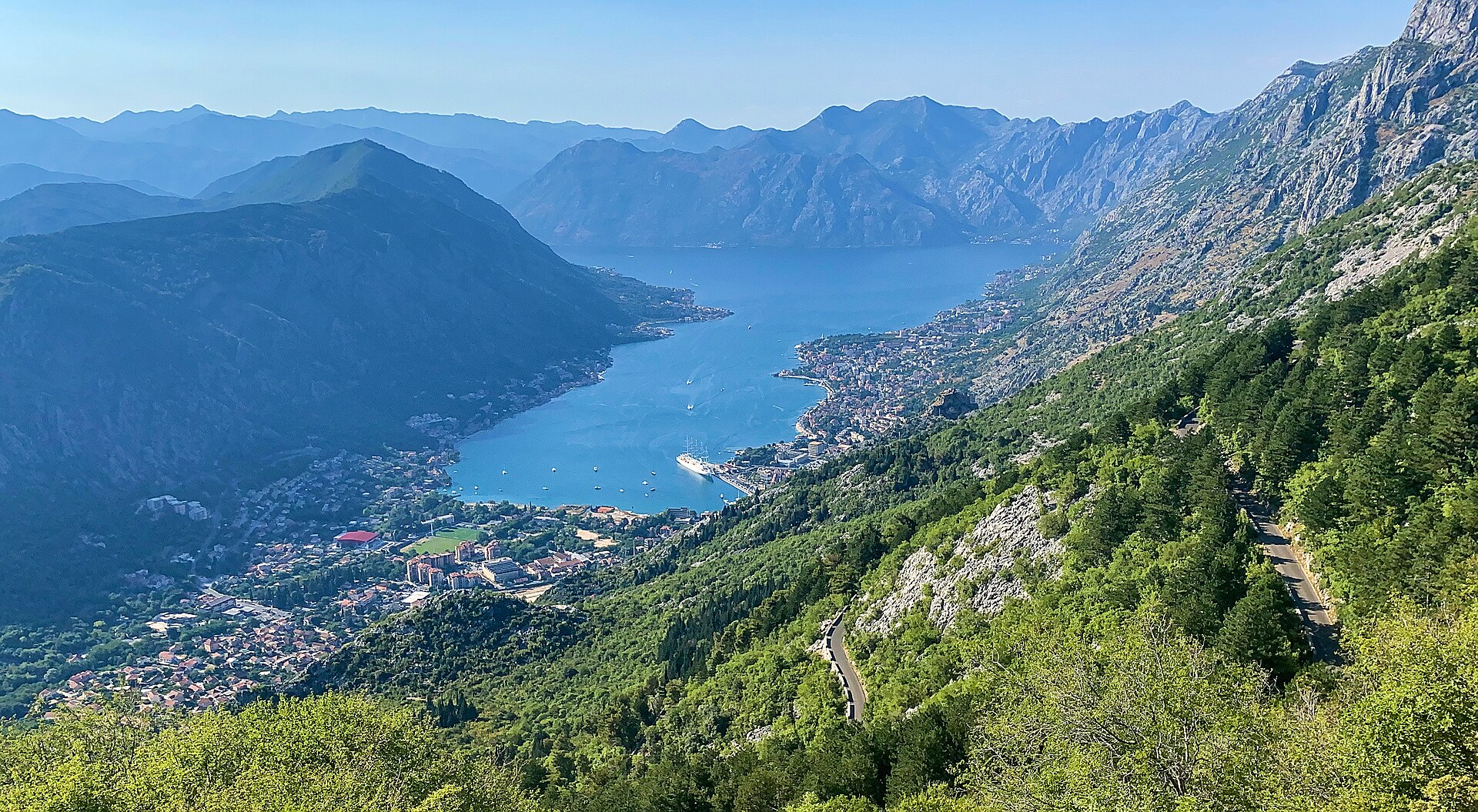
For a first Bay of Kotor day, choose a line rather than trying to combine every viewpoint. The National Tourism Organisation’s Sea and Heights panoramic route runs through Herceg Novi, Kamenari, Risan, Kotor, Tivat, Lovćen, Cetinje, Budva, Sveti Stefan, Petrovac, Virpazar, Ostros, Ulcinj and Bar. It is a route framework, not a promise that all of those stops fit one day. On a busy coast day, park once outside the Old Town and walk, then continue only when the next legal parking place is clear.
The Kotor traffic regulation restricts motor traffic in the Old Town contact zone and prohibits parking on places such as the promenade, squares, Riva and market areas unless a sign provides an exception. The municipality has also published current controls for vehicle movement and supply access. Read the sign at the car park, pay through the displayed channel and keep the receipt. A tow or fine is a poor place to discover that a map pin was not a parking permission.
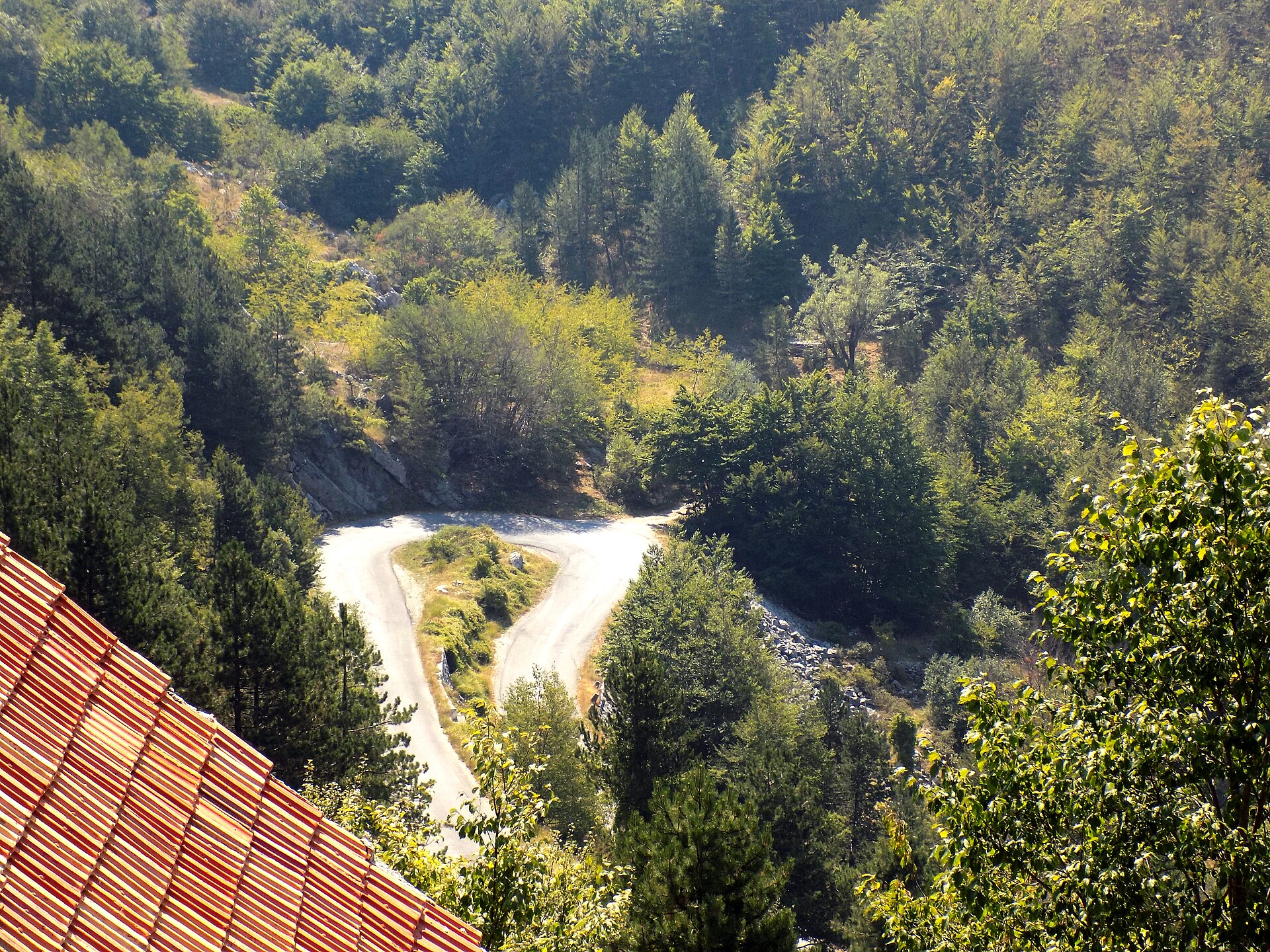
The old Kotor road, R-1 through Njeguši toward Cetinje, is a separate driving experience. It climbs through tight hairpins with limited passing room. Use a small car, start in daylight, keep the vehicle in a low gear on the descent and avoid the road when fog, heavy rain, ice or a large vehicle removes the margin. It is a route choice for the view and the mountain connection, not the default shortcut between every coastal stop.

Tolls, tunnels and payment
Montenegro does not use a nationwide road vignette. The Monteput price list currently lists a €2.50 passenger-car charge for the Sozina Tunnel and charges on the Smokovac to Mateševo section of the Bar to Boljare motorway, with the passenger category varying by entry and exit. The current motorway table lists €1.50 to €3.50 for the ordinary passenger category on that section. Treat these as review-date figures, not a permanent tariff.
The Monteput payment guidance accepts cash and bank cards and explains the ENP electronic tag. Keep the car below the lane’s indicated speed, choose the class that matches the rental vehicle and save proof of payment. Ask the rental company whether a plate-based charge, tag rental or administration fee will appear after return. Before a route that uses Sozina, compare the toll with the time and road conditions of the alternative, rather than assuming the cheaper-looking line is faster.
Podgorica parking, fuel and EV planning
Podgorica’s Parking Service operates zoned paid street parking with signs, parking meters and SMS payment. The official page currently shows SMS numbers for the red, yellow and green zones as 14551, 14552 and 14553. Check the sign at the exact bay for the current tariff, operating hours and vehicle restrictions, then keep the confirmation or meter ticket. An app map is not a substitute for the local sign.
On a mountain transfer, fuel planning is simpler than distance planning. Fill in Podgorica, on the coast or at a reliable town before starting a long highland stage. Confirm the fuel type at pickup, keep the receipt if the contract uses full-to-full, and do not rely on a last village station being open late. For an EV, check connector, payment app, opening hours and a backup charger for every stage. Montenegro’s Draft National Policy Framework for Alternative Fuel Infrastructure describes a network that is still developing, while an operator such as EVC Montenegro uses its own app and service conditions. Do not plan a Durmitor loop around a charger you have not confirmed on the day.
Durmitor, mountain roads and winter weather
The official Panoramic Roads of Montenegro lists the Durmitor Ring as a 76 km route from Žabljak through Mala Crna Gora, Nedajno, Trsa and Pišće back to Žabljak. Start with fuel, water, offline navigation and daylight. The route has fewer services than the coast, and a clear morning does not guarantee a clear high pass later in the day.
As of this review, the government has announced a full closure of the Đurđevića Tara bridge on the M-6 Pljevlja to Žabljak road from 10 August 2026 at 06:00 until 26 October 2026 at 12:00, with an alternative via Vrulja and Mijakovići. Check the official closure notice and current road information before using the Tara route. A time-sensitive closure belongs in the route decision, not in a fixed map pin.
From 15 November to 1 April, the Police’s winter-tyre notice requires winter tyres on all wheels when winter conditions apply, with at least 4 mm tread. Roads covered by the relevant order can require winter equipment even without snow, and studded tyres are prohibited. Confirm the rental car’s tyres, chains policy and roadside assistance before heading toward Durmitor, Lovćen or a high pass. If the forecast shows ice, dense fog, heavy snow or a closure, postpone the stage.

Cross-border rental decisions
Before booking, ask the rental company for written permission for every border crossing, the required notice period, the countries excluded by the policy, the cross-border fee and the documents carried in the car. Confirm whether the insurance certificate, registration document and any green-card or equivalent proof cover the planned country. The Automobile Association information service includes border-crossing and IDP information, but it does not replace the rental company’s contract approval.
The same check applies to ferries, unpaved access roads, roof boxes, additional drivers and one-way returns. Photograph the vehicle and the contract before leaving the branch. If a border plan depends on a document the company cannot name, keep the trip inside Montenegro and choose a domestic route instead.
Emergency response
Call 112 for an injury, fire, immediate danger, serious collision or a person who needs rescue. Montenegro’s official 112 notice describes 112 as the single emergency entry point that can coordinate police, fire, medical and mountain-rescue services. Give the road number, direction, nearest named place or coordinates, rental plate, number of people and any immediate hazard.
For a non-life-threatening breakdown or road-status question, the Automobile and Motorcycle Association uses 19807. Its information service can advise on passability, weather, winter equipment, closures, fuel, tolls and border crossings. Follow the rental company’s accident process, move out of a traffic lane only when safe and do not walk onto a closed mountain road to look for help.
A route decision checklist
- Bay of Kotor: choose a legal car park outside the Old Town before entering the busy core. Use the coastal route as a sequence of stops, not a promise to complete the full Sea and Heights circuit in one day.
- Old Kotor road: take R-1 through Njeguši in daylight with a small car when the forecast and visibility are stable. Use the main coastal line when the priority is a predictable transfer.
- Durmitor: use the 76 km loop only after checking road status, current bridge works, weather, fuel and daylight. Save a shorter return route before leaving Žabljak.
- Podgorica and fuel: pay only in a signed zone, keep proof, and fill before the highlands. An EV needs a confirmed live charger and a backup, not a map icon from an old trip report.
- Border and emergency: obtain written rental permission before crossing, save 112 and 19807 offline, and record the road, direction and coordinates whenever the route becomes remote.
Official sources and review date
This page was reviewed on 17 August 2026 against the Montenegro Road Traffic Safety Law, Montenegro Police winter-tyre notice, Automobile Association information notice, Montenegro 112 notice, National Tourism Organisation panoramic routes, Montenegro tourism driving recommendations, Podgorica Parking Service, Kotor traffic regulation, Kotor current vehicle-control notice, Monteput tariffs, Monteput payment models, Australia’s Montenegro travel advice, Canada’s Montenegro travel advice and UK international driving permit guidance. Road status, bridge works, parking tariffs, tolls, rental rules and charging availability can change, so reopen the official pages before every stage.
Related destinations and guides
Frequently Asked Questions
- Can I drive in Montenegro with a foreign licence?
- Carry the original valid licence and passport. Recognition depends on the issuing country, licence format and rental company: Australia's official advice says Australian drivers should carry an IDP with their licence, Canada's advice also recommends an IDP, and UK guidance points drivers to the 1968 convention and the hire company. Send a scan to the rental branch and obtain written confirmation.
- Does Montenegro drive on the right?
- Yes. Traffic keeps to the right and overtaking is normally on the left. Slow before blind bends, keep right on narrow mountain roads and do not assume the vehicle coming uphill can always stop in a passing place.
- What are Montenegro's speed limits?
- Common statutory maxima are 50 km/h in built-up areas, 80 km/h outside them, 100 km/h on a motor road and 130 km/h on a motorway where that class and sign exist. A lower sign, traffic officer, weather condition or road hazard sets the practical limit.
- Where should I park in Podgorica and Kotor?
- In Podgorica, use a marked paid bay, read the zone sign and keep the SMS or meter receipt. In Kotor, do not drive into the Old Town contact zone or leave the car on the Riva, squares or promenade. Use a signed car park outside the walls and walk in.
- Is the old Kotor road suitable for every rental car?
- The R-1 route from Kotor through Njeguši toward Cetinje is a narrow, winding mountain road and is not a time-saving shortcut. Use a small, familiar car in daylight, check weather and traffic, and avoid it when a coach, campervan or low visibility would leave no passing margin.
- How should I plan the Durmitor Ring?
- The official Montenegro National Tourism Organisation describes the 76 km Durmitor Ring as Žabljak, Mala Crna Gora, Nedajno, Trsa, Pišće and Žabljak. Treat it as a daylight mountain loop with limited services, verify road status and weather, and keep a turn-back plan.
- Does Montenegro use a road vignette?
- There is no nationwide vignette. Monteput charges for the Sozina Tunnel and the Smokovac to Mateševo section of the Bar to Boljare motorway. Cash and bank cards are accepted, while an ENP tag is another option. Confirm the current class, tariff and rental-company billing process before using a toll lane.
- Do I need winter tyres in Montenegro?
- From 15 November to 1 April, winter tyres are required on all wheels when winter conditions apply, with a stated minimum tread depth of 4 mm. The Police also says designated roads can require them regardless of the weather, and studded tyres are prohibited. Confirm the rental car's equipment before a mountain trip.
- What should I do after a breakdown or emergency?
- Call 112 for injury, fire, an immediate hazard or a serious collision. For road information and roadside assistance, the Automobile Association service uses 19807 and can provide traffic, weather, closures, fuel, toll and border information. Give the road, direction, landmark or coordinates and rental plate.
Information Sources & Disclaimer
This guide compiles information from the official transport authorities, road operators, government travel information, and automobile associations linked for Montenegro.
While we strive to keep this information as accurate and up-to-date as possible (last reviewed: August 2026), traffic laws and toll rates can change without notice. We recommend verifying critical information with the local authorities or your car rental agency upon arrival.
Learn more about our Editorial Process →Compare Your Origin and Destination
Use the comparison tool to check driving side, units, documents, and other destination data for your route.