Pick the right place to drive
South Korea’s rental car is most useful for rural coastlines, islands and mountain areas where public transport adds transfers. It is less useful for a central Seoul hotel stay. The Korea Tourism Organization driving guide recommends booking ahead, carrying the original licence and passport, and checking the rental company’s insurance and payment conditions.
Plan the first and last day around collection, traffic and parking rather than trying to fit a long intercity transfer beside a full sightseeing schedule. A short Jeju loop, a Gangwon mountain stage and a Seoul-to-Busan transfer need different buffers for weather, tolls and rest stops.
Licences, IDP and rental eligibility
The Korea Tourism Organization’s current rental-car requirements say short-term tourists should present an International Driving Permit, passport or alien registration card, and often their home-country licence. The usual rental minimum is 21 even though the legal driving age is 18; the booked vehicle class and branch policy can add conditions.
Korean Road Traffic Act Article 96 recognises IDPs issued under the 1949 Geneva Convention, the 1968 Vienna Convention and certain reciprocal arrangements. That legal route does not guarantee a rental handover. Send the branch a scan of the licence and IDP before a non-refundable booking, especially when the permit uses a different script or vehicle category.
Carry the original domestic licence, IDP, passport and rental agreement together. Every additional driver should be named on the contract. At collection, photograph the body, wheels, glass, mileage, fuel or charge level, keys, navigation unit, Hi-Pass device and charging cable. Check the excess, exclusions, loss-of-use wording and roadside number before leaving the depot.
Junction rules that need a pause
Korea uses right-hand traffic. The latest KTO road-rules guide describes a protected left turn with a green arrow and an unprotected left turn marked 비보호: the latter is made on a green light only when the movement is clear. A roundabout gives priority to vehicles already circulating.
Right turns on red require a full stop at the stop line or before the crosswalk, then a check for pedestrians and conflicting traffic. Where a right-turn signal exists, wait for the green arrow. Do not infer the rule from a neighbouring junction; signs, arrows and temporary police directions take priority.
All seats require seat belts. The Road Traffic Act prohibits handheld phone use while driving, with narrow exceptions for a stationary vehicle or emergency reporting. The legal blood-alcohol threshold is 0.03 percent, so a self-drive day should contain no alcohol. Use an appropriate child restraint and ask the rental company what it can supply.
Limits, cameras and expressway lanes
The KTO guide gives this planning framework:
| Road context | General guide |
|---|---|
| School zone | 30 km/h |
| Downtown or residential general road | 50 km/h |
| National road, one lane each way | 60 km/h |
| National road, two lanes each way | 80 km/h |
| Vehicle-only urban road | up to 90 km/h |
| Many two-lane-or-more expressways | up to 100 km/h |
Some expressways show 110 km/h, and signs can lower the limit for tunnels, bridges, work zones, weather or local policy. Speed cameras and section-control zones measure the whole signed section, so slowing only at a camera is not a safe strategy. On an expressway, use a rest area or drowsy-driving stop for a break. Pulling onto the shoulder is for emergencies.
The KoRoad safe-driving reference lists expressway minimum and maximum speeds, lane roles and the rule against reversing or making a U-turn. Keep lane changes early, avoid passing in tunnels, and follow the painted lane guidance before a complex interchange.
Hi-Pass and toll payment
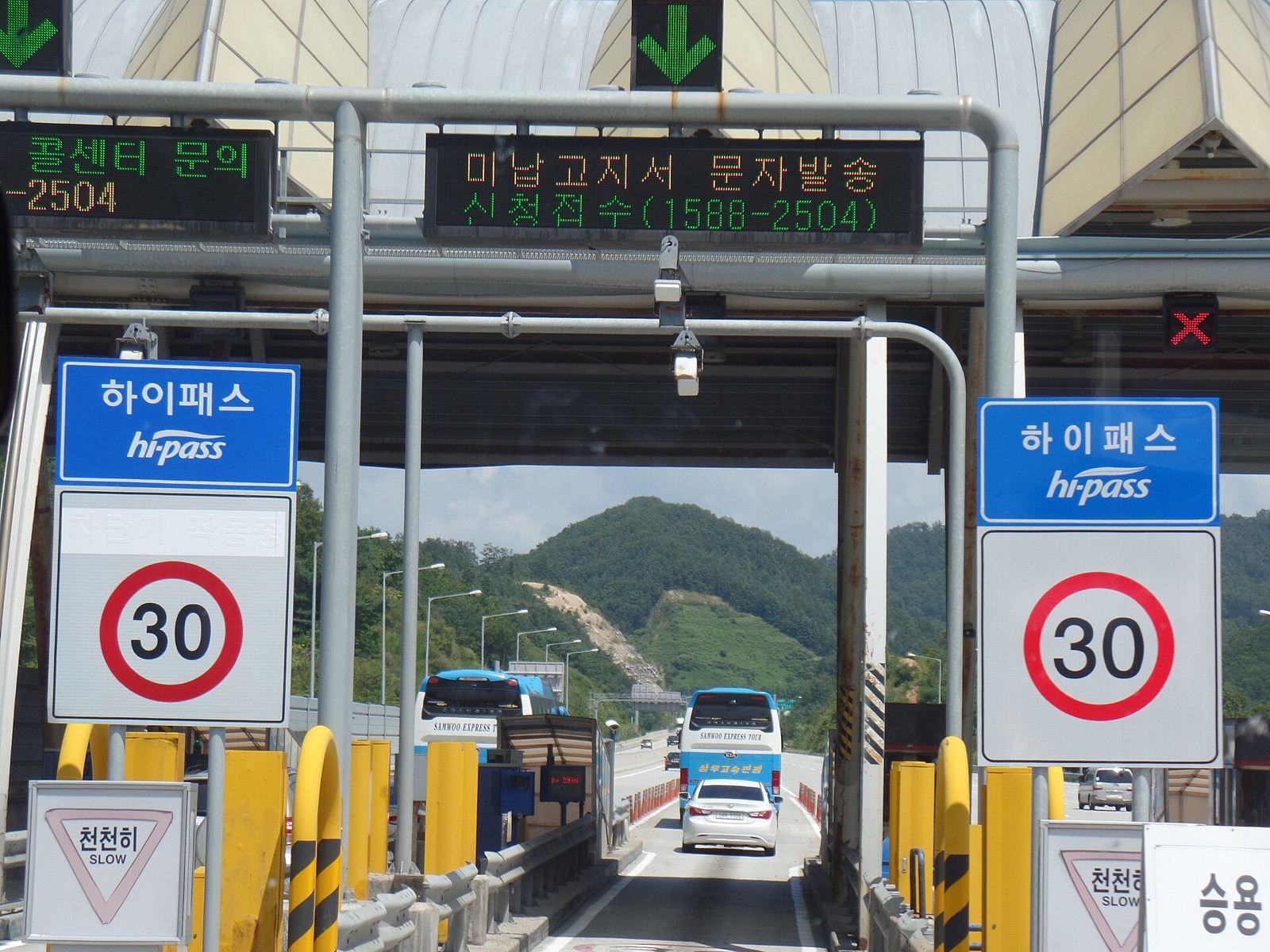
Hi-Pass lanes are marked in blue and are commonly on the left side of a toll plaza. A staffed cash or card lane is normally on the right. The KTO guide explains that a rental without a confirmed device must not use the blue lane, and that a mistaken entry can be resolved by noting the tollgate and explaining it to staff at the exit.
Ask three questions at collection: Is the device installed? Is the card or account active? How will the rental company bill the toll after return? The Korea Expressway Corporation toll page explains distance-based routes, vehicle classes and the One Tolling system. Tariffs vary by route, vehicle and operator, so use the live calculator rather than an old Seoul-to-Busan estimate.
If a toll is missed, the corporation lists staffed offices, rest-area counters, online and app payment, and the 1588-2504 call centre on its unpaid-toll page. Do not stop, reverse or change lanes inside the toll gate.
_3.jpg)
Seoul, Busan and parking decisions
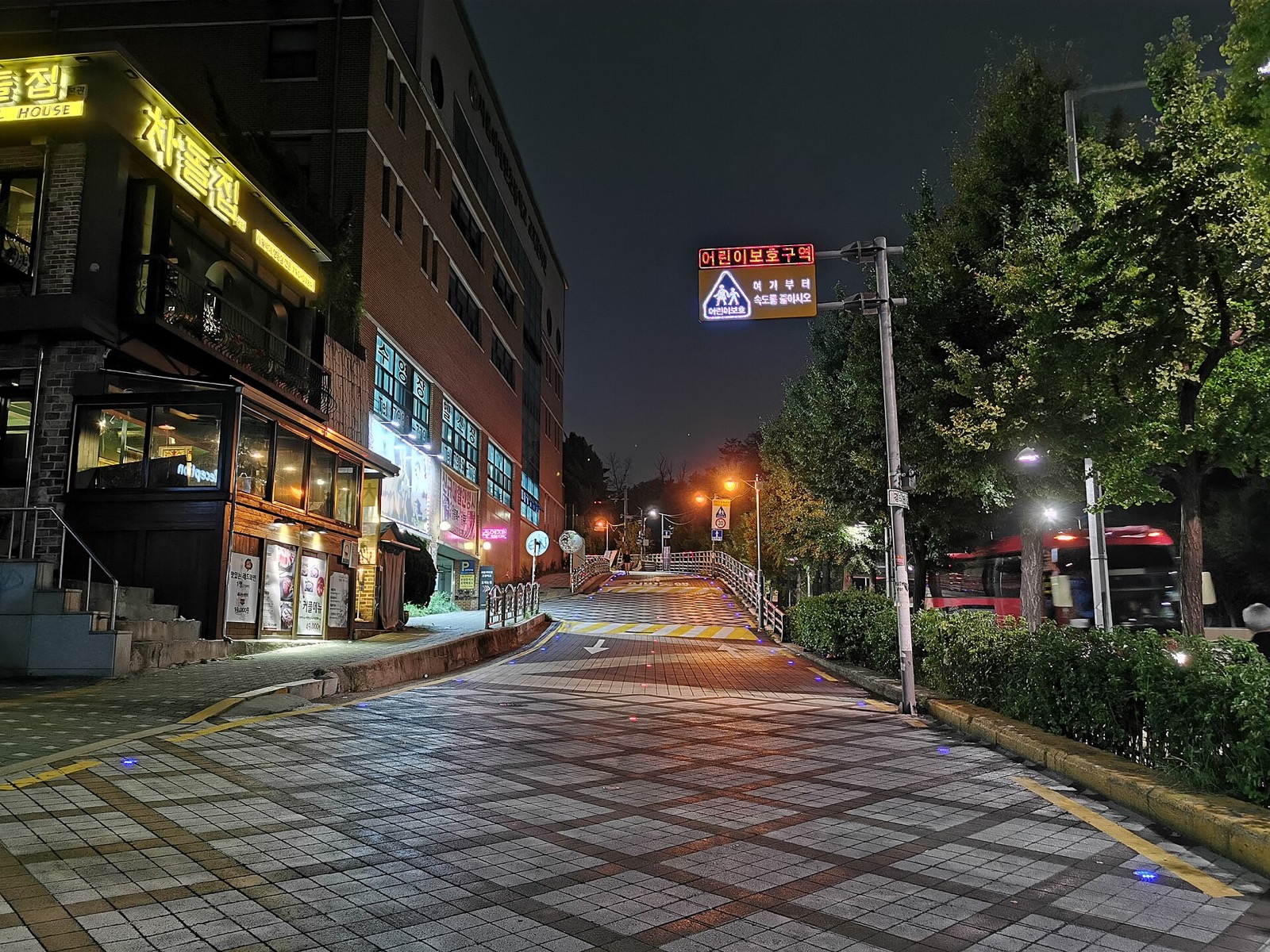
Central Seoul combines dense traffic, bus-only lanes, one-way streets, frequent pedestrian crossings and limited paid parking. Use the KTO parking guidance: street parking is generally limited to white-curb or marked roadside bays, while yellow curbs, bus stops, crosswalks, fire hydrants and junction corners are restricted. A garage or park-and-ride station is often simpler than searching residential streets.
Photograph the last four digits of the rental plate before entering an automated garage. Read the Korean sign beside the bay, check the payment method and ask a shop or hotel about validation before driving out. The Seoul Parking Info resource is useful for city services, but the sign at the actual lot controls.
Busan has steep streets and older neighbourhoods with tight turns. Haeundae and Gwangalli become busy on warm weekends. Keep the car for a day trip or coastal stage when possible, and use the subway for a central evening.

Jeju and rural route planning
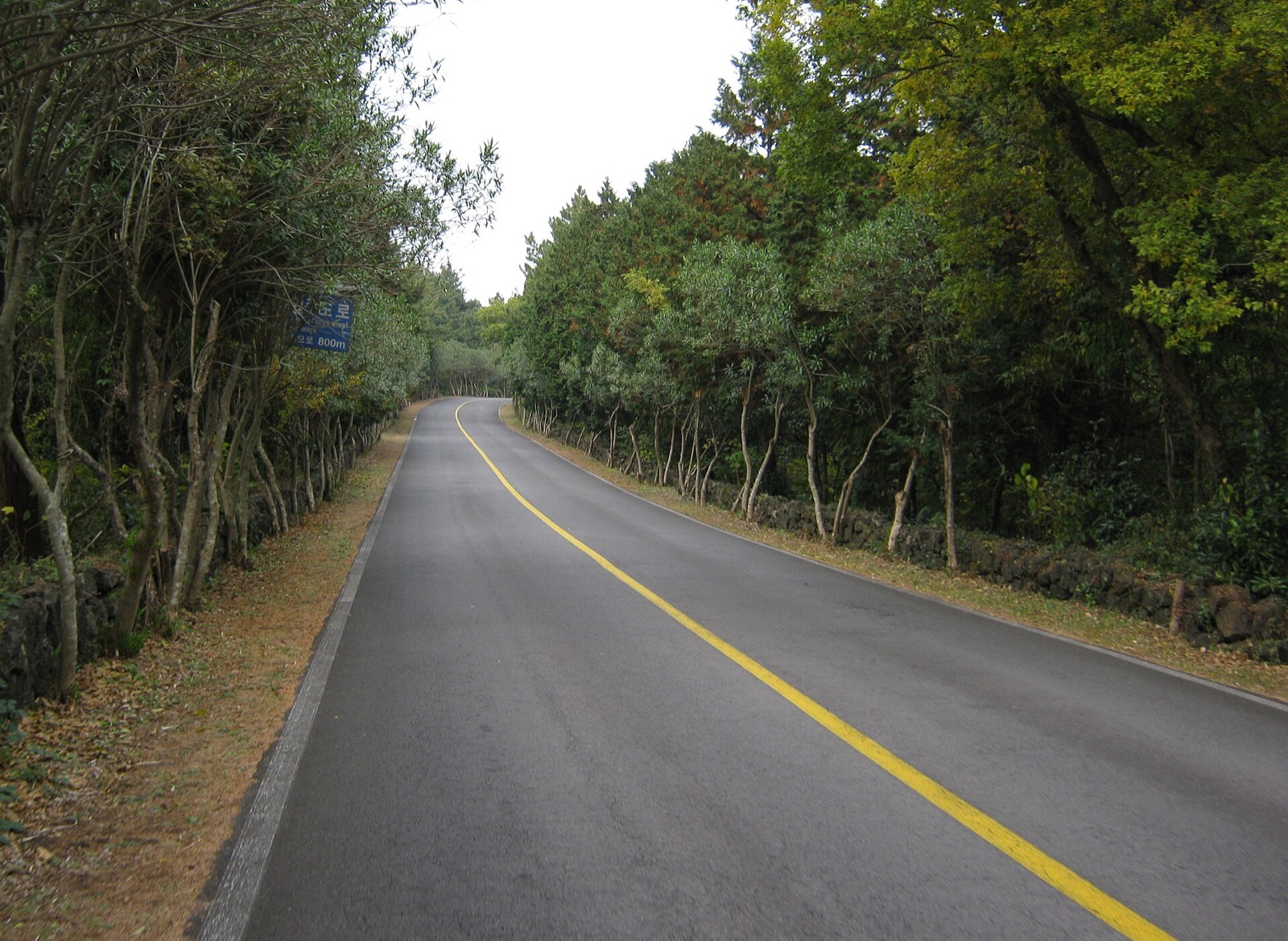
Jeju is a good place to use a rental when the plan includes several coastal or inland stops. Keep the route to a few bases, confirm parking at the final attraction, and leave space for the airport rental shuttle. Narrow lanes, cyclists, pedestrians and tour buses can make a short distance slow. A mountain road can have a different weather picture from the coast.

On the mainland, national roads trade toll savings for traffic lights, town centres and changing speed limits. Expressways trade a toll for steadier travel, rest areas and vehicle-only access. Choose the road class for the day rather than leaving the navigation app on its default route.
Navigation, fuel and charging
The Korea Tourism Organization recommends Naver Map and Kakao Map because their Korean road data and multilingual navigation work better for local addresses. Naver Map supports Korean, English, Chinese and Japanese; Kakao Map supports Korean and English. Save the rental return entrance, accommodation car park, a fuel stop and the Korean spelling of each destination before driving.
Korea has both self-service and attended petrol stations. Fuel grades are marked in Korean, so ask staff if the rental is LPG or if the nozzle labels are unclear. Do not assume an LPG rental has the same boot space as a petrol car. For an EV, confirm the connector, payment method and opening hours of every planned charger; coverage and queues vary outside the main cities.
Winter, fatigue and emergencies
Black ice, snow and strong wind can make a mountain route unsuitable even when the city is clear. Check the Korea Road Hazard Forecast System and the weather or road camera information available through Naver Map and Kakao Map. The KTO winter guidance recommends a lower speed and longer following distance, and suggests choosing another transport mode when conditions are severe.
If a breakdown occurs, use hazard lights, move away from the carriageway only when safe, and place the warning triangle according to the road authority’s instructions. On an expressway, walk to a safe refuge or call for help rather than standing in a live lane.
- Police: 112
- Fire and ambulance: 119
- Medical information: 1339
- Korea Travel Hotline: 1330
The KTO emergency FAQ confirms 112 and 119, while the international visitor safety page explains interpreter access and the multilingual Baro Emergency Reporting App. In a collision, call the rental company, photograph the scene, and follow the police and insurer’s instructions before moving the vehicle.
Sources and review date
This page was reviewed on 17 August 2026. The main checks used the Korea Tourism Organization driving guide, KTO road-rules and parking guide, Road Traffic Act Article 96, Road Traffic Act English provisions, KoRoad safe-driving reference, Korea Expressway Corporation toll information, unpaid-toll guidance, KTO emergency FAQ and KTO international visitor safety guidance.
Related destinations
Frequently Asked Questions
- Do I need an International Driving Permit to rent a car in South Korea?
- Short-term rental guidance from the Korea Tourism Organization asks visitors for an IDP, a passport and a home-country licence. Korean law also recognises certain reciprocal foreign licences for up to one year, so confirm the exact document accepted by your nationality and rental branch before booking.
- Which side of the road does South Korea use?
- Traffic keeps right and the driver sits on the left. Overtaking is normally on the left. At a roundabout, yield to traffic already circulating.
- Can I turn right on a red light?
- Usually only after a complete stop at the stop line or before the crosswalk, checking for pedestrians and oncoming traffic. If a right-turn signal is installed, wait for its green arrow. Follow the sign and signal at that junction.
- What are the usual speed limits?
- The general guide is 50 km/h downtown, 30 km/h in school zones, 60 or 80 km/h on national roads depending on lanes, and 90 to 100 km/h on vehicle-only roads and many expressways. Some expressway sections are 110 km/h. Posted limits and variable signs control.
- How do Hi-Pass tolls work in a rental car?
- Hi-Pass uses blue lanes and an in-car device. Ask the rental branch whether the device and payment account are active. Without a confirmed device, use a staffed cash or card lane. If you enter a Hi-Pass lane by mistake, note the tollgate and explain it at the exit.
- Is Seoul suitable for a rental car?
- Central Seoul often takes longer by car because of traffic, bus lanes, one-way streets and paid parking. Public transport is a practical choice for a city stay; collect the car when leaving Seoul or reserve a garage with a known entrance.
- Is Jeju good for self-driving?
- Jeju is one of the easier places in Korea to use a rental car, especially for coastal and inland stops outside the airport corridor. Roads still include narrow curves, pedestrians and weather-exposed sections, so keep the day short and check the final parking point.
- Can I use Google Maps for driving in Korea?
- The Korea Tourism Organization recommends Naver Map and Kakao Map for Korean navigation. Naver Map supports Korean, English, Chinese and Japanese; Kakao Map supports Korean and English. Download the apps and save Korean place names before collection.
- What should I do in winter?
- Black ice and heavy snow can make mountain roads unsafe. Check road and weather information, increase following distance, reduce speed below the posted limit when conditions require it, and switch to rail or bus when a pass is closed.
- Which emergency numbers should I save?
- Call 112 for police and 119 for fire or ambulance. The 1330 Korea Travel Hotline provides multilingual travel assistance, while 1339 can help connect medical information and hospitals.
Information Sources & Disclaimer
This guide compiles information from the official transport authorities, road operators, government travel information, and automobile associations linked for South Korea.
While we strive to keep this information as accurate and up-to-date as possible (last reviewed: August 2026), traffic laws and toll rates can change without notice. We recommend verifying critical information with the local authorities or your car rental agency upon arrival.
Learn more about our Editorial Process →Compare Your Origin and Destination
Use the comparison tool to check driving side, units, documents, and other destination data for your route.